
Council Minutes - Section B: Reports (9-15) - 11 December 2012
Contents | Previous Page: Section B - Reports 1-8 | Next Page: Section C - Notices of Motion
Contents | Previous Page: Section B - Reports 1-8 | Next Page: Section C - Notices of Motion
Reports 9-15, tabled at the Ordinary Meeting of Council on Tuesday 11 December 2012 held at City Hall, Little Malop Street in Geelong.
Role of Mayors, Councillors and Chief Executive Officers in Emergency Management
Sale of Industrial Land – Geelong Ring Road Employment Precinct (GREP) (Confidential
Portfolio: |
Finance – Cr S Kontelj |
Source: |
Property Management - Corporate Services |
General Manager: |
Jeff Wall |
Index Reference: |
Land Sales |
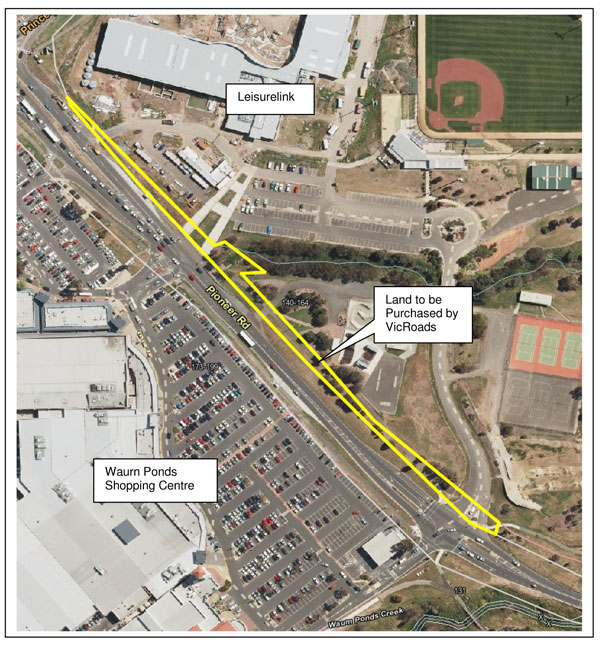
VicRoads has approached Council to purchase 2,969m2 of land for the Pioneer Road duplication project (refer to Appendix 9-1). The land forms part of the Leisurelink pool complex.
The project which commenced in July 2012 is expected to be completed in January 2013 and will duplicate Pioneer Road from Colac Road to the second set of traffic lights on Pioneer Road.
The land is not being compulsorily acquired by VicRoads and the land purchase is by agreement with the Council.
The land price of $200,000 plus GST has been agreed following a conference of valuers.
It is recommended that the Council sell the property to VicRoads for $200,000 plus GST subject to VicRoads paying all Council’s costs.
Notice of intention is required to sell the land under s189 of the Local Government Act. If submissions are received they will be heard by the Submissions Hearing Panel and a further report will be put to Council. If no submissions are received the property will be sold to VicRoads on the recommended terms.
Cr S Kontelj moved, Cr Richards seconded -
That Council:
Sells 2,969m2 of land to VicRoads located at Leisurelink 140-164 Pioneer Road, Belmont on the following terms:
Price $200,000 plus GST;
VicRoads paying all Council’s costs;
Such other terms and conditions considered appropriate to be included in the Contract of Sale; and
Commence the statutory procedures under section 189 of the Local Government Act 1989 (“the Act”) to sell the land and that public notice of and the right of a person under section 223 of the Act to make a submission in relation to the proposed sale be given in the Geelong Independent and Advertiser; and
Appoint the Submissions Hearing Panel to hear and report to the Council on any submissions in relation to the proposed sale; and
In the event that no submissions are received the land will be sold and;
Authorises the General Manager – Corporate Services to execute the Contract of Sale; and
Sign and seal the Transfer of Land.
Carried.
VicRoads has approached Council to purchase 2,969m2 of land for the Pioneer Road duplication project (refer to Appendix 9-1). The land is owned freehold by the Council and is zoned Public Park and Recreation Zone (PPRZ).
The project commenced construction in July 2012 under an access licence agreement with Council and is due for completion in December 2012 or January 2013. The project will duplicate Pioneer Road from the Colac Road to the eastern entrance of the Town and Country Shopping Centre being the second set of traffic lights on Pioneer Road when approached from the Colac Road.
The land of variable width is located within the nature strip between the Leisurelink car park and Pioneer Road. The widening does not affect the Council’s car park, and any works to other Council infrastructure or entrance roads will be managed by the construction project. The proposed purchase makes provision for additional land over a drain which runs north from Pioneer road towards the Waurn Ponds Creek to facilitate drainage works associated with the road widening.
There are no environmental considerations associated with the sale of this land.
Following a conference of valuers held in order to reconcile the differences in the parties respective valuations, the value of the land has been established at $200,000 plus GST. VicRoads will also pay all Council’s reasonable costs.
VicRoads is prevented from acquiring the land by compulsory acquisition by the operation of section 3 of the Cultural and Recreational Lands Act 1963 therefore the purchase of land by VicRoads is by agreement with the Council.
As the land is not being acquired under the Land Acquisition and Compensation Act, the Council is required to give public notice of its intention to sell land under s189 of the Local Government Act and consider any submissions received. If any submissions are received they will be heard by the Submissions Hearing Panel followed by a further report to Council. If no submissions are received the land will be sold to VicRoads.
No officers, consultants or contractors involved in the sale of the land have a direct or indirect interest in the land or its sale.
The risks associated with the sale of the land can be managed by obtaining appropriate advice and following normal management procedures.
The sale of the land does not involve any social considerations.
The sale of land is supported by the Council’s Engineering and Sport and Recreation Departments.
Portfolio: |
Finance – Cr S Kontelj |
Source: |
Corporate Services - Financial Services |
General Manager: |
Jeff Wall |
Index Reference: |
Financial Management \ Reporting |
The Quarterly Financial Report for the period ending 30 September 2012 is prepared as a requirement of Section 138 of the Local Government Act 1989.
Council approved amendments to the adopted Budget on 28 August 2012 and variances are reported based on comparing actuals to amended budget.
The recurrent operating surplus for the three-month period is $2.4M, being $5.9M favourable to amended budget and reflects favourable performance and timing issues.
The non-recurrent surplus for the three month period is $7.9M, being ($3.6M) unfavourable to budget with unfavourable Recognition of Infrastructure.
Capital expenditure for the year to date is $11.1M against a year to date projection of $10.4M, which is ($0.7M) overspent to projection.
The cash and investment balance of $41.6M is ($10.1M) unfavourable to budget, mainly due to payment of $9.4M made in September towards outstanding balance of Unfunded Superannuation Liability.
Cr S Kontelj moved, Cr Harwood seconded -
That Council endorses the Quarterly Financial Management Report to 30 September 2012.
Carried.
The report is prepared as a requirement of Section 138 of the Local Government Act 1989 which requires that at least every three months a statement be presented to Council comparing the budget with the actual revenue and expense for the financial year-to-date.
Operating
The September Management reports are provided in the following table to report year-to-date performance and full-year projection performance versus budget.
Summary
|
|
YTD |
YTD Am. Bgt |
YTD Var Fav/ (UnFav) |
FY Proj |
FY |
FY Var Fav/ (UnFav) |
|
Recurrent Surplus/(Deficit) |
2.40 |
(3.49) |
5.89 |
(16.74) |
(15.82) |
(0.92) |
|
Non-Recurrent Surplus/(Deficit) |
7.93 |
11.49 |
(3.56) |
51.91 |
46.28 |
5.63 |
|
Net Surplus/(Deficit) |
10.33 |
8.00 |
2.33 |
35.17 |
30.46 |
4.71 |
|
Capital Expenditure |
11.14 |
10.39 |
(0.75) |
109.34 |
108.97 |
(0.37) |
|
Closing Net Cash |
41.57 |
51.73 |
(10.16) |
|
50.59 |
|
The Adopted Budget was amended by Council on 28 August 2012 to include Carryover Capital and discretionary projects, plus other Capital and recurrent amendments.
The impact on the Recurrent Expenditure Budget is ($15.99M), consisting of carryover discretionary projects funded in 2011-2012, plus other budget amendments including adjustment for early receipt of first two quarters Grants Commission funding in June 2012.
The impact on Non Recurrent income was $3.10M for carryover of capital income from 2011-2012 projects.
The amended capital expenditure budget included an additional $58.76M to complete 2011-2012 Projects, including Civic Accommodation, Corio Landfill Rehabilitation and Ocean Grove Integrated Children’s Centre.
1. Recurrent Variance Commentary
|
|
YTD |
YTD Am. Bgt |
YTD Var Fav/ (UnFav) |
FY Proj |
FY |
FY Var Fav/ (UnFav) |
|
Recurrent Income |
66.47 |
64.54 |
1.93 |
251.75 |
252.56 |
(0.81) |
|
Recurrent Expenditure |
64.07 |
68.03 |
3.96 |
268.49 |
268.38 |
(0.11) |
|
Recurrent Surplus/(Deficit) |
2.40 |
(3.49) |
5.89 |
(16.74) |
(15.82) |
(0.92) |
YTD Variance - $5.89M Favourable
The following major variances to budget contributed to this result:
Recurrent Income
|
|
$M |
|
General Rates and Charges – Favourable rates generation and supplementary rates YTD, expected to be partly offset by objections in full year. |
0.85 |
|
Government Grants Main favourable variances consist of:
Offset by:
|
0.38 |
|
User Charges Main favourable variances consist of:
Offset by:
|
0.12 |
|
Other Fees & Charges Favourable mainly due to :
|
0.08 |
|
Sundry Income Favourable due mainly to Reimbursements & Recoveries $182K – mainly unbudgeted receipts for Lara Town Centre Expansion $135K (offset by expenditure) and Sundry Income $81K. |
0.24 |
|
Interest on Investments Higher than budgeted cash balances. |
0.26 |
|
Recurrent Income Sub-total |
$1.93M |
Recurrent Expenditure
|
|
$M |
|
Employee Related Expenditure – Favourable salary costs $1,434K mainly relating to unfilled vacancies and Workcover $87K. Partially offset by unfavourable supplementary labour costs ($565K) (see external services). |
1.52 |
|
General Works: Materials $118K favourable with the main variance being Ground Maintenance Materials $159K (ground renovations yet to commence). Materials $30K favourable with the main variances being Repairs & Maintenance $77K and External Plant & Equipment Hire ($53K) (all phasing only). Materials External Services is $1,347K favourable mainly due to:
Levies & Contributions $144K favourable – Drysdale Landfill $142K (EPA levy payable favourable mainly due to municipal waste diverted to Wyndham due to delay in construction of Landfill Cell).
|
1.50 |
|
Administration costs $205K favourable mainly due to :
|
0.20 |
|
Professional Services costs ($244K) unfavourable mainly due to:
|
(0.24) |
|
Utility costs are $437K favourable mainly due to Water usage costs $213K (seasonal factors) and Electricity $157K (phasing only). |
0.44 |
|
Depreciation costs $624K favourable (phasing only). |
0.62 |
|
Gain/(Loss) on Sale of Plant and Equipment ($80K) unfavourable. |
(0.08) |
|
Recurrent Expenditure Sub-total |
$3.96M |
Full Year Recurrent Projection – ($0.92M) unfavourable to Amended Budget
|
The main projection changes are favourable / (unfavourable): |
$M |
|
Grants Commission decrease |
(1.15) |
|
Insurance Premium Increase |
(0.27) |
|
Library Cleaning Contract (new 4 yr contract) |
(0.13) |
|
Transfers from Capital to Recurrent |
(0.12) |
|
Workcover Premium saving |
0.52 |
|
Myers St – Surrender of lease savings |
0.19 |
|
Other |
0.04 |
|
|
($0.92M) |
2. Non Recurrent Variance Commentary
|
|
YTD |
YTD Am. Bgt* |
YTD Var Fav/ (UnFav) |
FY Proj |
FY |
FY Var Fav/ (UnFav) |
|
Non-Recurrent Surplus/(Deficit) |
7.93 |
11.49 |
(3.56) |
51.91 |
46.28 |
5.63 |
YTD Variance – ($3.56M) unfavourable
|
|
|
$M |
|
|
Capital Grants & Income ($191K) unfavourable – mainly Clean Energy Grant ($0.55M) not received yet, offset by early receipt of State grants for Grovedale ICC and Barwon Heads Kindergarten $0.45M. |
(0.19) |
|
Other Phasing Variances |
|
|
Recognition of Infrastructure ($4,321K) unfavourable. |
(4.32) |
|
|
Developer Contributions $1,761K favourable. |
1.76 |
|
|
Gain/(Loss) on Sale of Property - ($708K) unfavourable. |
(0.71) |
3. Capital Expenditure Variance Commentary
|
|
YTD |
YTD Projection |
YTD Var Fav/ (UnFav) |
FY Proj |
FY |
FY Var Fav/ (UnFav) |
|
Capital Expenditure |
11.14 |
10.39 |
(0.75) |
109.34 |
108.97 |
(0.37) |
YTD Variance – ($0.75M) unfavourable
The capital program is ($0.75M) underspent compared to Projection year to date, with the major project variances as follows:
|
|
|
$M |
|
|
Geelong Library & Heritage Centre – project ahead of schedule. |
(0.20) |
|
|
Pioneer Road Footbridge Replacement – project ahead of schedule. |
(0.13) |
|
|
Playground Development – project ahead of schedule. |
(0.13) |
|
|
Leopold Community Hub – project ahead of schedule. |
(0.10) |
|
|
Civic Accommodation – Brougham Street fitout. |
(0.75) |
|
|
Corio – Norlane Regeneration Project - behind budget schedule. |
0.15 |
|
|
Building Renewal Works – project yet to commence. |
0.24 |
|
|
Clean Energy – Building, Plant and Equip – project yet to commence. |
0.35 |
|
|
Other |
(0.18) |
|
|
|
($0.75M) |
4. Cash and Investments
|
|
YTD |
YTD Am. Bgt* |
YTD Var Fav/ (UnFav) |
FY Proj |
FY |
FY Var Fav/ (UnFav) |
|
Closing Net Cash |
41.57 |
51.73 |
(10.16) |
|
50.59 |
YTD Variance – ($10.16) unfavourable
The month end cash and investments balance was $41.57M. This was ($10.16M) unfavourable to budget, mainly due to progress payment of $9.4M made in September towards outstanding balance of Unfunded Superannuation Liability.
Council has future commitments for $20.9M, which are fully cashed back:
Long Service Leave $ 16.0M
Statutory Reserves $ 0.7M
Refundable Deposits $ 2.5M
Income in Advance $ 1.4M
Asset Development $ 0.3M
Total $20.9M
The Landfill Provision balance is currently $17.4M.
There are no environmental implications arising from this report.
As detailed in the attached report.
The report is provided in accordance with requirements under the Local Government Act 1989.
Council staff preparing this report have no direct or indirect interest.
There are no risk implications arising from this report.
There are no social implications arising from this report.
The attached report is provided for information and public record and is available from the Council Governance or Financial Reporting units.
Portfolio: |
Governance - Mayor |
Source: |
Corporate Services - Administration & Governance |
General Manager: |
Jeff Wall |
Index Reference: |
Customer - ALGA |
Local government is established under state and territory government laws. The structure, powers and functions of local government are determined by state and territory governments. However, local government’s place and role as a third sphere of government needs to be included in the Constitution, which sets out how Federation works.
At the time colonies were discussing the formation of the Federation in the 1890s, the focus of attention was on national matters and how the new Federal Government would work with the new State Governments. Consequently, there is no reference to local government in the Australian Constitution. The growing role of local government that we see today was never envisaged in 1901.
Constitutional recognition of local government has been the subject of public debate over decades and two previous attempts in 1974 and 1988 failed.
The Australian Local Government Association (ALGA) has been instrumental in over recent years for developing the case for reform. Two recent High Court decisions known as the Pape Case and the Williams Case has cast legal doubt over the Commonwealths ability to directly fund local government. These High Court decisions have provided weight and urgency to the need for a change to the Constitution to allow direct federal funding of local government – what is known as financial recognition.
ALGA over the years has sought local government support for their campaign to achieve constitutional recognition of local government and has requested further support from Councils by sending a submission to the Parliamentary Select Committee on the issue.
The Prime Minister has also committed to holding a national referendum on constitutional recognition of local government in 2013.
Council has previously supported the case for reform by formal resolution on 22 March 2011, through submission to the Expert Panel and by lobbying for a bi-partisan support for Constitutional recognition of local government.
The Mayor vacated the Chair at 8:20pm in order to discuss the report.
The Deputy Mayor assumed the Chair at 8:20pm
Cr Fagg (Mayor) moved, Cr Ansett seconded -
That a submission is lodged with the Federal Joint Parliamentary Committee confirming Council’s support for constitutional recognition of local government.
Carried.
The Mayor resumed the Chair at 8:28pm
In March 2011 Council considered a report on constitutional recognition and adopted the following motion:
That Council
declares its support for recognition of Local Government in the Australian Constitution, particularly having regard to power for the Federal Government to directly fund Local Government,
declares its support for the inclusion of Local Government in any new preamble to the Constitution if one is proposed,
authorises the Mayor to write to the Prime Minister, Leader of the Opposition and Federal Members for Corio and Corangamite requesting their support for a referendum by 2013 to change the Constitution to allow financial recognition of Local Government.
Letters were sent in accordance with this decision.
In October 2011 Council provided a submission to an Expert Panel again supporting the constitutional recognition particularly in relation to inclusion of the power for the Commonwealth to directly fund local government.
Local government is established under state and territory government laws. The structure, powers and functions of local government are determined by state and territory governments. However, local government’s place and role as a third sphere of government needs to be included in the Constitution, which sets out how Federation works.
At the time colonies were discussing the formation of the Federation in the 1890s, the focus of attention was on national matters and how the new Federal Government would work with the new State Governments. Consequently, there is no reference to local government in the Australian Constitution. The growing role of local government that we see today was never envisaged in 1901.
Constitutional recognition of local government has been the subject of public debate over decades and two previous attempts in 1974 and 1988 failed.
ALGA has devoted considerable resources over the past three years to developing a case for constitutional reform and the need for reform. That need was highlighted in stark terms in 2009 by the decision of the High Court in Pape v Federal Commissioner of Taxation. In that case the High Court set out the limitations of the Australian Government’s powers and, in doing so, clearly indicated that the Australian Government does not have the power to fund local government directly.
It is in the best interests of local communities that Federal Governments, whatever political persuasion, has the capacity to fund councils directly to achieve national objectives.
The Prime Minister has also committed to holding a national referendum on constitutional recognition of local government. This referendum will most likely be held in conjunction with the 2013 Federal Election.
ALGA over the years has sought local government support for their campaign to achieve constitutional recognition of local government and has requested further support from Councils by sending a submission to the Parliamentary Select Committee on the issue.
On 31 October 2012 a Notice of Motion was accepted by the House of Representatives to form a Joint Select Committee on the issue. ALGA is again seeking Council’s support to provide a submission to this committee. The timelines for the submission are very tight, with the Committee to report its findings by the end of the year.
A submission will be lodged that that covers off on the key points that ALGA has raised in the attached letter which will confirm this Council’s commitment to this reform.
There are no environmental implications arising from this report.
Recognition of local government in the Constitution will ensure the Commonwealth Government can provide funding directly to local councils, without having to pass the funding through the State Government, hence enabling timely receipt of funds and delivery of programs and projects.
Recognition of local government in the Constitution is an issue of national importance, given the vital role local government now plays in the Australian communities as the third tier of government and given the expanded role and crossover activities that local government is involved in, in the delivery of services be they state, federal or a combination of both.
There are no Council Officers involved in preparing this report who have a direct or indirect interest.
If Constitutional recognition is not achieved the Australian Government will not have the power to fund local government directly.
Local government is an integral part of the governance of Australia and recognition within the Constitution is a vehicle for local autonomy.
Council’s position will be available on its website and communicated through local media.
Portfolio: |
Infrastructure/Parks & Gardens – Cr Ellis |
Source: |
City Services - Emergency Management & Fire Prevention Unit |
General Manager: |
Gary Van Driel |
Index Reference: |
Subject: Emergency - Fire; MEMPlan |
This report informs Council of two guides recently released by the Municipal Association of Victoria (MAV) that outline the roles and responsibilities of Chief Executive Officers (CEO), Mayors and Councillors prior to, during and following an emergency event;
The guides were developed by the MAV as part of the MAV’s Improving Emergency Management in Local Government program – Capability Building project which aims to develop tools, resources, programs and activities that improves the local government sector capability, capacity and performance in emergency management;
The guides have been developed as a resource that:
Explains the municipal role in emergency management
Defines the role of the elected officials, the Chief Executive Officers (CEOs), senior officers and other staff;
Provides a role statement to guide and support their actions
These guides have been included within the 2012 update of the Municipal Emergency Management Plan (MEMPlan);
The MEMPlan is a document that is developed and maintained by the multi agency Municipal Emergency Management Planning Committee. Both the Committee and the development of the MEMPlan are statutory requirement along with the appointment of a Municipal Emergency Resource Officer (MERO) under the Emergency Management Act 1986;
Cr Ellis moved, Cr Irvine seconded -
That Council notes the report regarding the role of Mayors, Councillors and Chief Executive Officers in Emergency Management.
Carried.
During the first half of 2012, the MAV circulated draft guides that focused on the role of Chief Executive Officers, Mayors and Councillors in emergency management as part of their Improving Emergency Management in Local Government program – Capability Building project. The project aims to develop tools, resources, programs and activities that improve sector capability, capacity and performance in emergency management.
Council’s Coordinator Emergency Management provided feedback during June 2012. These guides have now been completed and during October 2012, the MAV distributed the guidelines to council emergency management staff as well as CEOs, Mayors/councillor support officers.
About the Guides
Both guides follow a standard format, i.e;
For Mayors & Councillors:
Do’s & Don’ts – Handy Hints During an Emergency Event
Councillors’ Role in an Emergency Event
Media and Communications
Following an Emergency Event
Background Information
For Chief Executive Officers:
The Role of the CEO in emergency management
The priorities for the CEO in any emergency
Emergency Management Planning and Governance Responsibilities
Legislative Requirements
During an Emergency Event – Tips for the CEO to keep in mind
Communications and Media management
Following an Emergency Event
Background Information
Copies of the abovementioned guides are included as Attachment A and B to this report.
An emergency event, depending upon its size and nature will have an impact on the community as well as have an impact on the natural, built, economic and social environments.
The State Government via the Natural Disaster Funding Arrangements (NDFA) offers councils the ability to seek reimbursement for a ‘natural disaster’ as defined by the Commonwealth Governments Natural Disaster Relief and Recovery Arrangements (NDRRA).
A natural disaster is defined by the abovementioned arrangements as ‘…a serious disruption to a community or region caused by the impact of a naturally occurring rapid onset event that:
Threatens or causes death, injury or damage to property or the environment; and
Which requires significant and coordinated multi-agency and community response.’
The current NDFA policy which is administered by the State Government’s Department of Treasury and Finance (DTF) is summarised in the following table.
|
Category |
Municipal Council Expenditure |
Funding Assistance Formula |
|
Emergency Protection Works |
|
Expenditure fully reimbursed |
|
Restoration of Municipal Assets |
|
75 % of approved restoration costs between $10,000 and $110,000. Expenditure over $110,000 fully reimbursed (max council contribution $35,000) |
It should be noted that the funding arrangement primarily focus on the ‘response phase’ of an event and do not include reimbursement for costs associated with providing support to community members, i.e. ‘recovery phase’ during or after an emergency or the operation and staffing of the Municipal Emergency Coordination Centre or Emergency Relief Centres.
There are a number of statutes and regulations that relate to the municipal emergency management continuum - prevention, preparation, response and recovery ie:
Emergency Management Act 1986
Country Fire Authority Act 1958 (for councils located outside the Melbourne metropolitan area)
Public Health and Wellbeing Act 2008
Electrical Safety Act 1998
Water Act 1989
Local Government Act 1989
Electrical Safety (Electric Line Clearance) Regulations 2010
Emergency Management Manual Victoria
All Victorian Councils located outside the Melbourne metropolitan area have statutory responsibilities particularly under the Emergency Management Act 1986, and the Country Fire Authority Act 1958. These responsibilities are essentially to resource, plan and respond to emergency situations. Councils are also required to have a Municipal Emergency Management Plan and appoint officers to particular positions under the Emergency Management Act 1986 and the Country Fire Authority Act 1958. The City of Greater Geelong is meeting these responsibilities.
No Council officers associated with writing this report have any direct or indirect interest, in accordance with Section 80 (C) of the Local Government Act.
Dealing with an emergency event is high risk for all concerned – depending upon the type, size and location of the event. To this end, all preparedness actions need to be identified, recorded and acted upon. The City has an active Municipal Emergency Management Planning Committee as well as an active Municipal Fire Management Planning Committee. These committees are managed to ensure, as far as is practicable, that the risks to the community from a fire or other event are mitigated and that the City is prepared and well place to respond to and recover from an emergency event.
An emergency event has the potential to have a significant impact on the community. To this end, council needs to ensure that, via the Municipal Emergency Management Planning Committee that all preparedness tasks are, as far as is practicable, are actioned and that officers charged with emergency management responsibilities are continuingly reassessing these tasks.
It is important to note, that Council’s role in an emergency is that of a Support Agency, ie the Council supports both the Police and the nominated Control Agency.
With the above in mind, Council should only comment on the activities/tasks that it is performing in its Support Agency role and not make comments relating directly to the response, i.e. operational matters, as this is the role/responsibility of the Control Agency or VicPol. However, Council can make comments on representing the community’s needs and views as well as comment on recovery operations that follow an event.
A Guide to the Role ofMayors and Councillors in Emergency Management |
Under Victorian law, councils are required to assist with local planning and preparation for emergency events. The result of the emergency planning process should be a coherent and easily understood Municipal Emergency Management Plan (MEMP). The multi-agency Municipal Emergency Management Planning Committee (MEMPC) is responsible for preparing the MEMP.
The MEMP is a multi-agency plan for the municipal district. It is not only a council plan. However, under current arrangements, the plan will come to council for final endorsement and council is responsible for making sure the plan is compliant when audited. All agencies, MEMPC members, the Mayor and councillors, senior council officers and all staff who have emergency management responsibilities should be familiar with the contents of the MEMP.
The pressure of an emergency event can strain relationships, so building solid and strategic local connections can prove to be invaluable before, during and after an emergency event.
It is also important to remember that every person reacts differently to the stress of an emergency situation.
During an Emergency Event |
The Mayor and councillors do not have an operational or response role during an emergency. The council’s municipal emergency management officers have operational responsibilities and legislative obligations they need to carry out. Councillors should assist them by steering clear of operational areas, while staying informed of the situation.
The role of the Mayor and councillors in emergency management is quite different. Councillors do not usually play a prominent role in an emergency event.
Here are a few quick suggestions for mayors to remember during an emergency:
Do: work in close partnership with the CEO and their key emergency management officers. Mayors and councillors can be a conduit between the community and council.
Do: seek information from internal council briefings, seek daily briefings if possible
Do: provide approved comments to the media if requested. Always check in with the CEO first for the latest information.
Do: ensure that your media comments relate to representing the views of the community, not operational matters
Do: help boost community morale where it may be flagging
Do: be consistent and follow-up
Do: be patient. Information on what is happening and the impact of an emergency takes time to assess and verify.
Do: explain to residents that the council isn’t “running” the emergency; it plays a support and facilitation role.
Don’t: enter operational areas. The best place for the Mayor during an emergency is among the community, not in council operational spaces.
Don’t: try to take command of the situation. Emergency management officers have statutory responsibilities they must carry out in an emergency event.
Don’t: bypass existing communication and incident command structures
Don’t: give answers other than current facts, especially when speaking to the media or residents.
Councillors should:
assist the Mayor as requested
"fly the flag", boost morale and provide comfort to residents affected by an emergency event
advocate to council, and more broadly as required, on behalf of their constituents
facilitate communication between council and the community.
If the Mayor is the council’s nominated spokesperson, they can play a helpful and prominent role before, during and after an emergency event by providing approved comments and information to the community and media. This should be done in close consultation with the CEO or their delegated communications/emergency management officer.
It is vital that the Mayor always ensures s/he is fully briefed before making media comments. Comments to the media should focus on representing the community’s needs and views, not operational matters relating to the emergency.
If the Mayor is the council’s nominated spokesperson, other types of information they might deliver could include:
preparation of advice ahead of a period of high risk
notification of community meetings and relief and recovery services
details of any disruptions to council services
advice regarding the availability of support, counselling or insurance services, including locations of relief and recovery centres
general public announcements
details of any public appeal for financial assistance for affected residents.
Any media comments should be drafted in consultation with the council’s communications/emergency management staff with the necessary approvals.
Importantly, in a multi-agency event, specific crisis management information should only be issued by the spokesperson nominated by the control agency as it is likely to relate to technicalities of the emergency and may have legal ramifications.
Communication is a two way street. The Mayor may also receive vital information from local residents that should be passed on to the emergency management team via the CEO. This ensures that information coming from the community is collated to enable the best possible decision-making.
Accurate information about the emergency and the impact on the community will also be necessary if the Mayor is advocating to other levels of government or other agencies for assistance for the community. Advocacy should be done in consultation with the CEO, who will be gathering information and receiving advice from a range of internal and external sources.
Establishing good working relationships with local media during non-emergency times can prove very helpful during an emergency event.
The Mayor can also play a linking role to other levels of executive government, working with the CEO on this action. However it is important not to take pre-emptive action (and thereby disturb existing procedures).
Following an Emergency Event |
At the local level, councils have a long-established role in coordinating the provision of relief and recovery services to their communities, and the expectation of this important function is increasing. The recovery period that follows an event can last from months to years.
In the aftermath of an emergency event, the Mayor should monitor recovery activities and maintain their strong engagement with and advocacy for the community.
There may be an opportunity for the Mayor and councillors to boost morale or provide comfort to residents affected by an emergency event. This should be done in consultation with the CEO, who will liaise with the emergency management team to determine what would be most helpful.
In consultation with the CEO or their delegate, the Mayor can be the public face of an appeal for financial assistance from the wider public.
The Mayor can act as the focal point for queries from service clubs and community groups that may wish to support an appeal or start their own. This focal point for queries is important because during past emergency events, these organisations have sometimes expended significant amounts of well-intentioned energy gathering goods that are not actually required by the community in crisis.
It is usually far more useful that willing residents/organisations donate financial assistance or time rather than goods.
Background Information |
An emergency is an event or situation that poses an immediate risk to health, life, property and/or the environment. According to the Emergency Management Act 1986, “emergency management means the organisation and management of resources for dealing with all aspects of emergencies”.
All emergencies are different but the same management principles apply, whether the emergency event is relatively minor or very complex.
Local government plays an important role in emergency management, both in partnership with other levels of government and emergency services, and through its own responsibilities. The Emergency Management Manual Victoria (EMMV) gives guidance to councils, emergency services and other emergency management agencies about how to implement their obligations under Victorian legislation.
Key emergency management responsibilities of councils stem primarily from Part 4 of the Emergency Management Act 1986 (the EM Act), which broadly requires councils to:
prepare a Municipal Emergency Management Plan (MEMP)
establish a Municipal Emergency Management Planning Committee (MEMPC) involving various local stakeholder organisations
facilitate the development and maintenance of the MEMP through the MEMPC
allow the audit of the MEMP
appoint at least one Municipal Emergency Resource Officer (MERO) who coordinates the use of council resources needed for responding to and recovering from emergencies.
The broad role of local government in emergency management is not always clearly defined, and councils vary in their approach to emergency management planning.
Councils play an important support role in the response to an emergency, but they are not emergency response agencies. |
Councils play an important support role in the response to an emergency, but they are not emergency response agencies. Councils have the authority and governance structures, networks and strategic partnerships necessary to support community recovery. Council will have a Municipal Recovery Manager (MRM) and a range of support staff to activate recovery measures as quickly as possible. Planning is crucial to effective recovery in a community affected by an emergency or disaster.
Abbreviations |
|
CFA |
Country Fire Authority |
DTF |
Department of Treasury and Finance (Victoria) |
EHO |
Environmental Health Officer |
EM |
Emergency Management |
EMMV |
Emergency Management Manual Victoria |
ERC |
Emergency Relief Centre |
MECC |
Municipal Emergency Coordination Centre |
MEMP |
Municipal Emergency Management Plan |
MEMPC |
Municipal Emergency Management Planning Committee |
MERO |
Municipal Emergency Resource Officer |
MFB |
Metropolitan Fire and Emergency Services Board |
MFPO |
Municipal Fire Prevention Officer |
MRM |
Municipal Recovery Manager |
NDFA |
Natural Disaster Finance Assistance |
A Guide to the Role of theCouncil CEO in Emergency Management |
The role of the CEO in emergency management is to ensure the council:
fulfils its municipal emergency management planning, mitigation and preparedness responsibilities under the relevant legislation and ministerial guidelines
responds to an emergency event appropriately
leads the coordination of local relief and recovery efforts and activities with support from the region and state as appropriate
maintains critical business operations and priorities during and after an emergency event in accordance with its business continuity plan.
The priorities for the CEO in any emergency are to:
keep the organisation running – as much as possible council should meet the needs of the emergency as well as delivering core services to the community
anticipate possible risks to the organisation; plan and respond accordingly
maintain a strong focus and oversight of the physical, human, and financial resources of the council to ensure current and future demands are able to be met, prioritising as necessary
ensure that the physical and psychological welfare and safety of council staff is maintained, and that staff achieve appropriate relief and rotation
provide leadership to council officers and staff, and act as the main contact point for the Mayor and councillors
ensure appropriate media protocols are followed
work closely with the Mayor to keep the community informed
in partnership with the Mayor, advocate to the State and Federal Government for support/assistance for community recovery
work with other levels of government, agencies and stakeholders to achieve the best possible outcomes for the community and council
utilise agreed resource sharing protocols to obtain support and resources from other councils and organisations for response and recovery activities.
The following sections provide an outline of the important aspects of the ‘before, during and after’ phases of an emergency event, and the role of the CEO in each of these stages.
Before an Emergency Event |
Key Considerations
know the legislative responsibilities of councils in emergency management. In particular understand those key responsibilities detailed in the Emergency Management Act 1986.
ensure that under delegation the appropriate statutory roles of MERO and MFPO are appointed. Other non-statutory roles should also be appointed and provided with instruments of delegation.
ensure your council has a Municipal Emergency Management Plan (MEMP) and that it is up to date and endorsed by council. Make sure it appropriately interfaces with your council’s business continuity plan.
ensure adequate resources (physical, financial and human resources) are allocated to emergency management so as to ensure the organisation is meeting its legislative responsibilities. Ensure staff are trained and ready.
monitor the implementation of mitigation and preparation activities that are the responsibility of council under plans or legislation
ensure your emergency plans are able to be implemented and are tested
consider resource sharing protocols or memoranda of understanding with neighbouring or partner councils. These are a proven method to improving capacity and reducing the risk of failure.
engage with and be proactive in stakeholder forums relating to emergency management
when planning a new community facility give consideration to the role it could perform during or following an emergency.
Legislative Requirements
A detailed description of key statutory and recommended municipal emergency management roles and an overview of the various municipal emergency management responsibilities can be found in the Local Government Emergency Management Handbook, available from the MAV.
The Emergency Management (EM) Act 1986 prescribes many municipal obligations. The key emergency management planning responsibilities for councils stem primarily from Part 4 of the Act, which requires councils to prepare and maintain a Municipal Emergency Management Plan (MEMP) that:
identifies the municipal resources (being resources owned by or under the direct control of the municipal council) and other resources available for use in the municipal district for emergency prevention, response and recovery
specifies how such resources are to be used for emergency prevention, response and recovery
in the case of a municipal district that is located wholly or partly in the country area of Victoria within the meaning of the Country Fire Authority Act 1958—
identifies all designated neighbourhood safer places in the municipal district or, if no places have been designated under the Country Fire Authority Act 1958, recording that fact; and
designates any places in the municipal district that are community fire refuges within the meaning of Part IIIA of the Country Fire Authority Act 1958.
Part 4 of the EM Act also sets out municipal co-ordination and planning requirements:
a municipal council must appoint a person or persons to be the Municipal Emergency Resource Officer (MERO)
a MERO is responsible to the municipal council for ensuring the co-ordination of municipal resources to be used in emergency response and recovery
a municipal council must appoint a Municipal Emergency Management Planning Committee (MEMPC) constituted by members and employees of the municipal council, response and recovery agencies and local community groups involved in emergency management issues
the function of a MEMPC is to prepare a draft MEMP for consideration by the municipal council
a MEMPC must give effect to any direction or guidelines issued by the Minister
subject to the regulations, a MEMPC may determine its own procedures.
Further, under the Country Fire Authority Act 1958 and Metropolitan Fire Brigade Act 1958, each council must appoint a Municipal Fire Prevention Officer (MFPO), with any number of assistant MFPOs, who are responsible for issuing fire prevention notices and other mitigation activities.
The CEO should be familiar with what is required of the council in relation to municipal emergency management prevention, preparation, response and recovery within each of the following:
Emergency Management Act 1986
Country Fire Authority Act (CFA Act) 1958
Metropolitan Fire Brigades Act (MFB Act) 1958
Emergency Management Manual Victoria (EMMV)
Victoria State Emergency Service Act 2005
Public Health and Wellbeing Act 2008
Electrical Safety Act 1998
Electrical Safety (Electric Line Clearance) Regulations 2010
These Acts relate directly to emergency management. However, emergency management has important relevance to many parts of council business, including planning and building, infrastructure management, environmental management, animal management and public health and wellbeing.
Municipal Emergency Management Plan (MEMP)
The MEMP and its sub-plans are the key documents for prevention, preparedness, response, relief and recovery activities to be used before, during and after an emergency event. The MEMP needs to be audited and updated at least every three years. The MEMP is a multi-agency plan. Council is the custodian of the MEMP but all agencies on the MEMPC are responsible for its development and implementation.
Delegation under the Local Government Act
In relation to emergency management, written delegation under s98 of the Local Government Act 1989 may be issued to the Municipal Emergency Resource Officer (MERO), Municipal Recovery Manager (MRM) Municipal Fire Prevention Officer (MFPO), Environmental Health Officer (EHO) and Municipal Building Surveyor. This delegation will give the officer the authority to undertake actions on behalf of the council regarding the use of council resources, and other critical decisions relating to an emergency.
Business Continuity Planning
During an emergency, a key priority for the CEO is to keep the organisation running. As much as possible, council should continue to meet the needs of the emergency as well as delivering core services to the community. This will require continuous monitoring and deliberate prioritisation and allocation of resources.
Councils are not structured or funded to be emergency response organisations, and will be stretched in the event of a large-scale emergency. Events that extend for significant periods of time will exceed the capacity of an individual council to provide an ongoing response, and can have a serious impact on the council’s ability to carry out its everyday business. Large scale emergencies can also directly affect council staff living in or near the emergency.
For these reasons, it is prudent to link in municipal emergency management planning with the council’s business continuity planning. Emergency management needs to be supported as a critical service during emergencies, along with other identified critical council services. Where possible, effective business continuity planning includes diverting available resources from other non-critical council services to support critical services as a temporary measure.
Resource Sharing
Councils are strongly encouraged to become signatories to the MAV Inter-council Emergency Management Resource Sharing Protocol. The protocol provides clarity regarding the provision of resources to assist other councils with response and recovery tasks during and after emergencies. It also clarifies operational, insurance and reimbursement issues that may arise through municipal resource-sharing arrangements. This protocol can be applied to
both equipment and staff secondments and can be very helpful in preventing staff burn-out after an emergency event.
Stakeholder Engagement
The CEO needs to have strong stakeholder relationships prior to an emergency event. These relationships will prove invaluable when an emergency occurs. Good relations with neighbouring council CEOs, sister-council relationships, and critical industries in the local area such as tourism operators, port authorities or power stations, are highly beneficial during times of emergency.
During non-emergency periods, establish productive relationships with regional emergency management representatives from:
Victoria Police
CFA or MFB
State Emergency Service
Catchment Management Authorities
VicRoads
Departments of Health and Human Services
Department of Primary Industries
Red Cross
and any other local agencies/organisations identified in the MEMP. Get to know what their role will be during an emergency event. Encourage key municipal emergency management officers to also establish good working relationships with them.
Good relationships with your local Members of Parliament will also be beneficial during an emergency.
During an Emergency Event |
An emergency event may affect the council organisation or its locality, its region, the state or the nation. A single agency must be appointed as the control agency at each emergency. Councils are never control agencies. Part 7 of the EMMV specifies which organisation is the control agency for each type of emergency. During an emergency event, council emergency management officers will activate the relevant sections of the MEMP to support control and response agencies and commence relief and recovery services as required.
Tips for CEOs – things to keep in mind:
keep a group list of council emergency management contacts in your phone as well as hard copy
keep the organisation running – as much as possible council should meet the needs of the emergency as well as delivering core services to the community
anticipate possible risks to the organisation; plan and respond accordingly
maintain a strong focus and oversight of the physical, human, and financial resources of the council to ensure current and future demands are able to be met, prioritising as necessary
ensure that the physical and psychological welfare and safety of council staff and councillors is maintained
provide leadership to council officers and staff, and act as the main contact point for the Mayor and councillors
keep a log or record of important decisions and events
is a Municipal Emergency Coordination Centre (MECC) activation required? Has the EM team done this? (see background notes)
relief starts as soon as the emergency happens. Is an Emergency Relief Centre (ERC) needed? (see background notes)
are you likely to receive dignitaries and high-profile visitors? (see background notes)
recovery activities will probably need to commence while the emergency event is still underway
know your procurement policy (s186 of LG Act) and ability to undertake emergency works as needed.
Communications and Media Management
Establishing good working relationships with local media during non-emergency times can prove very helpful during an emergency event. As part of its broader communications plan, council should develop a media and communications policy for use during an emergency and through longer term recovery, with an appropriate spokesperson identified. This should also include a process for ensuring consistent communications from all parts of the organisation, including the Mayor and councillors.
Unlike some other interstate and international jurisdictions, the Mayor and councillors do not have operational roles in emergency management. During an emergency the role of the Mayor and councillors is to communicate with and advocate on behalf of their local community.
Types of information council might deliver could include:
preparation advice ahead of a period of high risk
notification of community meetings and relief and recovery services
details of any disruptions to council services
advice regarding the availability of support, counselling or insurance services, including the locations of relief and recovery centres
general public announcements
details of any public appeal for financial assistance for affected residents
messages to boost community morale where it may be flagging
ongoing advice in the post-emergency period
advice to volunteers, where to go and what to do.
Importantly, in a multi-agency event, information relating to the emergency itself should only be issued by the spokesperson nominated by the control agency, as it may have legal ramifications.
Social Media
Twitter and Facebook can be powerful communication tools and have been successfully used in emergencies. The time to establish a council’s online presence is before an emergency event. Waiting until an emergency occurs is too late – the time and effort it will take council staff to establish an effective, targeted Twitter or Facebook profile would be better spent responding to the emergency. Councils should integrate emergency management into new or established social media communications strategies.
Following an Emergency Event |
Key Considerations
relief and recovery are key leadership roles for councils. Recovery may be a long process and can last years.
be sure to recognise when you and your council need help, ask for assistance early and do not try and go it alone
put time and effort into setting up enduring systems of operations across all aspects of recovery – remember all four pillars of recovery; the social (community), built, economic and natural environments – and plan accordingly. Make sure regional and state arrangements are understood and supportive.
financial assistance through DTF and other sources is available. Initiate this action early in the process.
closely monitor the health and wellbeing of staff and councillors, ensure support is readily available and routinely offered
maintain close contact with key stakeholders and realise that for some time you will be running two businesses, the normal business of council and the business of recovery
emergency events change people and new leaders emerge. Be prepared to vary traditional approaches to ensure effective leadership and direction amongst staff and in the community.
look after yourself and take appropriate time out and rest.
Relief and Recovery
After (and often during) an emergency event, relief and recovery activities are undertaken to restore social (both individual and community), built, economic and natural environments. Depending on the nature of the emergency, recovery can take months and often years.
One of council’s largest emergency management responsibilities is the coordination of emergency relief and recovery services at the local level. Emergency relief services and activities, and the nominated agencies responsible for providing these at the local level must be designated in the Municipal Emergency Management Plan (MEMP). If an emergency event exceeds the council’s capacity to provide these services, it should be escalated to the DHS region for assistance.
CEOs that have experienced natural disasters in their municipalities advise that the best way of delivering recovery services is to ensure that the council promotes recovery with the community, rather than imposing recovery onto the community.
In the longer term, critical strategic issues that may emerge include ongoing financial viability, staff fatigue and staff turnover.
Existing and Emerging Leaders
When recovery activities are underway, the CEO should take the opportunity to look beyond traditional sources of community leadership, by exploring existing community groups, organisations and individuals that can adapt to assist with recovery efforts. For example, the local bush nurse, a sporting or service club, or a cultural activity organisation could be a source of informal or non-traditional leadership to help guide community recovery in real and valuable ways.
Natural Disaster Financial Assistance
The Victorian Department of Treasury and Finance provides Natural Disaster Financial Assistance (NDFA) for local councils to assist in the recovery process and alleviate some of the financial burden that may be experienced following a natural disaster. Financial assistance is available for approved emergency protection works and the approved restoration of municipal and other essential public assets. Up-front payments are available in some cases. Details regarding eligibility criteria and lodging a claim for financial assistance are available via the DTF website.
Background Information |
What is an Emergency? What is Emergency Management?
An emergency is an event or situation that poses an immediate risk to health, life, property and/or the environment. According to the Emergency Management Act 1986, “emergency management means the organisation and management of resources for dealing with all aspects of emergencies”.
All emergencies are different but the same management principles apply, whether the emergency event is relatively minor or very complex.
What is Local Government’s Role in Emergency Management?
Local government plays an important role in emergency management, both in partnership with other levels of government and emergency services, and through its own responsibilities. The Emergency Management Manual Victoria (EMMV) gives guidance to councils, emergency services and other emergency management agencies about how to implement their obligations under Victorian legislation.
Councils play an important support role in the response to an emergency, but they are not emergency response agencies. |
Councils play an important support role in the response to an emergency, but they are not emergency response agencies. At the local level, councils have a long-established role in providing relief and recovery services to their communities, and the expectation of this important function is increasing. Councils have the authority and governance structures,
networks and strategic partnerships necessary to support community recovery. Planning is crucial to effective recovery in a community affected by an emergency or disaster.
If the scale of the emergency event is such that the delivery of normal council services is not possible, the CEO or delegate should contact the relevant regional office of the state government department to seek additional support. Escalation procedures for recovery are outlined in the EMMV. Council emergency management staff will be familiar with them.
Municipal Emergency Coordination Centre (MECC)
Councils are responsible for establishing a MECC during an emergency. A MECC is a facility which brings together key agencies to coordinate the provision of council and community resources during an emergency for the response and recovery effort. The MECC facilitates activities of key personnel from local and state government agencies, emergency services and others as required to assist.
Emergency Relief Centre (ERC)
Councils are also responsible for setting up Emergency Relief Centre/s. ERCs are buildings or places established to provide shelter and essential needs to persons affected by an emergency (including evacuees). ERCs are established on a temporary basis to cope with the immediate needs of those affected during the initial response to the emergency. They do not imply any longer-term use of facilities as a location for recovery services.
Dignitaries and High-Profile Visitors
During a prolonged or major emergency event, it is not unusual for the CEO to become the contact point for other levels of executive government, particularly in relation to ministerial visits and direct assistance. Visits from dignitaries, ministers and other high-profile people can be complex and all-consuming and include considerations such as hosting, briefing, safety, logistics and media management. The CEO should factor this in to their anticipated time commitments during an emergency event and delegate some of these tasks whenever possible.
Abbreviations |
|
CFA |
Country Fire Authority |
DTF |
Department of Treasury and Finance (Victoria) |
EHO |
Environmental Health Officer |
EM |
Emergency Management |
EMMV |
Emergency Management Manual Victoria |
ERC |
Emergency Relief Centre |
MECC |
Municipal Emergency Coordination Centre |
MEMP |
Municipal Emergency Management Plan |
MEMPC |
Municipal Emergency Management Planning Committee |
MERO |
Municipal Emergency Resource Officer |
MFB |
Metropolitan Fire and Emergency Services Board |
MFPO |
Municipal Fire Prevention Officer |
MRM |
Municipal Recovery Manager |
NDFA |
Natural Disaster Finance Assistance |
Portfolio: |
Finance – Cr S Kontelj |
Source: |
Corporate Services – Property Management |
General Manager: |
Jeff Wall |
Index Reference: |
Land Sales |
Cr S Kontelj moved, Cr Macdonald seconded -
That in accordance with Section 89 (2) (d) of the Local Government Act 1989, this report be considered at the conclusion of all other business, at which time the meeting be closed to members of the public.
Carried.
Portfolio: |
Governance – Mayor |
Source: |
Corporate Internal Auditor and Ombudsman |
Chief Executive Officer: |
Stephen Griffin |
Index Reference: |
Audit CG - Internal |
Cr S Kontelj moved, Cr Macdonald seconded -
That in accordance with Section 89 (2) (h) of the Local Government Act 1989, this report be considered at the conclusion of all other business, at which time the meeting be closed to members of the public.
Carried.
[Back to List]
Cr S Kontelj moved, Cr Macdonald seconded -
That in accordance with Section 89 (2) (d) of the Local Government Act 1989, this contractual matter be considered at the conclusion of all other business, at which time the meeting be closed to members of the public.
Contents | Previous Page: Section B - Reports 1-8 | Next Page: Section C - Notices of Motion
