
Council Minutes - Section B: Reports - 25 October 2016
Contents | Previous Page: Section A - Procedural Matters | Next Page: Section C - Assembly of Councillors
Contents | Previous Page: Section A - Procedural Matters | Next Page: Section C - Assembly of Councillors
Reports tabled at the Ordinary Meeting of Council on Tuesday date held at the Council Conference and Reception Centre in City Hall, 57 Little Malop Street, Geelong.
Amendment C347 – Adoption of Managing Development in Rural Areas Planning Policy
Geelong Amateur Football & Netball Club Inc. – Request for Loan Guarantee
Contractual Matter (Confidential)
Source: |
Planning and Development – Strategic Implementation |
CEO: |
Kelvin Spiller |
Index Reference: |
Subject: Application C335 |
The purpose of this report is to enable Council to consider the Independent Panel report for Amendment C335 and to adopt the amendment.
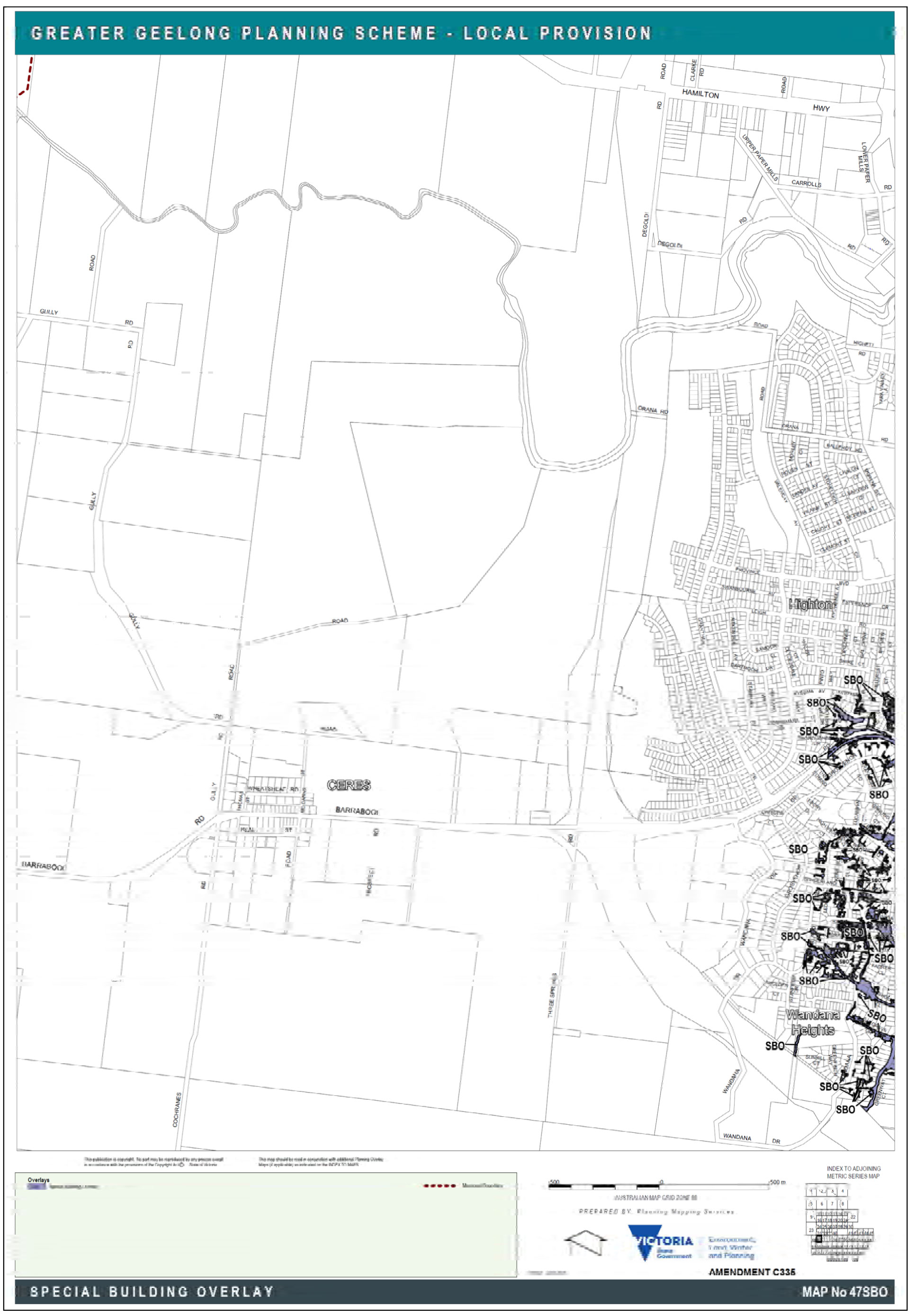
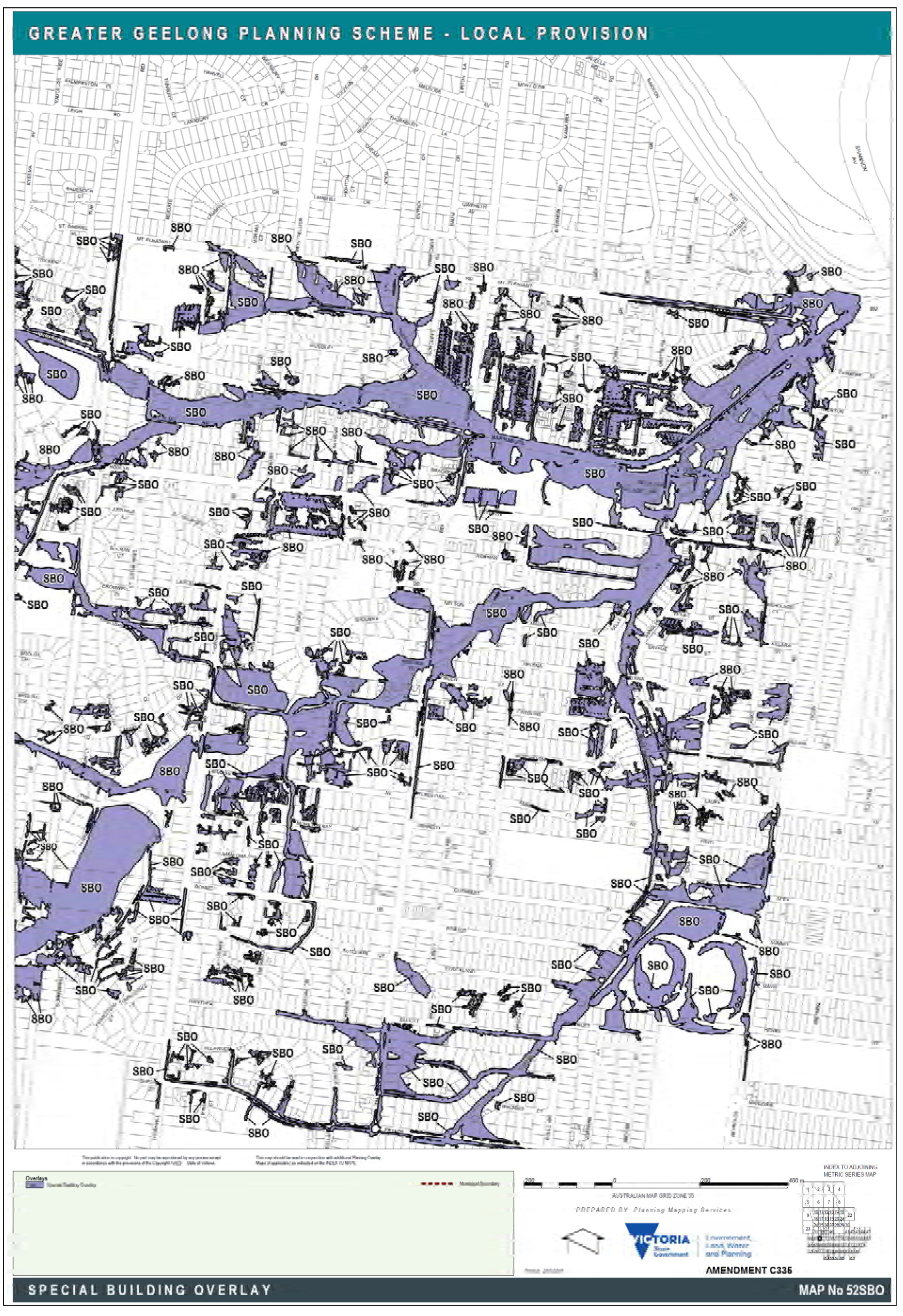
Amendment C335 proposes to extend coverage of the Special Building Overlay (SBO) to reflect the findings of the Highton drainage and flood study, recently undertaken and adopted by Council.
The study identifies the nature and extent of flooding in the Highton, Wandana Heights and Belmont areas.
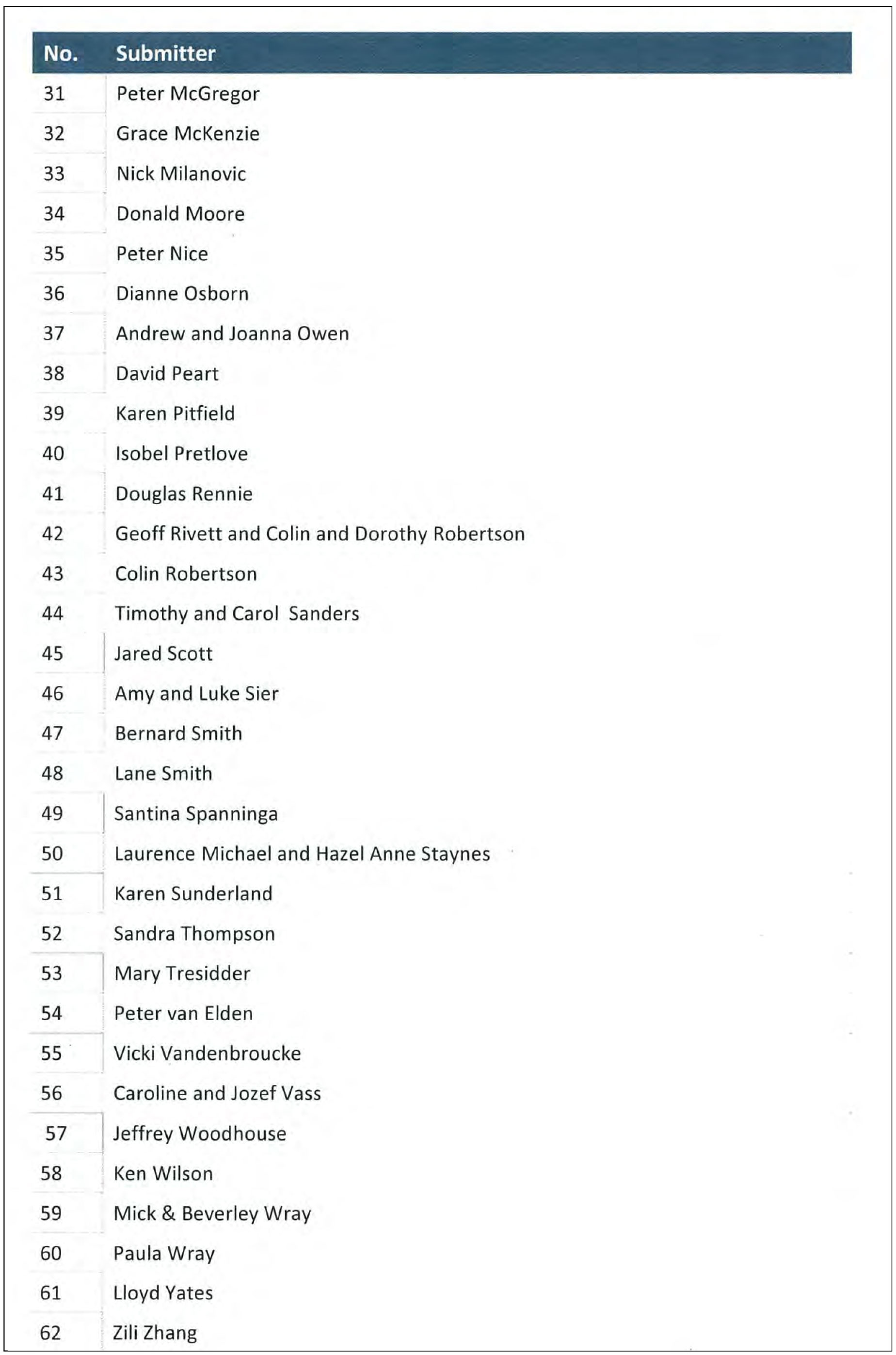
The exhibition of Amendment C335 resulted in the receipt of Sixty two (62) submissions from individuals seeking changes or objecting to the Amendment.
The exhibited Amendment, together with all submissions was referred for consideration to an Independent Panel appointed by the Minister for Planning, as required by the Planning and Environment Act 1987.
The Independent Panel has recommended that the Amendment be adopted as exhibited, with changes identified in Council’s submission to the Panel.
L Gardner moved, P Dorling seconded -
That Council:
Adopts Amendment C335 in the form as outlined in Appendix 1 and 2 to this report, consistent with the recommendation of the Planning Panel; and
Submits the adopted Amendment, together with the prescribed information, to the Minister for Planning requesting approval.
Carried.
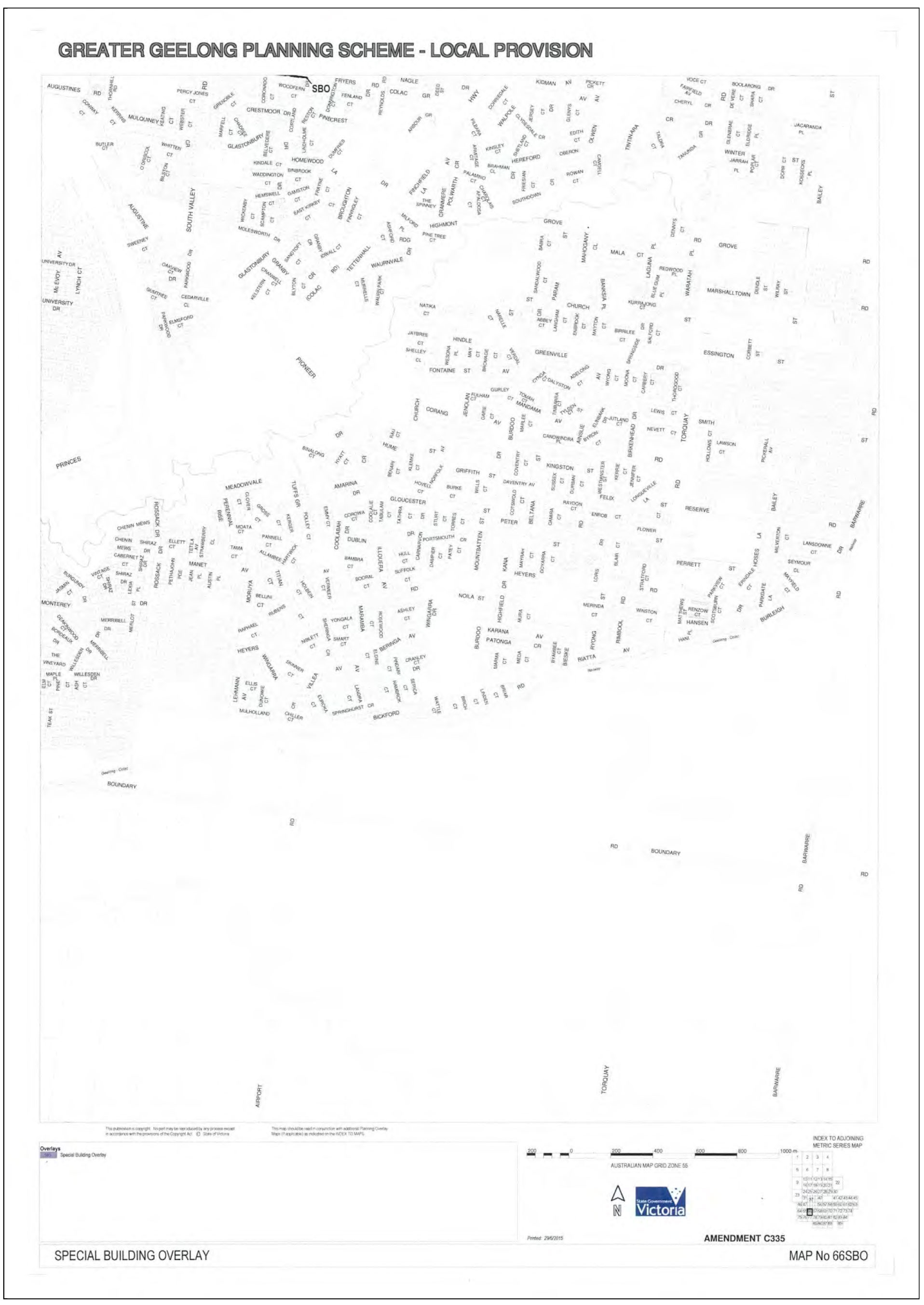
Amendment C335 seeks to apply the Special Building Overlay (SBO) to land subject to overland flow in the Kardinia Creek catchment. The areas affected by the Amendment are located in Highton, Wandana Heights and Belmont.
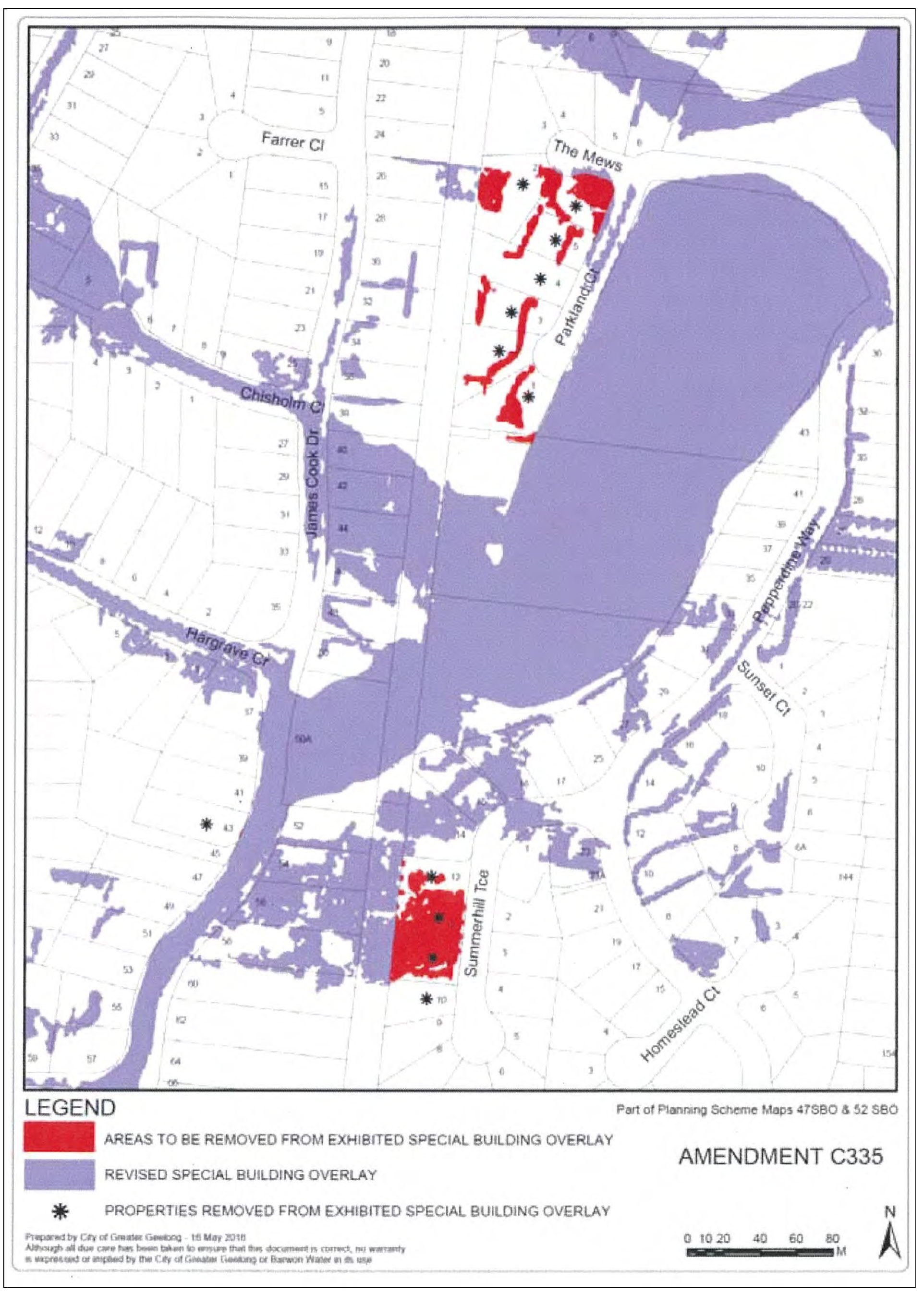
Appendix 2 to this report shows the exhibited extent of the SBO which is to proposed for adoption. The exhibited sites not proposed for adoption are identified in red, in Appendix 3.
The Amendment was exhibited for a one month period between 27th August 2015 and 28th September, 2015. Sixty two (62) submissions were received in response from individuals seeking changes or objecting to the Amendment.
Council considered the submissions under delegation and resolved to refer the exhibited Amendment and all submissions to an Independent Planning Panel appointed by the Minister for Planning.
A Planning Panel consisting of Chair Trevor McCullough, sitting alone, conducted a directions hearing at the Geelong City Hall on 7th June 2016 and a public hearing of the submissions at the Geelong Council Offices on 14th July, 2016. Council provided a detailed presentation to the Panel and 6 submitters made verbal presentations. Expert evidence on the flood modelling from Mr Joel Lister, an engineer from BMT WBM, was called by Council in support of its submission.
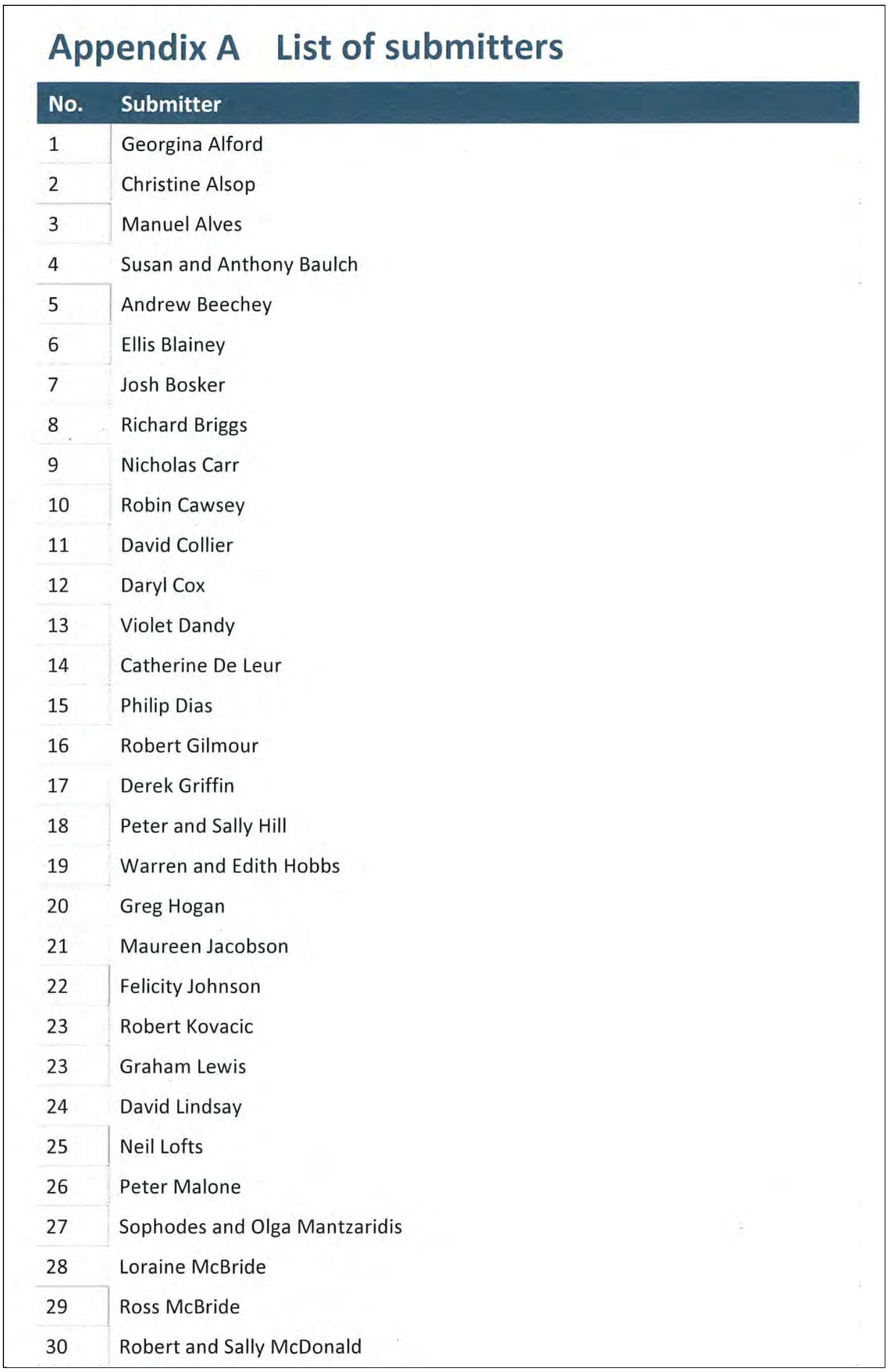
A list of submitters is included as Appendix 5 to this report.
The Panel report for Council’s consideration was received on 1st August, 2016, a full copy of which is available on the City website.
The Panel has assessed the Amendment in considerable detail, including the planning policy context, the strategic and technical basis for the Amendment, site specific issues and the points of submission put to it during the Hearing and as contained in the 62 written submissions.
Non-planning concerns raised by submitters
A number of written submissions expressed concern that the application of the SBO would cause them hardship, in that it would raise unnecessary apprehension of flooding on the part of prospective purchasers, leading to a reduction in demand for and, consequently the market value of properties as well as increasing insurance premiums.
As was confirmed by the Panel in its Report, there is long standing precedent that these concerns are not valid planning considerations, However, it would be trite to merely dismiss these concerns on that basis
Accordingly Council officers undertook in discussions with concerned submitters prior to the Panel hearing to include in this report comments that respond to these concerns.
For most of the 20th century the established method of house construction, utilised floors elevated well above natural ground level, on either timber/concrete stumps or brick piers. Such dwellings were largely unaffected by overland flows unless located in a low point of a natural flow path, as the relatively shallow flows, as modelled in the majority of this flood study, would either not peak above the floor level, and suffered minimal interruption, in that they could pass relatively unimpeded beneath the elevated floors.
Issues of speed, cost and skill levels in the building industry have however resulted in the increasing popularity of dwellings being constructed with ‘on-ground’ concrete slabs. This results in floors with minimal or, on sloping sites where the ‘cut and fill’ technique is utilised, negative freeboard, i.e. height above natural ground level. In such circumstances it is crucial that the SBO is applied, in order to ensure that these floors are built at sufficient elevation to avoid inundation.
While this may be seen as unfair by those whose homes have elevated floors, it is however necessary to apply the overlay on the basis that any future redevelopment of the site might utilise on-ground slab construction.
The application of the SBO at least has the advantage of clearly identifying which parts of a property are, or are not, affected by the SBO. As a result as part of the processes of due diligence and disclosure, vendors and prospective purchasers are able to easily identify the extent of potential flooding, relative to the footprint of the existing dwelling.
In cases wher`e, for example, the floors of dwellings are built on stumps or where the area affected by the SBO consists of a portion of the property containing, an elevated deck, it should be readily apparent to all parties that any overland flow of storm water to the extent identified by the SBO would be unlikely to have any adverse effect on the structure of the dwelling, its insurance risk, or the quiet enjoyment of the property by a prospective purchaser.
This transparency should assist bona fide potential vendors and purchasers to identify the extent of any ‘real world’ impact of potential inundation.
Panel Conclusions and Recommendations
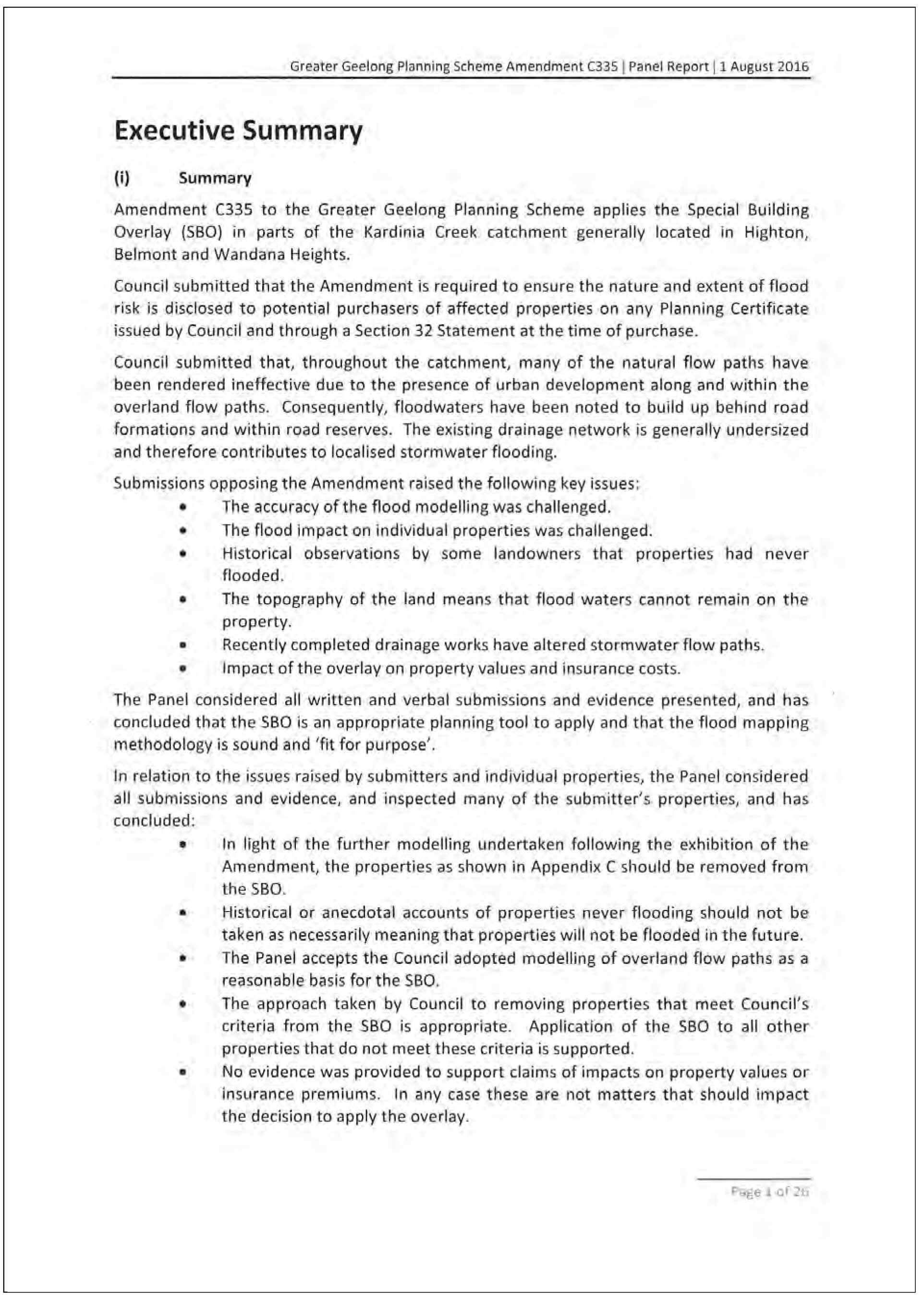
The Executive summary of the Panel Report is included as Appendix 4 to this report.
Based on the reasons set out in its Report, the Panel recommended that Amendment C335 to the Greater Geelong Planning Scheme should be adopted as exhibited, subject to the removal of sites identified by Council in its submission to the Panel as no longer requiring the protection of the SBO, either as a result of improvements to drainage infrastructure that have been undertaken since the study was undertaken, additional survey work or more detailed modelling. The exhibited sites that are to be not included in the adopted amendment are identified in Appendix 3 to this Report.
The application of the SBO will have no adverse environmental implications.
As the application of this overlay will facilitate the regulation of development on the affected land, it will provide a mechanism to ensure that such development does not generate adverse off–site environmental impacts as a result of changing the direction or extent of passage of water during flood events.
The application of the SBO will have no adverse financial implications for Council. While the Amendment will generate additional planning permit applications, these will be at least partially off-set by a corresponding decrease in applications under the Building Act for the specification of minimum floor heights.
The increase in the number of permit applications is not likely to be of a significant magnitude, relative to the total resources of Council’s Statutory Planning unit.
The Amendment is considered to be consistent with State and Local planning policies as set out in the Explanatory Report which forms part of the Amendment documentation.
The application of flood mapping consistent with the adopted flood and drainage studies will limit the potential for affected property owners to seek redress against Council, in the event that their property is adversely affected by flooding or inundation.
The Amendment supports the overall thrust of Growing our Economy and Sustainable Built and Natural Environment strategic directions in that it will clearly delineate the identified extent of likely inundation in a flood event and is designed to ensure that the floor levels of future development are at a level that they will not be adversely affected by a 1% probability flood event.
No Council officers involved in the consideration of this application or the preparation of this report and recommendation have a direct or indirect interest, in accordance with the Section 80C of the Local Government Act (the Act), to which this amendment relates. Peter Bettess, General Manager, Planning and Development owns a property affected by the Amendment. This indirect interest is not a conflict of interest as, under Section 77A(5) of the Act, the interest held does not exceed the interests generally held in common with a large class of persons.
There are no risks to Council associated with the application of the SBO, as proposed.
Until such time as the extent of the mapped flood areas are identified in the Planning Scheme there is a risk that prospective purchasers of land may not be aware of the potential flood issues. The application of the SBO to affected land will significantly reduce this risk.
The Amendment is expected to result in net community benefit, in that extension of the accurate identification of land affected by flooding through the application of the SBO will reduce community exposure to damage and loss of property due to flooding.
The Amendment does not impact on any basic human rights, freedoms and responsibilities as set out in the Charter. The process of exhibition of the Amendment provided for submissions by the public and the consideration of those submissions by an independent planning panel appointed by the Minister for Planning, in accordance with planning legislation. This report recommends that the Amendment be adopted in a manner consistent with the recommendations of the Planning Panel.
The Amendment has been exhibited in the normal manner and an opportunity provided for any submitter to appear before an Independent Panel appointed by the Minister for Planning.
Appendix 5 – List of Submitters
Source: |
Planning & Development - Strategic Implementation |
General Manager: |
Peter Bettess |
Index Reference: |
Application: Planning Scheme Amendment C347 |
This report considers the Amendment C347 Panel Report and recommends the Amendment be adopted by Council.
Amendment C347 is a Council-initiated Amendment proposing to update the Local Planning Policy Framework to reflect Council’s adopted 2015 Managing Development in Rural Areas Planning Policy Review.
The Planning Policy continues policies recognising that farming and the rural landscapes are very significant elements to the economy, identity, image and liveability of the municipality.
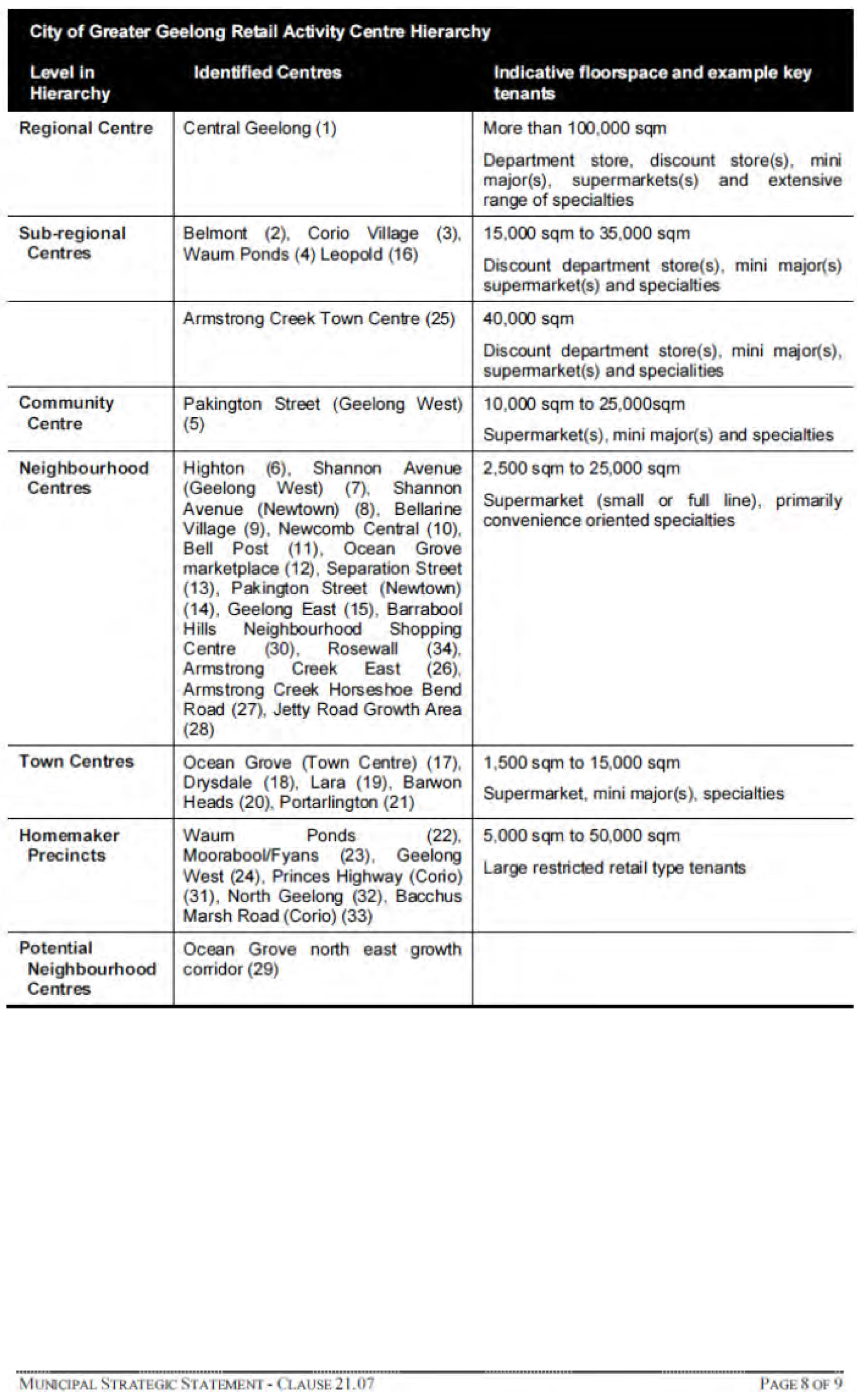
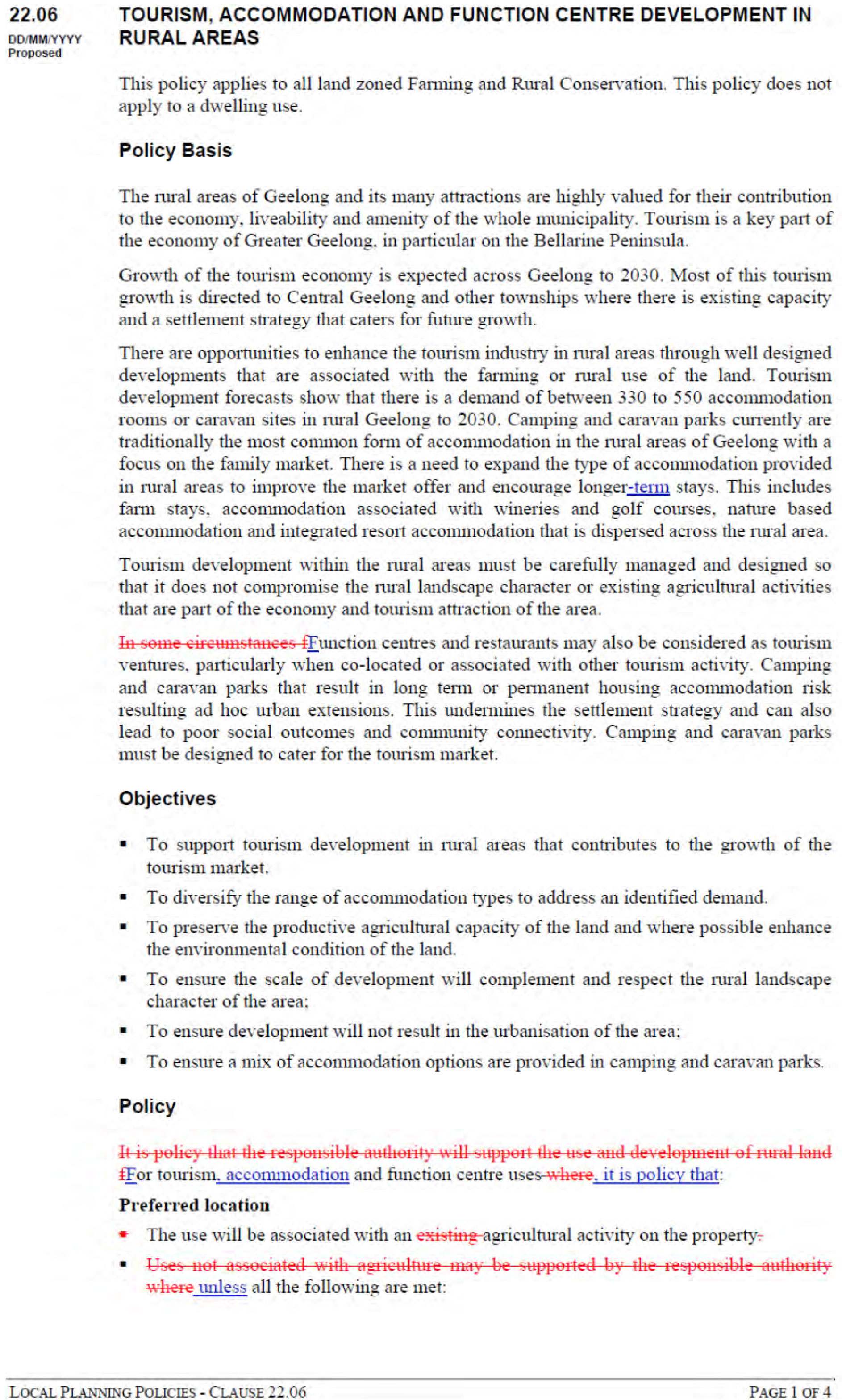
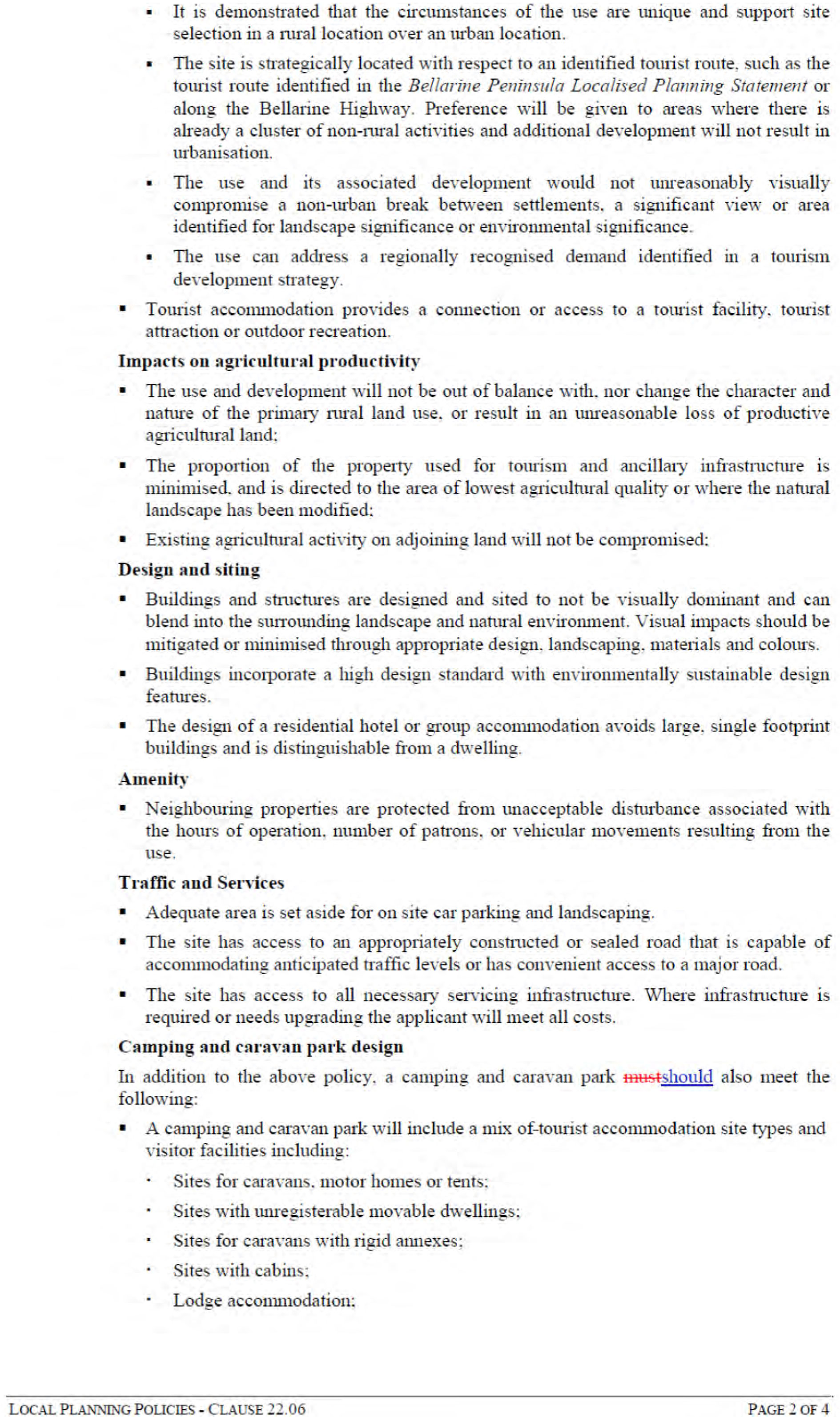
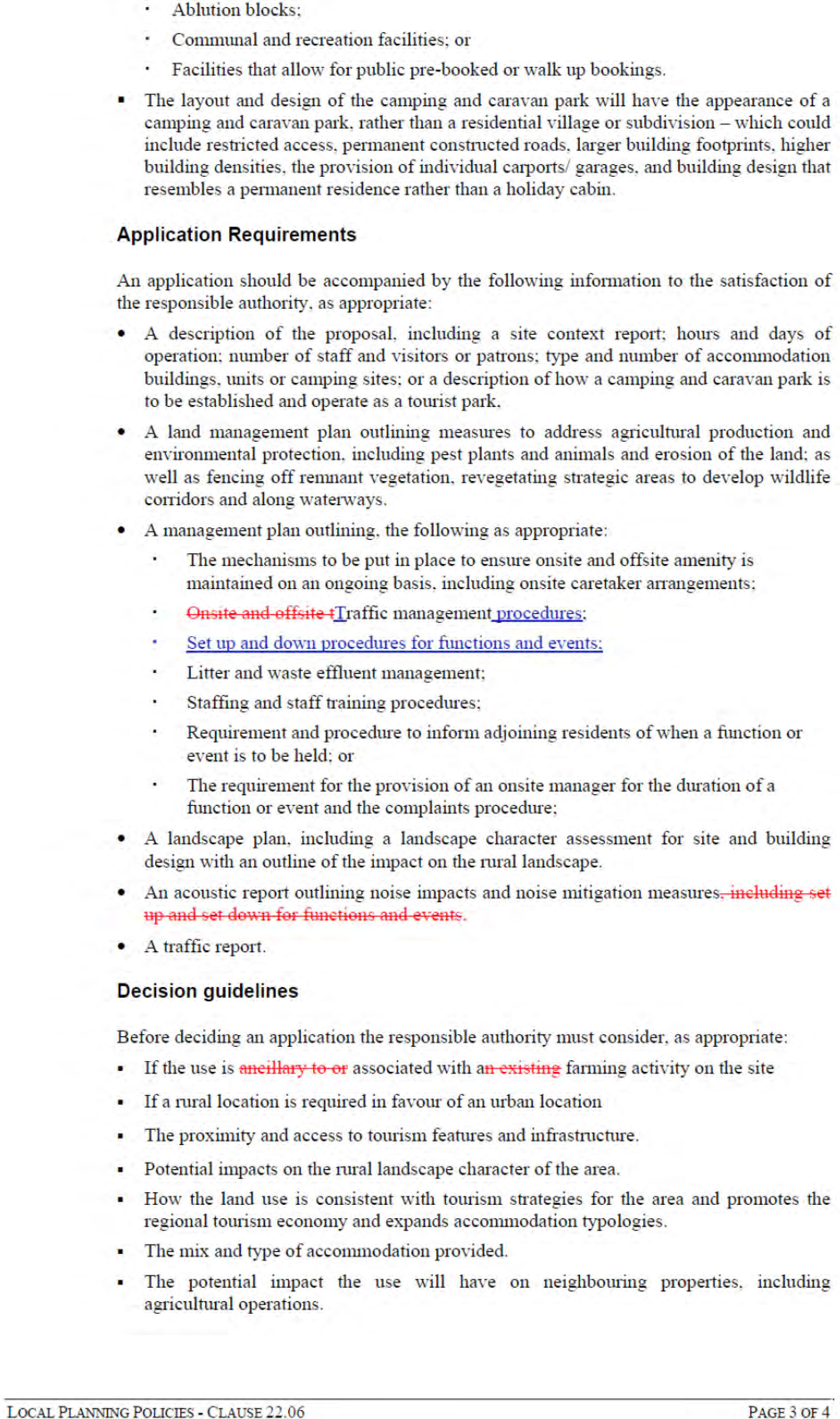
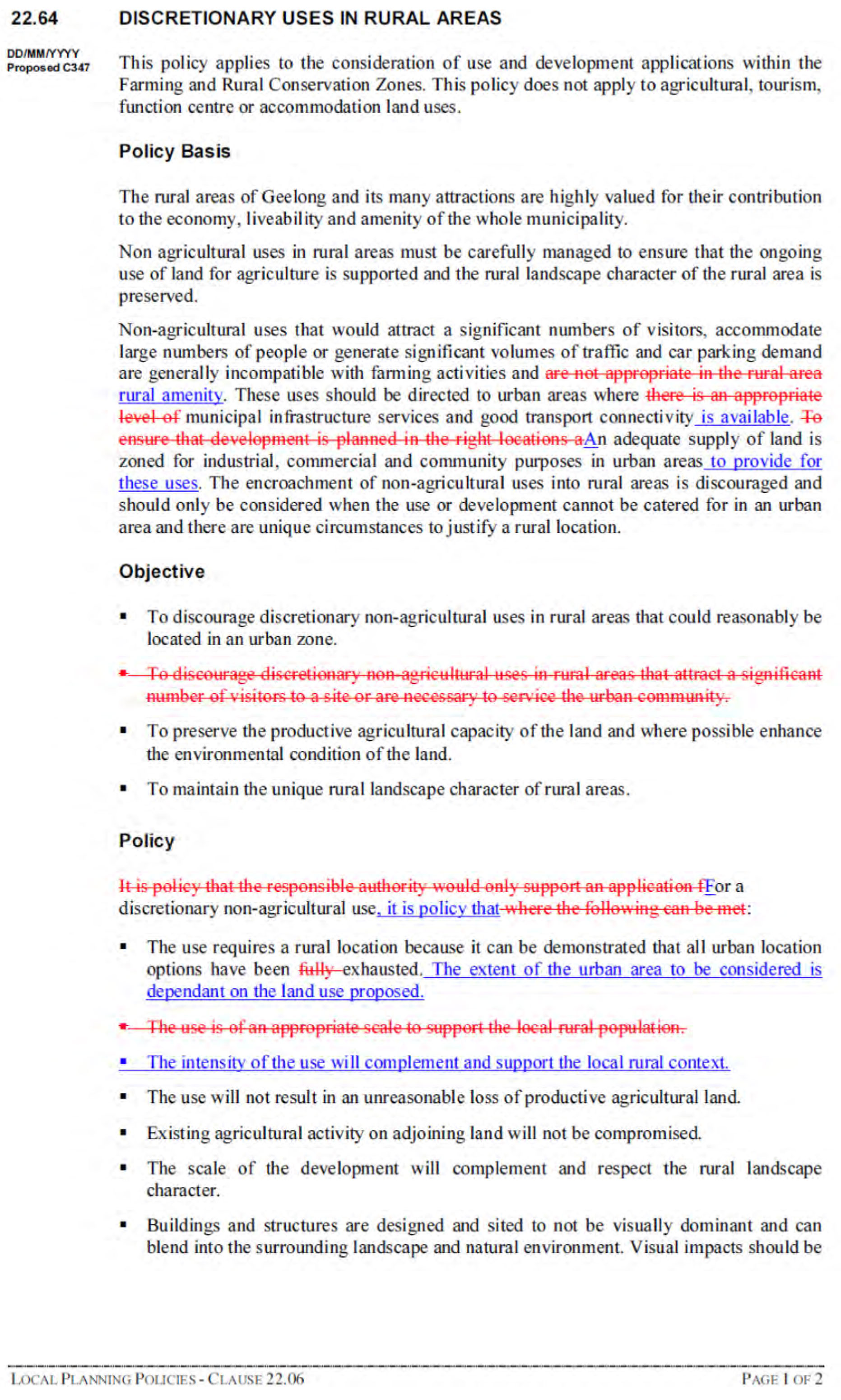
The Amendment implements two new policies in the Greater Geelong Planning Scheme: Clause 22.06 Tourism, Accommodation and Function Centre Development in Rural Areas; and Clause 22.64 Discretionary Uses in Rural Areas.
The Amendment responds to Victorian Government changes to the rural zones in 2013, where previously prohibited land uses are now allowed subject to planning permit.
The Amendment only applies to land zoned Farming and Rural Conservation.
The proposed new local policies clarify Council’s position on non-agricultural use and development, providing guidance to landowners, the community and decision-makers in the consideration of planning permit applications.
The policies balance ongoing agricultural activity with supporting non-rural uses that positively contribute to tourist and employment growth that have minimal impact on rural landscape character.
Amendment C347 was exhibited between 18 February and 29 March 2016 and resulted in the receipt of six (6) submissions. Council resolved under delegation on 17 May 2016 to refer the submissions to an Independent Planning Panel appointed by the Minister for Planning.
There were four outstanding objecting submissions by the time of the Panel Hearing in July 2016. Objectors at the Hearing submitted that the policies would unreasonably restrict non-agricultural and tourism land uses.
The Panel concluded that the Amendment is well founded and is strategically justified. The Panel considered the net community benefit of the Amendment far outweighs the impact on any individual property owner.
Overall the Panel supported the new policies subject to recommendations to improve drafting and clarity. The Panel did however recommend that the Clause 22.64 policy requirement for applicants to demonstrate that all urban location options have been exhausted before requiring a rural location, be removed.
Council officers disagree with the removal of this critical policy requirement for reasons discussed in the report.
It is recommended that the Amendment now be adopted and sent to the Minister for Planning requesting approval.
P Dorling moved, L Gardner seconded -
That Council:
Adopts Amendment C347 in the form as outlined in Appendix 1 of this report; and
Submits the adopted Amendment together with the prescribed information to the Minister for Planning requesting approval.
Carried.
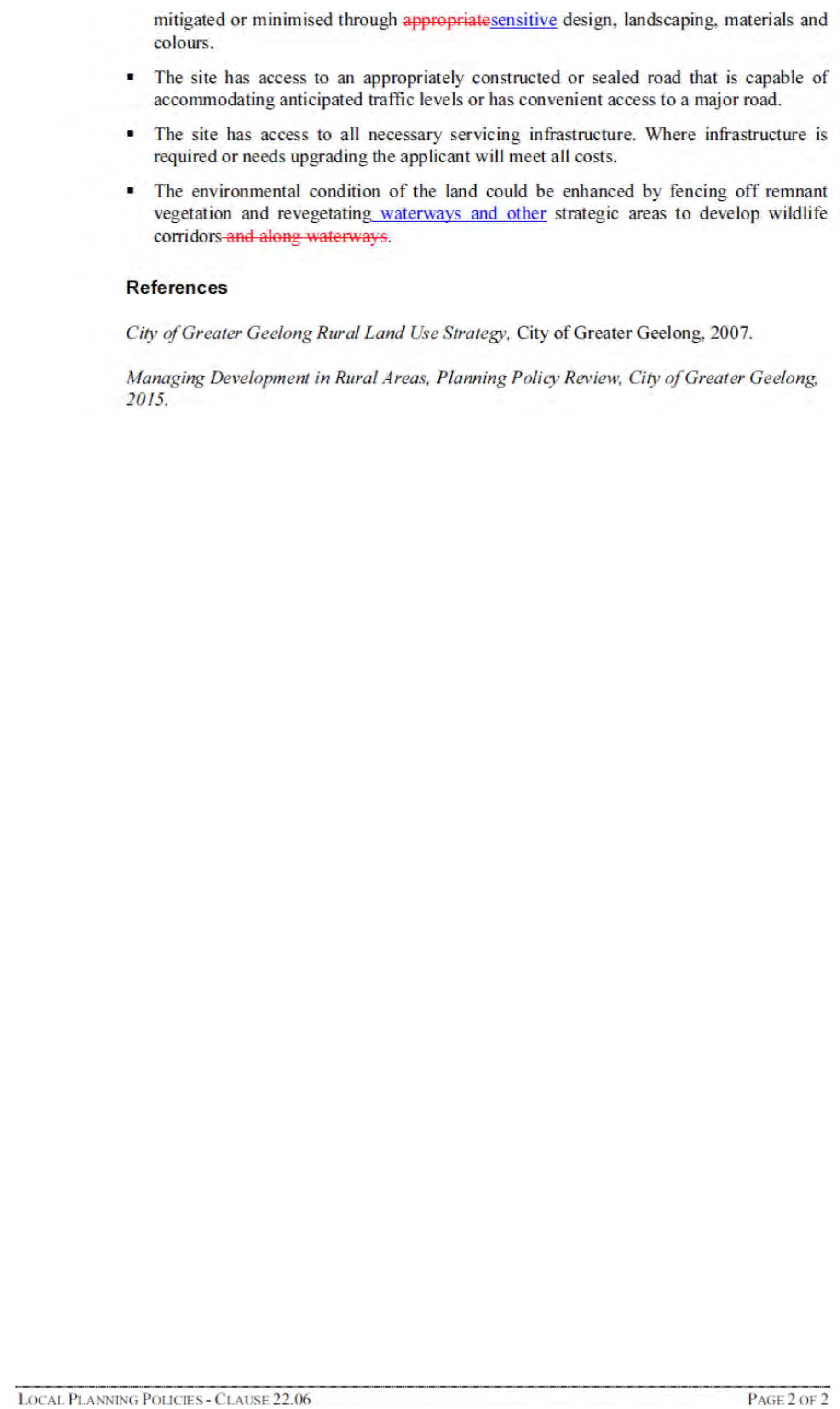
Amendment C347 is a Council-initiated Amendment proposing to update the Local Planning Policy Framework to reflect Council’s Managing Development in Rural Areas Planning Policy Review Final Report – September 2015. This policy was adopted by Council at its meeting on 8 December 2015.
The Amendment only applies to land zoned Farming and Rural Conservation. The new local policies clarify Council’s position on non-agricultural use and development and provide guidance to landowners, the community and decision-makers in the consideration of planning permit applications.
The new policies are:
Clause 22.06 Tourism, Accommodation and Function Centre Development in Rural Areas; and
Clause 22.64 Discretionary Uses in Rural Areas
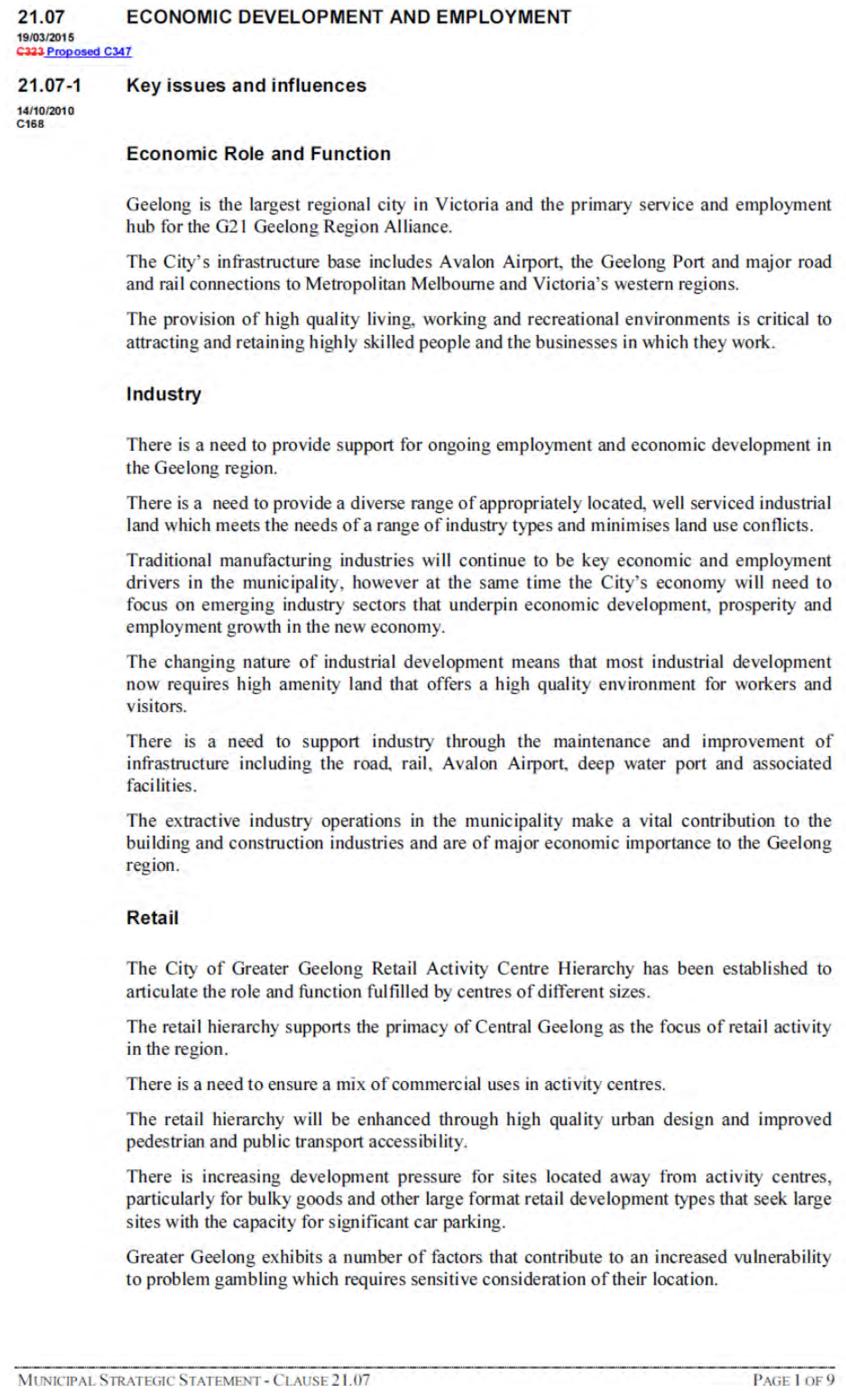
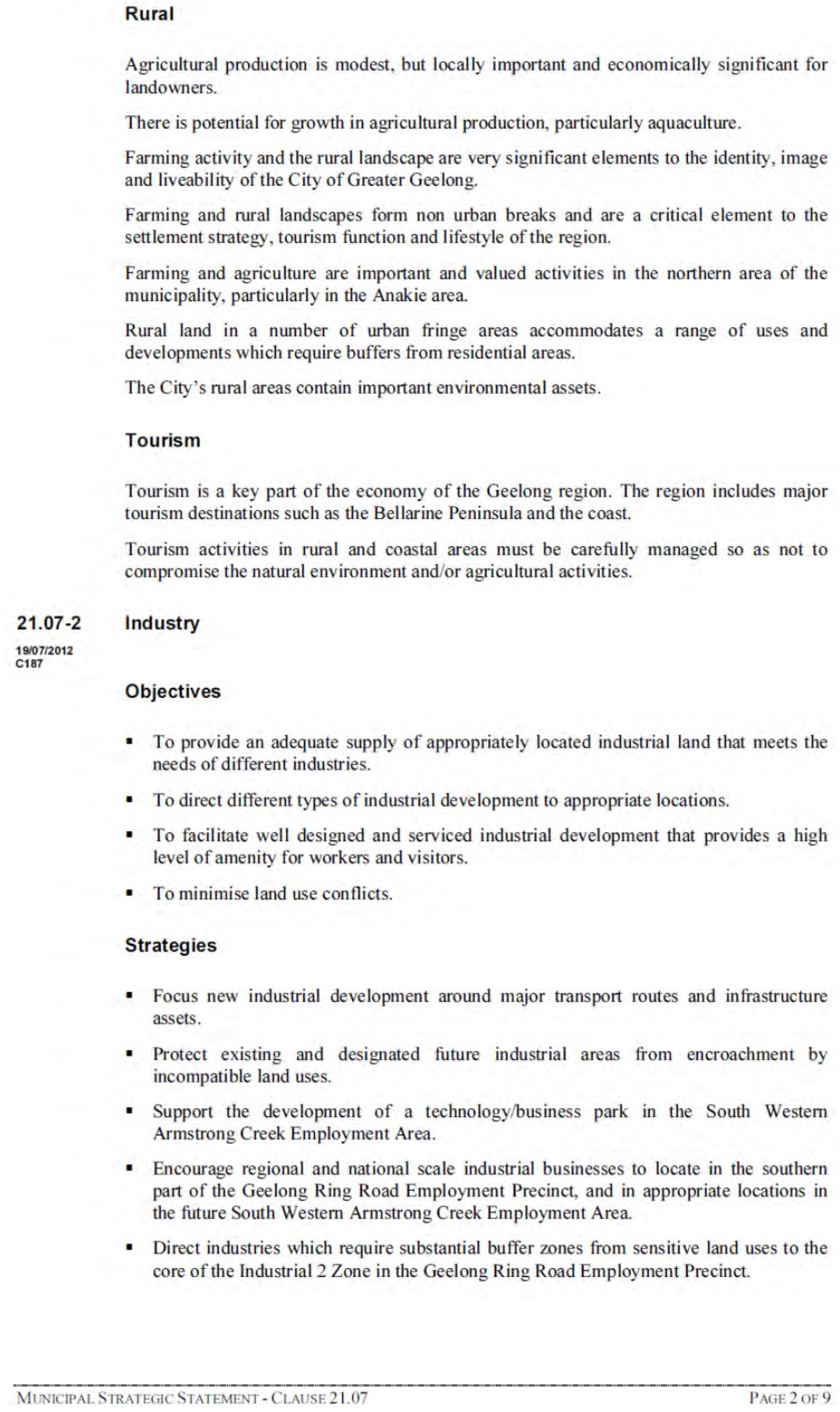
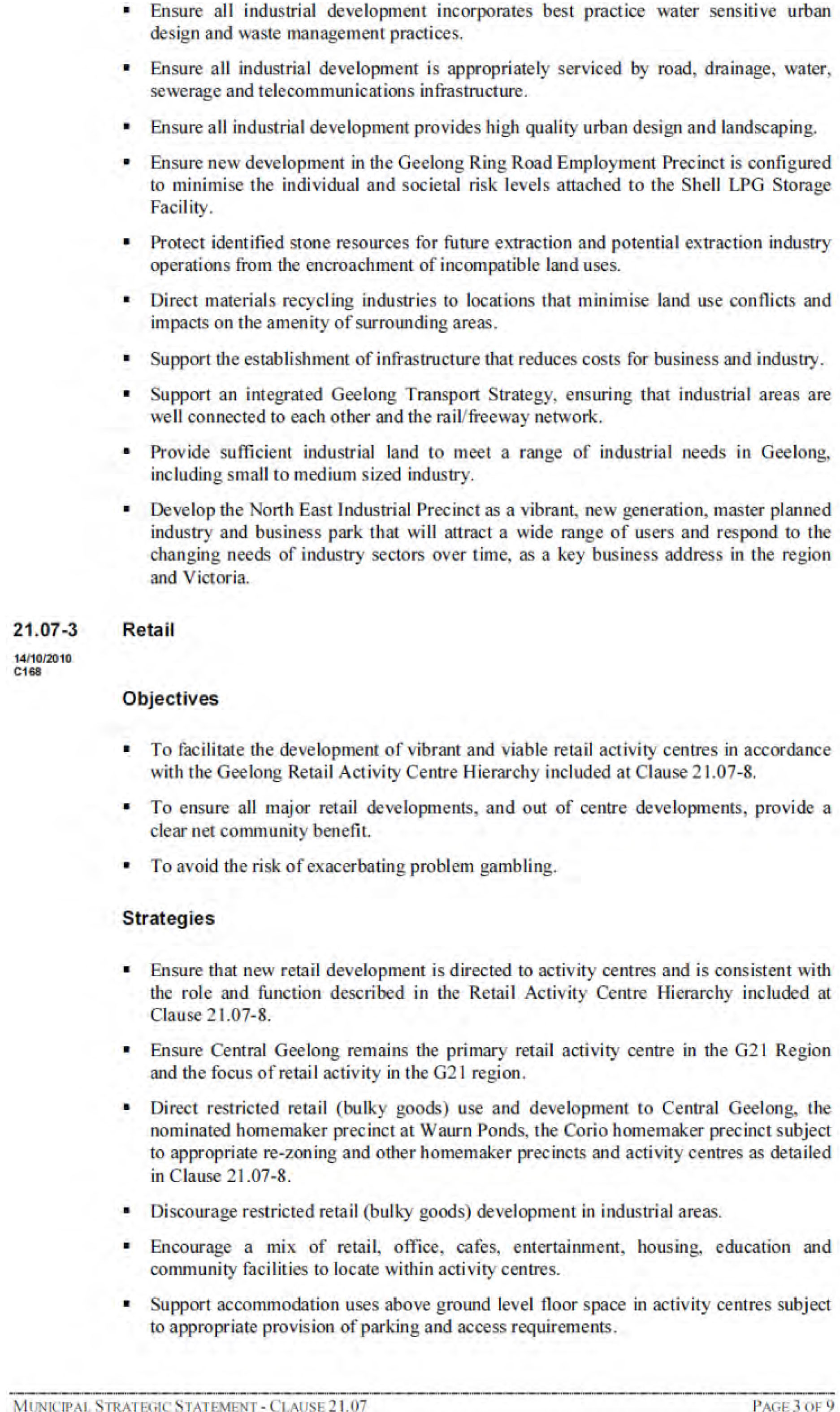
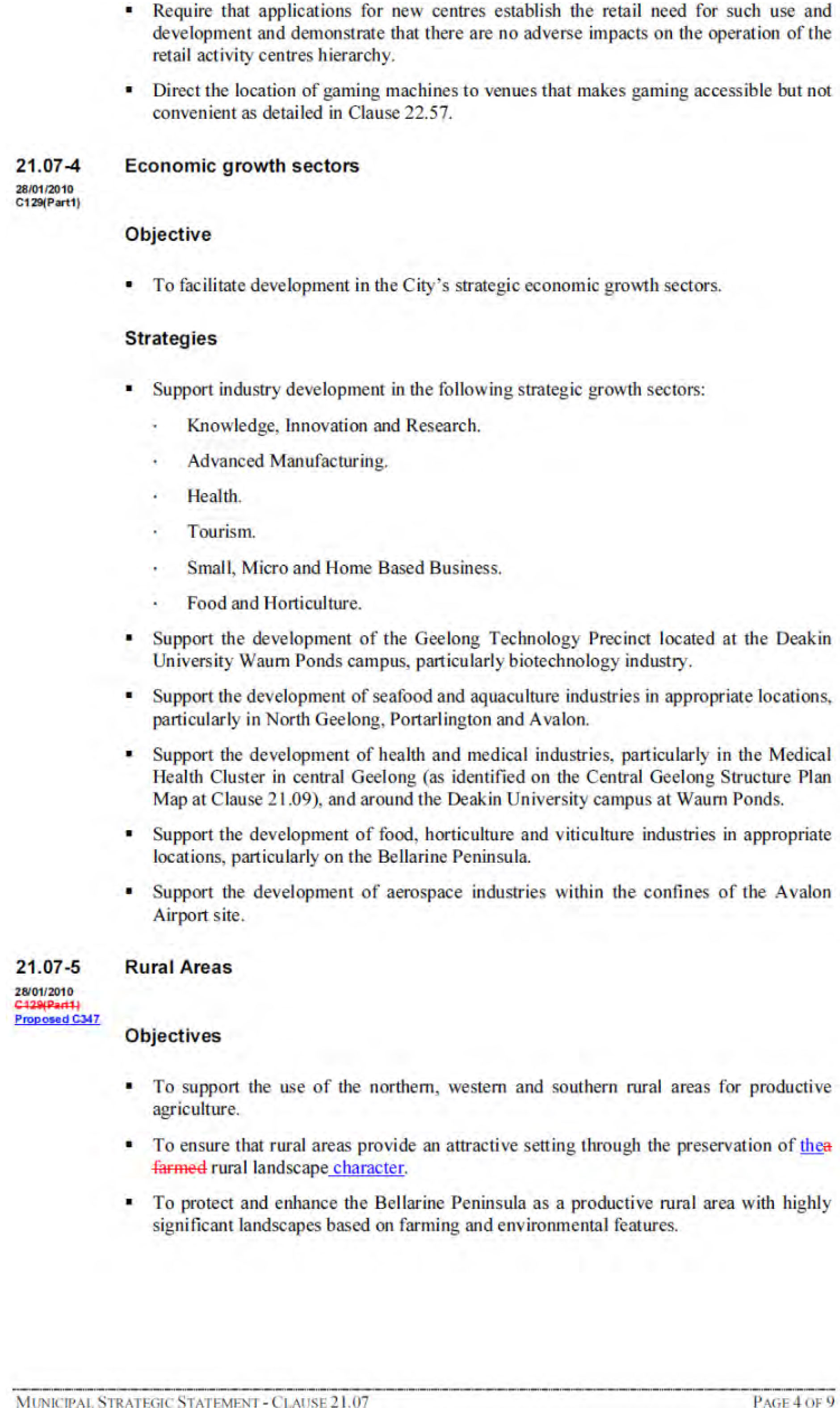
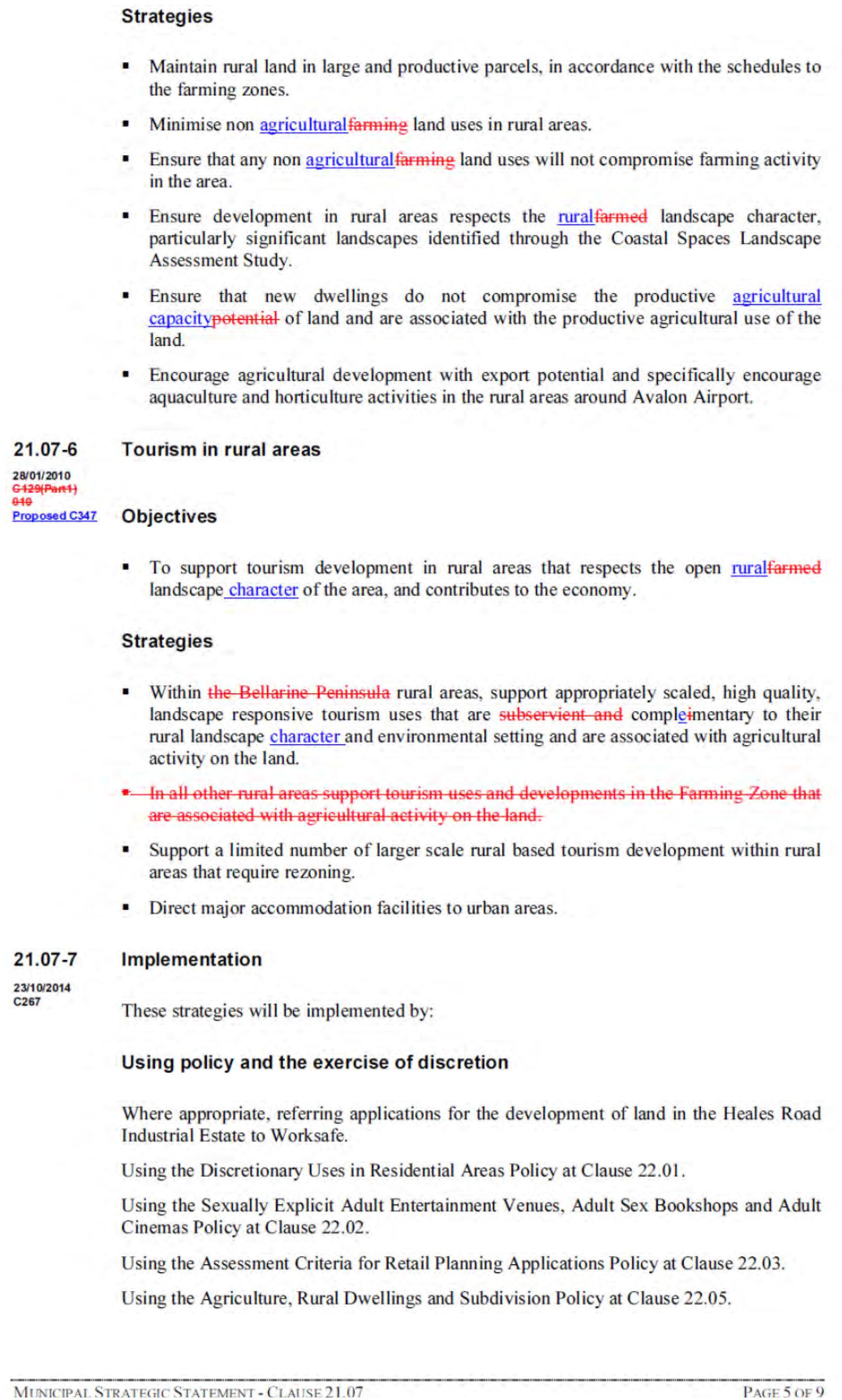
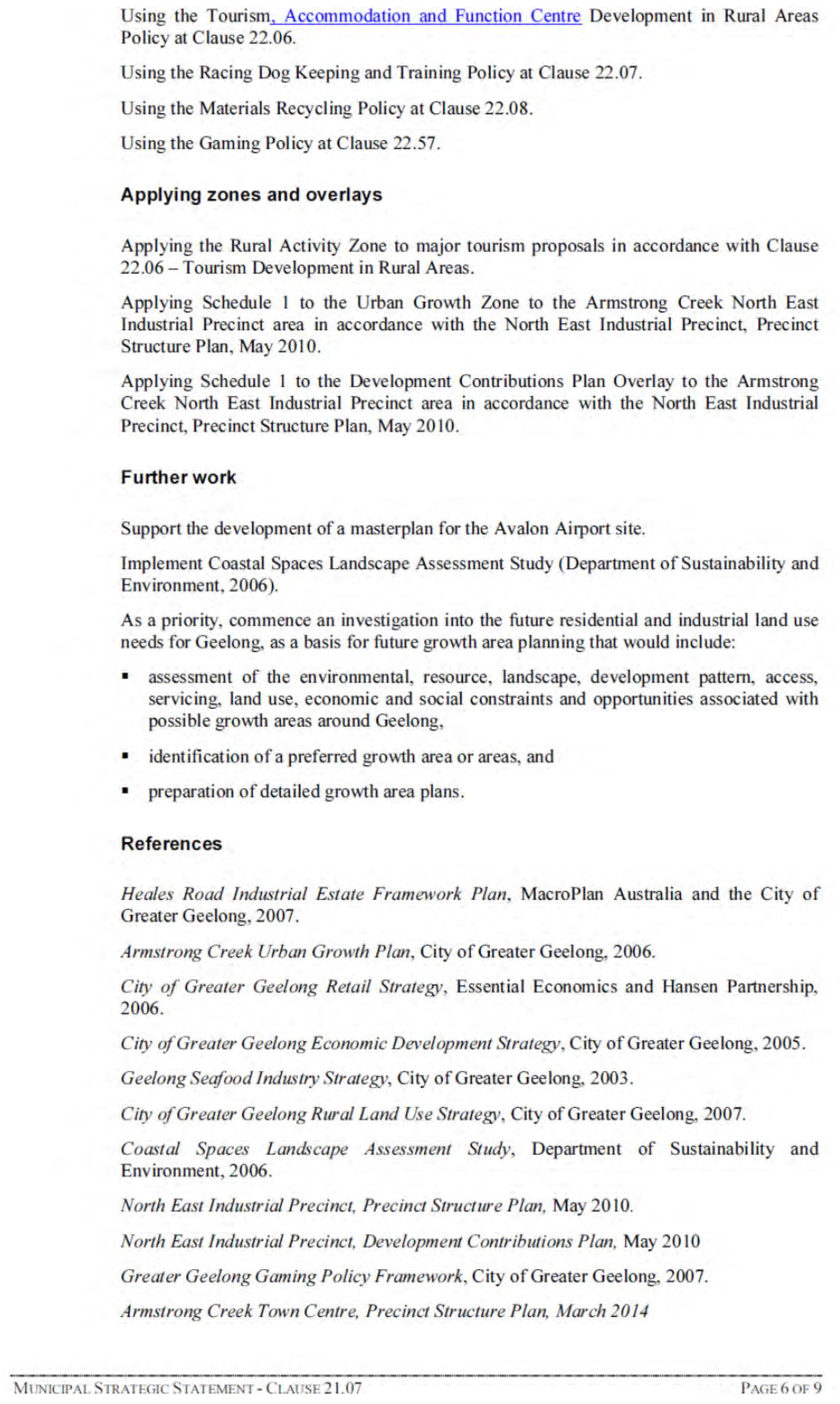
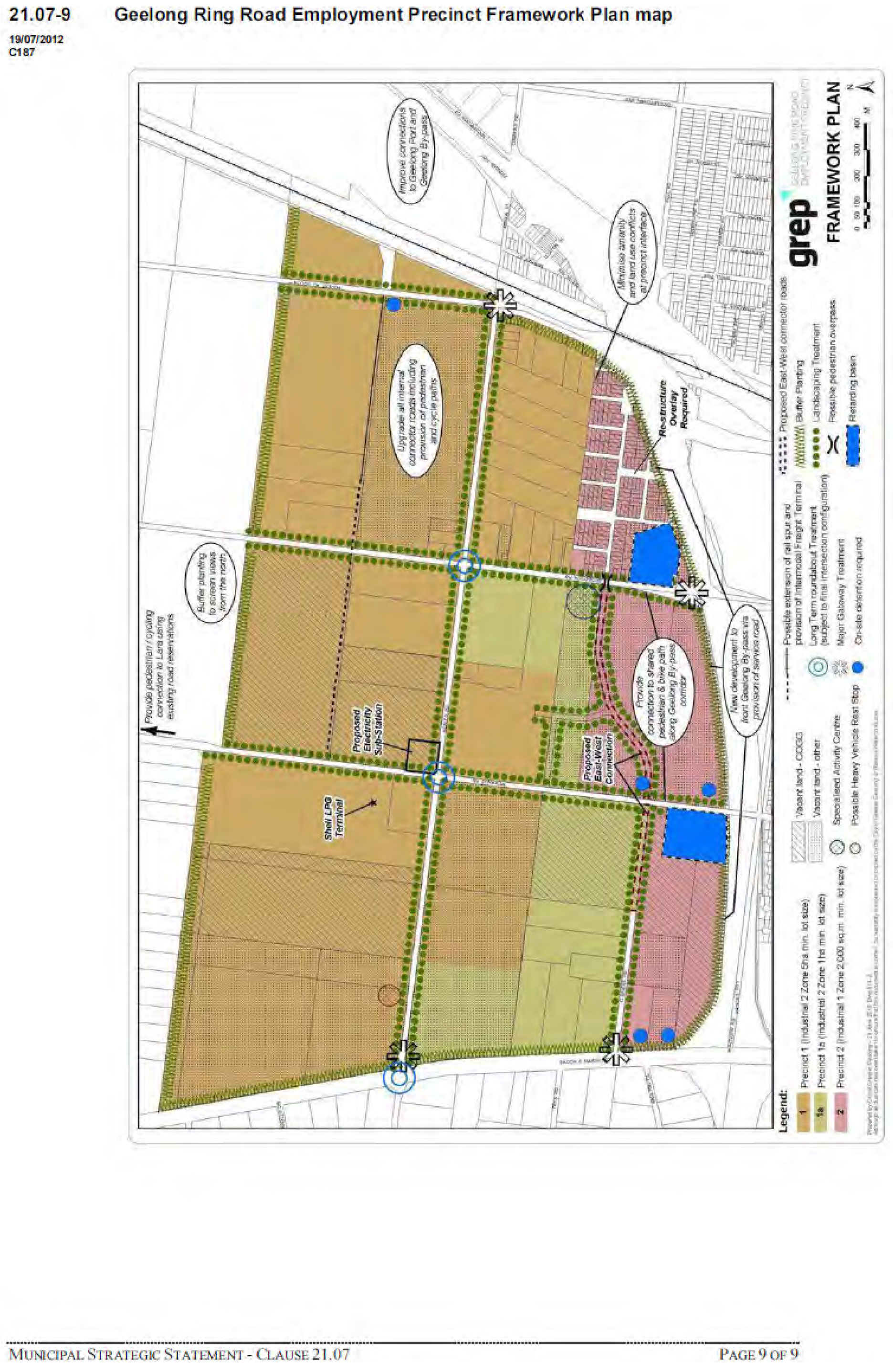
These policies also require some minor changes to Clause 21.07 Economic Development and Employment.
Public exhibition of Amendment C347 commenced on 18 February 2016 and closed on 29 March 2016. A total of six (6) submissions were received – five objecting. One objecting submission was subsequently withdrawn following agreement on revisions to Clause 22.06.
Under delegation Council then resolved on 17 May 2016 to refer the submissions to an Independent Planning Panel appointed by the Minister for Planning. The Panel Hearing was held at Geelong City Hall on 12 July 2016.
Senior Panel Member Con Tsotsoros conducted the Hearing. Parties in attendance included a Council officer, Ms Hicks of Counsel representing Bacchus Marsh Grammar, Mr Gibson of Counsel representing M Blackhall (Campbell Point House, Leopold) and Mr D More.
The Panel provided its report to Council on 10 August 2016.
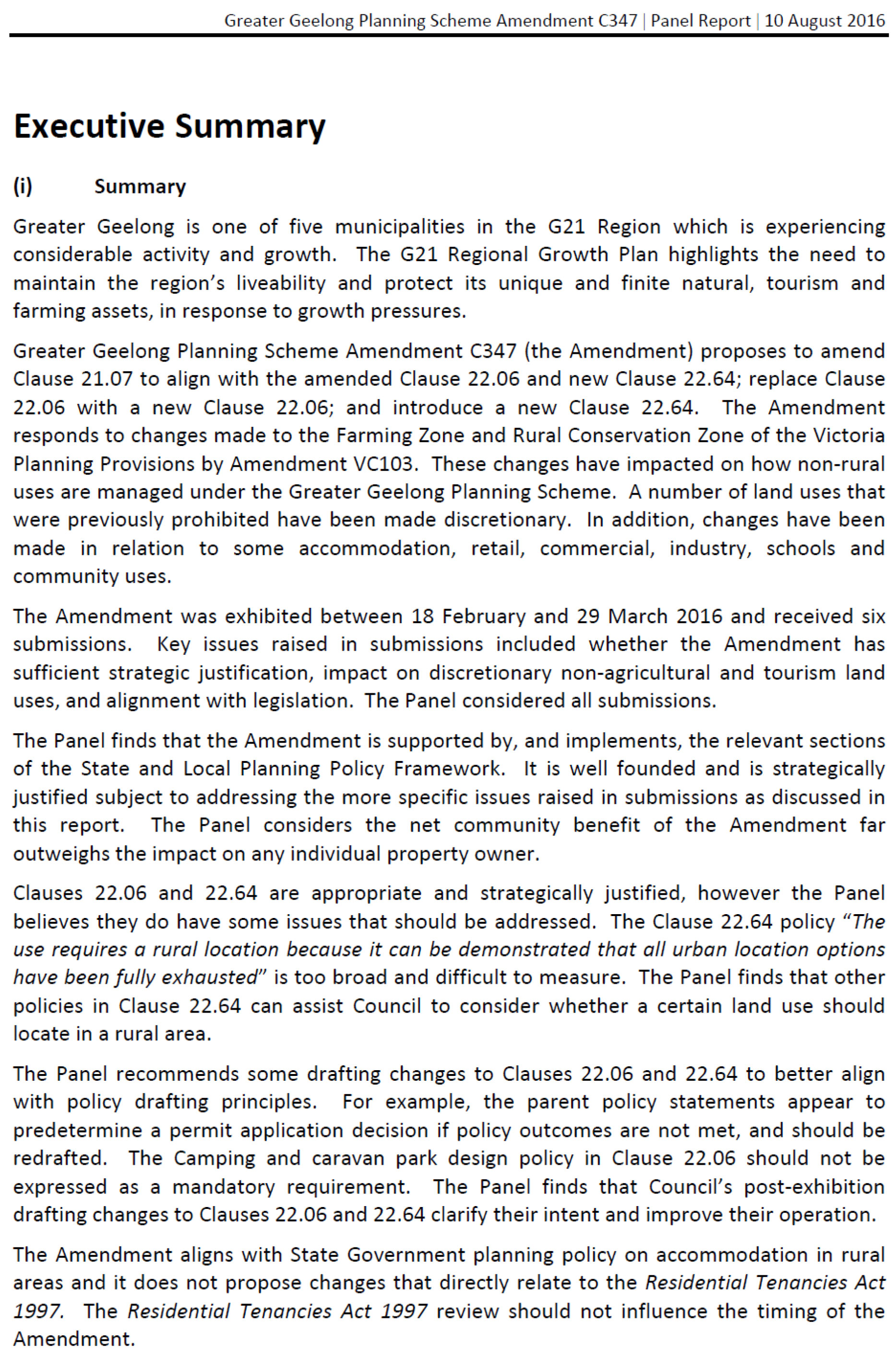
The key findings were:
The Amendment is supported by, and implements, the relevant sections of the State and Local Planning Policy Framework.
The Amendment is well founded and is strategically justified.
The net community benefit of the Amendment far outweighs the impact on any individual property owner.
Clauses 22.06 and 22.64 are appropriate and strategically justified, however the Panel believes they do have some issues that should be addressed. The Clause 22.64 policy “The use requires a rural location because it can be demonstrated that all urban location options have been fully exhausted” is too broad and difficult to measure. The Panel finds that other policies in Clause 22.64 can assist Council to consider whether a certain land use should locate in a rural area.
The Panel recommends some drafting changes to Clauses 22.06 and 22.64 to better align with policy drafting principles.
The Amendment aligns with State Government planning policy on accommodation in rural areas and it does not propose changes that directly relate to the Residential Tenancies Act 1997. The Residential Tenancies Act 1997 review should not influence the timing of the Amendment.
A copy of the Panel Report’s Executive Summary is in Appendix 2.
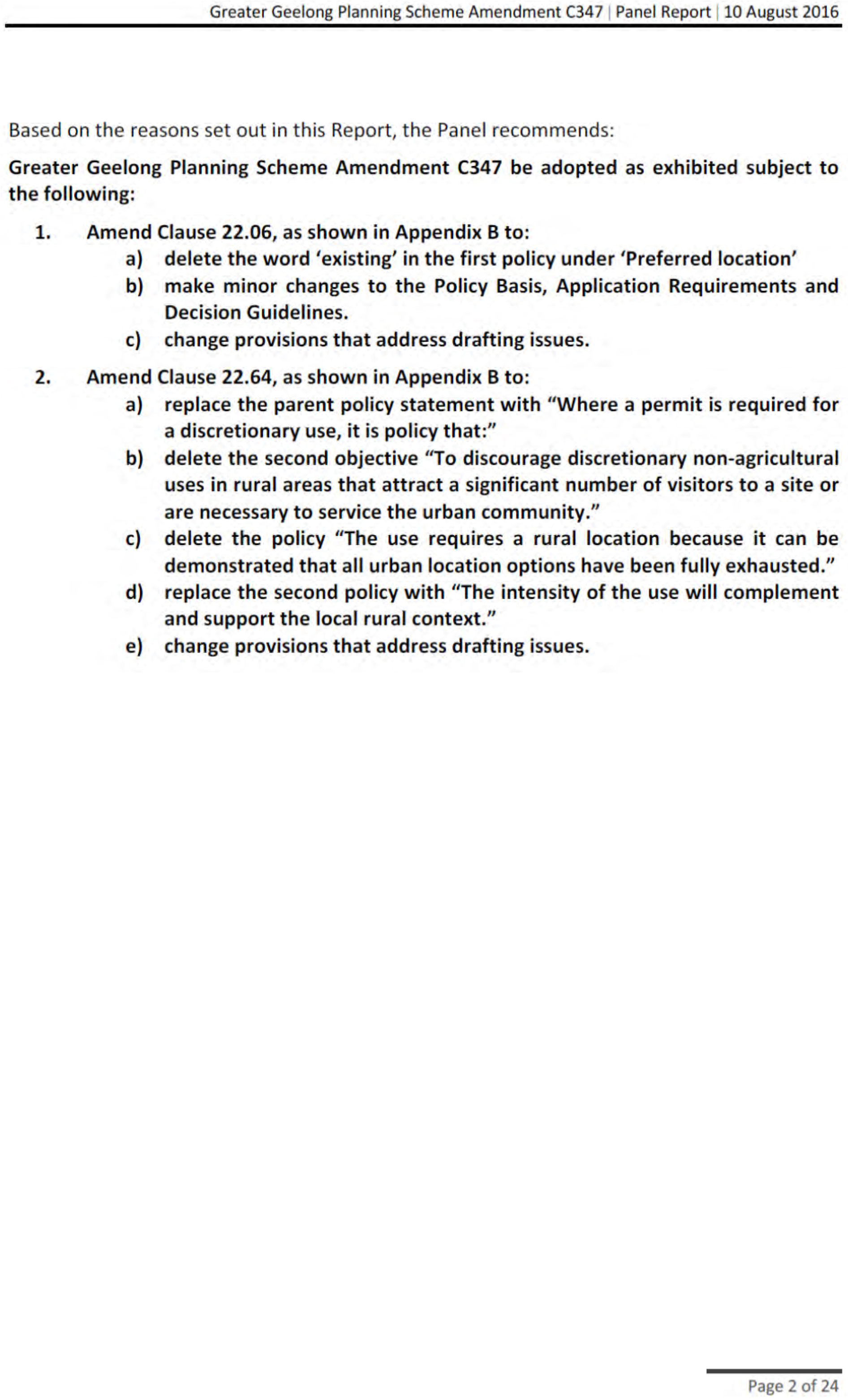
The Panel’s recommendations are accepted except for the recommendation to remove the Clause 22.64 policy requirement:
The use requires a rural location because it can be demonstrated that all urban location options have been exhausted. The extent of the urban area to be considered is dependant on the land use proposed.
The Panel considered this policy to be a broad strategic goal and difficult to measure. The Panel concluded: “taking into account the many possible discretionary non-agricultural land uses, the Panel considers it an unnecessary burden on applicants to have to prove each time that there is no opportunity to locate their land use in an urban area. The Panel finds that the suite of remaining policies can guide Council when considering a permit application that proposes a discretionary non-agricultural land use in a rural area without the need for this policy”.
Council officers are of the view that the intent of this policy is critically linked to the first objective, being: To discourage discretionary non-agricultural uses in rural areas that could reasonably be located in an urban zone.
It is not agreed that the policy is a ‘broad strategic goal’. Council’s position, through the objective, is that in the first instance discretionary uses are ‘discouraged’. As described in the Policy Basis, Council would only consider these uses if there is a unique circumstance and the use cannot be catered for in an urban area. In order for Council to determine whether a use cannot be catered for in an urban area, an applicant must undertake an assessment and demonstrate how this is the case. Hence the purpose of the policy statement. The policy is therefore prescribing what should occur and is not a broad level strategic planning issue.
The extent of the assessment will ultimately depend on the type of land use proposed. This may present as onerous on the applicant, but is a consequence of the overall objective to discourage; and is therefore considered to be a necessary and reasonable obligation.
Overall it is considered removal of this policy requirement would significantly water-down the purpose of Clause 22.64 and move towards a ‘support’ intent, rather than to discourage non-agricultural uses.
The Amendment as shown in Appendix 1 can now be adopted and sent to the Minister for Planning requesting approval.
There are no environmental implications as a result of adopting Amendment C347. Both policies contain objectives to preserve agricultural capacity, enhance environmental conditions and maintain rural landscape character.
No impact to budget.
The Amendment is consistent with the State Planning Policy Framework, particularly the following clauses: Clause 11 Settlement; Clause 12 Environment and Landscape Values; Clause 13 Environmental Risks; Clause 14 Natural & Resource Management; and Clause 17 Economic Development.
The Amendment is consistent with Council’s Rural Land Use Strategy – a critical policy document referenced at Clause 21.07 of the Municipal Strategic Statement. Clause 21.07-5 focuses on rural areas and contains objectives to support productive agriculture and preserve landscapes. A key strategy is to minimise non-farming land uses. Clause 21.07-6 supports tourism development in rural areas that respects farmed landscapes and contributes to the economy.
The Amendment supports the ‘Growing our Economy’ and ‘Sustainable Built and Natural Environment’ strategic directions of City Plan.
No officers involved in this report have any direct or indirect interest In accordance with Sec 80 (c) of the Local Government Act.
There are no notable risks associated with implementing the recommendation contained in this report.
The Amendment strikes a balance between retaining farmer’s ability to use the land for productive purposes and supporting landowners who seek alternative uses allowable in the zone.
The Amendment will not impact on any basic rights, freedoms and responsibilities as set out in the Charter. Planning legislation ensures an open community consultation process occurs, enabling people to freely express their views and obtain a fair hearing before an Independent Panel.
Council officers have written to the Amendment submitters to advise them of the release of the Panel Report. Submitters will be notified of the final decision of Council and the Minister for Planning.
The planning authority for this amendment is the Greater Geelong City Council.
The Greater Geelong Planning Scheme is amended as follows:
The Planning Scheme Ordinance is amended as follows:
In Local Planning Policy Framework – replace Clause 21.07 with a new Clause 21.07 in the form of the attached document.
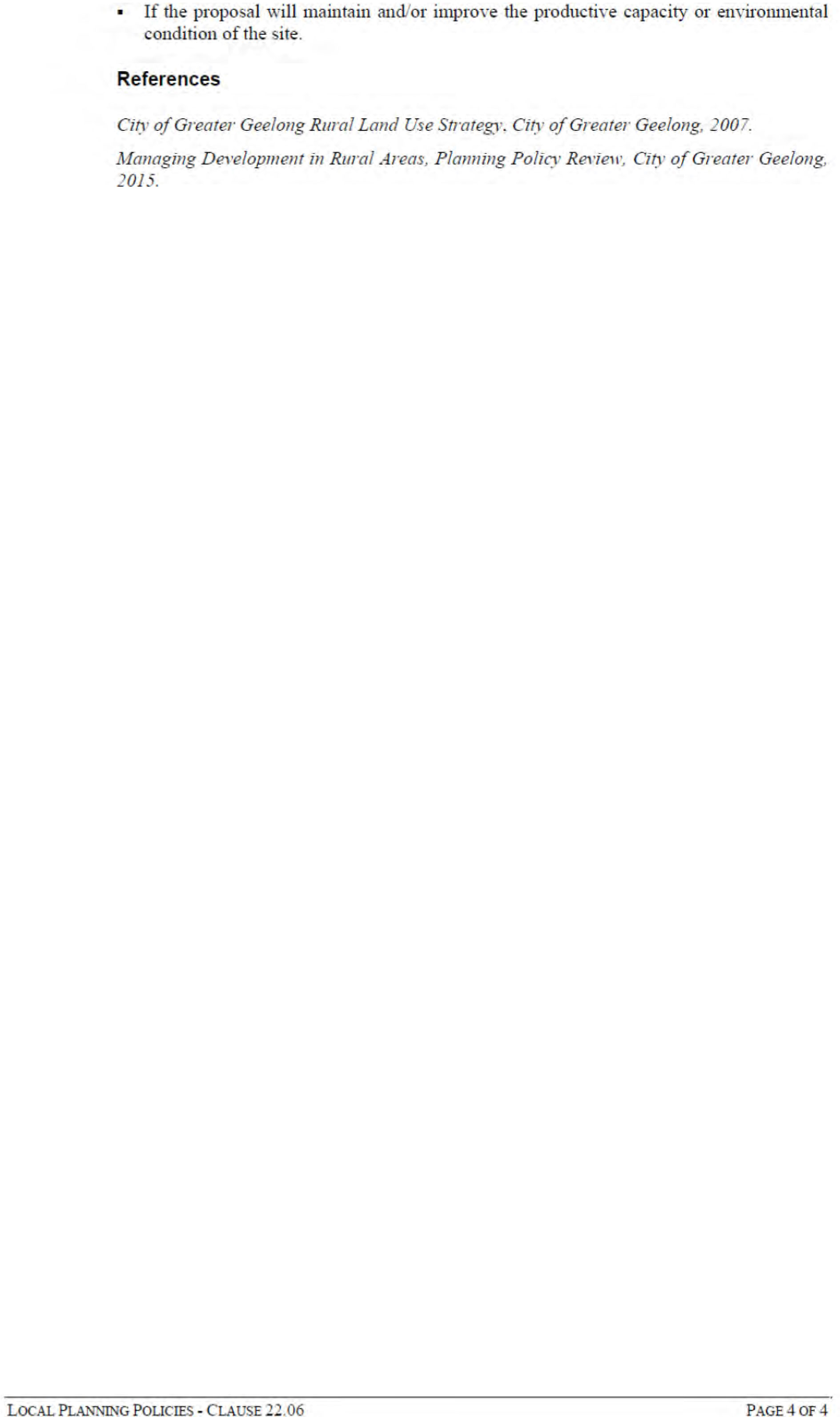
In Local Planning Policy Framework – replace Clause 22.06 with a new Clause 22.06 in the form of the attached document.
In Local Planning Policy Framework – insert a new Clause 22.64 in the form of the attached document.
End of document
Source: |
Chief Executive Office |
General Manager: |
Kelvin Spiller |
Index Reference: |
Subject: People and Organisation Development |
To provide an overview of the Community Action Plan developed by independent consultant Susan Halliday.
The Community Action Plan addresses findings in the Susan Halliday Culture Review and the Commission of Inquiry, and the expectation of business and community members for a transparent understanding of operational frameworks of Council, and service delivery and behaviour that is professional and ethical.
The Community Action Plan has six sections:
New approach – positive duty – an organisation wide approach that prioritises people, aiming for fair, safe and lawful treatment at all times
Cultural change – a clear vision, purpose statement and well understood values provide a solid platform for business interaction and community engagement, particularly during the period of cultural adjustment
Knowledge growth – increased communication across many platforms as part of regular interaction and involvement with business and community members
Enhanced frameworks – the core documents that provide information, parameters and guidance for business and community members
Support strategies – complaint and issue resolution systems and structure that are beyond standard
Monitoring – mechanisms to measure and understand external sentiment to facilitate and improve business and community relationships.
L Gardner moved, P Dorling seconded -
That Council endorse Susan Halliday’s Community Action Plan, noting that some of the actions have already been undertaken and that further actions will be incorporated into the organisation’s transformation change program.
Carried.
In early 2015 then CEO Gillian Miles, instigated a review into the workplace culture of the City of Greater Geelong.
The review included a broad ranging review of workplace culture and an employee survey, conducted by EY Sweeney and Susan Halliday respectively.
The Culture Review was made public in October 2015.
Susan Halliday committed to continue working with the organisation on three action plans to address the findings of the review: an Organisation Action Plan, Councillor Action Plan and Community Action Plan.
The Community Action Plan is the final of the three plans to be developed.
The Community Action Plan has been developed to address the findings of the Culture Review which was based on first person feedback received by Susan Halliday who conducted community sessions to independently inform herself about negative interactions people claimed that they had with Council staff, Council as an entity or councillors.
The Community Action Plan also takes into account the findings of the Commission of Inquiry and aligns with relevant corporate strategies. There are particularly strong relationships with the community engagement strategy and corporate communications strategy.
As a guiding approach to community and business interaction, the Community Action Plan is based on a structural framework that clarifies the roles, responsibilities and accountability of councillors, council officers and the organisation.
This framework has been considerably strengthened over the past six months through a new Councillor Code of Conduct (adopted by the Administrators 28 June 2016) provisions in The Local Government Amendment (Improved Governance) Act 2015 and a new Staff Code of Conduct (now being developed).
The Community Action Plan also notes the work underway to transform the organisation through education and training (knowledge growth), embedding purpose and values (cultural change), strengthened focus on complaint and issue prevention and resolution (support strategies), seeking feedback on interaction (monitoring) and the new organisation approach that underpins all of this work - positive duty.
The Commission of Inquiry noted the importance of building trustful relationships and communication between the Council and the community. The Community Action Plan will contribute to this outcome.
There are no environmental implications.
Initiatives underway and planned for the 2016-17 financial year are funded in the current budget. Future programs will be included in planning for the 2017-18 and future Budgets and included in the long term financial plan.
The Community Action Plan aligns and refers to the Local Government Act 1989 and a range of policies including Councillor Code of Conduct, Staff Code of Conduct, Community Engagement Policy, Social Media Policy, Records and Document Management Policy etc.
The actions outlined in this report are aligned with Council’s commitment to providing a safe environment for staff and good governance practice.
There are no officer direct or indirect interests with respect to this report.
The actions outlined in this report will minimise risk to Council.
The actions outlined in this report will ensure that safety and wellbeing concerns are being addressed, and contribute to the development and strengthening of good working relationships with business and the community.
We have taken into consideration the human rights relative to the subject matter of this report.
Development of the Community Action Plan is based on firsthand feedback and written submissions from business and community direct to Susan Halliday. The plan also takes into account the findings from the Commission of Inquiry which involved 56 private and public hearings, 109 hours of evidence, staff forums and written submissions.
As elements of the plan are progressed , communication will involve a range of methods including print, digital and community engagement/presentations.
Source: |
Investment & Attraction - Central Geelong Action Plan |
General Manager: |
Brett Luxford |
Index Reference: |
PRJ-16-1281 : Central Geelong Action Plan |
To provide an update on the implementation of the Central Geelong Action Plan. To acknowledge the achievements of the Central Geelong Task Force Section 86 Committee and review its operations in the context of the State-Council partnership.
The Central Geelong Task Force (II) was established by resolution of the Council on 28 January 2014 as a Special Committee under the provisions of Section 86 of the Local Government Act.
The purpose of the Central Geelong Task Force (II) (the Task Force) is to oversee the implementation of the Central Geelong Action Plan, the preparation of which was guided by the first Central Geelong Task Force Special Committee.
Substantial progress has been made on a number of major initiatives under the Task Force, including designs for the Malop Street green spine, laneways precinct design, transport and drainage strategies, city heart location and public realm strategy.
Tactical urbanism initiatives such as the Malop Street Lab and greening of the mall were also delivered under the guidance of the Task Force, improving the vibrancy and attractiveness of the CBD and changing community expectations of public spaces in the CBD.
The release of the Revitalising Central Geelong Action Plan by the State Government in July 2016 has expanded the program.
The Revitalising Central Geelong Action Plan builds upon the key initiatives progressed by the Task Force. Under this new governance context, the Task Force is no longer required.
K Alexander moved, L Gardner seconded -
That Council:
acknowledges the significant achievements of Central Geelong Task Force in setting the foundations for the revitalisation of Central Geelong;
writes to individual non-Council members to thank them for volunteering their time in contributing to enhancing the liveability and prosperity of the CBD; and
rescinds the Central Geelong Task Force Section 86 Committee.
Carried.
** Kathy Alexander, Chair, expressed the thanks of the community for the individuals who participated and gave of their time to improving outcomes for Central Geelong. They volunteered their time and provided their expertise free to the community. The initial appointment of community members to the committee on 10 June 2014 were Roz Hansen, Mark Edmonds, Rory Costelloe, Dan Simmonds, Nick Heath and Todd Devine.
Three of the Taskforce members, Roz Hansen, Mark Edmonds and Rory Costello have transitioned across to the Geelong Authority, so there is a continuation of local flavour into the work of the Geelong Authority.
The Taskforce members have worked closely with Council officers and have overseen a large number of initiatives which are all outlined in the report to Council. The announcement of the partnership with the Victorian Government in the delivery of initiatives across the Central Geelong Revitalisation Plan has now meant that there is no further need for the taskforce and as such it needs to be rescinded.
At its meeting on 1 June 2013, Council resolved to establish the first Central Geelong Task Force Special Committee under Section 86 of the Local Government Act to prepare a plan to support the revitalisation of Central Geelong. The Committee comprised of ten members, including State Government and Council representatives as well as urban planning experts. Finalised in December 2013, the Central Geelong Action Plan was subsequently adopted by Council on 28 January 2014.
On 28 January 2014, the Council also resolved to revise the Terms of Reference for the Central Geelong Task Force, conclude the term of the members and undertake an Expression of Interest process for a new Task Force committee.
On 10 June 2014, the Council resolved to appoint six external members to the Task Force: Roz Hansen, Mark Edmonds, Rory Costelloe, Dan Simmonds, Nick Heath and Todd Devine. The external members joined the Mayor, Councillor for Brownbill, Councillor (Transport Portfolio Holder) and CEO on the committee, filling ten of the eleven positions identified in the Terms of Reference.
The first meeting of the Task Force occurred on 10 July 2014. Since that time, 18 meetings have been held, with the Task Force establishing its own meeting schedule in accordance with Council’s adopted terms of reference. The Task Force meets on the second Friday of each month.
In May 2015, the Terms of Reference were revised by the Council, to reflect the powers of the Mayor under the Geelong Act (1993) to nominate a Chair of Section 86 Committees. An amendment was also made to clarify the powers of the Task Force to reallocate funds.
In August 2015, the State Government announced the creation of the Geelong Authority, as a body to oversee the implementation of Vision II in Central Geelong.
On 29 July 2016, the State Government released the Revitalising Central Geelong Action Plan. On 4 September 2016, the Minister for Planning approved revised Terms of Reference for the Geelong Authority, expanding the responsibilities of the Ministerial Advisory Committee.
Discussion
Over the past two years, the Task Force has overseen a number of significant initiatives and improvements in Central Geelong. These include:
Malop Street Green Spine concept development and schematic designs, including endorsement of the ‘botanic walk’ concept, widening of the footpath south side of the street and delivery of separated bike lanes along the length of the street;
Little Malop and Laneways concept development, including reintroduction of alfresco activity on both sides of Little Malop Street;
Little Malop Streetscape and Pedestrian bridge design and funding resolution, enabling delivery of a priority bike connection from Geelong West to Central Geelong (construction planned 2016/17);
Overseeing the ‘City in a Park’ initiative undertaken by City of Melbourne and Design Urban, setting a new vision for public realm improvements in the CBD and identifying catalyst projects;
Undertaking the Myers Street unifying works between Gheringhap and Moorabool Streets, the first demonstration project to illustrate ‘City in a Park’ principles;
Overseeing the development of a new public realm strategy for the CBD. In particular, the Public Realm Framework, sets out a higher quality materials, landscape and fixtures palette, reflecting Geelong’s modern identity and depth of history;
Delivery of the Malop Street Lab, a temporary tactical-urbanism installation between Moorabool and Yarra Streets, providing a new experience of the city’s streets and public spaces and shaping community expectations about the vibrancy of the CBD over summer 2015/16;
Enlivening Little Malop Central, through the installation of turf, transforming it into a more welcoming place for a wider range of people;
Significant progress on the City Heart project, including the launch of a month long gallery and consultation process to obtain input into the type and design of the space, as well as its location;
Initiating the CBD 40km/hr zone project, to increase safety for all road users and improve pedestrian and cyclist amenity within the city;
Endorsement of the CBD drainage strategy, including identification of major infrastructure projects such as the Gheringhap Street pipe to mitigate flood risks, unlock development potential of land and enhance design outcomes for the public and private realm;
Commissioning transport studies that underpin current work with State Government to resolve the overall transport network in Central Geelong;
Commissioning of the Market Assessment and Investment Attraction Strategy associated with the injury and disability sector (pending release);
Commissioning improvements to the civic car park façade, including repainting and banner installation.
These initiatives shape the future of Central Geelong: its look and feel, the way people move around the city and the quality of environment it offers to live, work, study, invest or visit. The planning and policy work overseen by the Task Force provides a firm basis for a number of initiatives identified in the Revitalising Central Geelong Action Plan and the work that will now be undertaken by the State Government and Council partnership.
There are no environmental impacts arising from this report.
There are no financial implications arising from this report.
A formal resolution from the Panel of Administrators is required to modify or rescind the Terms of Reference for the Section 86 Committee under the relevant provisions of the Local Government Act (1989).
The Central Geelong Task Force is a mechanism intended to implement the ‘Growing the Economy’ and ‘Sustainable and Built Environment’ through the revitalisation of Central Geelong and the implementation of Council’s Central Geelong Action Plan.
A decision to repeal the operation of the Task Force does not compromise Council’s ability to deliver on the outcomes described in City Plan.
No officers involved in this report have any direct or indirect interest in accordance with Section 80(c) of the Local Government Act.
There are no risks arising from this report.
There are no social impacts arising from this report.
The outcomes described in this report will not impact on any basic rights, freedoms and responsibilities as set out in the Charter.
As part of the review of the Task Force, a discussion was held with members at the conclusion of its meeting on 13 May 2016. In addition, a number of one-on-one conversations have been held since with the members.
Source: |
Strategy & Performance – Strategy & Program Delivery |
Acting General Manager: |
William Tieppo |
Index Reference: |
Corporate Strategy Reporting 2016 |
The Annual Report 2015-16 was submitted to the Minister for Local Government as per the requirement of the Local Government Act 1989, Section 131.
As per the Local Government Act 1989, the purpose of this report is for the Council to receive the Annual Report 2015-16.
Section 133(1) of the Local Government Act 1989 requires that the Council submit its Annual Report to the Minister for Local Government within three months of the end of the financial year.
The Annual Report for 2015-16 has been prepared and a copy was provided to the Minister on 26 September 2016.
The Annual Report has been prepared to comply with Section 131 of the Local Government Act 1989 that requires it to contain the following:
a report of operations of the Council;
an audited performance statement;
audited Financial Statements;
a copy of the auditor’s report on the performance statement, prepared under section 132;
a copy of the auditor’s report on the financial statements under Part 3 of the Audit Act 1994; and
any other matter required by the regulations.
In accordance with the requirements of Section 132 of the Local Government Act 1989 the nominated Principal Accounting Officer of Council, two Councillors (Administrators) and the Chief Executive Officer have signed the Performance Statement, Financial and Standard statements.
The Performance Statement and Financial Statements have been finalised and the Auditor General’s Report on these has been received.
After the Annual Report has been submitted to the Minister, Council is required [(under Section 133(2)] to give public notice that the Annual Report has been prepared and can be inspected at Council Offices.
Section 134 of the Local Government Act 1989 also requires the Council to consider the Annual Report at a meeting of Council and that 14 days public notice must be given of this meeting.
On 8 October 2016 a public notice was published in local newspapers advising of the availability of the Annual Report for viewing and the intention to discuss the Annual Report at the Council meeting on 25 October 2016.
P Dorling moved, L Gardner seconded -
That Council receives the 2015-16 Annual Report (Appendix 1) in accordance with Section 134 of the Local Government Act 1989.
Carried.
Council approved “in principle” the Financial Statement of Accounts, Standard Statements and Performance Statement and authorised the signing of the Accounts subject to Auditor General requirements on 6 September 2016.
The Auditor-General has signed the accounts and issued his report stating that the accounts fairly present the financial position of the Council and comply with accounting requirements and the Local Government Act 1989.
A copy of the Annual Report together with the Report of Operations, Audited Performance Statement and Financial Statements was provided to the Minister for Local Government on 26th September 2016.
Under Section 134 of the Local Government Act 1989, the Council must consider the annual report at a meeting of Council as soon as practicable after the Annual Report has been sent to the Minister.
The Annual Report is a comprehensive review of highlights and achievements for 2015-16 financial year.
Under the Local Government Act the Council is required to give public notice when the Annual Report is available for public inspection and is also required to provide 14 days notice of when it will be considered at a Council Meeting.
On Saturday, 8 October 2016 Council gave public notice that:
Council had prepared the Annual Report for the financial year to 30 June 2016 and that copies containing the following information contained within the Annual Report were available from the Council’s website and Customer Service Centres:
A report on Council’s operations during the year;
Audited Financial Statements for the financial year; and
Audited Performance Statement for the year.
The Annual Report, including the Performance and the Financial Statements, is to be received at the Council meeting to be held on Tuesday, 25 October 2016 commencing at 5:30 p.m.
The Annual Report addresses the City’s achievements in the Sustainable Built and Natural Environment strategic direction and reports on actions undertaken in 2015-16 and progress indicators.
The Annual Report includes a copy of the City’s Audited “Financial Statements” that have been the subject of a previous report to Council.
Policy/Legal/Statutory Implications
The recommendation and procedures outlined in this report conform to the requirements of the Local Government Act and Regulations.
Council has given public notice that the Annual Report 2015-16 is available for public inspection and provided 14 days notice of a meeting to consider the report.
City Plan 2013-2017 is the guiding document for the 2015-16 Annual Report. The Annual Report provides an update on the achievements under the Community Wellbeing, Growing Our Economy, Sustainable Built and Natural Environment and How We Do Business strategic directions.
There are no direct or indirect interests.
There are no identified risks arising from this report.
The Annual Report provides a report to the community on the Actions and Initiatives undertaken during the reporting period.
In addition to the Statutory Financial Reporting, the Annual Report provides information to the community on how the resources of the City have been allocated between the Social, Environmental and Economic needs of the community.
This information is presented in the City’s adopted Planning Framework of the four strategic directions being:
Community Wellbeing
Growing Our Economy
Sustainable Built and Natural Environment
How We Do Business.
The 2015-16 Annual Report will be made available to the community in a number of formats satisfying accessibility requirements:
Hard copies will be available for viewing at all Customer Service Centres
Electronic versions in MS Word, MS Excel, PDF and eText (for the visually impaired) will be available online
Hard copies can be requested and mailed out on request
All images in the final design version that feature staff or members of the community have had photo releases signed.
The Council’s Annual Report 2015-16 is a primary communication document that has been made available for public inspection in draft form.
A copy of the report will also be accessible via the City’s internet site and at Council’s Customer Service Centres.
Source: |
Strategy & Performance – Financial Services |
Acting General Manager: |
William Tieppo |
Index Reference: |
Financial Reporting 2016 |
Seek Council’s approval to act as Loan Guarantor for the Geelong Amateur Football and Netball Club Inc. to secure a bank loan to fund the completion of works in excess of $830,000 on the Queens Park Change Room upgrade project.
The City of Greater Geelong has entered into an agreement with the Geelong Amateur Football and Netball Club Inc. (The Club) to provide funding for the development of a change room upgrade project. Total funding of $830,000 has been committed from the 2016-17 Capital Budget C15842 – Queens Park Change Room Upgrade.
The Club is project managing the project under a partnering funding agreement with the City of Greater Geelong. The Club has identified significant inkind works which will deliver a project value greater than Council funding being provided.
Under clause 6.5 of the funding agreement the Club is solely responsible for any overrun of costs on the project. In order to fund this contingency, the Club has indicated they would require a bank loan to fund such overrun.
The Club is unable to provide any security to the bank for the loan and in order to complete pre-approval of this line of finance, have requested the City of Greater Geelong to act as loan guarantor.
The line of finance facility is required to be established prior to the project commencing. This facility will be cancelled at the completion of the project if no overun occurs.
A reduction in scope has been investigated including the review of change room sizes (which need to meet AFL Preferred Facility Guidelines for State, regional facilities) as well as options for disability access compliance (Lift vs Ramps). The scope review found that in order to comply with BCA access requirements and the AFL Facility Guidelines, change room sizes cannot be reduced any further and the lift option for disability access was determined to be the most cost effective option
L Gardner moved, P Dorling seconded -
That Council authorise the General Manager Strategy & Performance to execute all necessary documentation to complete a loan guarantee for the Geelong Amateur Football & Netball Club Inc. on the following basis:
the guarantee is for a commercial business loan facility (fully drawn principal and interest to a maximum of $162,000 for a maximum term of 10 years);
the loan is ‘borrower specific’ in that if there is a change in facilities guaranteed, then a new guarantee would be required and considered by Council;
there are no fluctuating facilities (eg. Overdrafts) incorporated under the guarantee;
the guarantee is limited to a maximum of $162,000 inclusive of interest and other costs as set out in the guarantee document;
the Councils’ liability only arises upon default by the Geelong Amateur Football & Netball Club Inc., and
the Club agrees to complete a separate agreement to recognise the terms on which the guarantee is being completed by Council.
Carried.
The City of Greater Geelong (CoGG) has entered into an agreement with the Geelong Amateur Football and Netball Club Inc. (The Club) to provide funding for the development of a change room upgrade. Total funding of $830,000 has been committed from CoGG’s Capital Budget 2016-17 C15842 – Queens Park Change Room Upgrade. No further funding will be provided by CoGG.
CoGG is owner of the site and facilities where the works are to take place at 150 Queens Park Road, Highton.
The Club will self manage and carry out the works with significant inkind works and the project has an expected completion date of 30 June 2017.
The maximum Grant provided by CoGG is $830,000. CoGG will not contribute any further funding in excess of the value of this Grant.
Quantity Survey estimates based on final design indicate the total cost of the project at up to $162,000 higher than Council funding $830,000.
If the value of the works is greater than the amount of the Grant, the Club is required to fund any overrun. The Club has indicated they would require a bank loan to fund such overrun.
The Club is unable to provide any security to the bank for the loan and in order to complete pre-approval of this line of finance, have requested the City of Greater Geelong to act as loan guarantor.
The Club has agreed to Councils request for a line of finance facility to be put in place prior to the project commencing, to ensure that the project is not delayed if cost overruns eventuate.
Environmental Implications
There are no environmental implications since this project represents renewal of the existing facility.
A Grant of $830,000 to the Club has been approved in the 2016-17 Capital Budget.
The Club are solely responsible for funding any overrun to the project. The completion on the loan facility and draw down will require Council to recognise this Loan Guarantee as a contingent liability. The outstanding balance of the loan would be reported in the Annual Financial Statements adopted by Council.
Policy/Legal/Statutory Implications
Guarantees are covered in the Council’s debt reduction policy for recreational and sporting clubs (Council Policy CPL510.1 and Management Procedure MPR510.1.1.2).
Under this policy Council will not guarantee loans and financial developments for sporting and recreational groups unless sufficient financial information is supplied to highlight the Club’s ongoing ability to service the loan and then only in instances where the Club is debt free to the Council.
If the Club requests Council to act as loan guarantor for any loan they wish to take out in order to fund an overrun of the project, then this would be subject to separate Council approval and following Club approval of a guarantee agreement.
This project aligns with Council’s strategic directions in ‘Community Wellbeing’ by providing improved outcomes for Healthy lifestyles, Healthy environments and Connected, creative and strong communities.
The Financial Services Manager has an indirect interest in this Club as a past player and committee member. The financial position of the Club has been assessed by other finance staff members in terms of the capacity to repay the loan facility.
The Clubs’ financial accounts have been reviewed for the year ending 31 October 2015. The Club traded profitably for the year with net income of $4,044 and currently hold a $50,000 term deposit.
Any risks with the Club either not completing the project or overunning expenses have been accounted for in a separate Funding Agreement between CoGG and the Geelong Amateur Football and Netball Club Inc.
Social Considerations
Supporting sporting clubs encourages participation in physical activity. Sporting clubs also provide a range of broader benefits to the community, including contributions to social capital, community cohesiveness, community connection and building local leaders.
It has been determined that the project will not have an impact on any individual’s human rights.
The Club has met to discuss the proposal with Council officers and provide all required information. At a meeting of members on 14 September 2016 it was resolved to agree to a loan agreement with the Bendigo Bank for $162,000. This being the agreed outstanding amount of the value of the ‘in kind’ support of goals and services that the Club is providing towards the upgrade of the Queens Park Pavilion change room.
Up to $162,000 of the loan funding to be made available should the construction costs of the upgrade exceed the allocated budget of $830,000.
Source: |
City Services - Engineering Services |
Acting General Manager: |
Vicki Shelton |
Index Reference: |
Fencing |
The purpose of this report is to present a revision to Council’s current contributions for dividing fences along public parks and public reserves that are owned and/or vested to Council.
Council’s dividing fence contribution is subject to a revision due to the Fences Amendment Act 2014.
In applying the Fences Amendment Act 2014, Council’s contribution to the construction of fences within public parks and public reserves will be reduced.
Council will no longer contribute to the construction of dividing fences along public parks and public reserves.
P Dorling moved, L Gardner seconded -
That Council following amendments to the Fencing Act 2014 will;
not contribute to the construction of dividing fences along public parks and public reserves; and
apply a 3 month grace period before this change comes into effect.
Carried.
The Fences Act 1968 contains rules about who pays for a dividing fence, the type of fence to be built, notices that neighbours need to give one another and how to resolve disputes that come up when discussing fencing works with your neighbour.
A dividing fence is a fence built to separate two pieces of adjoining land.
A dividing fence does not include a retaining wall or any wall that is part of a house, garage or other building (although sometimes these types of walls may mean that a dividing fence is not needed, or is needed for part of the boundary).
Generally, owners of adjoining land must contribute in equal shares to a dividing fence. The standard of fence that you must contribute to is a ‘sufficient dividing fence’, which will depend on the circumstances.
Contributions can cover more than just building or repairing the dividing fence. Neighbours are required to contribute in equal proportions to fencing works, and any other associated work to allow the fencing works to take place(called ‘subsidiary works’ in the Fences Act), required for a sufficient dividing fence. Depending on the circumstances, this may include clearing the land, removing the existing dividing fence, having the land surveyed and using temporary barriers.
In accordance with the Fences Act 1968, Council currently contributes towards half the cost of a standard fence where adjoining lands abut a public reserve or public park. This liability does not extend to front and side fences in road reserves and Council has not contributed in these instances.
Under the Fences Act 1968, the responsibility for undertaking fencing works and contributing to dividing fences was on occupiers of land.
Under the Fences Act 1968, notice was only required where a financial contribution was being sought. If an occupier did not want a financial contribution to the fencing works from their neighbour, they could undertake fencing works without giving notice to the adjoining occupier or seeking the adjoining occupier’s agreement.
The Fences Amendment Act 2014 provides that an owner must generally give notice to an adjoining owner before undertaking fencing works, unless the owner’s have already agreed outside of the Act.
The fencing notice forms the basis for the owners to negotiate and agree about the fencing works.
Under the Fences Amendment Act 2014, the Act shifts this liability to owners of land in most instances. The owner will generally be the registered proprietor of land or someone who holds an estate in fee simple. Owners Corporations are also deemed to be owners in respect of dividing fences between common property in an owners Corporation subdivision and external land.
There are some exclusions from the definition of “owner” and, therefore, from fencing responsibilities, Municipal Council’s and others who own or manage land for the purposes of a public park or public reserve are excluded and the Crown exemption from contributing to dividing fences between Crown land and adjoining land remains unchanged.
There are no environmental implications as a result of complying with the Fences Amendment Act 2014.
In applying the Fences Amendment Act 2014 Council’s contribution and expenditure for fencing adjacent to public parks and public reserves will be significantly reduced.
Council contributed the following amounts for the construction of fencing adjacent to public land.
Year |
Amount |
2013/14 |
$119,000 |
2014/15 |
$93,000 |
2015/16 |
$80,973 |
2016/17 |
$21,927 |
The Fences Amendment Act 2014 does not change the position that particular types of Crown land are exempted from contributions under the Act. The Government may choose to contribute in some circumstances, but this is not required by the Act.
The Fences Amendment Act 2014 also provides that where a municipal Council or other body or person owns or manages land for the purposes of a public park or reserve, then they are not considered to be an ‘owner’ under the Act and so do not have to contribute to fencing works for a dividing fence between that land and privately owned land.
The recommendation of this report is consistent with the City Plan in relation to responsible and sustainable financial management.
There are no officer direct or indirect interests with respect to this report.
Council has no exposure to risk in complying with the Fences Amendment Act 2014.
There are no social considerations as a result of complying with the Fences Amendment Act 2014.
We have taken into consideration the human rights relative to the subject matter of this report.
Although the Act came in to effect in 2014, it was not well publicised. It is therefore suggested the Council responsibly advertise the change in act, confirming that Council will be complying respectively and are no longer required to contribute to dividing fences.
In the interest of current planned projects it is deemed reasonable to provide a grace period of 3 months for this change to come into effect.
No other formal consultation with the public is deemed required to comply with the Fences Amendment Act 2014.
Carried.
Source: |
Strategy & Performance - Property & Procurement |
Acting General Manager: |
William Tieppo |
Index Reference: |
Property and Procurement |
L Gardner moved, P Dorling seconded -
That in accordance with Section 89 (2) (d) of the Local Government Act 1989, this contractual matter be considered at the conclusion of all other business at which time the meeting be closed to members of the public.
Carried.
Contents | Previous Page: Section A - Procedural Matters | Next Page: Section C - Assembly of Councillors
