
Council Minutes - Section B: Reports - 26 April 2017
Contents | Previous Page: Section A - Procedural Matters | Next Page: Section C - Assembly of Councillors
Contents | Previous Page: Section A - Procedural Matters | Next Page: Section C - Assembly of Councillors
Reports tabled at the Ordinary Meeting of Council on Tuesday date held at the Council Conference and Reception Centre in City Hall, 30 Gheringhap Street, Geelong.
Appointment of an Independent Member of the Audit and Risk Committee
Tender T1700010 – Performance Management and Online Recruitment Solution
Tender T1600049 – Provision of Cleaning Services for Major Building and Libraries
Source: |
Investment and Attraction / Arts & Culture |
Director: |
Brett Luxford |
Index Reference: |
SUB-16-1219 : Geelong Regional Library Corporation |
To recommend that Council close three (3) Geelong Regional Library Network branches and that the municipal contribution to the Geelong Regional Library Service 2017-2018 budget is set at a 2% increase.
The Geelong Regional Library Corporation (GRLC) provides library services to the residents of the City of Greater Geelong (CoGG), Surf Coast Shire, Borough of Queenscliffe and Golden Plains Shire.
The CoGG municipality is serviced by thirteen (13) static libraries and a mobile library service.
Periodic strategic reviews of the library branch network in the city, have been commissioned by Council and the GRLC since 1999. Findings have been consistent and recommend the Chilwell, Highton and Barwon Head branches are closed due to their continuing low assessment against industry accepted key viability measures.
The City of Greater Geelong strongly believes in the value of libraries in communities as evidenced by the significant funds invested by Council into our library service with operational funding currently at just over $10m per annum and capital funding of over $54m in ten years.
Access to the City’s libraries is no longer equitable. Populations in growth areas also need access to library services.
Five (5) strategic reviews have identified Chilwell, Highton and Barwon Heads library branches as predominantly non-viable against the following key measures: over service within catchment (close proximity to other libraries); capacity; usage including visits per hours, loans per hours, internet sessions and collections turnover.
Affected library staff will fill existing vacancies in other branches.
The loss will be felt by community members who have had historic access to these three libraries, however the majority of members of each library already use other branches. Alternatives are available for library members to access library services nearby and other supports will be identified for those impacted.
The GRLC budget must be adopted by 30 June 2017, in accordance with the Local Government Act and the Corporation’s Board has recommended the City of Greater Geelong implement the recommendations of the Branch Review 2015.
L Gardner moved, P Dorling seconded –
That Council:
note the advice and resolution of the Geelong Regional Library Corporation from its meeting on 3 April 2017;
cease to provide a library branch at Chilwell, Highton and Barwon Heads in accordance with the Strategic Review findings;
close the Chilwell and Highton branches of the Geelong Regional Library Corporation by 30 June 2017;
continue to operate the Barwon Heads branch until 30 September 2017 to allow time for consultation with the community to identify appropriate community space(s) and/or support(s) required to meet and connect;
commence a consultation and communication process to identify suitable transition and support arrangements for continuing access to City of Greater Geelong library services and identify any additional supports required;
determine the City of Greater Geelong’s financial contribution to the GRLC for 2017/18 at a 2% increase or $186,000;
allocate an additional $15,000 in the 2017/18 budget to allow for the additional three (3) months of operation of the Barwon Heads Library.
Carried.
The Geelong Regional Library Corporation (GRLC) has been identified for three (3) years running as the number one performing library service in the State, achieving high levels of service and community participation at industry average cost.
However, at sixteen (16) libraries and two (2) mobile libraries, it has the highest number and concentration of library branches of all public libraries in Victoria - with thirteen (13) of the static libraries in the municipality of Geelong.
As early as 1999, the Greater Geelong Branch Library Network Review identified that inter-network competition or catchment overlap, was a major issue for the ongoing viability of the whole library service. This has been confirmed by each subsequent review as illustrated by the GRLC CEO report ‘Summary of Reviews and Usage Data Related to the City of Greater Geelong Network of Libraries’ (Attachment 2).
The City of Greater Geelong (CoGG) has strongly affirmed the value of libraries in communities and should continue to invest in their operation and development each year. The opening of the $45.5m multi-award winning Geelong Library & Heritage Centre (GLHC) in November 2015, is a demonstration of Council’s commitment to libraries.
Libraries are a service which contribute to creating informed communities, provide equitable and free access to information sources and universal access to technology resources. They also provide opportunities for lifelong learning, including self-directed learning, programmed information, reading and digital literacy activities. Libraries build community by providing welcoming, neutral, community space that is open to all members of the community.
However, Barwon Heads, Chilwell and Highton libraries continue to demonstrate low performance on a number of industry accepted viability measures including, visits per hour, loans per hour, internet sessions per PC and collections turnover.
The viability measures quantify the extent to which branches appeal to users and perform their core function. They can guide improvement or change, and reveal the capacity of branches to deliver the level of service the GRLC seeks to provide. The viability measures show where branches are providing good value and what success looks like. They also reveal branches operating well below average where questions about ongoing viability must be asked.
Proximity to other larger libraries is also a key measure for viability. Each of the libraries are located very close to other libraries and are all serviced by public transport (Attachments 3 and 4):
Chilwell Library is within 3km or a 6 minute drive of the Geelong Library & Heritage Centre, Geelong West and Belmont libraries;
Highton Library is within 2km of the Belmont Library and within 4km of the Waurn Ponds Library; and
Barwon Heads Library is 4.2km from the Ocean Grove Library.
The majority of members of all three (3) libraries already use other branches within the library network. Members at Chilwell have increased their use of the central library (now the GLHC) from 1.54% of checkouts to 18.42%, at Highton from 1.42% to 12.98% and Barwon Heads from 0.7% to 7.5%.
In recommending the closure of the three (3) libraries, both Council and the Geelong Regional Library Corporation are responding to changing demographics and the need to service growth areas in the municipality in a time of constrained budget.
Council has invested in the development of a library at Leopold, due to open in 2018 and plans are underway for improved services in the growing population area of Drysdale and a new library at Armstrong Creek.
In addition, the closure of three (3) low performing branches of the network enables savings within the financial constraint of the rate-capping environment in which Council now operates. It is therefore proposed they cease operation at the end of the current financial year.
Council makes an annual recurrent member contribution to the GRLC as well as its disbursement for all operational costs associated with our static libraries and the mobile library service within the municipality.
Council’s contribution makes up the majority of the funding for the GRLC service due to the quantity of libraries and use. In the 2016/2017 budget, Council’s recurrent contribution to the GRLC is $9,283,000. Other costs met by Council include cleaning, security and utilities bringing the total cost in 2016/17 to just over $10m.
In its draft budget for 17/18, the GRLC identified that a 5.1% or $476,000 increase to recurrent funding was required to maintain all services at the current level.
It has been established, savings from the closure of the three (3) library branches will total $300,000 in 17/18, plus additional savings in costs such as utilities and cleaning. A one off cost for the decanting and relocation of collection items and equipment will be required.
The budget for 2017/18 is therefore proposed to increase by 2% or $186,000 bringing Council’s contribution to the GRLC $9,469,000.
The Chilwell and Highton Libraries are located on Council owned land and are recognised Council assets, maintained by Council. The Barwon Heads Library is located in the grounds of the Barwon Heads Primary School and is not a Council asset.
Closure of the Council owned libraries will initiate an asset assessment including investigations into the potential reuse of the buildings for Council purposes. Both the Highton and Chilwell libraries are zoned Public Park and Recreation Zone (PPRZ) and both occupy land which is largely used as parkland. The Chilwell Library is co-located with the Newtown Maternal and Child Health centre.
A Communications Strategy has been developed to ensure the social and economic reasoning for this report’s recommendations are able to be communicated to all key stakeholders.
Current members of the three (3) libraries proposed to close will be directly contacted by the GRLC if the recommendations of this report are adopted.
Information on alternative library options in their vicinity, public transport, opportunities available on-line (giving all library members access to the entire GRLC Collection) and the Community Library Service for library members physically unable to access other libraries due to frailty or disability, will all be explained with print copies also made available (Attachment 4).
Discussions with the Barwon Heads Primary School have been held outlining the rationale and recommendation. Additional bulk loans would be offered to the school to minimise impact. Other options may be identified from discussions between the GRLC, Council and affected members.
At the 6 February 2016 meeting, the Board of the Geelong Regional Library Corporation considered the GRLC Branch Review and resolved that GRLC Officers update figures of the 2015 branch review document, review recommendations accordingly, discuss with member councils and report at the next meeting.
At the meeting, the Board also reviewed the draft GRLC budget and requested the GRLC work with Council to identify budget options.
At its meeting of 3 April 2017, the Board gave due consideration to:
the long term sustainability of the CoGG Library Network;
identified inefficiencies and duplication in the CoGG Library Network; and
the current cap on rates imposed by State Government;
The GRLC board recommends that the City of Greater Geelong implement recommendations of the GRLC Branch Review 2015.
The provision of library services and the programs offered by GRLC in the City of Greater Geelong aligns directly to City Plan’s Strategic Directions ‘Community Wellbeing’ (Priority Areas: Connected, Creative and Strong communities) and ‘Growing our Economy’ (Priority Areas: A prosperous and innovative Geelong, a successful vibrant city centre, and Greater Geelong is a leading city of tourism, arts culture and events).
There is no direct or indirect interest by Council Officers involved in the preparation of this report.
Section 196(7A) of the Local Government Act exempts a member of the governing body of a regional library from having a conflict of interest if their only interest is as a Councillor or member of Council staff, who was appointed to the board by Council.
Some library members will be directly affected by closure of a familiar service they have been able to access for a number of years and feel a strong attachment for.
The majority are able to, and indeed already do access other branch libraries within their catchment. However, those who are unable to physically access other libraries can be directly supported by the Community Library Service. Support for changes to existing patterns of borrowings and returns will also be provided.
Source: |
Finance & Strategy – Financial Services |
Director: |
Joanne Moloney |
Index Reference: |
Financial Management/Reporting |
A Council borrowing policy, based on contemporary finance principles, ensures that future borrowings will be sustainable and comply with legislative requirements.
The policy sets the appropriate parameters for Council to undertake borrowings without compromising the application of sound fiscal management principals. The policy framework allows Council the flexibility to respond to funding requirements while minimising risk.
In April 2016 an independent Commission of Inquiry established by the Minister for Local Government reported on City of Greater Geelong against a framework for good governance.
As a result of the Commission of Inquiry, Administrators were appointed to perform the powers, functions and duties of the Council. In order to inform the Administrators an independent review of the financial position and strategies of Council was completed by Ernst & Young with 18 recommendations.
Two of the recommendations from Ernst & Young were for Council to develop a borrowing approach and policy based on contemporary finance principles.
Borrowings provide an important funding source for assets of a capital nature to be used by present and future ratepayers. Borrowings should not be used for operating expenditure.
Borrowings will be considered through the annual budget process and Council’s Strategic Resource Plan.
The policy specifies loan type and interest rate based on classification of expenditure.
New borrowings will be subject to a Public Tender process.
Borrowing ratios and limits will be reported in the annual budget and annual report to ensure transparency and sustainability of Council resources.
Assets which diminish in value quickly and will be disposed of in a short time frame will be subject to a lease versus buy analysis.
L Gardner moved, P Dorling seconded -
That Council approve the Borrowing Policy (Attachment 2).
Carried.
The Ernst & Young Report made a number of recommendations in reviewing the financial position and strategies of Council. The overall objective being to develop a fully integrated approach to financial and business planning and reporting. Council will achieve this through the development of an overarching Financial Management Framework.
The Framework will provide guidance to ensure:
Council’s funding activities are in accordance with its legislative and statutory responsibilities.
The management of Council resources are clearly linked to City Plan.
The appropriate level of funds are available at the appropriate time to support the strategic objectives as outlined in the City Plan.
Financially responsible and prudent financial management ensuring all risks are identified and managed.
User pays principles are considered as part of determining the most appropriate way to fund activities.
Full, accurate and timely disclosure of financial information.
The Borrowing Policy is part of the Framework and addresses the issue of the level of Council debt and how Council will manage the financial risks prudently having regard to economic circumstances.
The Policy applies to Council in determining the annual budget in particular when:
Considering new borrowings; and
Refinancing existing borrowings (where long term benefits of refinancing are greater than the cost of exiting the loan).
The Borrowing Policy has been developed based on the findings of the Ernst and Young Report and other local government policies (Mitchell Shire, Coffs Harbour and Moreland City Councils). The draft policy was sent to external parties for review with comments received taken into consideration when drafting the final policy.
The Policy complies with the Local Government Act 1989, specifically sections 144 to 148 which refer to borrowings. All legal and statutory obligations are referred to in the Policy.
This policy aligns to City Plan’s objective on How We Do Business.
There is no Council Officer direct or indirect interest involved in this report.
This policy exists to ensure Council’s legislative compliance when undertaking borrowings.
There are no environmental issues arising from this report.
Source: |
Finance & Strategy – Financial Services |
Director: |
Joanne Moloney |
Index Reference: |
Financial Management / Budget – Financial Year 2017-18 |
Adopt the Proposed 2017-18 Budget and City Plan 2017-18 update to allow for a 28 day public submission period prior to adoption of the final budget.
In accordance with Section 127 of the Local Government Act 1989 (LGA), Council is required to prepare a budget for each financial year and must ensure that it contains all required statements, reports and data as prescribed by the Act. The requirements are outlined in Appendix 1.
Under Section 125 of the LGA, Council must consider any adjustment in respect of the remaining period of the City Plan. As the City of Greater Geelong did not hold a Council Election in 2016, the Minister for Local Government has granted a twelve month extension on City Plan 2013-2017. Accordingly, the City will prepare and approve a new Council Plan by 30 June 2018, following the election of Council in October 2017.
City Plan 2013-2017 has been reviewed and no changes to the Planning Framework, objectives and priority areas have been made. An annual update of initiatives to be undertaken to work towards achieving the priority areas is included in the Proposed Budget.
The elements of the Proposed Budget are detailed in Appendix 1.
Key outcomes achieved in the Proposed 2017-18 Budget are:
A strategic approach to the prioritisation and development of community infrastructure;
A focus on addressing social inequity in areas of most need;
Continued investment in the development and revitalisation of central Geelong;
A fair and transparent unified grants program which aligns with strategic priorities; and
An investment in business productivity improvement.
As required under the LGA, a schedule declaring the differential rates and charges has been provided for public scrutiny and comment (Appendix 2).
The Rating Strategy for 2017-18 contains Council Policy, Procedure, rate assistance and information on the City’s approach to the raising of property rates updated to reflect the outcome of Council’s budget deliberations.
The Minister for Local Government announced on 19 December 2016 that all Victorian Councils would have a rate cap imposed, limiting any increases to a maximum of 2.0%. The City of Greater Geelong did not apply for a variation to the rate cap for 2017-18.
K Alexander moved, L Gardner seconded -
That Council:
Pursuant to Section 127 of the LGA, Council:
receive and consider the Proposed 2017-18 Budget and City Plan document, (Appendix 1), which includes the Budgeted Statements of Comprehensive Income, Cash Flows, Balance Sheet, Capital Works, Changes in Equity and Human Resources.
receive and consider the Four Year Strategic Resource Plan (Appendix 1, Section 3) including Budgeted Statements of Comprehensive Income, Cash Flows, Balance Sheet, Capital Works, Changes in Equity and Human Resources (under Section 126 of the LGA).
receive and consider the Rates, Municipal Charge, Waste Collection & Recycling charge and other income (required to meet the appropriate financial requirements as proposed in the 2017-18 Budget package).
receive and consider the proposed declaration of Rates and Charges (Appendix 2), for the purpose of:
public scrutiny and comment;
inclusion within the Rating Strategy 2017-18 of Rate waivers under section 171 of the LGA as detailed therein; and
inclusion within the Rating Strategy 2017-18 of Rate rebates, under section 169 of the LGA as detailed therein.
advertise the Proposed Budget and make it available for inspection at Customer Service Centres and the Council website. The advertisement be placed in the Geelong Advertiser on Thursday, 27 April 2017 inviting written submissions from the public by 5pm on Wednesday, 24 May 2017.
appoint a Budget Submissions Panel consisting of administrator(s) to hear submissions made in relation to the Budget and Differential Rating, such Panel to:
consider any written submissions and to hear any person who wishes to address the Panel in support of a submission, on a date to be confirmed by administrator(s).
report to Council in relation to the submissions that have been received and any recommended amendments to the Proposed Budget.
after considering the report of the Budget Submissions Panel, adopt the Budget and declare the rates at a Council Meeting on Tuesday, 27 June 2017.
advertise the adoption of the Budget and declaration of the rates following the Council meeting.
Carried.
The Proposed 2017-18 Budget and City Plan 2017-18 Update for the financial year commencing 1 July 2017 has been completed.
The Proposed 2017-18 Budget and City Plan Update document (Appendix 1) has been prepared on the basis of the Best Practice Guidelines as developed by a Local Government industry taskforce and issued to all municipalities across Victoria. The Proposed Budget document has been developed under the following sections:
Overview;
Budget Analysis;
Budget Strategies;
Appendices, including activities and initiatives linked with City Plan.
In accordance with the LGA, the Proposed 2017-18 Budget also includes clear linkages to Council’s proposed “City Plan 2013-2017 (2017-18 Update)”, and its supporting key strategies and actions.
Specific inclusions in the Proposed Budget are a summary by City Plan Strategic Directions:
the activities and initiatives to be funded in the Budget;
how the activities and initiatives will contribute to achieving the strategic objectives; and
the service performance outcome indicators in relation to each strategic objective.
In addition, a component of the Proposed Budget is the setting of Rates and Charges. The Minister for Local Government announced on 19 December 2016 that the 2017-18 rate cap would be 2.0% for all Victorian Councils. The Declaration of Rates and Charges for 2017-18 is attached (Appendix 2).
The formal Rating Strategy document will be updated to reflect Council’s statements of policy, procedure, general information and historical trends.
Council has declared a special rate in respect of the central business district of Geelong applicable to non-residential, non-exempt properties. The special rate is the Central Activities Area (CAA) Rate and is in addition to other rates and charges. The purpose of the special rate is to promote the CAA as a commercial shopping precinct using events, marketing and media.
Rating Strategy 2017-18
The Rating Strategy document will be updated to reflect the outcome of Council’s Budget deliberations.
Rates and Charges are the major source of Council revenue accounting for 63% of the total Council revenue annually. An increase in rate income is required to meet the objectives of Council aspirations and community expectations for new infrastructure.
The Minister for Local Government announced on 19 December 2016 that the 2017 18 rate cap would be 2.0% for all Victorian Councils.
Not all Council charges are included in the rate cap calculation.
Rates and the Municipal Charge are included in the rate cap calculation.
The Waste charge and the Fire Services Property Levy are not included in the rate cap calculation.
The 2016-17 base average rate is calculated as $1,475.14 and the 2017-18 Budget proposes this will increase by 2.0% to $1,504.64.
The rate cap calculation for 2017-18 is:
|
2016-17 |
2017-18 |
Proposed Average Rate Increase all Rateable Property |
|
2.0% |
Rates and Municipal Charge (adjusted for Supplementaries 2016-17) |
176,671,824 |
180,205,260 |
Number of Rateable Properties |
119,766 |
119,766 |
Base Average Rate (BAR) |
1,475.14 |
1,504.64 |
The rates and charges for individual properties may have increased or decreased by a different percentage amount to the rate cap for the following reasons:
The valuation of a property relative to the valuation of another property in the municipal district;
The application of a differential rate based on land use;
The inclusion of other charges not included in the rate cap.
Current Year Rate Increases
Changes proposed for 2017-18 are:
The rate in the dollar for the Residential, Mixed Use, Farm and Cultural and Recreational differentials have increased in accordance with the 2% rate cap. Other differential rate in the dollar movement is as follows, Vacant land has increased by 1.5%, Commercial 4.3%, Industrial has decreased by (2%), and Petroleum has decreased by (9.2%).
The Municipal Charge represents a fee on all rateable assessments as a contribution to the fixed and unavoidable costs of governance. The Municipal Charge is to increase from $96.65 to $98.55 or 2.0%.
The Waste Collection Service charge is calculated based on a fee for service, including direct, indirect and overhead costs. The charge is impacted by cost estimates of EPA levy $34.00 per tenement. The charge for 2017 18 will increase from $270.50 to $278.05 or 2.8%.
A Section 162 Service Charge known as Additional Bins Service was introduced in 2016-17. This is for families with six or more occupants within a household, who may apply for an additional garbage, recycling or green waste bin. The charges for 2017-18 are $138.80 for a garbage bin, $49.30 for a recycling bin and $92.50 for a green bin.
The Farm rebate will be retained at 40% and represents a cost to Council of $1.692M.
The Housing Support Waiver for eligible Charitable Housing will be maintained for 2017 18 and is available upon application.
A rates waiver introduced for the New Corio Estate from 2013-14 recognising this inappropriate subdivision and Planning Scheme Amendment C243 will be maintained.
The pensioner concession will increase from $218.30 in accordance with movement in CPI for Melbourne as advised by the Australian Bureau of Statistics to an estimated $222.65 (to be confirmed in May 2017).
The Industrial land use definition has been amended to include warehousing. This will align Council’s definition with the Fire Services Property Levy classification to reduce confusion for the ratepayer.
For 2016-17 the Industrial rate in the dollar is 40% higher than the Commercial rate in the dollar. The relativity between the Industrial and Commercial differentials is to be more closely aligned commencing from 2017-18 and continuing in future years.
Council will revert to the definition of Cultural and Recreational Land use as per the Cultural and Recreational Lands Act 1963. Any disadvantaged properties will be eligible for a transitional rebate to the otherwise applicable rate. The transitional rebate is to be set at 75% for 2017-18.
The Automobile differential has been discontinued from 2017-18 since there are no properties that satisfy the land use description.
The Petroleum differential has been aligned to the Industrial rate in the dollar, as per Council’s adopted Statement of Principle.
Residential Rates and Charges
The average Capital Improved Value of residential properties within the municipality has increased from $400,322 to $401,730.
The total increase in rates and charges for the average residential property with a capital improved value of $401,730 is $35.39 or 2.41%. This increase is made up of $25.94 for General Rates, $1.90 for Municipal Charge and $7.55 for the Waste Collection Service.
|
2016-17 |
2017-18 |
|
|
Rates on Average |
Budget Rates on Average |
|
Residential Properties |
CIV $ |
CIV $ |
Increase % |
General Rates CIV x Rate in $ |
1,096.41 |
1,122.35 |
2.36% |
Municipal Charge |
96.65 |
98.55 |
2.00% |
Total Rates including Municipal Charge |
1,193.06 |
1,220.90 |
2.33% |
Waste Collection Service |
270.50 |
278.05 |
2.80% |
Total Rates & Charges |
1,463.56 |
1,498.95 |
2.41% |
The higher than 2% increase reflects movement in average CIV whilst the rate in the dollar has increased by 2%. The proposed average increase in rates for all rateable properties is 2%.
Rate Waiver
Council declares a waiver under Section 171 of the LGA for residential land and farm land properties where the valuation of the assessment has increased between the 2014 valuation and the 2016 valuation by 50% or more and that increase is purely attributable to market factors, not attributable, in whole or in part, to improvements made to the assessment by the owner (or occupier). The amount of the waiver be set at:
between 25% and 49.99% of the general rates payable for the 2017-18 financial year, increasing pro rata according to the valuation increase, for valuation increases between 50% and 59.99%; and
50% of the general rate payable for the 2017-18 financial year for valuation increases of 60% or more.
The waiver is designed to mitigate the impact of significant valuation increases and is only claimable once in a two year valuation cycle. 2017-18 is the second year of the valuation cycle.
Council declare a Housing Support waiver under section 171 of the LGA of 100% of general rates and municipal charge for the following types of housing. Transitional, Emergency, Crisis Housing, Housing for Legatees or War Widows provided by the Geelong Legacy Club or provided by RSL, and supported Housing for disabled people.
This waiver recognises that these properties provide specific needs within the community. Application can be made to Council to have land classified as being eligible for the waiver.
The New Corio Estate is an old and inappropriate subdivision within an established farming zone in Corio. Since the land is zoned as farming land it cannot be developed for residential use with no services available for the area.
There is no prospect of these services becoming available in the future. In addition, environment reports in recent years have shown that the land contains significant native vegetation which Council is obligated to protect for future generations. Council adopted Planning Scheme amendment C243 which formally protects the native vegetation and provides some certainty over the future of the land. This amendment was approved by the Minister of Environment & Climate Control on 30 April 2013.
From 2013-14 Council declared a waiver under section 171 of the LGA of 100% of general rates and municipal charge for privately owned properties in the New Corio Estate. This rates assistance waiver recognises the financial burden associated with ownership of the land and the encumbrances that prevents property owners from making any demands on Council services now and into the future.
Rate Structure
Council has 11 rating or tariff groups with the application of differential rates to each of these groups in accordance with Section 161 of the LGA. The finalised Ministerial Guidelines for Differential Rating were gazetted on 26 April 2013 and came into effect from 1 July 2013. The intention of the Guidelines is to provide clarity, consistency and transparency. Council needs to consider the objectives, the suitable uses and the types of classes of land when introducing a differential rate. The Guidelines establish three groups of types and classes of land categories for differential rates – those which are considered ‘appropriate’, those which must be ‘carefully considered’ by a council and those which would ‘not be appropriate’.
Fire Services Property Levy
The Fire Services Property Levy Act 2012 (FSPL) came into effect from 1 July 2013 and requires Local Government to bill, receipt and collect FSPL on rateable and non-rateable properties. The FSPL is billed on the annual rate notice in accordance with legislative requirements.
The FSPL rates applicable for 2017-18 will be released in May 2017. The levy amount to be remitted to the State Revenue Office in 2017-18 will be approximately $27.7M.
The budget has been prepared in accordance with the direction provided by Council at the rate cap of 2.0%. Changes in rates, fees and charges have been structured to meet the financial requirements as proposed for the 2017-18 financial year.
Expenditure includes the continuation of Council services to the community.
The Budget includes a recurrent operating surplus of $0.9M.
The gross capital expenditure of $81.1M includes new funding of $10.2M on Infrastructure Leisure, $28.1M on roads, footpaths, kerb & channel and drains and $10.3M on buildings.
New loans of $39.3M are proposed for 2017-18 including $28.9M deferred loans from 2016 17. The projected total amount of borrowings as at 30 June 2018 is $71.7M.
A Public Notice will be published in the Geelong Advertiser on Thursday, 27 April 2017 advising that the Proposed 2017-18 Budget will be available for public scrutiny and inviting written submissions to be made.
Following the closing date for the written submissions on Wednesday, 24 May 2017 at 5.00pm, it is proposed to convene a Budget Submissions Panel on Tuesday, 30 May 2017 to review any submissions that have been received. A report will then be put forward to Council on any recommended amendments to the Proposed Budget.
Public Notice of the adopted budget and declaration of rates and charges will be advertised following the Council Meeting.
The annual budget is prepared to comply with the requirements of the Local Government Act 1989 and the Local Government (Planning and Reporting) Regulations 2014. The process also recognises the need to align the Annual Budget to the direction and allocation of resources identified within the proposed City Plan update.
This report identifies the activities and initiatives Council will undertake in 2017-18 which are aligned to achieving the objectives in City Plan 2013-2017.
No Council officers involved in the preparation of this report have a direct or indirect interest in any matter to which this report relates.
Under Section 130 of the Local Government Act Council must adopt the Annual Budget by 30 June each year.
On 13 December 2016 Council adopted a budget timetable to include Community consultation, meetings of the Executive and Council to prepare the 2017-18 Budget/City Plan update. The timetable provides a framework to manage risk in order for Council to meet its statutory obligations and avoid adverse implications if the process is delayed.
These include:
A lack of internal control to monitor the financial position of the City into the new financial year.
Delays in commencing (and therefore completion) of projects identified within the Annual Budget.
Delaying the issuing of the first rate instalment notices (due in early September).
The Proposed Budget identifies the sources and allocation of the resources to implement the many environmental initiatives that impact on the community as outlined with Council’s 2013 2017 City Plan, (2016-2018 Update).
2017-18 Proposed Budget forms part of this report. It is provided as a separate document.
In accordance with Section 127 of the Local Government Act 1989 (LGA), Council is required to prepare a budget for each financial year and must ensure that it contains:
The budgeted statements in the form and containing the matters required by the regulations;
A description of the activities and initiatives to be funded in the budget;
A statement as to how the activities and initiatives described under paragraph (b) will contribute to achieving the strategic objectives specified in the Council Plan;
Separately identified Strategic Objectives to be undertaken during the financial year and service performance outcome indicators in relation to each Strategic Objective;
Any other details required by the regulations.
In addition, Council must ensure the budget considers the following:
The information the Council is required to declare under section 158(1);
If the Council intends to declare a differential rate under section 161, the details listed in section161(2), and
If the Council intends to declare a differential rate under section 161A, the details listed in section 161(2).
Amount Intended to be raised by General Rates, Municipal Charge, and Annual Service Charge for the period 1 July 2017 - 30 June 2018.
An amount of $210,248,889 be declared as the amount which Council intends to raise by General Rates, Municipal Charge and the Annual Service Charge, which amount is calculated as follows:
General Rates |
$168,405,086 |
Municipal Charge |
$11,803,003 |
Annual Service Charge |
$30,040,800 |
General Rates
2.1 A general rate be declared for the period 1 July 2017 to 30 June 2018.
2.2 It be further declared that the general rate be raised by the application of differential rates.
2.3 A differential rate be respectively declared for rateable land having the respective characteristics specified below, which characteristics will form the criteria for each differential rate so declared.
2.3.1. Farm Land – means any land which:
is not less than 2 hectares in area; and
is used predominantly for the business of grazing (including agistment), dairying, pig-farming, poultry farming, fish farming, tree farming, bee-keeping, viticulture, horticulture, fruit growing or the growing of crops of any kind or for any combination of those activities; or
satisfies the criteria for municipal purpose benefit for large holdings to the extent that it is, for example, land that is predominantly used and maintained for heritage, cultural or environmental purposes, or land that is held as natural bushland under a trust for nature covenant, or land that is held under some other type of similar formal undertaking.
To avoid doubt, 'business' for the purposes of identifying Farm Land has the same meaning as that given to it by section 2(1) of the Valuation of Land Act 1960 for the same purpose, being a business that:
has a significant and substantial commercial purpose or character; and
seeks to make a profit on a continuous or repetitive basis form its activities on the land; and
is making a profit from its activities on the land, or that has a reasonable prospect of making a profit from its activities on the land if it continues to operate in the way that it is operating.
2.3.2 Residential Land - means any land:
that is used exclusively for residential purposes; or
on which a habitable building is erected, which building is unoccupied, and which is zoned residential under the Greater Geelong Planning Scheme.
2.3.3 Vacant Land - means any land:
that does not have the characteristics of Farm Land; and
on which no building is erected, save for any uninhabitable shed or shelter, the size of which does not exceed 5% of the total area of the land.
2.3.4 Petroleum Production Land – means any land that is:
used primarily for the production or conveyance of petroleum and/or petroleum by-products; and
is described as such in Schedule A.
2.3.5 Industrial Land – means any land that:
does not have the characteristics of
Vacant Land; or
Commercial Land; or
Petroleum Production Land; and
is used predominantly for industrial purposes, which includes manufacturing, repairing, servicing, processing and reprocessing or warehousing.
2.3.6 Commercial Land – means any land that:
does not have the characteristics of:
Farm Land; or
Industrial Land; or
Petroleum Production Land; and
is used predominantly for the sale of goods or services or other commercial purposes; or
on which a habitable building is erected, which building is unoccupied, and which is zoned other than residential under the Greater Geelong Planning Scheme.
2.3.7 Mixed Use Land – means any land that:
has the characteristics of Residential Land combined with the characteristics of Commercial Land or Industrial Land; and
is used partly for residential purposes and partly for commercial and/or industrial purposes.
2.3.8 The Point – Residential Land - means any land that:
is used exclusively for residential purposes; or
on which a habitable building is erected, which building is unoccupied, and which is zoned residential under the Greater Geelong Planning Scheme; and
is described as such in Schedule A.
2.3.9 The Point – Vacant Land - means any land:
that does not have the characteristics of Farm Land; and
on which no building is erected save for any small uninhabitable storage shed or shelter, the size of which does not exceed 5% of the total land area; and
is described as such in Schedule A.
2.3.10 The Point – Commercial Land - means any land that:
does not have the characteristics of:
Farm Land; or
Industrial Land; and
is used predominantly for the sale of goods or services, or other commercial purposes; or
on which a habitable building is erected, which building is unoccupied, and which is zoned other than residential under the Greater Geelong Planning Scheme; and
is described as such in Schedule A.
2.4 A rate pursuant to the Cultural and Recreational Lands Act 1963 be declared for rateable land having the respective characteristics specified below.
2.4.1 Cultural and Recreational Land -
Any land which -
has the characteristics of Recreational land as defined by the Cultural and Recreational Lands Act 1963; and
is described as such in Schedule A.
2.5 Each differential rate and Cultural and Recreation Lands Rate will be determined by multiplying the Capital Improved Value of each rateable land (categorised by the characteristics described in paragraph 2.3 and 2.4 by the relevant percentages indicated in the following table:
CATEGORY %
Farm Land .002794 (or .2794 percent of Capital Improved Value).
A rebate of 40% of the CIV by rate in dollar in accordance with Council policy for farm rating.
Residential Land .002794 (or .2794 percent of Capital Improved Value).
Vacant Land .004251 (or .4251 percent of Capital Improved Value).
The Point Residential Land .002794 (or .2794 percent of Capital Improved Value).
The Point Vacant Land .004251 (or .4251 percent of Capital Improved Value).
The Point Commercial Land .005725 (or .5725 percent of Capital Improved Value).
Petroleum Production Land .007530 (or .7530 percent of Capital Improved Value).
Industrial Land .007530 (or .7530 percent of Capital Improved Value).
Commercial Land .005725 (or .5725 percent of Capital Improved Value).
Mixed Use Land .004194 (or .4194 percent of Capital Improved Value).
Cultural and Recreational .001962 (or .1962 percent of Capital Improved Value).
2.6 It be recorded that Council considers that each differential rate will contribute to the equitable and efficient carrying out of Council functions; and that
2.6.1 the respective objectives of each differential rate be those specified in Schedule B;
2.6.2 the respective types or classes of land which are subject to each differential rate be those defined in Schedule B;
2.6.3 the respective uses and levels of each differential rate in relation to those respective types or classes of land be those described in Schedule B; and
2.6.4 the relevant
uses of; and
geographical locations of; and
planning scheme zonings of; and
types of buildings on the respective types or classes of land be those identified in Schedule B; and
2.7 It be confirmed that no amount is fixed as the minimum amount payable by way of general rate in respect of each rateable land within the municipal district.
Rebates
3.1 Farm Rebate
For 2017 18 Council declare a rebate under section 169 of the LGA of 40% for all land classified and rated as farm land. Properties defined as farms will be entitled to a rebate recognising that there is a benefit to the community in encouraging the retention of large lot primary producing holdings. An application can be made to Council to have land classified as Farm land.
3.2 Cultural and Recreational Rebate
For 2017-18 Council declare a transitional rebate under section 169 of the LGA for 75% of the difference between the Cultural and Recreational differential of the otherwise applicable differential. Properties that were eligible for the Cultural and Recreational differential in 2016-17 that are no longer eligible in 2017-18 will be encouraged to apply for this rebate.
Waivers
4.1 Rates Assistance Waivers
Council declares a waiver of general rates under Section 171 of the LGA for the class of persons comprised of ratepayers in respect of assessments which are categorised as Residential Land or Farm Land where the valuation of the assessment has increased, between the 2014 valuation and the 2016 valuation, by 50% or more and that increase is purely attributable to market factors, not attributable, in whole or in part, to improvements made to the assessment by the owner (or occupier). The amount of the waiver is set at:
4.1.1 between 25% and 49.99% of the general rates payable for the 2017-18 financial year, increasing pro rata according to the valuation increase, for valuation increases between 50% and 59.99%; and
50% of the general rates payable for the 2017-18 financial year for valuation increases of 60% or more.
The waiver is designed to mitigate the rates shock of a valuation increase and can only be claimed in respect of an assessment once in a two year valuation cycle.
4.2 For 2017-18 Council declares a Housing Support waiver of 100% of general rates and municipal charge under section 171 of the LGA for the class of persons comprised of ratepayers in respect of assessments which contain the following types of housing:
4.2.1 transitional, emergency or crisis housing;
4.2.2 housing for Legatees or War Widows, provided by the Geelong Legacy Club or provided by RSL; and
4.2.3 supported housing for disabled people.
This waiver recognises that these properties provide for specific needs within the community. Application can be made to Council to have land classified as being eligible for the waiver.
4.3 New Corio Estate (Inappropriate Subdivision)
For 2017-18 financial year, Council declares a waiver of 100% of general rates and municipal charge under Section 171 of the LGA for the class of persons comprised of ratepayers in respect of assessments which are in private ownership within the inappropriate subdivision known as New Corio Estate. This rates assistance waiver recognises the financial burden associated with ownership of this land. Land within the New Corio Estate is zoned as farming land and the area has been determined to be an inappropriate subdivision due to the difficulty of providing utilities and drainage and due to its distance from other residential areas. The Minister for Environment & Climate Change has approved a native vegetation plan for this land in support of natural temperate grassland of the Victorian Volcanic Plains. The waiver recognises the ongoing encumbrances on the land that prevent owners from making any demands on Council services now and into the future.
Municipal Charge
5.1 An annual municipal charge be declared for the period commencing 1 July 2017 to 30 June 2018.
5.2 The purpose of the municipal charge is to recover some of the administrative costs of the Council.
5.3 The charge be the sum of $98.55 for each rateable property in the municipality.
5.4 Applications for exemption for farm land in accordance with section 159 of the LGA, is to be made within two months from the date of issue of annual rate notice.
Annual Service Charge
6.1 An Annual Service Charge be declared for the period commencing 1 July 2017 to 30 June 2018.
6.2 The Annual Service Charge be declared for the collection and disposal of refuse.
6.3 The Annual Service Charge be $278.05 for each rateable land and non-rateable land (or part) in respect of which the Annual Service Charge may be levied.
6.4 The criteria specified below, be the criteria, which form the basis of the Annual Service Charge, so declared:
Geographic existence within those areas of the municipal district in which Council provides a domestic refuse collection and disposal service. The charge will be raised irrespective of whether the service is used or not.
Annual Service Charge – Additional Bin Service
7.1 An Annual Service Charge – Additional Bin Service, be declared for the period commencing 1 July 2017 to 30 June 2018.
7.2 The Annual Service Charge – Additional Bin Service, be declared for the collection and disposal of refuse.
7.3 New Service Charge to apply if additional services are requested by the property owners who meet eligibility criteria.
7.4 The criteria specified below, be the criteria, which form the basis of the Annual Service Charge – Additional Bin Service, so declared:
The additional bin service charge will be available via application, compliant with the following criteria:
Families with six or more occupants within a household may apply for an additional garbage and/or recycling bin;
The property owner or their authorised agent signs the additional bin application form, provides appropriate supporting evidence and agrees to the applicable service charge;
For residential properties to be eligible for an additional green waste bin, the property must have a minimum area of 1,500m2 (1 acre = 4,046m2);
The green waste additional bin will only become available when the Anakie Road Green Organics processing facility is fully operational.
In all cases of application for additional bins, Council reserves the right to inspect the applicant’s existing bins to confirm that they are overloaded. If this cannot be confirmed, the additional bins will not be provided;.
Applications that meet the criteria will be billed via the Rate, Valuation & Charges notice.
If an application is received and approved in the first six months of the financial year, that is, from July to December, the full annual cost of the additional bin will be charged. If an application is received and approved in the second half of the financial year, that is January to June, half the annual cost will be charged.
The following costs will apply for the additional bin service:
Garbage bin $138.80 (for 2017-18)
Recycling bin $ 49.30 (for 2017-18)
Green Waste bin $ 92.50 (for 2017-18)
Central Activities Area Rate
Council has declared a special rate in respect of the central business district of Geelong applicable to non-residential, non-exempt properties. The special rate is the Central Activities Area (CAA) Rate and is in addition to other rates and charges. The purpose of the special rate is to promote the CAA as a commercial shopping precinct using events, marketing and media.
A special rate has been declared for the period commencing on 1 July 2016 and concluding on 30 June 2021. The second year of the scheme (2017-18) will raise $1,066,024 ($1,045,122 in 2016-17). The rate in the dollar for 2017-18 is set at $0.0007560 and $0.0002591 for Cultural & Recreation (Cultural and Recreation properties are charged a reduced CAA rate, in accordance with the ratio of the recreation rate to the commercial rate).
Incentives
No incentives be declared as the incentives to be given by Council for the payment of General Rates, Municipal Charge and the Annual Service Charge (described earlier in this document) before the dates fixed for their payment under Section 167 of the LGA.
Consequential
10.1 Notwithstanding anything said in any earlier Resolution of Council, the Geelong Advertiser be chosen, as the newspaper in which the public notice will appear.
10.2 The Responsible Officer of Council be authorised to levy and recover the General Rates, Municipal Charge and the Annual Service Charge described earlier in accordance with the LGA.
Interest
Interest on unpaid rates and charges will be charged in accordance with Section 172 of the LGA. Interest will be charged at the penalty interest rate of 10% for 2017-18. In proven cases of hardship where Council allows rates to be deferred, interest will be charged at 5.18% for 2017 18.
Petroleum Production Land
All that land generally bounded more or less by Princes Highway, Shell Parade, Corio Bay Foreshore, Wharf Road, Station Road and neighbouring land.
The Point Residential Land
All the residential land formerly described in Certificate of Title Volume 09901 Folio 324 and also described as Lot B LP 214468, Lot B PS 635643, PS 640648Y, PS 722221H, PS 722220K, PS 743868K, PS 732908M, PS 638301D, PS 635642R, PS722215C and PS 722214E.
The Point Vacant Land
All the vacant land formerly described in Certificate of Title Volume 09901 Folio 324 and also described as Lot B LP 214468, Lot B PS 635643, PS 640648Y, PS 722221H, PS 722220K, PS 743868K, PS 732908M, PS 638301D, PS 635642R, PS722215C and PS 722214E.
The Point Commercial Land
All the commercial land formerly described in Certificate of Title Volume 09901 Folio 324 and also described as Lot B LP 214468, Lot B PS 635643, PS 640648Y, PS 722221H, PS 722220K, PS 743868K, PS 732908M, PS 638301D, PS 635642R, PS722215C and PS 722214E.
Cultural and Recreational Land
Any land reserved under the Cultural and Recreational Lands Act 1963 including the following:
Ratepayer Name |
Property Address |
Australian Croatian Sporting Centre |
15 Gibbons Road, Lara VIC 3212 |
Bareena Bowling Club Incorporated |
89 Noble Street, Newtown VIC 3220 |
Barwon Heads Bowling Club |
18 Geelong Road East, Barwon Heads VIC 3227 |
Barwon Heads Golf Club Incorporated |
Golf Links Road, Barwon Heads VIC 3227 |
Barwon Rowing Club Inc |
2 Barwon Terrace, South Geelong VIC 3220 |
Beckley Park Committee of Management Inc |
40 Broderick Road, Corio VIC 3214 |
Bell Park Sports Club Inc |
515 Ballarat Road, Batesford VIC 3221 |
Belmont Bowling Club Incorporated |
16-36 Reynolds Road, Belmont VIC 3216 |
Clifton Springs Bowling Club |
Clifton Street, Clifton Springs VIC 3222 |
Clifton Springs Golf Club Incorporated |
86-88 Clear Water Drive, Clifton Springs VIC 3222 |
Corio Bay Rowing Club |
10 Barwon Terrace, South Geelong VIC 3220 |
Corio Bay Sailing Club |
Foreshore Road, Corio VIC 3214 |
Drysdale Bowling & Croquet Club inc |
19-29 Collins Street, Drysdale VIC 3222 |
East Geelong Golf Club |
Eastern Park Circuit, East Geelong VIC 3219 |
East Geelong Recreation Reserve Committee |
137-139 McKillop Street, Geelong VIC 3220 |
Eastern Park Bowling Club Inc |
51-55 Garden Street, East Geelong VIC 3219 |
Geelong Agricultural & Pastoral Society |
79 Breakwater Road, Breakwater VIC 3219 |
Geelong Bowls Club Incorporated |
4-10 Sommers Street, Belmont VIC 3216 |
Geelong College Rowing Club |
4 Barwon Terrace, South Geelong VIC 3220 |
Geelong Football Club Incorporated |
360-380 Moorabool Street, South Geelong VIC 3220 |
Geelong Grammar School Rowing |
6 Barwon Terrace, South Geelong VIC 3220 |
Geelong Lawn Tennis Club Incorporated |
12-20 Sommers Street, Belmont VIC 3216 |
Geelong Pistol Club |
70-80 Williams Road, Mount Duneed VIC 3216 |
Geelong Race Course Trustees |
99 Breakwater Road, Breakwater VIC 3219 |
Geelong Rowing Association |
8 Barwon Terrace, South Geelong VIC 3220 |
Geelong Trailable Yacht Club Inc |
105 Mackey Street, North Geelong VIC 3215 |
Geelong Watersports Club Incorporated |
493-499 Wilsons Road, St Albans Park VIC 3219 |
Geelong West Bowling Club Incorporated |
12 Bowlers Avenue, Geelong West VIC 3218 |
Herne Hill Bowls Club Inc |
180 McCurdy Road, Fyansford VIC 3221 |
Highton Bowling Club Inc |
204 Roslyn Road, Highton VIC 3216 |
Indented Head Boat Club |
The Esplanade, Indented Head VIC 3223 |
Indented Head Yacht Club |
The Esplanade, Indented Head VIC 3223 |
Lagoon Boat Club Inc |
Foreshore Road, Corio VIC 3214 |
Lara Bowling Club Inc |
10 Alkara Avenue, Lara VIC 3212 |
Lara Sporting Club Incorporated |
4 Walkers Road, Lara VIC 3212 |
Leopold Sportsmans Club Inc |
131-139 Kensington Road, Leopold VIC 3224 |
Lonsdale Golf Club |
31-69 Fellows Road, Point Lonsdale VIC 3225 |
Norlane Bowling Club Incorporated |
26-36 St Georges Road, Corio VIC 3214 |
Ocean Grove Bowling Club |
16-24 The Terrace, Ocean Grove VIC 3226 |
Ocean Grove Golf Club Incorporated |
9 Guthridge Street, Ocean Grove VIC 3226 |
Portarlington Bowls Club Incorporated |
Harding Street, Portarlington VIC 3223 |
Portarlington Golf Club |
92-160 Hood Road, Portarlington VIC 3223 |
Portarlington Sailing Club |
219 Point Richards Road, Portarlington VIC 3223 |
Royal Geelong Yacht Club |
25 Eastern Beach Road, Geelong VIC 3220 |
Seabrae Boat Owners Club Inc |
302 Clifton Avenue, Leopold VIC 3224 |
St Leonards Bowling Club |
1274 Murradoc Road, St Leonards VIC 3223 |
St Leonards Yacht Club & Motor Squadron |
Lower Bluff Road, St Leonards VIC 3223 |
Western Beach Boat Club Incorporated |
74-90 Western Foreshore Road, Geelong VIC 3220 |
Properties potentially eligible for the Cultural and Recreational rebate are:
Ratepayer Name |
Property Address |
Geelong Speedway Drivers Club Inc |
1/4 Wood Street, South Geelong VIC 3221 |
Wood Street Public Recreation Reserve COM Inc |
2/4 Wood Street, South Geelong VIC 3221 |
Wood Street Public Recreation Reserve COM Inc |
3/4 Wood Street, South Geelong VIC 3221 |
Geelong Transport Drivers Social Club Inc |
4/4 Wood Street, South Geelong VIC 3221 |
Serbian Parish Youth Club |
256 Plantation Road, Corio VIC 3214 |
Austrian Club Geelong Incorporated |
258 Plantation Road, Corio VIC 3214 |
Geelong Bridge Club |
148-152 Portarlington Road, Newcomb VIC 3219 |
Association of Ukrainians - Victoria |
16-21 Monastery Court, Lovely Banks VIC 3213 |
Polish Community Association in Geelong |
35 Ryrie Street, Geelong VIC 3220 |
Croatian Community Centre of Geelong (Inc) |
172-178 Cox Road, Corio VIC 3214 |
Geelong & Dist Angling Club & Fish Protect Society |
9 Yuille Street, Geelong West VIC 3218 |
Geelong Table Tennis Association |
84-88 Church Street, North Geelong VIC 3215 |
Western District Car Club |
55 Beach Road, Avalon VIC 3212 |
Belrec Incorporated |
68 Calvert Street, Hamlyn Heights VIC 3214 |
North Shore Sports & Community Club Inc |
39 Rose Avenue, Norlane VIC 3214 |
St Leonards Golf Club Inc |
79-175 Harvey Road, St Leonards VIC 3223 |
Farm Land
Rating Objectives:
To ensure that all rateable land makes an equitable and efficient financial contribution to the cost of carrying out the functions of Council generally, including the:
construction and maintenance of public infrastructure;
development and provision of health and community services; and
provision of general support services.
To encourage and support the business of primary production and, where appropriate, expand the business of primary production.
These objectives will be met by setting the Farm Land differential at 100% of the Residential Land differential and by the provision of a farm rebate under Section 169 of the LGA.
Types and Classes
Rateable land having the relevant characteristics described previously in 2.3.1
Use and Level of Differential Rate
The differential rate will be used to fund some of those items of expenditure described in the Budget adopted by Council.
The level of the differential rate less the applicable rebate is the level, which Council considers it necessary to achieve the objectives specified above.
Geographic Location
Wherever located within the municipal district.
Use of Land
Any use permitted under the Greater Geelong Planning Scheme.
Planning Scheme Zoning
The zoning applicable to each rateable land within this category, as determined by consulting maps referred to in the Greater Geelong Planning Scheme.
Types of Buildings
All buildings which are now constructed on the land or which are constructed prior to 30 June 2018.
Residential Land
Rating Objective:
To ensure that all rateable land makes an equitable and efficient financial contribution to the cost of carrying out the functions of Council generally, including the:
construction and maintenance of public infrastructure;
development and provision of health and community services; and
provision of general support services.
Types and Classes
Rateable land having the relevant characteristics described previously in 2.3.2
Use and Level of Differential Rate
The differential rate will be used to fund some of those items of expenditure described in the Budget adopted by Council.
The level of the differential rate is the level which Council considers is necessary to achieve the objectives specified above.
Geographic Location
Wherever located within the municipal district.
Use of Land
Any use permitted under the Greater Geelong Planning Scheme.
Planning Scheme Zoning
The zoning applicable to each rateable land within this category, as determined by consulting maps referred to in the Greater Geelong Planning Scheme.
Types of Buildings
All buildings which are now constructed on the land or which are constructed prior to 30 June 2018.
Vacant Land
Rating Objectives:
To ensure that all rateable land makes an equitable and efficient financial contribution to the cost of carrying out the functions of Council generally, including the:
construction and maintenance of public infrastructure;
development and provision of health and community services; and
provision of general support services.
To encourage the prompt development of vacant land to attract new residents and businesses to the City of Greater Geelong.
To discourage untimely and unnecessary divisions of land.
These objectives will be met by setting the Vacant Land differential at 152% of the Residential Land differential.
Types and Classes
Rateable land having the relevant characteristics described previously in 2.3.3
Use and Level of Differential Rate
The differential rate will be used to fund some of those items of expenditure described in the Budget adopted by Council.
Geographic Location
Wherever located within the municipal district.
Use of Land
Any use permitted under the Geelong Regional Planning Scheme.
Planning Scheme Zoning
The zoning applicable to each rateable land within this category, as determined by consulting maps referred to in the Geelong Regional Planning Scheme.
Types of Buildings
No building must be located on the land or constructed prior to 30 June 2018 save for any uninhabitable shed or shelter that does not exceed more than 5% of the total area of the land.
Petroleum Production Land
Rating Objective:
To ensure that all rateable land makes an equitable and efficient financial contribution to the cost of carrying out the functions of Council generally, including the:
construction and maintenance of public infrastructure;
development and provision of health and community services; and
provision of general support services.
The Petroleum Production Land differential is set at the Industrial Land rate differential from 2017-18.
Types and Classes
Rateable land having the relevant characteristics described previously 2.3.4.
Use and Level of Differential Rate
The differential rate will be used to fund some of those items of expenditure described in the Budget adopted by Council.
Geographic Location
As described in Schedule A.
Use of Land
Any use permitted under the Greater Geelong Planning Scheme.
Planning Scheme Zoning
The zoning applicable to each rateable land within this category, as determined by consulting maps referred to in the Greater Geelong Planning Scheme.
Types of Buildings
All buildings which are now constructed on the land or which are constructed prior to 30 June 2018.
Industrial Land
Rating Objective:
To ensure that all rateable land makes an equitable and efficient financial contribution to the cost of carrying out the functions of Council generally, including the:
construction and maintenance of public infrastructure;
development and provision of health and community services; and
provision of general support services.
Types and Classes
Rateable land having the relevant characteristics described previously in 2.3.5
Use and Level of Differential Rate
The differential rate will be used to fund some of those items of expenditure described in the Budget adopted by Council.
Geographic Location
Wherever located within the municipal district.
Use of Land
Any use permitted under the Greater Geelong Planning Scheme.
Planning Scheme Zoning
The zoning applicable to each rateable land within this category, as determined by consulting maps referred to in the Greater Geelong Planning Scheme.
Types of Buildings
All buildings which are now constructed on the land or which are constructed prior to 30 June 2018.
Commercial Land
Rating Objective:
To ensure that all rateable land makes an equitable and efficient financial contribution to the cost of carrying out the functions of Council generally, including the:
construction and maintenance of public infrastructure;
development and provision of health and community services; and
provision of general support services.
Types and Classes
Rateable land having the relevant characteristics described previously in 2.3.6
Use and Level of Differential Rate
The differential rate will be used to fund some of those items of expenditure described in the Budget adopted by Council.
Geographic Location
Wherever located within the municipal district.
Use of Land
Any use permitted under the Greater Geelong Planning Scheme.
Planning Scheme Zoning
The zoning applicable to each rateable land within this category, as determined by consulting maps referred to in the Greater Geelong Planning Scheme.
Types of Buildings
All buildings which are now constructed on the land or which are constructed prior to 30 June 2018.
Mixed Use Land
Rating Objective:
To ensure that all rateable land makes an equitable and efficient financial contribution to the cost of carrying out the functions of Council generally, including the:
construction and maintenance of public infrastructure;
development and provision of health and community services; and
provision of general support services.
Types and Classes
Rateable land having the relevant characteristics described previously in 2.3.7.
Use and Level of Differential Rate
The differential rate will be used to fund some of those items of expenditure described in the Budget adopted by Council.
Geographic Location
Wherever located within the municipal district.
Use of Land
Any use permitted under the Greater Geelong Planning Scheme.
Planning Scheme Zoning
The zoning applicable to each rateable land within this category, as determined by consulting maps referred to in the Greater Geelong Planning Scheme.
Types of Buildings
All buildings which are now constructed on the land or which are constructed prior to 30 June 2018.
The Point – Residential Land
Rating Objectives:
To ensure that all rateable land makes an equitable and efficient financial contribution to the cost of carrying out the functions of Council generally, including the:
construction and maintenance of public infrastructure;
development and provision of health and community services;
provision of general support services; and
management of environmentally sensitive land.
To ensure that, following the development of the Point Land, and transfer to Council of the management of environmentally sensitive land, including the provision of a range of services around an existing waterway, constructed lake and canal system, an equitable and efficient financial contribution to the cost of Council's management responsibilities will be made by the ratepayers in respect of that land.
Types and Classes
Rateable land having the relevant characteristics described previously in 2.3.8
Use and Level of Differential Rate
The differential rate will be used to fund some of those items of expenditure described in the Budget adopted by Council.
Geographic Location
As described in Schedule A.
Use of Land
Any use permitted under the Greater Geelong Planning Scheme.
Planning Scheme Zoning
The zoning applicable to each rateable land within this category, as determined by consulting maps referred to in the Greater Geelong Planning Scheme.
Types of Buildings
All buildings which are now constructed on the land or which are constructed prior to 30 June 2018.
The Point – Vacant Land
Rating Objectives:
To ensure that all rateable land makes an equitable and efficient financial contribution to the cost of carrying out the functions of Council, generally including the:
construction and maintenance of public infrastructure;
development and provision of health and community services;
provision of general support services; and
management of environmentally sensitive land.
To ensure that, following the development of the Point Land, and transfer to Council of the management of environmentally sensitive land, including the provision of a range of services around an existing waterway, constructed lake and canal system, an equitable and efficient financial contribution to the cost of Council's management responsibilities will be made by the ratepayers in respect of that land.
Types and Classes
Rateable land having the relevant characteristics described previously in 2.3.9
Use and Level of Differential Rate
The differential rate will be used to fund some of those items of expenditure described in the Budget adopted by Council.
Geographic Location
As described in Schedule A.
Use of Land
Any use permitted under the Greater Geelong Planning Scheme.
Planning Scheme Zoning
The zoning applicable to each rateable land within this category, as determined by consulting maps referred to in the Greater Geelong Planning Scheme.
Types of Buildings
All buildings which are now constructed on the land or which are constructed prior to 30 June 2018.
The Point – Commercial Land
Rating Objectives:
To ensure that all rateable land makes an equitable and efficient financial contribution to cost of carrying out the functions of Council, generally including the:
construction and maintenance of public infrastructure;
development and provision of health and community services;
provision of general support services; and
management of environmentally sensitive land.
To ensure that, following the development of the Point Land, and transfer to Council of the management of environmentally sensitive land, including the provision of a range of services around an existing waterway, constructed lake and canal system, to ensure that an equitable and efficient financial contribution to the cost of Council's management responsibilities will be made by the ratepayers in respect of that land.
Types and Classes
Rateable land having the relevant characteristics described previously in 2.3.10
Use and Level of Differential Rate
The differential rate will be used to fund some of those items of expenditure described in the Budget adopted by Council.
Geographic Location
As described in Schedule A.
Use of Land
Any use permitted under the Greater Geelong Planning Scheme.
Planning Scheme Zoning
The zoning applicable to each rateable land within this category, as determined by consulting maps referred to in the Greater Geelong Planning Scheme.
Types of Buildings
All buildings which are now constructed on the land or which are constructed prior to 30 June 2018.
Cultural and Recreational Land
Has the characteristics of Recreational land as defined by the Cultural and Recreational Lands Act 1963.
Types and Classes
Rateable land having the relevant characteristics described previously in 2.4.1
Use and Level of Differential Rate
The differential rate will be used to fund some of those items of expenditure described in the Budget adopted by Council.
Geographic Location
As described in Schedule A.
Use of Land
Any use permitted under the Greater Geelong Planning Scheme.
Planning Scheme Zoning
The zoning applicable to each rateable land within this category, as determined by consulting maps referred to in the Greater Geelong Planning Scheme.
Types of Buildings
All buildings which are now constructed on the land or which are constructed prior to 30 June 2018.
Source: |
Finance & Strategy - Property & Procurement |
Director: |
Joanne Moloney |
Index Reference: |
Land & Building Sales |
The purpose of this report is to recommend that Council commence the procedures to sell the Old Geelong Gaol (“the Gaol”) by Expressions of Interest (EOI).
Following an approach by the Barwon Health Future Fund Foundation (BHFF) for the purchase the Gaol on 26 July 2016, Council resolved to sell the Gaol to Barwon Health and a notice of intention to sell was published. One submission was received.
In February 2017, BHFF advised Council that it was not in a position to proceed with the purchase of the Gaol.
Between 2013 and 2015, Council made three resolutions in relation to its future ownership of the Gaol including formation of a reference group, commencing procedures to sell the property and requesting a report on retention of the property for tourism purposes. The report on retention of the property for tourism purposes and the intended workshop process were set aside when Council resolved to sell the property to Barwon Health.
Since Council took ownership in 1994, no significant improvements have been carried out apart from emergency maintenance. A backlog maintenance program of $1.559m is required to address the identifiable works to stabilise key parts of the main structure. This program makes limited provision for building compliance work and does not make provision for either capital works to allow adaptive uses or any restoration and conservation works.
Without a commitment to a maintenance program, access to various parts of the complex over time will be further prevented including the main cell block where the central wooden skylight structure continues to deteriorate.
Research indicates that apart from those gaols well positioned in terms of heritage values or special interest, there are no examples of successful sustained investment in and adaptive use of cell block gaol buildings within Australia. State governments and one Council have divested themselves of ownership of old gaols.
The current arrangement of having Rotary manage the Gaol through a lease with Council, while convenient, is neither generating sufficient funds to meet maintenance and compliance requirements, nor does it represent a sustainable model for long term management.
Provision is made in the 2017/18 budget for the preparation of both a Masterplan for the Hospital precinct (which would include the Gaol) and a Municipal Heritage Strategy. The Hospital Precinct Masterplan will provide broad direction around land uses in the precinct and identify heritage, key transport network, landscape and urban design objectives. The Municipal Heritage Strategy will identify strategies for future heritage study reviews and implementation but is unlikely to make any specific recommendations about the Gaol.
It is intended that the successful purchaser of the Gaol will participate in Hospital Precinct Masterplan process.
P Dorling moved, L Gardner seconded -
That Council, in relation to the Old Geelong Gaol (“the Gaol”), at 202 Myers Street Geelong:
notes that its decision to sell the Gaol to Barwon Health in March 2016 set aside the intended workshop process;
offers the property for sale by Expressions of Interest;
provides notice under section 189 of the Local Government Act 1989 (“the Act”) of its intention to sell the Gaol and that public notice of and the right of a person to make a submission be given in the Geelong Advertiser and the Geelong Independent;
appoints the Submissions Review Panel to hear and report on any submissions;
seeks a report from management on the outcome of the submissions process and any potential terms of the sale.
Carried.
Further relevant information is provided in Attachment 2 including:
Rotary’s financial statement 2015.
Conservation Management Plan (CMP).
Maintenance and cost projections.
Summary of the KPMG investigation carried out in 2000.
Adaptive uses of other Australian gaols.
Grants and other income sources.
Use of the Gaol as a tourist attraction.
The Council has considered its options for future ownership of the Gaol including on-going ownership or sale.
Should Council continue to own the complex and neither fund the works backlog nor implement a preventative maintenance program, access to various parts of the complex over time will be further prevented including the main cell block where the central wooden skylight structure continues to deteriorate. At a minimum it is likely that unsupervised public access to the main cell block will be restricted. This option does not present a sustainable approach to the ownership of the Gaol.
On going arms length management of the Gaol through a lease to Rotary is neither generating sufficient funds to meet maintenance and compliance requirements, nor does it represent a sustainable model for long term management.
On going ownership of similar disused prisons in Victoria has not been supported by either the State Government or Councils, with the State Government having sold many to private owners and the Mt Alexander Shire Council having disposed of the Castlemaine Gaol in 2012. (Bendigo Gaol is an exception) It is difficult to reconcile ownership of a disused Gaol with Council’s primary role as a local government authority.
If Council continues to own the property and wants to develop it into a fully adapted use similar to that proposed by Rotary, it will need to budget for a project with an ultimate estimated capital cost of $34.6m and provide for increased operating costs for the on-going maintenance of the property along with resourcing the management of the museum functions to be located in the main cell block. While a detailed business case for such a project has not been completed it is unlikely that financial returns will justify the costs.
Due to the cost exposures of ongoing ownership and the limited public benefit to be gained though ownership, it is recommended that the Council divest itself of ownership.
Sale by EOI as described below will allow Council to realistically test the potential for private investment in the site. The EOI process will proceed as follows:
Prepare an EOI document to the market based on the Council’s standard EOI format providing key information to the market.
Advertise and market through an appointed estate agent.
Information to be sought in the process:
Price;
Maintenance program;
How public access to the cell block be provided;
Broad concept description (master plan);
Experience capability of purchaser; and
Contract conditions requested.
Council Requirements:
Cell block open to the public; and
Implementation of maintenance program.
EOI’s to be assessed by a panel to be appointed.
Assessment panel will recommend to Council a preferred purchaser. The EOI assessment process may be a single or two stage process depending on the number of responses and the level of information provided.
Evaluation criteria will include:
Response to Council requirements;
Experience and capability;
Plan for use of the Gaol;
Compatibility of the Plan for the Gaol with the Hospital Precinct Masterplan; and
Purchase price.
The EOI process is a guide to Council’s requirements and the conduct of the process. The Council may vary the terms and conditions of the EOI depending upon responses.
The Minister for Planning in June 2013 advised the Council that the interest free Government loan of $360,000 taken out by the Council in 1996 for the purchase of the Gaol shall be repayable in full upon sale of the asset.
However, the Minister also advised that upon repayment of the loan, consideration will be given to establishing a Geelong Heritage Restoration Fund for the conservation of heritage places in the City of Greater Geelong.
All persons, including tenants, will be provided an opportunity to make a submission following the giving of notice of intention to sell the property under s189 of the Local Government Act. Anyone making a submission will have the opportunity to be heard.
In 2015 Council publically invited proposals for the future use of the Gaol indicating that interested parties would have an opportunity to workshop proposals prior to a further report to Council. Barwon Health expressed interest in the property at the time and Council resolved to sell the property to that authority giving public notice of its intention to do so in March 2016. In deciding to sell the property to Barwon Health Council set aside the workshop process.
Under s189 of the Local Government Act 1989, Council is required to give notice of its intention to sell the Gaol. If submissions are received they are required to be heard and a further report will be put to Council prior to placing the property on the market.
The Council is also required to obtain a valuation within six months of the date of sale and have regard to that valuation when entering into a contract of sale.
The recommendation supports the action priority relating to Responsible and Sustainable Financial Management by avoiding significant maintenance and capital costs through the continuing ownership of the Old Geelong Gaol.
No officers or contractors involved in the preparation of this report have a direct or indirect interest in matters to which this report relates.
Ongoing ownership and arms length management of the property by the Council in the absence of a commitment to fund maintenance and improvements represents an unacceptable risk.
Should the Council continue to own the property, it will be accepting risk relating to the use of buildings for which they were not designed along with growing and unavoidable cost of maintenance and capital improvements.
The risks associated with the sale of the complex can be managed by obtaining appropriate advice and following normal management procedures.
While no environmental site assessment has been implemented, there are no known contamination issues on the site.
Rotary Financial Statement 2015
The following is a summary of Rotary’s statement of income and expenditure for 2015 for the Old Geelong Gaol (rounded $,000).
Income |
2015 |
Rent from sub leases |
$117,000 |
Ticket Sales |
$20,000 |
Other |
$22,000 |
Total Income |
$159,000 |
Expenditure |
|
Rent (to Council) |
$29,000 |
Utilities |
$12,000 |
Other |
$7,000 |
Total Expenses |
$48,000 |
Conservation Management Plan (CMP)
Conservation consultant Ivar Nelson prepared a review of the CMP in 2014. The main purpose of the review was to take the original 1997 CMP and identify the significance of the structures and parts of structures within the complex.
The following table provides a snapshot of the allocation of significance levels of the building elements by the CMP.
Level of Significance |
Elements Included in level |
Significant Fabric |
Original fabric and changes up to 1900 including:
|
Fabric of some value |
|
Fabric of little or no significance |
|
The CMP must be interpreted as a whole to understand how the future of the complex is to be managed to retain, maintain and enhance its heritage values. Significantly the review states:
“The conservation of the Geelong gaol must give due regard to its ongoing and sustainable use and maintenance when considering changes to its fabric.
Change is inevitable. It is not necessarily a threat to conservation but, if directed appropriately, can contribute to the ongoing and sustainable use and maintenance of the Gaol.
Change can be minor changes to Significant Fabric, the removal of Fabric of Some Value and/or the introduction of new fabric to contribute to the use and future of the Gaol."
The CMP review provides an overview of the complex and a progressive framework for change to encourage sustainability and viability of the complex.
In summary the CMP establishes that most of the structures are of heritage value and there is little scope for wholesale redevelopment.
Maintenance and Capital Cost Projections
Technical reports commissioned indicate that known maintenance backlogs and compliance works are expected to cost $1,559,000. The actual maintenance cost will exceed that amount as the estimates were obtained using non invasive walk through techniques and do not account for contingencies relating to lack of documentation and conservation restrictions. It is possible that a fully documented maintenance and compliance program will cost significantly more than the current estimate.
If the maintenance works were implemented, much of the deteriorating elements of the complex will be stabilised and increased allocations for recurrent maintenance budgets will be required to ensure that maintenance backlogs do not re-accumulate.
These works will only stabilise the existing infrastructure and will not upgrade the complex to allow any new uses, restoration or conservation works.
The capital works elements of the Rotary submission have been costed by a quantity surveyor at $34.6m. This estimate does not include the above maintenance and compliance costs, or any allowance for conservation works, tenant’s works or compliance works.
KPMG Report 2000
The last comprehensive analysis of the revenue potential of the complex was carried out by KPMG in 2000. While that report is somewhat dated, some of its conclusions and visitation projections remain valid. The KPMG report assumptions and conclusions are summarised as follows:
The report provided cost and revenue projections for the operation of a museum type facility primarily based on the main cell block. Revenue from the other associated buildings and spaces was also assumed.
Capital cost estimate $848,100
Annual visitation $ 35,000
Annual operating deficit -$ 14,000
It was assumed that the capital funding would be allocated by the State Government through the then Regional Infrastructure Development Fund or Heritage Victoria.
While some involvement from volunteer resources was contemplated, “..the future of the site as a tourist attraction (depends upon) installing a professional team …… working towards ongoing self sufficiency.”
A substantial part of the operating income is derived from the tenancies not the museum visitation.
The outcome of the KPMG report was to identify a preferred operating model rather than pass an opinion on the desirability or otherwise of the Council being actively involved in the museum and property business. Given the findings of the KPMG report and with the benefit of current knowledge, the following observations are made:
Current Old Geelong Gaol visitation remains at a relatively modest level of less than 10,000 although the revenue would indicate between 2,000 and 3,000 paying fee paying visitors.
Given the Geelong and Bellarine regions attracted 4.9 million overnight and day visitors in 2014, up considerably in the last 15 years, this increase is not being reflected in the visits to the Gaol.
The capital and operating costs today are likely to be much higher, greatly increasing the projected operating deficit. The net revenue from tenancies is currently around $100,000 which has increased from the estimated $44,000 in 2000, however the growth in revenue appears to be less than the growth in costs.
Increasing the visitation to the Gaol assumed a synergy with the Geelong Waterfront, National Wool Museum and the (former) Ford Museum. The attraction and profile of the Waterfront has advanced compared to that of the Gaol and the Ford Museum has closed.
Funding sources identified in 2000 are either not available or more likely to be more modest or tied to Council funding if available (see Funding Sources below).
Adaptive Use of Other Historic Gaols
In order to gain information on the re-use of old gaols across Australia, research has been undertaken on a number of gaols that have been closed and redeveloped.
This research concludes cell block gaol buildings (as opposed to land and other associated buildings) in general are not generating positive incomes for owners and any adaptive use of Gaol buildings is difficult and limited. Private owners are pushing the limits of heritage controls and seeking to maximise demolition of gaol structures and maximise development outcomes. Apart from those gaols being well positioned in terms of heritage sites and special interest, there are no examples of successful sustained private investment and adaptive use of gaol cell block buildings within Australia (Bendigo gaol is an exception).
It is evident from this research that the re-development, or stabilisation works, of an old gaol can be time consuming, complex and expensive. In addition, there is no evidence to suggest that either the public or private sectors are better custodians of old gaols, and it is noted that the majority of old gaols in Victoria have been sold off to the private sector.
The Mount Alexander Shire Council sold the Castlemaine Gaol for $500,000 in 2012 and the principle motivation behind the Council’s decision to sell was the mounting cost of ownership. The Council encountered some community opposition to the sale during the public notification process under s189 of the Local Government Act.
The Bendigo Prison has been redeveloped for a community theatre which was built on vacant land within the complex and the new building incorporates a cell block building for associated services and entry. The project cost $25m with the Council contributing $3m.
At Pentridge, the vacant land associated with the complex has been developed and sold leaving the historic gaol buildings in the ownership of two developers. One developer, Valad, has successfully converted the workshop part of their site into apartments but several cell blocks remain undeveloped and are the continuing subject of conservation master plans that have not been realised. Both private developers have encountered financial difficulties in dealing with the heritage parts of their properties.
Examples of successful adaptive uses of former gaols include Port Arthur (more a penal colony), Old Melbourne Gaol and Freemantle Gaol. A common characteristic of these successfully reused gaols is their high level heritage or world heritage status, which supports the viable museum use.
The Gaol is similar in use and heritage status to the Adelaide Gaol in that they of similar design and both have relatively intact fabric, however they are not unique and their significance lies at the local and State level only. The Adelaide Gaol remains in the ownership and management of the State and achieves a modest visitation level of 15,000 per annum.
Grants and Other Income Sources
External funding sources include State and Federal Government grant programs.
Commonwealth funding schemes include programs administered through the Commonwealth Department of the Environment.
Community Heritage and Icons Grants
Protecting National Historic Sites
National Trusts Partnership Programs
The first two programs only allocate funding to buildings and sites on Australia’s National Heritage List. The third program provides funding directly to State based National Trust organisations.
The Gaol is not eligible for funding from any of the Commonwealth’s funding sources.
At the State level, there is the Victorian Heritage Register Places and Objects Fund providing grants of between $20,000 and $200,000 for places listed on the Victorian Heritage Register (which includes the Gaol – H991).
The Use of the Gaol as a Tourist Attraction
The main cell block has been used as museum or tourist attraction since the Gaol was decommissioned. The cell block has not been improved and provides some low level interpretive information. It achieves an annual visitation of less than 10,000 generating and income of $20,000 per annum.
Any plans to develop the cell block as a tourist attraction, in addition to the maintenance and compliance works previously detailed, will require considerable investment in building and fit-out to reach the required standards expected by the tourism market today. Professional management utilising some volunteer resources will also be required along with a dedicated marketing effort.
Any plans to develop the Gaol as a significant tourist attraction, in addition to the cost, introduces business risks evidenced by comparison with other successful Australian tourism based gaols which have either national or international recognition of their heritage fabric.
The Old Geelong Gaol is not significant at this level and is not unique within Victoria. Without the basic criteria of significance or uniqueness there is doubt that the Gaol will, even with the considerable investment in staffing, marketing, maintenance and capital, achieve a level of visitation and income to justify the application of resources. It is however acknowledged that visits could experience a modest increase through improved marketing and professional tours.
Source: |
Environment & Waste Services |
Director: |
William Tieppo |
Index Reference: |
Additional Bin Residential Waste Service |
To adopt the revised Recycling and Waste Collection System Policy (CPL225.1) and to authorise the commencement of Phase 2 of the additional bins program, commencing on 1 January 2018.
In March 2016, Council resolved to revise the Recycling and Waste Collection System Policy and introduced a user pays system for all new additional bins requests from July 2016.
The criteria of having six or more in the household or a medical condition generating excess waste was required to be eligible for the user pays system. The additional bin annual cost for 2017-2018 is $138.80 for 140 litre garbage bin, $49.30 for a 240 litre recycling bin, $92.50 for a 240 litre greenwaste bin and retaining a single garbage bin by changing a 140 litre to a 240 litre costs $99.50.
Under the recently introduced user pays system, additional bin growth is now approximately 220 per annum compared to 1,100 per annum when the additional bins were issued at no charge.
Council will spend an estimated $618,000 for the 2016-17 financial year through providing free additional bin services. Additional bins are currently used by approximately 4.2% of residential properties, with 5,263 additional garbage and 3,786 additional recycling bins in service, being provided at no direct cost to the residents. The current cross subsidy paid by all residential properties for the provision of this service is $5.80.
The revised Policy will introduce a user pays system with no criteria required other than a willingness by the property owner to pay the Additional Bin Charges for the bin allocated to their property. The removal of criteria is designed to simplify the administration of the system, better cater for residents needs and also help deal with the growing number of stolen bins.
The revised policy still retains the provision of a no cost additional bin based on medical grounds by the provision of a medical certificate.
A sample survey of 15 regional, rural and metropolitan Councils showed that they all provided an additional garbage bin service including additional fee charges.
P Dorling moved, L Gardner seconded -
That Council:
adopts the revised Policy CPL225.1 – Recycling and Waste Collection System (refer Attachment 2) to introduce a user pays system on 1 January 2018;
notify residential properties with a current non paying additional bin(s) that the non paying Additional Bin service will cease on 31 December 2017;
undertake a program to retrieve additional bins presented that are not allocated to a residential property.
Carried.
The implementation of Phase 1 of the user pays system for Additional Bins has prevented the costs associated with the additional bin service from increasing from $545,000 per annum to $1.88 million per annum over the next 10 years.
With the adoption of a full user pays system for additional bins, there is expected to be a significant uptake to a paying service. If there was a 40% conversion to user pays charge this would equate to a potential income of $360,000 per annum. If all bins were converted to a user pays system the income would be $898,000 per annum.
In addition to this income there would also be a reduction in the costs of operating the additional bin service through returned bins not having to be collected. This potential income and cost reduction will offset some of the costs associated with implementing phase 2 of the program.
Additional resources will be required to retrieve the additional bins that do not change to a user pays system and the ongoing retrieval of stolen or non allocated bins. This is expected to cost $252,500, which will be considered as part of the 2017/18 budget process. This cost will then reduce in following years once phase 2 is completed.
Following the approval of this report, a letter will be sent in July 2017 to the properties that currently have a non paying additional bin. The initial letter will advise of the charges for additional bins and that the initial Additional Bin Charge will be a half yearly charge to apply from 1 January 2018.
Following the initial letter a second letter that includes a notice to all properties, will be sent in October 2017. The letter would include appropriate forms to allow the property owner to advise the City whether they:
wish to continue with their additional bin(s) under a user pays system and pay the Additional Bin Charge; or
intend to relinquish their additional bin(s) and not be charged.
The relinquished additional bin(s) will be collected from the kerbside by the City. The letter will also advise the property owner that if no response is received, the property will be automatically charged until their bin(s) are returned.
A final reminder letter will be sent in December 2017 to those properties that have not responded.
The retrieval of bins that are not allocated to a property will also be undertaken as part of this program. Ultimately if residents do not elect to request a user pays additional bin service and continue to present their unallocated bins for collection, a process of retrieval will need to be implemented.
The introduction of a user pays non criteria based charge, requires the current policy to be revised. The revised Policy in attachment 2, now incorporates a user pays model for additional bins.
There has been no negative publicity from the introduction of Phase 1, a user pays system for new additional bin(s) since July 2016.
The introduction of a user pays charge to properties with a ”free” additional bin may result in an adverse reaction from the 4.2% of properties that have access to this free service.
Recycling and Waste Collection System |
Document No: |
CPL225.1 |
Approval Date: |
26 April 2017 |
|
Approved By: |
Council |
|
System Review Date: |
26 April 2020 |
|
Responsible Officer: Manager Environment and Waste Services |
Version: |
04 |
Authorising Officer: |
Chief Executive Officer |
|
To outline the principles and processes for the operation of Council’s kerbside residential recycling and waste collection system.
Applies to all properties with a residence that are charged the Waste Collection Charge.
Neighbourhood Amenity Local Law 2014 – Part 1 and Clauses 29 to 31 Your Waste Collection
Garbage - means all waste generated or accumulated in or on any residential premises, but excludes any substance designated by Council from time to time not to constitute Waste for the purposes of Neighbourhood Amenity Local Law 2014;
Green Waste - means any substance which the Council designates from time to time as green waste material for the purposes of Neighbourhood Amenity Local Law 2014;
Litterbin - means a receptacle provided by Council, or with authority of Council, in a road, a reserve or other public place, for use by the public in depositing small items of litter;
MGB – Mobile Garbage Bin, for Waste, Recycling or Green Waste;
Recyclables - means any substances or articles, which the Council designates from time to time to be recyclables Neighbourhood Amenity Local Law 2014;
Residential - includes all tenements used for residential purposes in whole or in part, and any other premise designated by Council from time to time;
Tenement - means a building or part of a building in separate occupation which is, or is capable of being, rated separately by Council.
The City of Greater Geelong provides a standard recycling and waste collection system that utilises a three (3) bin kerbside service for recycling, green waste and garbage that use mobile bins provided by the City. There are options for variations to this standard service to meet specific requirements enabling a universal (whole of life) service to be provided to all residential properties.
The following are key principles of the system.
5.1. |
All residential properties (dwellings) within the Municipality be charged for a standard three mobile garbage bin (MGB) service in line with “the City’s Rating Strategy”. |
|
5.2. |
The standard domestic recycling and waste collection system is a weekly 140 litre MGB service, a fortnightly fully commingled recycling 240-litre MGB service and a fortnightly green waste 240 litre MGB service. |
|
5.3. |
The Recycling and Waste Collection System must utilise MGB’s supplied by the City. Reference Neighbourhood Amenity Local Law 2014 – Part 1 clause 29(1) (a). |
|
5.4. |
The recycling, green waste and garbage collection bins are allocated to and remain with the property as part of the residential garbage, recycling and green waste collection service |
|
5.5. |
A 120 litre MGB in lieu of 140-litre MGB can be provided to units to meet the specific needs of some residents for their garbage, recycling and green waste services. |
|
5.6. |
Properties with flats or units may share a 240 litre bin for garbage, recycling and green waste. Each flat or unit entitled to a minimum equivalent capacity of 120 litres for garbage, recycling and green waste service of 120 litres per flat or unit per week. |
|
5.7. |
Upon compliance with the conditions outlined in the “Guidelines for Provision of Additional Bins for Garbage, Recycling and Green Waste” a resident may be granted an Additional Garbage, Recycling or Green Waste bin or any combination thereof provided the appropriate Annual Service Charge for additional bins is paid. Additional bins are available and the property pays a Residential Waste Charge. |
|
5.8. |
Additional Green Waste bins will only become available when the Green Organics processing facility is constructed and operational. |
|
5.9. |
That a review of the collection system be undertaken on an annual basis to ensure that it continues to meet the needs of residents and that feedback be provided to Manager Environment and Waste Services and General Manager City Services on the overall performance of the system. |
|
|
5.10. The body colour of the body of all residential MGB’s shall be dark green with lids coloured burgundy for garbage, yellow for recycling and nature green for green waste. |
|
5.11. |
All residential MGB’s will be appropriately marked with; |
|
|
5.11.1. |
The City logo, a property address label and embossed marking to reflect type of bin and serial number; |
|
5.11.2. |
having stickers to denote an additional bin; and |
|
5.11.3. |
Stickers or embossing to provide information on contamination and type of material that can be placed in the MGB. |
5.12. |
The rate notices to provide separate descriptions for the Residential Waste Charge and the Additional Bin Charge. |
|
5.13. |
A Communication and Education Strategy be used to assist in the on-going operation of the system and to include:
|
|
5.14. |
All rural properties entitled to the standard domestic recycling and waste collection system service shall be entitled to green waste service regardless of property size. |
|
5.15. |
Criteria for the provision of a Special Needs Service be developed and maintained in accordance with the principles of Council’s Disability Action Plan. |
|
5.16. |
Opportunity be provided for other properties (e.g. schools, small commercial business premises within collection areas) to be included within fully commingled recycling and green waste collection service on a fee for service basis. This fee will be a “commercial bin collection charge” billed via accounts receivable. |
|
5.17. |
Council reserves the right to remove Additional Recycling and Green Waste MGB’s where the additional bins contain ongoing and regular contamination. |
|
Quality Records shall be retained for at least the period shown below.
Record |
Retention/Disposal Responsibility |
Retention Period |
Location |
Council Property Database for Residential Properties (refer Items 5.1, 5.4, 5.5 & 5.6) |
Finance Manager |
7 years (that is: duration of collection contracts) |
Finance Department |
File database for Additional Garbage and Recycling Services (refer Item 5.7) |
Finance Manager |
7 years (that is: duration of collection contracts) |
Finance Department |
File database for Special Needs Service (refer Item 5.15) |
Manager Environment & Waste Services |
7 years (that is: duration of collection contracts) |
Waste Management Department |
Guidelines for Provision of Additional Bins for Recycling, Garbage and Green waste.
These guidelines have been prepared to:
Ensure that the community is encouraged to embrace waste minimisation principles and maximise the separation of waste into the appropriate collection streams of recycling, green waste and waste;
Provide flexibility in the provision of waste, recycling and green waste bins so that the each property has services that meet the needs of the occupants at any given time over a “whole of life concept”;
Enable the City to deliver its recycling and waste collection services in a socially just manner to members of the community who seek additional support to meet their needs for reasons which are reasonably outside their control (e.g. medical conditions);
Provide Residential Recycling and Waste Services to residents that reflect the costs to the users of the service; and
Apply only to residential properties that use domestic MGB’s (2 wheel) and not Multi Unit developments that use industrial 4 wheel MGB’s.
The following Additional Bins will be supplied to a tenement providing:
The property owner is willing to pay the appropriate Additional Bin Charge;
All ongoing and administrative costs service charges being paid;
Only one additional bin for each service is allowed per property;
The property owner or their authorised agent signs the Additional Bin Application Form;
A resident who provides a medical certificate that states they have a medical condition that is beyond their control (e.g. diabetic with dialysis waste) requiring disposal of a waste volume that is reasonably beyond the capacity of the standard service to accommodate will be provided with an appropriate Additional Bin at no cost. The Resident must provide a Doctors certificate annually to retain the No Cost status for the Additional Bin or the Additional bin will be removed; and
The Green Waste Additional Bin will only become available when the Green Organics processing facility is fully operational.
The Additional Bins that are available are:
Garbage being an additional 140 litre garbage bin or the exchange of a 140 litre garbage bin with a 240 litre garbage bin; and
Recycling being a 240 litre recycling bin
Greenwaste being a 240 litre green waste bin
Provided the property owner agrees to pay:
The charge being either a full year charge or a half yearly charge for the current financial year upon application;
The ongoing additional charge in their rates notice; and
They shall be provided with additional bins which will be collected under the City’s residential kerbside collection system.
Shall be accompanied by education material to assist on correct recycling and effectively using the space in MGB’s;
The costs shall be reviewed annually as part of the annual budget process. The cost is to be generally a cost recovery rate but can also include a market signal in pricing. Costs for the additional bin service will include all additional administrative, management, delivery, retrieval and field inspection costs;
If an additional bin is no longer required, an application to remove the bin(s) must be made in writing by the property owner or their authorised agent. No refund of the Additional Bin Service Charge will be made. The removal of an additional bin may incur a removal and administrative cost.
Removal of the additional bins will occur as soon as circumstances warrant following the request from the property owner or their authorised agent or the Additional Bin charges not being paid.
The end of the transition period for properties with non paying additional bins service is 31 December 2017. This period is to allow property owners and residents a transition period before they must pay the Additional Bin Charge or return the bin(s).
A property that has an existing non paying Additional Bin may retain their additional bins at no cost until 31 December 2017; and
If the existing non paying additional bins are not returned then the Additional Bin Change will apply to the property where the bins are registered to from 01-January-2018.
Where a property presents an unregistered additional bin(s) the property owner will be offered the option of paying the Additional Bin Charge or surrendering the bins. If the property owner does not wish to pay the Additional Bin Charge the Additional Bins are able to be reclaimed under the Neighbourhood Amenity Local Law 2014 Cl 29 (1) (t)
Any appeal of decisions relating to provision of the Additional Bin Services shall be made to the Waste Services Unit and be subject to review by the Manager Environment and Waste Services and if requested the responsible Director.
Source: |
Finance & Strategy – Property & Procurement |
Director: |
Joanne Moloney |
Index Reference: |
Property Land Sale |
To provide Council with recommendation to sell the land and former pre-school located at 11 Gerbera Avenue, Norlane.
The opening of Norlane Children and Family Centre in 2014 led to the consolidation of a range of community services to one centre. These services included maternal and child health, pre-school, playgroup, occasional care, family support, parenting programs and counseling services.
The former pre-school building sits on an irregularly shaped allotment of approximate area 2,600m2.
Since the opening of the new centre the former pre school at 11 Gerbera Avenue has been unused. Advice sought has indicated that there is no requirement to retain the property for Council use.
Council provides and supports a range of community services in the surrounding area including The Fort (youth services), Norlane Children and Family Centre (pre-school, playgroup, occasional care, family support, parenting and counselling services) and Norlane Community Centre (providing community programs, services and activities). Additionally, services provided by the Uniting and Catholic Churches are also located nearby.
The proposed sale is required to be advertised under s189 of the Local Government Act 1989.
L Gardner moved, P Dorling seconded -
That Council:
commence procedures to sell the land at 11 Gerbera Avenue, Norlane (the “Land”) on the following terms:
the price being not less than the Council’s valuation;
other appropriate terms and conditions;
commence procedures under section 189 of the Local Government Act 1989 (“the Act”) giving public notice of the proposed sale in the Geelong Advertiser and Geelong Independent;
consider any submissions received under section 223 of the Act by appointing a Submissions Hearing Panel to hear and report to the Council;
authorise the Director – Finance & Strategy to execute contracts of sale in the event that no submissions are received.
Carried.
In 2015 Council sold the former maternal and child health center located at 32 Plume Street (directly opposite the pre school - 11 Gerbera Avenue refer to attachment 2) due to no longer being used or required.
The land is zoned General Residential Zone 1 and has an area of approximately 2,600m2. The land was subdivided in 1973 and has an irregular shape, the reason for which is unknown.
Proceeds from the sale of the land, will be non recurrent income for which provision is made in the draft 2017/18 budget. As property assets are disposed of the written down value is adjusted on the asset register.
The relevant internal departments have been consulted in the preparation of this report. Public submissions on the proposed sale will be invited as described below.
Section 189 of the Act requires that Council obtain a certified valuation dated not more than six months prior to the sale of land being the date of the contract of sale. The price for the land will be not less than Council’s valuation.
Under the same section of the Act, Council is required to give public notice of its intention to sell the land and consider any submissions received. If any submissions are received they will be heard by the Submissions Review Panel followed by a report to Council. If no submissions are received the land will be sold.
An agent will be appointed to sell the property and the method of sale will be determined in discussion with the agent.
The recommendation supports the action priority relating to Responsible and Sustainable Financial Management where the sale of assets no longer required will support the identified progress indicators.
No officers or contractors involved in the preparation of this report have a direct or indirect interest in the matters to which this report relates.
Aerial View - 11 Gerbera Avenue, Norlane
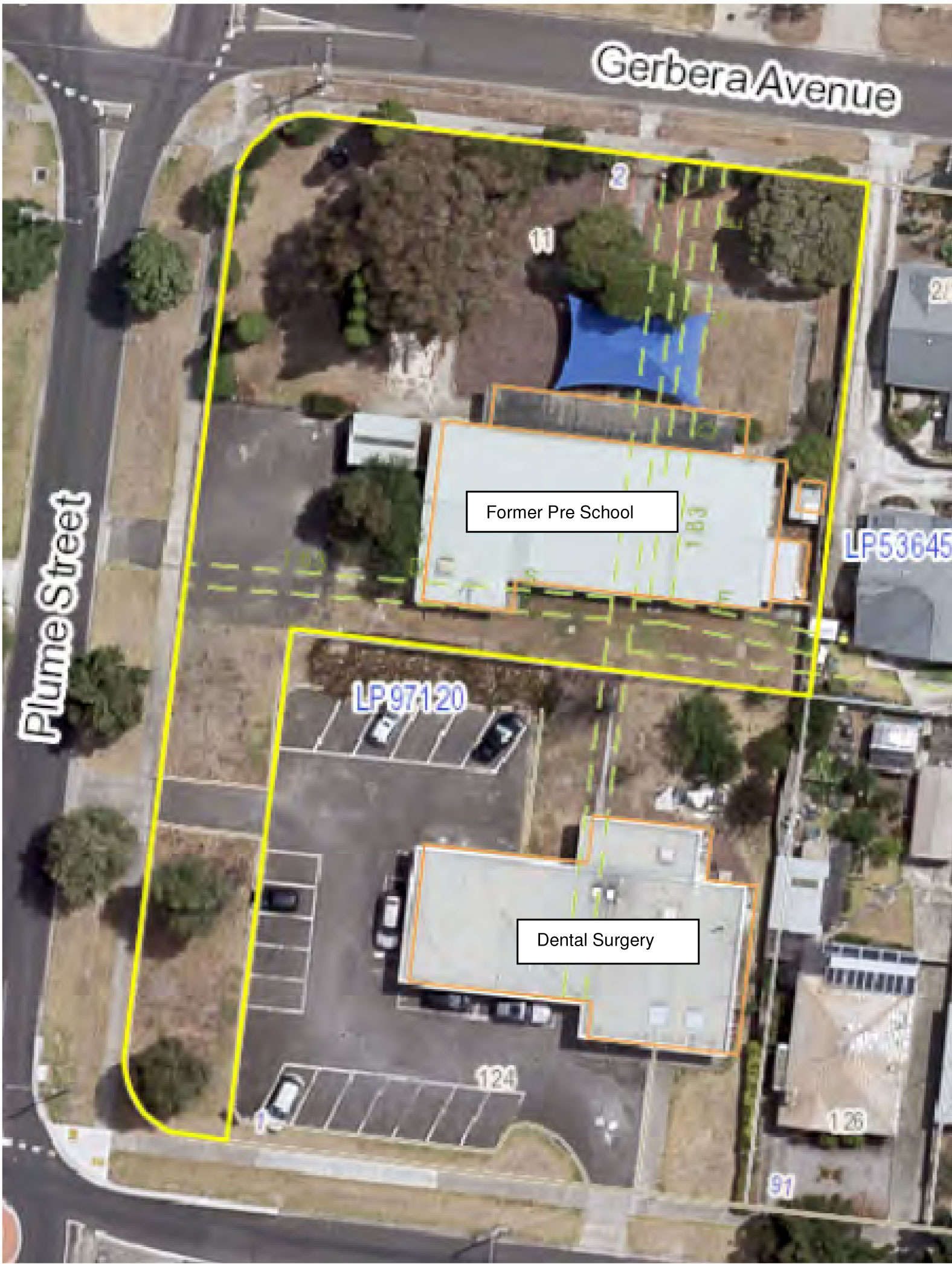
Source: |
Legal Services and Governance |
CEO: |
Kelvin Spiller |
Index Reference: |
Corporate Internal Auditor |
To appoint Mr John Watson as an independent member of Council’s Audit and Risk Committee for the period 2017-2020.
The Audit and Risk Committee (ARC) is an advisory committee to Council, providing advice on a range of financial, governance, risk management, audit and compliance matters.
The ARC is governed by the City of Greater Geelong Audit and Risk Committee Charter (Charter) which was reviewed and approved by Council in December 2016. The Charter states, amongst other things, that:
members of the ARC are appointed by Council;
the committee is comprised of four voting members, being three independent members and one Councillor;
independent members will have appropriate broad-based senior business or financial management and reporting skills and experience;
the term of appointment of independent members will be for a period of three years.
In December 2016, an independent member of the ARC resigned, which created a vacancy in the ARC’s membership that needed to be filled.
An advertisement for an independent member of the ARC was published in January 2017 in The Age, The Geelong Advertiser and online on seek.com.au.
Fifty applications were received in response to a public advertisement during January 2017. Five applicants were selected for interview. First-round interviews were conducted in February 2017. Three applicants were then selected to participate in a final interview with Laurinda Gardiner, Administrator and Rebecca Leonard, Senior Manager Legal Services and Governance.
Mr John Watson has been selected as the preferred candidate for appointment as an independent member of the ARC. Mr Watson satisfies the criteria for appointment to the ARC pursuant to the Charter. It is recommended to Council that Mr Watson be appointed to the ARC for a period of three years commencing 1 May 2017.
L Gardner moved, P Dorling seconded -
That Council:
appoint Mr John Watson to the Council’s Audit and Risk Committee for a period of three years commencing on 1 May 2017 meeting;
thank all applicants for expressing their interest in becoming an independent member of the Council’s Audit and Risk Committee.
Carried.
Source: |
City Services - Environment and Waste Services |
Director: |
William Tieppo |
Index Reference: |
Greenhouse Mitigation |
To seek Council endorsement of the Zero Carbon Emissions Strategy.
The development of the Zero Carbon Emissions Strategy is a key action of the City’s Environment Management Strategy under the strategic direction of “Leadership, Greenhouse and Energy”.
In September 2016, Council endorsed the Draft Zero Carbon Emissions Strategy, (previously named Greenhouse Reduction Strategy) which included an emission reduction target of 50% by 2020 based on 14/15 emissions.
The Strategy represents an update of Council’s Greenhouse Response 2008-2011 and incorporates work from the Low Carbon Growth Plan for Greater Geelong.
In late 2016 the Draft Strategy was placed on public exhibition for a four week period, in which the outcomes have been detailed in the final document. (Refer Attachment 2).
The Strategy incorporates targets to achieve the following emissions reduction from Council’s buildings and vehicle fleet from 2014-15 levels:
50% by 2020
75% by 2035
100% by 2050
Key action areas that support the targets include; energy efficiency (electricity and gas) in buildings, renewable energy (small and large scale) and carbon offset purchasing.
P Dorling moved, L Gardner seconded -
That Council endorse the Zero Carbon Emissions Strategy.
Carried.
The City is committed to working towards the ten One Planet Living principles. Under the One Planet Living framework, this Strategy is closely aligned with the One Planet Living principle: Zero Carbon.
The development of the Zero Carbon Emissions Strategy incorporates outcomes from consultation activities undertaken and background documents produced. These include;
A Background and Literature Review analysed current climate change policies from a federal, state and local government perspective.
An energy audit and solar analysis of Councils top ten energy consuming buildings provides a costed, energy efficiency priority action list and solar analysis for each site.
An Emissions Abatement Business Case was prepared to provide a range of abatement scenarios and cost impacts for Council consideration when making a decision as to which option to adopt in the Strategy.
The Zero Carbon Emissions Strategy will be supported through the recent carbon tax refund. The refund is administered through the Waste Industry Protocol and requires all signatories to invest in abatement projects or purchase carbon offsets. The energy efficiency and renewable energy actions listed in the strategy’s fulfil the requirements.
Current approved budget: Income: the carbon tax refund is providing $1,291,714:
Future budget proposal: An $80,000 budget proposal will be considered and prioritised as part of the 2017/18 budget process.
Input for the Zero Carbon Emissions Strategy incorporates outcomes from the following consultation activities:
Three workshops were conducted with the Project Steering Group and Project Advisory Group.
Interviews with key stakeholders including; Geelong Sustainability, Geelong Chamber of Commerce and key internal Council stakeholders.
Community survey: 325 completed surveys received. The purpose of the survey was to gain the community’s views on what action the City should take to minimise greenhouse gas emissions in the municipality.
Council staff survey: 60 completed surveys received. The survey was undertaken to canvass staff views on how their work is connected to environmental issues, and what information and support is needed by staff to contribute to Council’s overall emissions reduction efforts.
Background document information has been incorporated into the Draft Strategy. Project Steering Group and Project Advisory Group members provided comments on the Draft Strategy.
The draft Strategy was placed on public exhibition for a four week period in October to November 2016. Four submissions were received, a summary of responses is listed as an appendix to this report.
The Zero Carbon Emissions Strategy aligns closely with City Plan strategic direction; Sustainable Built and Natural Environment. An objective within this is to partner with our community to encourage sustainable design and reduce resource consumption. The Zero Carbon Emissions Strategy is listed as a key strategy for delivering Sustainable Built and Natural Environment priorities.
Carbon emissions are a major factor in driving global climate change. The Zero Carbon Emissions Strategy will assist in reducing the City’s and community generated greenhouse emissions. The implementation of the Strategy will also reduce air pollution resulting from use of fossil fuels.
Source: |
People & Organisation Development |
Executive Manager: |
Andrew Keen |
Index Reference: |
T170010 |
This report seeks Council endorsement for the award of Contract C1700010, for the provision of a software program for performance management and online recruitment.
The City has an outdated and insufficient performance review process to meet the needs of its large and diverse workforce. This was rated, in the Commission of Inquiry Report Good Governance Framework, as poor.
A contemporary system to manage performance review and to integrate recruitment, on-boarding, and performance review to the core Human Resources system is necessary.
Tenders were advertised November 5, 2016 and closed November 30, 2016. Ten tender submissions were received and evaluated by a procurement panel.
Of the ten tender submissions received, the panel determined that three failed to meet the mandatory criteria, three submitted non conforming tenders leaving the remaining four tenders to be assessed against predetermined criteria by the panel.
The two highest scoring tenders were invited to present their systems to the evaluation panel.
Whilst PageUp was not the lowest tender price they ranked highest overall and were the only tender to comply with all of Council’s requirements.
L Gardner moved, P Dorling seconded -
That Council:
approve the contract for the provision of a performance management and on-line recruitment software solution to PageUp People Pty Ltd;
delegates authority to the Chief Executive Officer to sign the contract documents for and on behalf of the City of Greater Geelong.
Carried.
The procurement process was undertaken to source a software solution for the City that would replace existing in-house and paper based systems for recruitment and on-boarding activities undertaken by People & Organisation development. The objective being a single software system that:
Manages end to end recruitment for all appointments;
Manages on-boarding for all appointments;
Manages cyclical performance reviews for all employees;
Integrates current Payroll and Document Management systems;
Provides access to employees and the public by desktop or mobile devices;
Can be managed and configurable by CoGG;
is based on best and contemporary practice; and
can be subject to ongoing updates and improvements to ensure best and contemporary practice.
In determining the acceptance of PageUp’s tender, the panel established that they offered:
best and contemporary practice in recruitment, on-boarding and performance reviews, that not only caters for CoGG current processes and workflows but will lead and support innovation, improvements and growth into the future;
proven integration with Empower and other third parties including video providers;
intuitive design – requires minimal or no training for staff to use, resulting in minimal learning overhead;
ability to customise reports and provide easy to use dashboards;
excellent user interface – ability for employee and the public to access recruitment opportunities via desktop and mobile devices using a user friendly, attractive system that will reflect positively on CoGG and increase our ability to attract the best talent;
talent pooling to better manage secondments and learning opportunities and quickly identify and deploy internal and external talent;
volunteer management and recruitment; and
test environment and 24/7 support services with an externally hosted cloud solution with high level accessibility, security and data recovery – no additional storage costs or ongoing maintenance required.
The evaluation panel were unanimous in recommending PageUp People Pty Ltd even though they have submitted the highest cost. PageUp were clearly able to support all of City’s current workflows and processes, but also grow with the City and drive best practice processes and recruitment/performance initiatives in the future.
The 2nd ranked tender (who submitted a lower cost) when demonstrating the functionality of processes and workflows was deemed by the evaluation panel as onerous and confusing in parts. User interface was deemed as not as intuitive by the evaluation panel and concerns were raised regarding integration capabilities.
Costs of the tender include implementation and annual licensing. In 2016/17 there is a first year lump sum payment of $162,400 (ex GST for implementation), with ongoing annual licensing costs of $174,300 (ex GST) for years one to five inclusive.
Implementation and first year licensing costs are budgeted for in the current 2016/17 budget and 2017/18 proposed budget respectively.
Source: |
Community Life - Leisure Services |
Director: |
Linda Quinn |
Index Reference: |
T1700018 |
The City of Greater Geelong tendered to engage a suitably qualified and experienced cleaning contractor for the provision of full cleaning services at four Leisure Centres, (LeisureLink, Waterworld, Splashdown and Kardinia), and day to day event, function and specialty cleans at the Geelong Arena.
Cleaning of the nominated Leisure Centres and the Geelong Arena has been undertaken under contract that commenced 1 December 2011. A tender for the provision of cleaning services for the nominated centres was advertised on Saturday, 10 December 2016. Tenders closed 2.00pm Wednesday, 1 February 2017 and six tenders were received.
The evaluation panel completed a thorough assessment of the six tenders received. All six tenders were deemed conforming, in that they were able to demonstrate adequate experience in cleaning aquatic and sporting facilities.
Tenderers were required to provide evidence of past experience cleaning aquatic and sporting facilities.
Submissions were assessed against pre-determined criteria including price and non price criteria.
Price was assessed on hourly rate relative to indicated hours estimated to fulfil the scoped cleaning requirements at each centre. Non price assessment considered the methodology to be adopted to meet the scoped requirement including hours, staffing and plant and equipment as nominated to perform cleaning to a specified standard.
L Gardner moved, P Dorling seconded -
That Council award Contract C1700018 for the Provision of Cleaning Services at Council’s Aquatic and Leisure Centres to Quayclean Australia Pty Ltd (QA):
sites include Waterworld, Kardinia, Splashdown, LeisureLink and the Geelong Arena;
tendered rates for an initial contract term of three years with possible extension to a maximum contract term of six years;
estimated contract cost for maximum term is $4,454,945.00 plus schedule of rates (ext-GST), excluding any annual price adjustment through CPI.
Carried.
The evaluation panel conducted a full comprehensive evaluation of the six submissions with particular attention to assessing each tenderer’s ability to carry out cleaning requirements at each centre as scoped. This assessment was undertaken giving consideration to the proposed hours and the nominated hourly rate.
Quayclean Australia Pty Ltd (QA) were assessed as best value, having demonstrated a thorough knowledge of the cleaning services required under the specification.
QA have significant experience in cleaning aquatic and sports facilities for local government and as such, can offer the combination of appropriate hours at a competitive hourly rate. QA are the incumbent cleaners at the nominated aquatic centres and are considered highly professional given their demonstrated approach to employ locally sourced staff, training and management of resources and cleaning methodology as outlined in the tender submission, including use of environmentally sustainable products and management of recyclables.
Funding for the provision of cleaning services is drawn from an annual recurrent budget allocation from each individual centre. The recommended contractor has confirmed that employees engaged to undertake services under this contract will be remunerated at no less than the hourly base rate as prescribed in the Cleaning Services Award 2010.
A tender for the provision of cleaning services for the nominated centres was advertised on Saturday, 10 December 2016. Advertisement calling for tenders was circulated in local and state media. Tender period closed 2:00pm Wednesday, 1 February 2017.
This report aligns to the Community Wellbeing of City Plan ensuring cleaning services are engaged and centres are presented in a clean, healthy and professional environment. The cleaning services contractor will work with Council to generate positive employment outcomes within the City of Greater Geelong for disadvantage groups including long term unemployed and people with disabilities.
No officer involved in the preparation of this report has any direct or indirect interest.
The tender evaluation process involved the assessment of Work, Health and Safety policies, procedures and risk assessment documents.
The successful tenderer possesses significant industry experience having delivered numerous comparable contracts and has obtained independent accreditation of their Quality Management and OH&S systems (ISO9001 and AS/NZS4801).
Companies were asked to provide details of any Environmental Sustainability Policies. The recommended tenderer is accredited to AS14001, a standard that assess 17 elements of a company’s Environmental Management System.
Source: |
Finance & Strategy – Property & Procurement |
Director: |
Joanne Moloney |
Index Reference: |
T1600049 |
To seek Council endorsement for the award of Contract C1600049, for the Provision Cleaning Services for Major Buildings and Libraries
The existing Cleaning Panel contract C11223 expired on the 30 November 2016 and is currently being renewed on a month to month basis until such time as a new contract commences.
The Procurement Unit has conducted an open tender seeking the services of a qualified and experienced cleaning contractor for a period of three years commencing 1 May 2017 with an option for a further two years at the sole discretion of Council.
Council and the Geelong Regional Libraries Corporation (“GRLC”) received a total of twenty (20) conforming tender submissions.
Each submission was assessed against pre determined criteria including price and non price criteria.
Price was assessed based on tendered rates for routine and periodical cleaning along with the provision of consumables.
Non price assessment considered experience, staffing and resources and the proposed method for delivering the cleaning in accordance with the Specification.
After a detailed evaluation and interview process the Evaluation Panel determined that Storm International Pty Ltd delivered the best value for money outcome.
The estimated annual cost of the service is $619,699 p/a (ex-GST) and is in accordance with Council and GRLC budget estimates.
L Gardner moved, P Dorling seconded -
That Council:
award Contract C1600049 for the Provision Cleaning Services for Major Buildings & Libraries to Storm International Pty Ltd as per tendered rate;
note the contract term is for a five (5) year period consisting of an initial three (3) year term with two (2), one (1) year options available at the sole discretion of Council;
delegate authority to the Chief Executive Officer to sign contracts and other relevant documents.
Carried.
The estimated annual cost of the service is $619,699 p/a (ex-GST) and is in accordance with Council and GRLC budget estimates.
Council Buildings - $341,544.00 p/a (ex-GST)
Geelong Library & Heritage Centre - $116,153.70 p/a (ex-GST)
Regional Libraries - $162,001.30 p/a (ex-GST)
The whole of life contract cost is estimated at $3.1M over the full contract term.
Expenditure in future years will be in accordance with approved budget allocations.
The tender process was subject to consultation between the Procurement Unit, Facilities Maintenance and the Geelong Regional Library Corporation.
The tender process has been carried out in accordance with the requirements of Council’s Procurement Policy and the requirements of section 186 of the Local Government Act 1989.
The cleaning services contractor will work with Council and the GRLC to generate positive employment outcomes within the City of Greater Geelong for disadvantaged groups including the long term unemployed and people with disabilities.
The tender evaluation process involved the assessment of Work, Health and Safety policies, procedures and risk assessment documents.
The successful tenderer possesses significant industry experience having delivered numerous comparable contracts and has obtained independent accreditation of their Quality Management and OH&S systems (ISO9001 and AS/NZS4801).
Companies were asked to provide details of any Environmental Sustainability policies.
The recommended tenderer is accredited to AS14001, a standard that assess 17 elements of a company’s Environmental Management System.
The officers responsible for this report have no direct or indirect interests requiring disclosure.
Contents | Previous Page: Section A - Procedural Matters | Next Page: Section C - Assembly of Councillors
