
Council Minutes - Section B: Reports - 25 July 2017
Contents | Previous Page: Section A - Procedural Matters | Next Page: Section C - Assembly of Councillors
Contents | Previous Page: Section A - Procedural Matters | Next Page: Section C - Assembly of Councillors
Reports tabled at the Ordinary Meeting of Council on Tuesday date held at the Council Conference and Reception Centre in City Hall, 30 Gheringhap Street, Geelong.
Amendment to Adopted Master Plan for 13-35 Mackey Street, North Geelong
State Government of Victoria Country Football and Netball Funding Program
Revoke – Sale, Exchange, Transfer and Use of Council land Policy
Source: |
Planning and Development – Strategic Implementation |
Director: |
Peter Bettess |
Index Reference: |
Application C352 |
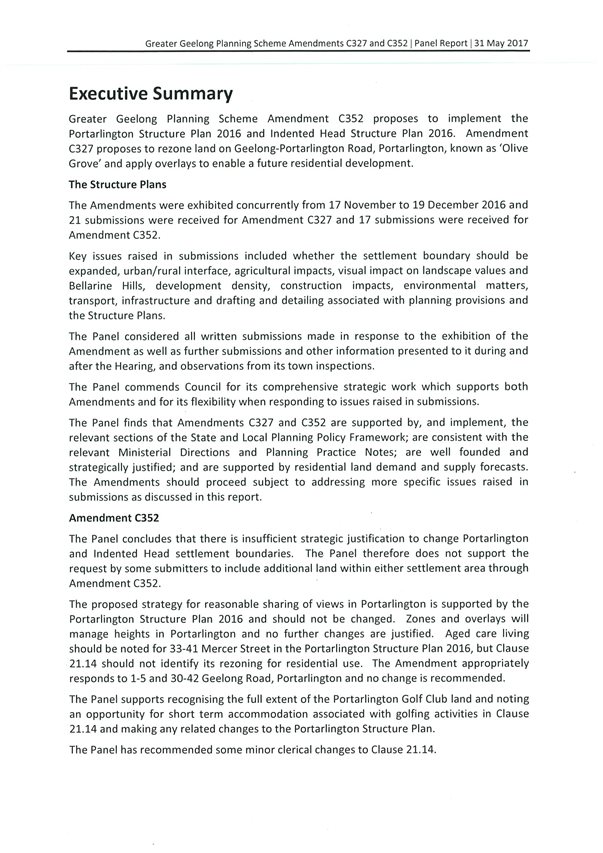
The purpose of this report is for Council to consider the Independent Panel report into Amendment C352 and to adopt the Amendment.
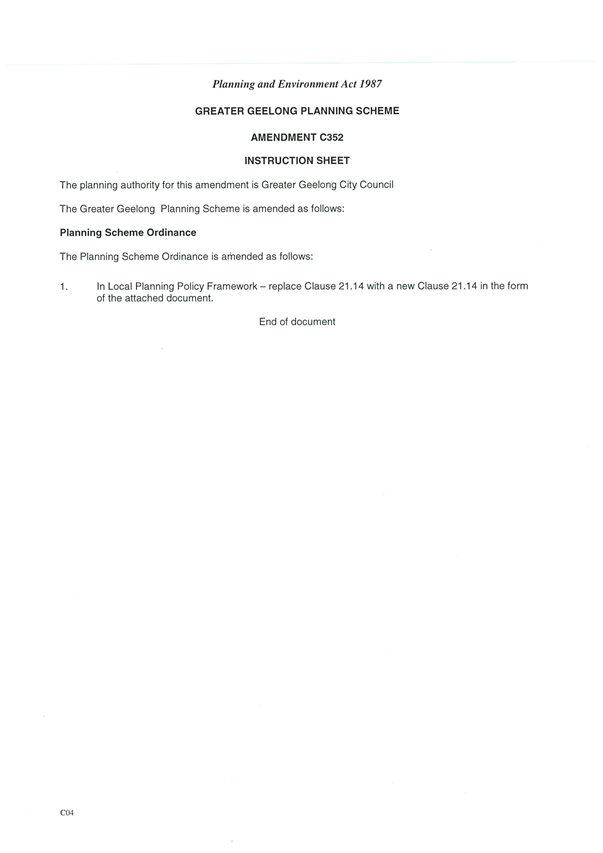
Amendment C352 seeks to implement the findings of the following Council adopted documents into the Greater Geelong Planning Scheme:
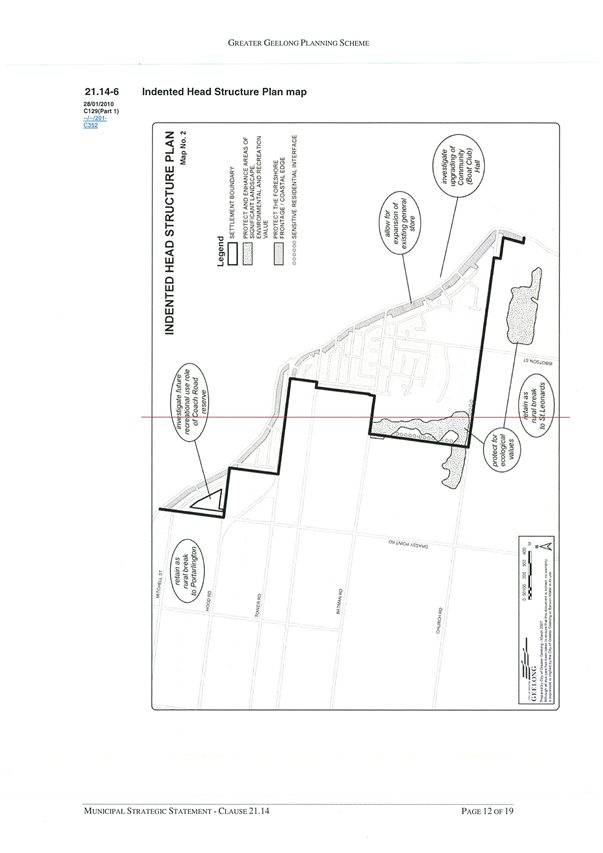
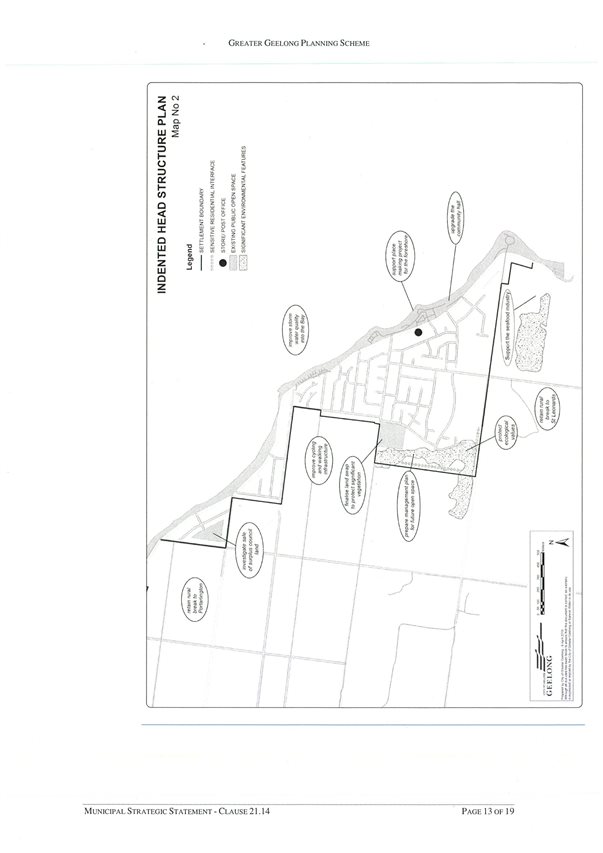
the Indented Head Structure Plan (Adopted May 2016); and
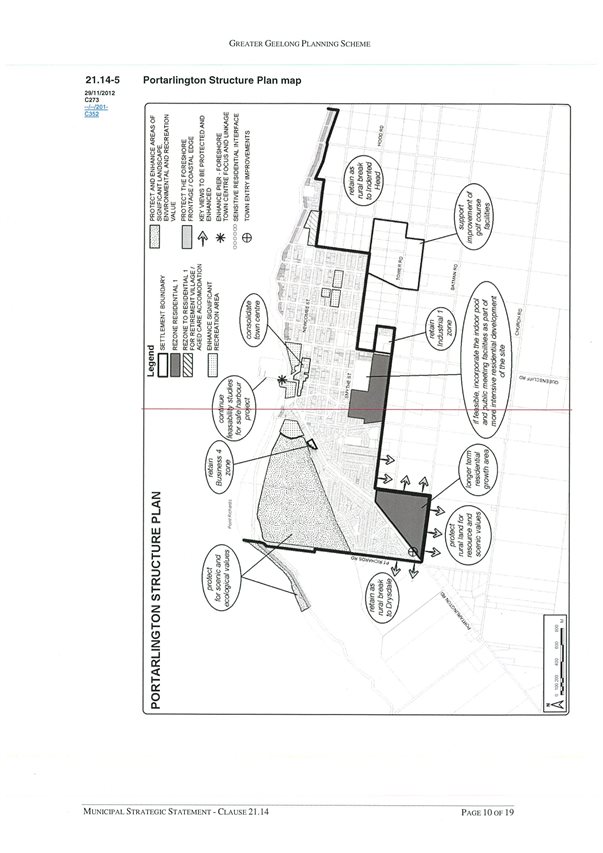
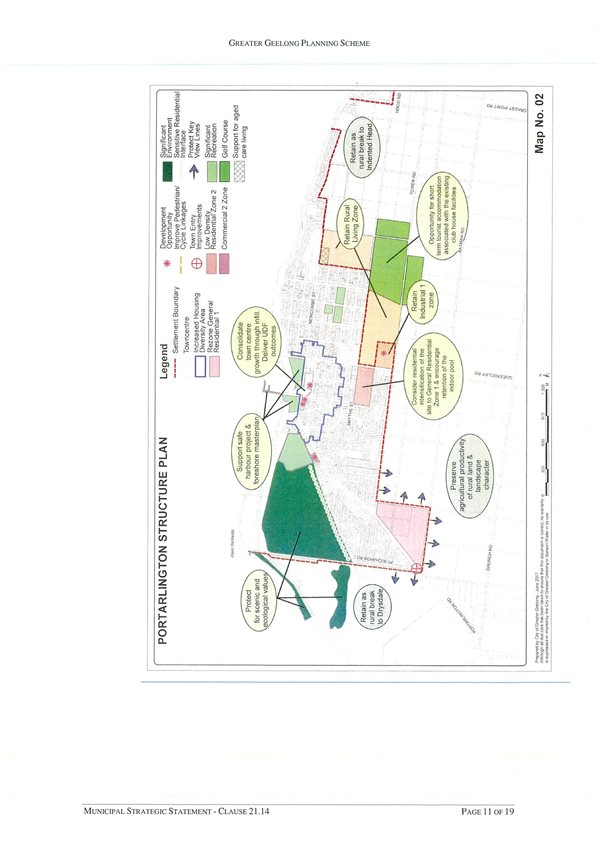
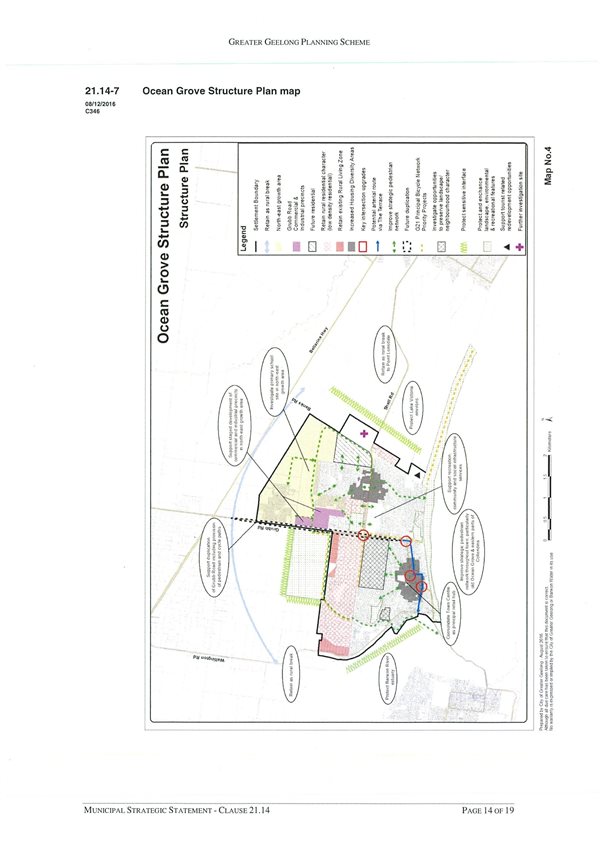
the Portarlington Structure Plan (Adopted September 2016)
An Independent Planning Panel hearing to consider the amendment and objections on 5 and 6 April, 2017.
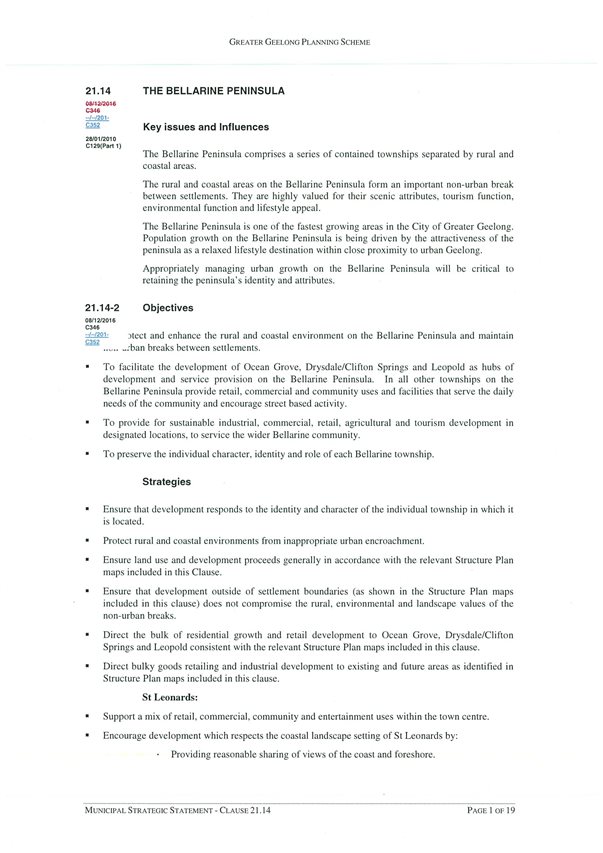
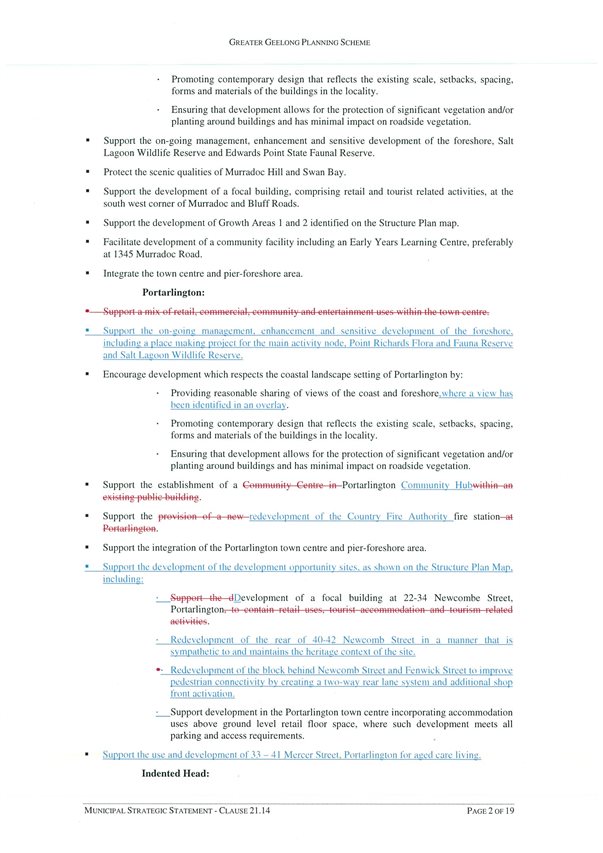
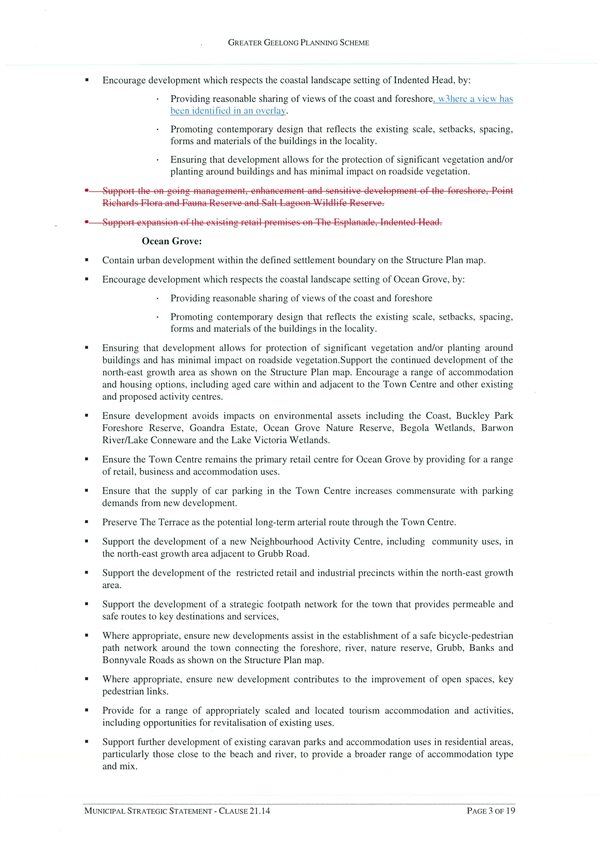
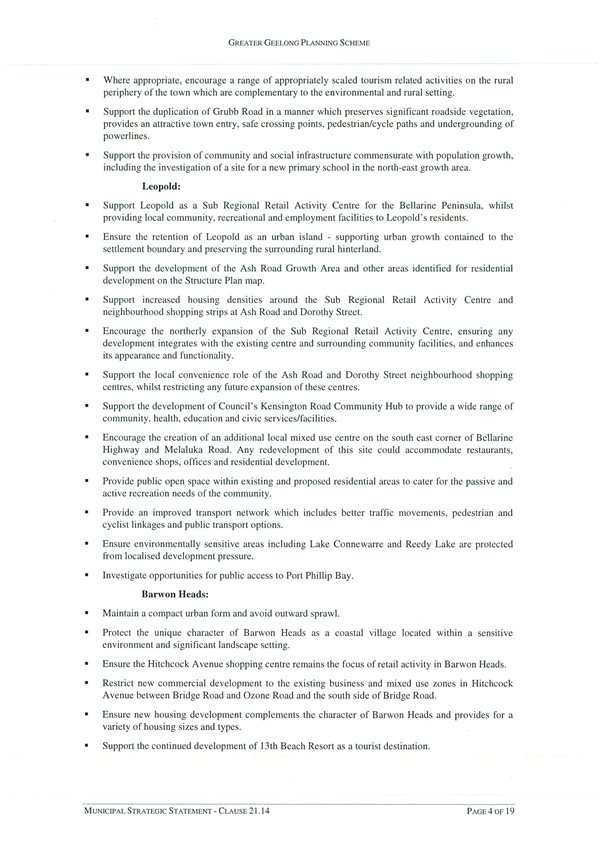
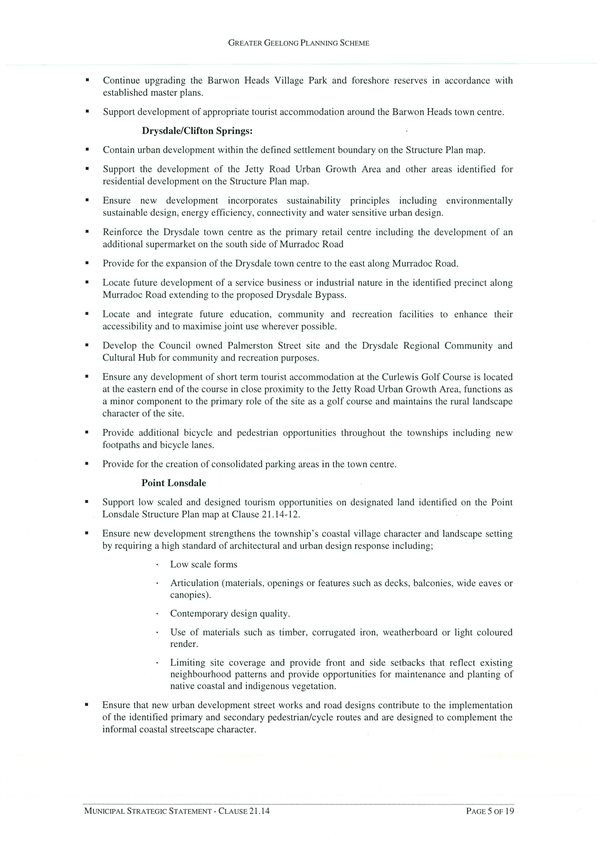
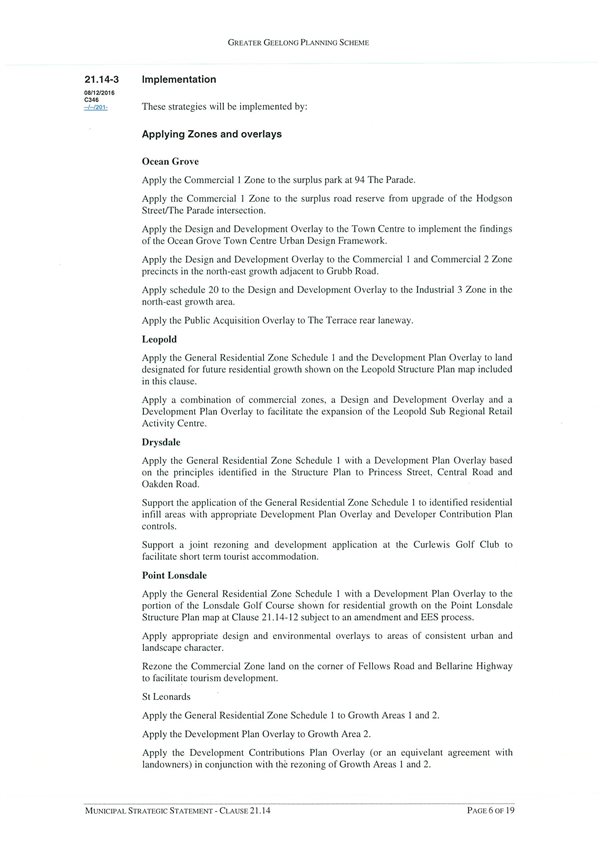
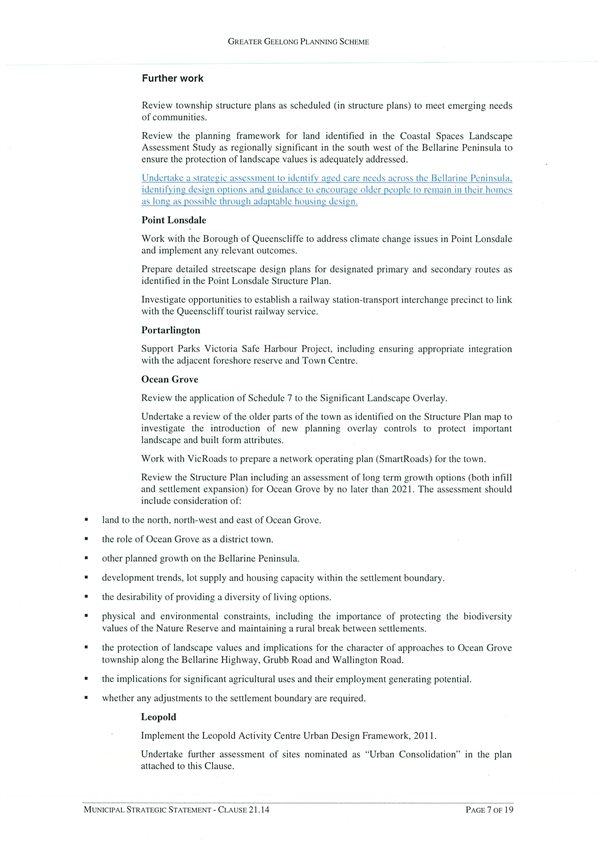
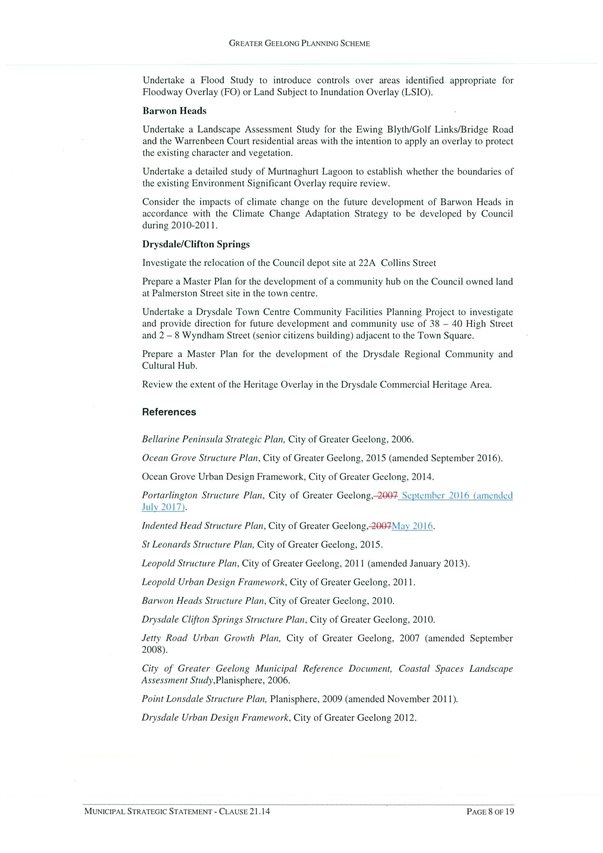
The Amendment will amend Clause 21.14 Bellarine Peninsula to:
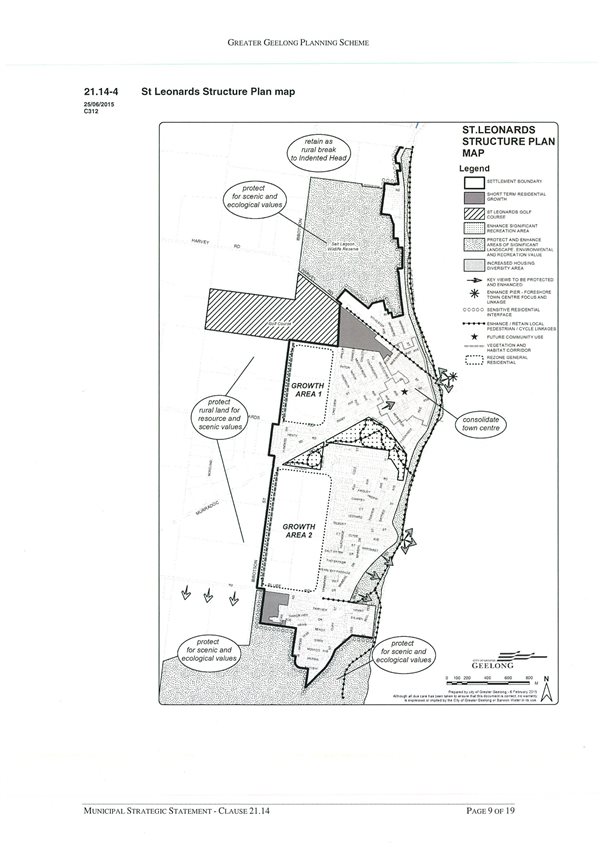
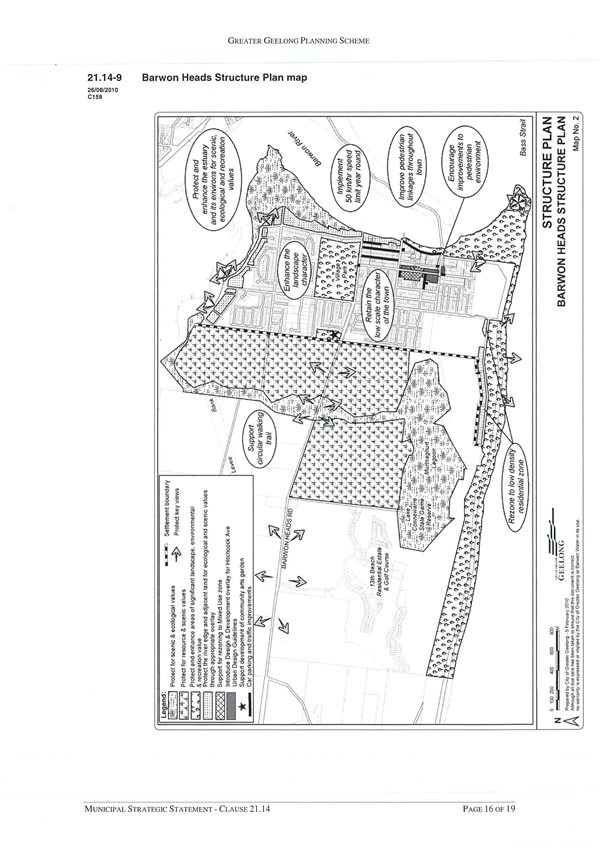
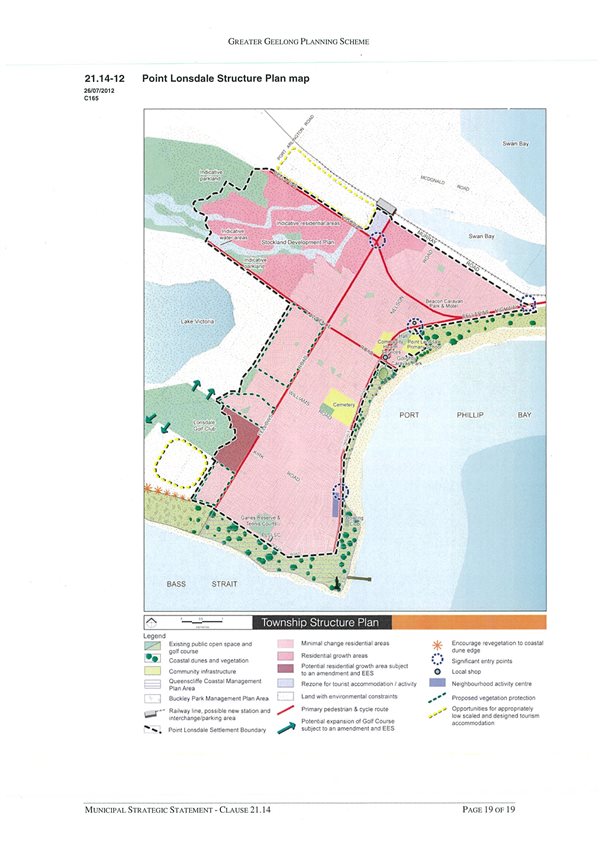
include revised strategies and maps in relation to Portarlington and Indented Head, consistent with the recently adopted Indented Head and Portarlington Structure Plans.
Include in ‘further work’, an additional requirement to “Undertake a strategic assessment to identify aged care needs across the Bellarine Peninsula, identifying design options and guidance to encourage older people to remain in their homes as long as possible through adaptable housing design”.
Revise the list of reference documents to include 2016 adopted versions of the Indented Head and Portarlington Structure Plans.
The conclusions and recommendations of the Planning Panel generally supported the submissions of Council, and all the recommendations of the Planning Panel are supported in their entirety by Council officers.
The Executive Summary of the Panel Report relevant to Amendment C352 is included as Attachment 2 to this report.
P Dorling moved, L Gardner seconded -
That Council resolves to:
note that the report in referring to the Panel Conclusion for submission issue 2.3 relating to 30-42 Geelong Road Portarlington should read “The Panel concludes the Portarlington Structure Plan 2016 appropriately identifies 30-42 Geelong Road, Portarlington for future mixed use development and should not be changed”;
adopts the exhibited Amendment C352, as contained in Attachment 3 to this report, in accordance with the recommendations of the Independent Planning Panel;
submits the adopted Amendment and prescribed information to the Minister and
re-adopts the Portarlington Structure Plan (as amended July 2017) to reflect the Amendment changes.
Carried.
Amendment C352 was exhibited between 17th November 2016 and 19th December 2016.
As a result, 17 submissions were received of which 3 were from Government Departments or Statutory Authorities in support of the Amendment, and 14 were submissions from community stakeholders who sought changes or objected to the amendment. Two of the latter submissions were late submissions received on the day of the directions hearing.
An additional submission seeking changes was received by the Planning Panel following the Directions Hearing, however a copy was not forwarded to Council by the submitter until after the Panel Hearing had occurred. The Panel sought and was provided comment on this submission subsequent to the Panel Hearing.
The key themes/issues raised in the submissions were:
Concern that the revised clause 21.14 undermines the findings and recommendations of the Planning Panel which considered submissions in relation to combined Amendment C321 and Permit application 1234/2014;
Objection to the identification of locations on a structure plan map as “development opportunities”.
Opposition to ‘high rise’ development in excess of two storeys;
Support for maintenance of a rural break between Drysdale and Portarlington;
Opposition to the addition of the words “where a view has been identified in an overlay”, in relation to clarify the reference to ‘reasonable sharing of views of the coast and foreshore’ in Portarlington.
Request for the extension of the identified Portarlington Settlement Boundary, to support the future expansion of the Portarlington Retirement Village to include 33 – 41 Mercer Street, Portarlington within the identified township boundary.
In relation to management of environmentally significant locations within the Indented Head urban settlement boundary:
Remove references to Point Richards Flora and Fauna Reserve and Salt Lagoon Wildlife Reserve, and
Include references to additional areas within Clause 21.14-2.
In relation to Indented Head, requests for:
Improved pedestrian and cycling infrastructure within Indented Head;
Investigation of the need for traffic control devices on collector roads;
Investigation, in consultation with Bellarine Bayside Committee of Management, of means to reduce the entry of stormwater run-off into Port Phillip Bay via the creek near David Street.
Revision of detailed references to the aquaculture operation.
Improved off-street additional sporting facilities on the western side of the settlement and increased off-street recreational facilities for young people.
Request for the southward extension of the Indented Head urban settlement boundary to include 88 – 91 Ibbotson Street.
The late submission, received by the Panel after the directions hearing but not forwarded to Council by the submitter, sought the southern extension of the Portarlington urban settlement boundary at the eastern end of Grassy Point Road.
The Delegated Authority report dated 31 January 2017 both summarises all of the submissions and provides a detailed officer response to all of the issues raised.
An additional Delegated Authority report, dated 31 March 2017 was subsequently prepared in relation to the late submissions received on the date of the Directions Hearing. These reports are available on Council’s website at www.geelongaustralia.com.au/amendments (under the C352 webpage).
All submissions where considered under delegated authority and referred to an Independent Panel appointed by the Minister for Planning.
The appointed 2 person panel held a Directions Hearing on 6 March 2017 and a two day Panel Hearing in Geelong on 5 & 6 April, 2017.
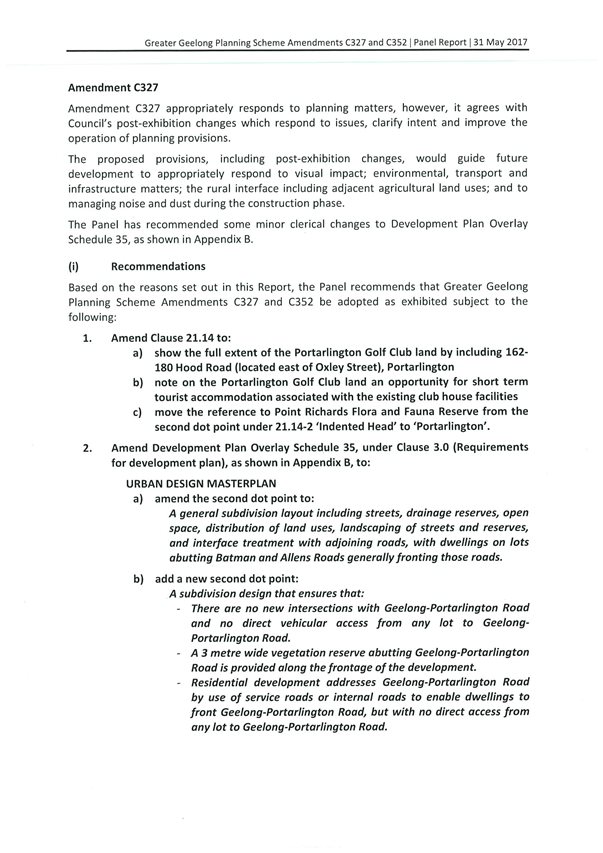
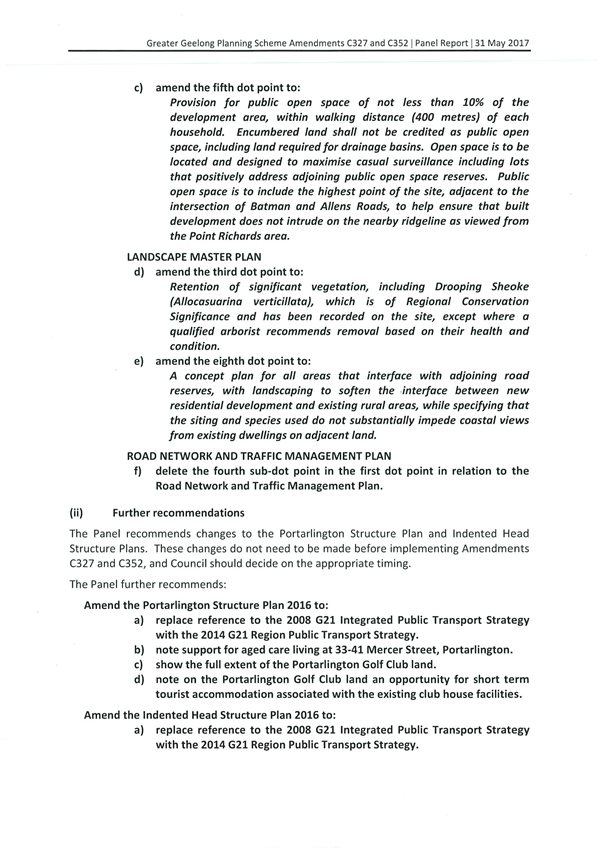
The Panel has now presented its report to Council for its consideration and has recommended that Amendment C352 be adopted as exhibited subject to several minor changes. Attachment 2 is the Executive Summary of the Panel report which outlines the issues considered by Panel and contains the consolidated the panel recommendations, including recommended changes to the exhibited amendment documentation.
A full copy of the Panel’s Report has been placed on Council’s website www.geelongaustralia.com.au/amendments (under the C352 webpage). The following sections of this report make reference to page numbers in the Panel report where specific issues have been addressed.
The issues as set out by the Panel, together with the Panel’s conclusions, as well as Officer recommendations are detailed below.
Issues raised in Submissions:
1 Settlement Boundaries
Issue
The issue is whether the Portarlington and Indented Heads settlement boundaries should be extended to include additional land.
Reasons for extending the boundary to include specific land included:
lot size is relatively small to remain in the Farming Zone
existing subdivision layout does not align with the Farming Zone
surrounding residential lot layout enables connections to the land
land unsuitable for productive agriculture or conservation
would not compromise the non‐urban break between coastal settlements
insignificant expansion of settlement area
would contribute to additional land supply and lot flexibility
encroachment towards an existing industry (abalone farm) would not affect its operation.
Panel Conclusion
There is insufficient strategic justification to extend the Portarlington and Indented Head settlement boundaries.
Officer Recommendation
The Panel Conclusion is supported.
2 Portarlington
2.1 Building heights and views
Issues
The issues are:
Whether building heights should be reduced to no greater than two storeys
Whether there should be more restrictive provisions to enable a greater sharing of views from across Portarlington to selected parts of the town.
Panel Conclusion
There is insufficient justification to restrict building heights limits in Portarlington beyond those proposed by the Amendment.
Zone and overlay provisions are appropriate for managing building heights in Portarlington.
The proposed strategy for reasonable sharing of views in Portarlington is supported by the Portarlington Structure Plan 2016 and should not be changed.
Officer Recommendation
The Panel Conclusion is supported.
2.2 33‐41 Mercer Street, Portarlington
Issue
The issue is whether the policy in Clause 21.14 should be amended to support 33‐41 Mercer Street, Portarlington being rezoned to a residential zone so that it can be used for retirement/aged care.
Panel Conclusion
The Portarlington Structure Plan 2016 and Map should be amended to include a note supporting the use of the land at 33‐41 Mercer Street, Portarlington for aged care living.
Clause 21.14 should not be amended to support 33‐41 Mercer Street, Portarlington being rezoned to a residential zone.
Recommendation
The Panel does not recommend any change to the Amendment but further recommends:
Amend the Portarlington Structure Plan to:
note support for aged care living at 33‐41 Mercer Street, Portarlington.
Officer Recommendation
The Panel Conclusion and Recommendation are supported.
2.3 30‐42 Geelong Road, Portarlington
Issue
The issue is whether the Portarlington Structure Plan 2016 should be changed to identify 30‐42 Geelong Road, Portarlington for future residential rezoning.
Panel Conclusion
The Panel concludes:
there is insufficient strategic justification to rezone 1‐5 Geelong Road, Portarlington to a residential zone.
the Structure Plan 2016 should not be amended to identify the land for a future rezoning.
Officer Recommendation
The Panel Conclusion is supported.
2.4 1 – 5 Geelong Road Portarlington
Issue
The issue is whether the Portarlington Structure Plan should indicate that 1‐5 Geelong Road, Portarlington be rezoned for residential purposes.
Panel Conclusion
The Panel concludes:
there is insufficient strategic justification to rezone 1‐5 Geelong Road, Portarlington to a residential zone.
the Structure Plan 2016 should not be amended to identify the land for a future rezoning.
2.5 Portarlington Golf Club
Issues
The issues are whether Clause 21.14 and the Portarlington Structure Plan should be amended to:
show the full extent of the Portarlington Golf Club land
note support for golf course facility improvements
note an opportunity for short term accommodation on the Golf Club land.
Panel Conclusion
The Panel concludes:
Clause 21.14 and the Portarlington Structure Plan should be amended to:
show the full extent of the Portarlington Golf Club land to also include a portion of land located east of Oxley Street (162‐180 Hood Street) that is included in Special Use Zone Schedule 3.
add a notation on the Golf Club land identifying short term accommodation opportunity that is linked with the Portarlington Golf club facilities.
the amendment of the Portarlington Structure Plan map to reinstate the notation “support improvement of golf course facilities” is unnecessary.
Recommendation
The Panel recommends:
Amend Clause 21.14 to:
show the full extent of the Portarlington Golf Club land to include 162‐180 Hood Road (located east of Oxley Street).
note on the Portarlington Golf Club land an opportunity for short term tourist accommodation associated with the existing club house facilities.
The Panel further recommends:
Amend the Portarlington Structure Plan 2016 to:
show the full extent of the Portarlington Golf Club land
note on the Portarlington Golf Club land an opportunity for short term tourist accommodation in conjunction with the existing club house facilities.
Officer Recommendation
The Panel Conclusions and Recommendations are supported.
3 Indented Head
3.1 Environment and infrastructure
Issue
The issue is whether policy provisions and the 2016 Indented Head Structure Plan should be amended to address environmental matters raised in submissions.
Panel Discussion and Conclusion
The Panel generally agrees with Council’s submission on this matter. However, the policy reference to the Point Richards Flora and Fauna Reserve in the second dot point in Clause 21.14‐2 under Indented Head should be deleted. This area is clearly located in Portarlington so it is appropriate to move the policy into the relevant policy dealing with Portarlington.
Recommendation
The Panel recommends:
Amend Clause 21.14 to:
move the reference to Point Richards Flora and Fauna Reserve from the second dot point under 21.14‐2 ‘Indented Head’ to ‘Portarlington’.
Adoption and approval of Amendment C352 will have no significant financial implications for Council. Implementation of any further work specified in the policies as a result of the adoption of his amendment will be subject to future Council budget consideration.
Amendment C352 has been exhibited in accordance with the provisions of the Planning and Environment Act and all persons who lodged a submission had an opportunity to be heard before an Independent Panel appointed by the Minister for Planning.
Amendment C352 has been prepared having regard to existing relevant State, regional and local planning policies as described in some detail in the Explanatory Report accompanying the exhibited amendment.
The Independent Panel has considered in detail all relevant aspects of State, regional and local planning policies in providing its recommendations to Council.
Both Structure Plans are the subject of Amendment C352 and align with the directions of the Sustainable, Built and Natural Environment and Growing our Economy strategic directions in City Plan.
No Council officers involved in the preparation of this Amendment, the development of the Structure Plans and the preparation of this report have any direct or indirect interest, in accordance with Section 80C of the Local Government Act, in relation to any matters to which this report relates.
There are no risks associated with processing a Planning Scheme Amendment as recommended by this report.
Environmental implications where considered as part of the review of both Structure Plans. The further work identified in the policy has been refined to more accurately reflect the location of key environmental features, in accordance with the recommendations of the Planning Panel. The maintenance of the existing extent of the identified urban growth boundaries of both Structure Plans will continue to protect environmental assets in close proximity to these boundaries.
Source: |
Planning and Development |
Director: |
Peter Bettess |
Index Reference: |
PRE 2-2014 |
The purpose of this report is to seek Council’s adoption of an amended land use Master Plan prepared for 13-35 Mackey Street, North Geelong as a policy for considering Planning Permit applications. The original report was adopted by Council on 25 November 2014 and this report seeks approval to amend the previously adopted Master Plan. For ease of reference, the amendment has been referred to as Stage 2. The primary purpose of the amendment is to facilitate the establishment of office and other compatible uses at the site.
On 25 November 2014 Council adopted the Land Use Master Plan prepared for 13-35 Mackey Street, North Geelong as a policy to inform the assessment of Planning Permit applications, under the Greater Geelong Planning Scheme. Given the successful implementation of Stage 1, the owner has approached Council to consider a revision to the Master Plan to support the establishment of more commercial uses, in particular office uses.
The key issues include the need to protect the Port and to ensure that any new land use does not compromise Port related activities. It is considered that this issue can be managed through the assessment of planning applications.
The protection of the significance of the heritage site. The Master Plan promotes the adaptive re-use of the site for various uses. The implementation of Stage 1 has confirmed that the heritage significance of the site can be protected and celebrated which can be demonstrated through the recent award at the Geelong Heritage Awards as part of the annual National Trust Heritage Festival.
Traffic and car parking remains a key issue that needs to be managed. The implementation of the Master Plan ensures that any application be supported by a traffic and car parking demand assessment which essentially needs to demonstrate all car parking be accommodated on site.
Amenity impacts to the future tenants also needs to be carefully considered and has also been raised by the EPA. The EPA support the use of the Section 173 which makes tenants aware of the potential amenity impacts from nearby industrial land uses and for measures to be put in place to mitigate potential impacts.
P Dorling moved, L Gardner seconded -
That Council adopts the Amended Master Plan and Land Use Planning Guide dated 21 June 2017 prepared for 13-35 Mackey Street, North Geelong as a policy to inform the assessment of Planning Permit applications, under the Greater Geelong Planning Scheme.
Carried.
Background
The Master Plan sets out a list of preferred uses, potential uses and non-preferred uses which could be established at the site subject to planning approval. Currently the Master Plan divides the site roughly in half with ‘potential uses’ (eg. Office) generally being limited to half of the site therefore the amendment is sought to expand the option for ‘potential uses’ to be established at the site.
Stage 1 has been successful with the establishment of a number of commercial, office and hospitality uses. The success has resulted in the creation of employment and the restoration of heritage buildings, and was recently given an award at the Geelong Heritage Awards as part of the annual National Trust Heritage Festival.
The site has been an attractive choice for new businesses due to is location, available floor space, heritage character and availability of services and car parking. Demand for floor space, particularly for office space, has continued and with Stage 1 almost at 100 percent occupancy, the owner has approached Council to expand.
As part of the Stage 1 process, Council Officers facilitated a consultation process which involved various stakeholders from the Port, State Government and Council. The key issues identified through the consultation process included the need to protect the Port and to ensure that any new land use does not compromise Port related activities. In particular there were strong concerns raised in relation to the introduction of non-industrial related traffic to the area and despite development of traffic management strategies, these concerns remain outstanding by some stakeholders.
Prior to its adoption, the Master Plan evolved resulting in the scaling back the extent of non-industrial uses. The concept of a Land Use Planning Guide (LUPG) was developed and included defining a list of ‘preferred uses’, ‘potential uses’ and ‘non-preferred uses’ to inform the consideration planning applications.
Amended Master Plan
Given the successful implementation of Stage 1, the owner has approached Council to consider a revision to the Master Plan to support the establishment of more commercial uses, in particular office uses.
Following a consultation process with key stakeholders, officers are satisfied that the expansion is appropriate and therefore it is recommended that an amendment be supported. The Master Plan will continue to be used as a non-statutory document that can inform the assessment of Planning Permit applications, in addition to the provisions of the Greater Geelong Planning Scheme.
The Site and Surrounds
The site is located at 13-35 Mackey Street, North Geelong and has three road abuttals, namely Mackey Street to the south and Mcleod Street to the east and north.
The site and surrounding land is located within an Industrial 2 Zone and has a Design and Development Overlay (Schedule 20). The site itself also has a site specific Heritage Overlay (Schedule 1648).
The site has an area of approximately 54,000m2 which has an existing floor space of approximately 22,000m2. Since the adoption of the Master Plan a number of Planning Permits have been issued which have resulted in the establishment of a number of commercial, office and hospitality uses.
These include:
|
Application Number |
Address |
Proposal |
|
919/2015 |
West 4 |
Food and Drink Premises |
|
920/2015 |
Powerhouse Building |
Wine Bar |
|
1229/2015 |
West 10 |
Gym |
|
123/2016 |
West 5 |
Office (440m2) |
|
124/2016 |
West 2,3, 6, 7 and 8 |
Limited Function Centre (4 per year) |
|
198/2016 |
West 11 |
Office (430m2) |
|
397/2016 |
West 2 |
Office (624m2) |
|
548/2016 |
West 6,7 and 8 |
Office – 2516sqm |
|
1286/2016 |
East 5 and Dining Hall |
X 2 Offices (765sqm) |
|
1309/2016 |
West 4 |
Liquor License |
|
1427/2016 |
Full Site |
Car Park Construction |
|
1439/2016 |
East 1 |
Office (3013m2) |
|
417/2017 |
Power 1 |
Office (300 m2) |
Vehicular access to the site is provided from various driveways to Mackey and McLeod Streets. Mackey Street is classified as a 30 metre wide local road and a default 50kph speed limit. McLeod Street is also classified as a local road and is 20 metres wide.
The site is within the Geelong Port Precinct and to the east of the site is Barrett Burston (grain malting plant) while to the north is Graincorp (grain export terminal). Other surrounding land uses include the former Pilkington Glass site to the west which is currently used by a range of land uses and MHG Glass manufacturing to the south. Non-industrial uses to the west include a second hand goods market, Schots furniture and homewares retail and an adult sex book shop.
The Federal Woollen Mills were built from 1905-1915 to make uniforms for the soldiers of WW1. The site remained a mill until it closed in 2001. The subject site is listed as HO1648 on the Victorian Heritage Registrar. Pursuant to Clause 43.01-5, a permit may be granted to use a heritage place (including a heritage place which is included on the Victorian Heritage Register) for a use which would otherwise be prohibited if all of the following apply:
The schedule to this overlay identifies the heritage place as one where prohibited uses may be permitted.
The use will not adversely affect the significance of the heritage place.
The benefits obtained from the use can be demonstrably applied towards the conservation of the heritage place.
Summary
Overall it is considered that the amended Master Plan is appropriate. The consultation process has revealed that the implementation of Stage 1 has been successful with minimal adverse impact and the use of the buildings in Stage 2 is a logical inclusion for ‘Potential Uses’ to be established.
Planning officers will continue to favour ‘Preferred Uses’ and ‘Office’ type uses or other uses which are compatible with the sites industrial location over other inappropriate uses. It is anticipated that any issues can continue to be appropriately considered through the Planning Permit application process. The proposal represents an opportunity to facilitate the adaptive re-use of a significant heritage place and to support the growth of new business and employment.
There are no financial implications.
Officers commenced a review and consultation process with the first stage being a presentation to the Business Facilitation Group (BFG) on 22 August 2016. A consultation process with key stakeholders followed on 17 March 2017 involving representatives from CoGG (Planning, Enterprise Geelong and Traffic), key adjoining land owners including Graincorp and Barrett Burston, Department of Environment, Land, Water & Planning (DELWP), Victorian Regional Channels Authority (VRCA), Transport for Victoria (also representing Vicroads), Geelong Port, Environment Protection Authority (EPA) and Department of Economic Development, Jobs, Transport and Resources (DEDJTR). The land owner, including the owners consulting town planner and traffic engineer were also at the consultation meeting.
The consultation process was successful with the majority of stakeholders offering their in principle support to the amendment. There was general acknowledgement that Stage 1 has worked well with minimal impacts, particularly to the nearby Port users. Some concerns were raised in relation to one incident, being the ‘Catch of the day’ sales event which had significant impacts to the road network due to the number of people visiting the site causing traffic congestion. This event was not authorised by Council and did not form part of the implementation of the Master Plan. At Council officers request, the owner took immediate actions to remedy the situation with the tenant vacating the site and no complaints have been received since.
The initial draft of the amended Master Plan and Land Use Planning Guide (LUPG) was sought to refer to East and West precincts, primarily to facilitate office on the East and to make an Office a ‘Preferred Use’. Following the consideration of comments from DEDJTR and discussions between CoGG officers and the owner, it has been agreed that the LUPG will remain essentially unchanged however the Master Plan will be amended to acknowledge that all buildings are nominated as ‘Potential Uses’ and any planning application will be treated on its own merit.
No other comments or concerns have been raised with Council. Therefore it is considered that the consultation process has been successful.
There are a number of planning policies which are applicable to the use and development of this site.
Clause 11 – Settlement
Clause 13 – Environmental Risk
Clause 15 – Built Environment and Heritage
Clause 17 - Economic Development
Clause 18 – Transport
Clause 21.07 – Economic Development and Employment
Clause 21.12 – Geelong Port
Clause 22.09 – Cultural Heritage
These policies were discussed in detail in the 25 November 2014 Council Report which is included as Attachment 3. While some inconsequential changes to policy have been made since the Council Report was adopted, the general direction remains unchanged and the amended Master Plan is still considered to respond to the policy framework.
The implementation of the Master Plan will assist in Growing our Economy and Sustainable Built and Natural Environment strategic directions of City Plan.
No Council officers have any direct or indirect interest, in accordance with Section 80C of the Local Government Act.
The risks identified are addressed in the Master Plan.
Environmental implications are addressed in the Master Plan.
Source: |
Finance & Strategy - Strategy & Program Delivery |
Director: |
Joanne Moloney |
Index Reference: |
Corporate Strategy |
The purpose of this report is to present the updated Council Community Engagement Policy and introduce a new Community Engagement Plan that outlines and formalises our engagement approach at the City of Greater Geelong (“City”).
The Community Engagement Policy and Plan addresses findings in the Commission of Inquiry, strategies for deliberative democracy reflective of the Victorian Government’s response to the Citizens Jury recommendations, as well as learnings from the Our Future long-term vision engagement.
The City’s transformation program sets out a clear agenda for change. The development of an updated Community Engagement Policy and Plan, along with a focus on strategic partners and networks, are key projects within the transformation program.
The City has had an existing Community Engagement Policy since 2009. The updated documents seek to further strengthen and boost our current capacity and capability for quality community engagement.
The Community Engagement Plan and revised Policy recognises and reflects the importance of engaging with the clever and creative Greater Geelong community to improve decision making and increase community confidence.
The City is committed to working with our community and considers community engagement an essential element of good governance.
The Policy applies to all areas of Council and provides a clear statement about when we will engage and the principles we will use for Councillors, Council Officers and consultants/agencies acting on behalf of the City.
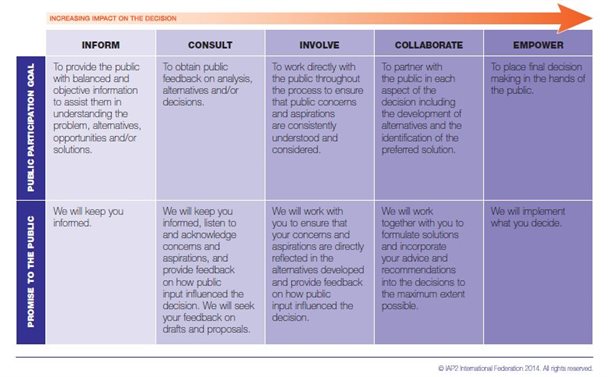
The Policy (Attachment 2) confirms that Council’s approach is based on the principles of effective community participation as outlined in the internationally recognised International Association for Public Participation (IAP2) guidelines.
The Plan (Attachment 3) outlines required resources, focus areas for action and desired results.
K Alexander moved, L Gardner seconded -
That Council approves the Community Engagement Policy and Plan.
Carried.
The need for a refreshed approach to community engagement at the City was driven by the following factors:
The City’s development of a new purpose statement - Working together for a thriving community and organisation values; prioritise people and promote processes that place people at the centre of council business.
The 2016 Commission of Inquiry into Greater Geelong City Council identified that one of the key components of best practice governance is strong community engagement as it enables the community’s views to be included in the decision-making process.
Both Susan Halliday Culture Review 2015-2016 and the Community Action Plan (endorsed by Council in October 2016).
The extensive Our Future engagement for the Greater Geelong long-term vision impacts the way the City engages in two ways: a heightened expectation from the community on how, and the level of engagement, the City will now undertake engagement activities; and the data attained during engagement is an important resource to be accessed and reviewed by all officers before undertaking engagements into the future.
The City’s decision to expand Positive Duty beyond the legal requirements of the Victorian Equal Opportunity Act and apply to all roles and functions including how Council engages with business and community members.
The Local Government Act Review proposes key reforms which are focussed on encouraging greater participation in Council. The reforms seek to enhance democracy, diversity of representation, Council transparency and responsiveness to the community and the state.
The Victorian Government’s response to the Citizens Jury recommendations relating to deliberative democracy practices provides further evidence and demand for quality community engagement.
To address the above information and findings, we must set a new policy direction and implement a comprehensive engagement plan to enhance our practice and reach our desired outcomes.
The City’s proposed Community Engagement Plan outlines how we will enhance engagement practice within the organisation over three years and is focused around our organisational purpose; Working together for a thriving community.
Quality community engagement practice is embedded and supported through our values; make people the centre of business, create a healthy and safe environment for all, respect and encourage each other and embrace new ideas and better ways to work.
The Plan has been developed around five pillars and include:
Relationships;
Practice and knowledge;
Workforce capability;
Leadership and policy; and
Monitor and improve.
The Policy and Plan is informed by current good practice models such as the IAP2 engagement standards, principles and code of ethics. Using these standards and principles the Policy outlines when we will engage and our engagement promise. The IAP2 public participation spectrum is used to define the level of participation for each engagement.
The outcomes for implementing good community engagement practice at the City will lead to:
Improved decision making by Council which reflects the best interest of all sections of our community;
Improved community confidence in Council and the decisions that are made;
Increased capacity and participation by all sections of the community in engagement activities;
Improved community knowledge about the role of Council and the process of how decisions are made; and
Increased opportunities for collaboration with stakeholders.
Current resources for the Community Engagement Plan implementation are being reviewed as part of planning for the 2017-18 and future budgets. It is an expectation that an increase of resources in such areas as training and staffing is required.
Council staff have been consulted via semi-formal interviews and focus group consultations conducted in collaboration with the City’s Marketing and Communications Department.
A fact sheet explaining our approach to community engagement will be produced upon adoption of the policy and framework for the community (and will include languages other than English). Information about our approach to community engagement will also be communicated via the Geelong Australia website.
Further consultation and research will be undertaken with the Community about engagement as part of the implementation of the Plan.
The following legislation outlines specific requirements relating to community engagement:
Councillor Code of Conduct;
Staff Code of Conduct;
Victorian Charter of Human Rights and responsibilities Act 2006;
Local Government Act 1989;
Planning Environment Act 2007; and
Public Health and Wellbeing Act 2008.
Community engagement relates to all areas of City Plan. Community engagement is central to the development, implementation and evaluation of City Plan.
Community engagement is directly linked and impacts the City’s reputation.
Council Officers have no direct or indirect conflict of interest in preparing this report.
No human rights will be affected by the recommendation of this report.
Community Engagement |
Document No: |
CPL |
Approval Date: |
Draft |
|
Approved By: |
Council |
|
Review Date: |
26-02-2019 |
|
Responsible Officer: Manager Strategy and Program Delivery |
Version No |
03 |
Authorising Officer: |
Chief Executive Officer |
This policy outlines our commitment and approach to community engagement at the City of Greater Geelong (the City).
The City is committed to working with our community and considers community engagement an essential element of good governance.
This policy applies to all areas of the City and provides a framework for Councillors, Council Officers and consultants/agencies acting on behalf of the City.
This policy should be implemented in line with the City’s Corporate Communications Strategy and Internal Communication Strategy, which support internal and external engagement through appropriate corporate communication and marketing activities.
Code of Conduct - Councillor
Code of Conduct - Staff
IAP2 Code of Ethics for Community Engagement Practitioners
Victorian Charter of Human Rights and Responsibilities Act 2006
Local Government Act 1989
Planning and Environment Act 2007
Public Health and Wellbeing Act 2008
Municipal Early Years Plan 2013-2017
Multicultural Action Plan
Karreenga Aboriginal Action Plan
Youth Development Strategic Plan
Disability Action Plan
Corporate Communications Strategy
Internal Communications Strategy
Plain English Guide and Writing Standard
Diversity Policy
Community - a real or online group of people united by at least one common characteristic such as geography, shared interests, experiences, values or attitudes.
Engagement - refers to the many ways in which a council connects with its community, and the community connects with a council to exchange views, ideas and information in the development and implementation of strategy, policies, programs and services.
Communication - refers to the many ways in which a council connects and engages with its community to provide information to help its members understand how we spend public money and why.
Stakeholder - a person, group or organisation who may be affected by, have a specific interest in, or influence over, a council decision or issue under consideration.
Continuous quality community engagement at the City will lead to:
Improved decision making by the City and its Council that reflects the best interest of all sections of our community;
Improved community confidence in Council and the decisions that it makes;
Increased capacity and participation by all sections of the community in engagement activities;
Improved community knowledge about the role of the City and its Council, and the democratic decision-making process; and
Increased opportunities for the City and its Council to collaborate with its stakeholders.
The City’s Community Engagement Plan is focused around our organisational purpose Working together for a thriving community. Quality community engagement practice is embedded and supported through our values:
Make people the centre of business;
Create a healthy and safe environment for all;
Respect and encourage each other; and
Embrace new ideas and better ways to work.
When we will engage:
The City will identify the most appropriate engagement methods in order to uphold our values and improve outcomes when:
we’re making plans – for example, developing strategies
we’re changing something – for example levels of service
our decision is likely to impact on people and the places they live, work and play
we’re required by law to do so.
There are times when we will not engage:
Some situations are not suited to community engagement. These include:
when decisions must be made immediately
when decisions relate to the City’s day-to-day business operations
when legal or commercial restrictions prevent it.
Our community engagement promise:
We will:
Plan our engagements to be timely, open and easily understood.
Make sure engagement activities are inclusive, accessible and seek a diverse range of perspectives.
Be upfront about how much opportunity there is to influence a decision.
Define the community’s role in any community engagement process using the IAP2 Public Participation Spectrum (see below).
Provide information to support meaningful community participation.
Use a variety of engagement techniques that meet the needs and interests of the community.
Let the community know how their input has influenced our decision.
Learn from each experience to review and improve our practice.
As members of the International Association of Public Participation (IAP2), the City commits to the IAP2 Code of Ethics for community engagement practitioners. This set of principles guides us in our practice of enhancing the integrity of the public participation process.
Quality records shall be retained for at least the period shown below.
Record |
Retention/Disposal Responsibility |
Retention Period |
Location |
|
|
|
|
|
|
|
|
Community Engagement Plan.
Source: |
Community Life - Social Planning & Investment |
Director: |
Linda Quinn |
Index Reference: |
Sport & Recreation |
The purpose of this report is to seek Council endorsement to develop an application to the State Government’s Country Football and Netball Program (CFNP).
Each year, the State Government allocates funding for sport and recreation projects through a number of grant programs.
The CFNP aims to improve football and netball facilities in rural, regional and outer metropolitan areas through funding for infrastructure developments.
Local Authorities receive the initial expressions of interest from clubs and are then required to shortlist the EoIs and make a recommendation to Sport and Recreation Victoria (SRV).
Applications must be submitted to SRV by 26 July 2017.
Four (4) expressions of interest have been assessed by officers, being:
Geelong Amateur Football Netball Club – oval 2 floodlighting upgrade.
Anakie Football Netball Club – floodlighting upgrade.
Ocean Grove Collendina Junior Football Club – floodlighting upgrade.
East Geelong Football Netball Club – umpire change room upgrade.
The East Geelong Football Netball Club project is recommended for submission. This project is deemed to have the strongest alignment to Council priorities and the CFNP funding criteria. The project will also address ongoing non-compliance concerns and provide for more appropriate female umpire change facilities.
The total project cost is $431,000. The project is requesting a contribution of $100,000 from the CFNP being the maximum grant available. Therefore, only one application is being recommended to Council.
Should this project be successful in seeking funding from SRV, a business case will be submitted to the 2018/19 budget process for consideration by Council.
P Dorling moved, L Gardner seconded -
That Council:
Endorses development of a submission to Sport & Recreation Victoria’s Country Football and Netball Program for the upgrade to the East Geelong Football Netball Club Umpire Change Rooms (the Project);
Notes that should the project submission be successful the projected Council contribution of $331,000 will be referred to the 2018-19 Budget process.
Carried.
Each year, the Victorian Government provides funding via its Country Football and Netball Program (CFNP) for the development of regional infrastructure projects that directly benefit football and netball clubs.
The details of this program are:
Country Football and Netball Program |
|
Who can apply |
Local Government Authorities |
Number of applications |
Up to three (3) per Council seeking a maximum total amount of $100,000 |
Maximum grant amount |
$100,000 |
Maximum project cost |
No limit |
Funding Ratio** (minimum) |
1.5 State: 1 Local |
**Funding ratio is specific for regional cities
CoGG opened the Expression of Interest (EoI) process on 2 June, 2017 for a period of two weeks. The EoI process was advertised through the local media.
Four (4) EoIs were received, which consisted of three (3) from football and netball clubs and one (1) being an EoI submitted by Council officers. In evaluating the EoI’s, Council officers have assessed the applications against the CFNP funding criteria (Attachment 2), Council budget drivers and the Our Future community indicators.
In addition, discussions were held with local SRV and AFL Barwon representatives who both provided a level of comfort for the proposed project. The assessment of applicants can be found within the EoI Assessment (Attachment 3).
The East Geelong Football Netball Club Umpire Change Rooms upgrade project has been identified as the preferred application, providing best community outcomes and chance of success.
Preferred Application: Upgrade to the East Geelong Football Netball Club Umpire Change Rooms
Description: This project will address issues around non-compliance of the current umpire facility at East Geelong Football Netball Club (Richmond Crescent Reserve). The facility does not meet designated sporting facility standards or building code, resulting in umpires having to utilise the netball change rooms in the interim. The use of netball change for umpires is resulting in displaced female players. In addition, future games are in jeopardy of being cancelled at this venue due to non-compliance. The upgrade to the umpire facility will create a modern, accessible, unisex change facility.
Project costs
|
Funding Source |
Confirmed |
Amount |
Country Football Netball Program |
N |
$100,000 |
Council contribution required in 2018/19 |
N |
$331,000 |
|
Total project cost |
$431,000 |
|
Should the funding submission to SRV be successful, Council will be expected to make a commitment to the project in the 2018-19 financial year of $331,000
The following consultation and communication was undertaken during the expression of interest and evaluation process:
Expressions of interest were advertised via:
City News
Emailed directly to all football and netball clubs
CoGG e-newsletter
Stakeholders consulted included:
AFL Barwon
Sporting Clubs
SRV Representatives
Supporting strategies referred to:
G21 AFL Barwon Regional Strategy
There are no legislative or legal ramifications associated with the adoption of this report.
The recommended project will align to the City Plan’s priority of Community Wellbeing, encouraging healthy lifestyles and connected communities through active recreation and participation in sport.
No Council Officers engaged in the creation of this report have a direct or indirect interest in the matter.
There are no immediate risks associated with this report. The project proposed does address a current risk of non-compliance at one of CoGG owned venues..
There are no foreseeable environmental implications associated with this report. Environmentally sustainable design initiatives are incorporated into the design.
Source: |
Finance & Strategy - Strategy & Program Delivery |
Director: |
Joanne Moloney |
Index Reference: |
Corporate Strategy |
To present the 30-year community vision (Attachment 2) which has been developed following the Our Future community engagement.
In response to recommendation three of the Commission of Inquiry 2016 report, the City of Greater Geelong (“City”) has developed a 30-year outcome focused vision and strategy in consultation with the community.
The Our Future engagement project ran between August 2016 and May 2017 to determine how our community would describe a 30-year vision for the region to ensure a thriving, inclusive and sustainable future. Through a series of workshops, community events, community meetings, and school visits, over 16,000 people had their say. The culmination of this project was the Our Future Assembly, with 350 participants attending and coming to a consensus on what the 30-year vision for Geelong should be.
The document, Greater Geelong: A Clever and Creative Future, is the outcome of the Our Future project.
The vision presents 30-year aspirations and targets for the City to work towards. Delivery will involve ongoing key partnerships and stakeholder involvement. The Our Future project required a Partner Group that will continue to be involved in the project implementation.
Implementation (Attachment 3) will also involve all departments within the Council and the broader community.
K Alexander moved, L Gardner seconded -
That Council endorses:
the 30-year vision, aspirations and indicators to guide the organisation’s strategies to invest and develop Greater Geelong;
a review by the City’s audit function of each new four-year council plan and the alignment of outcomes with Greater Geelong: A Clever and Creative Future;
a yearly review and report to the community outlining progress against the indicators in Greater Geelong: A Clever and Creative Future;
the 12 month Implementation Plan to implement and embed Greater Geelong: A Clever and Creative Future into the organisation and community;
a 10-year refresh of Greater Geelong: A Clever and Creative Future;
the City’s strategic planning framework;
that the community is acknowledged and thanked for their involvement in producing Greater Geelong: A Clever and Creative Future.
Carried.
Greater Geelong: A Clever and Creative Future is the outcome of the Our Future project – an extensive 10 month community engagement project. From August 2016 to May 2017, the City heard from over 16,000 people from our community during workshops, event appearances, community meetings and school visits.
During the initial engagement phase, over 10,000 people told us about their aspirations for our region and what they think it should look like 30 years from now. The second stage ‘Time to Decide’ involved the Greater Geelong community delving deeper into community-generated ideas formed during the initial engagement. Over 5,000 people contributed to this phase of engagement.
On Saturday 6 May, 2017, 350 people from the Greater Geelong community attended the Our Future Assembly to discuss, debate, deliberate and decide on a community-vision for our region. Participants were encouraged to listen, discuss and contemplate Greater Geelong’s future before voting on their preferred outcome. A clear majority of people had a preference for Greater Geelong to be internationally recognised as a clever and creative city-region that is forward looking, enterprising and agile, and cares for its people and environment.
Greater Geelong: A Clever and Creative Future will provide the framework and priority areas for the next Council Plan.
Key risks include the failure of the incoming councillors to ‘own’ and adopt the vision as their own, and failing to keep the vision ‘alive’, visible and front-of-mind with the community and stakeholders.
Failure to implement the vision and aspirations outlined in the document presents a significant reputational risk to the City, given the level of community engagement throughout this project. Commitment to implementation has been made publicly throughout the engagement process. A detailed implementation plan has been developed for the next 12 months in order to commence this process. The organisation’s Strategic Planning Framework has also been reviewed to align to the community vision.
Council Officers have no direct or indirect conflict of interest in preparing this report.
No human rights will be affected by the recommendation of this report.
Source: |
City Services - Engineering Services |
Director: |
Peter Godfrey |
Index Reference: |
Graffiti |
For Council to revoke the Graffiti Management Policy CPL240.2, Graffiti Artwork Permits CPL240.3 and Graffiti Removal CPL240.4 and to note the new Graffiti Management Strategy to replace the requirement for these policies.
The current City of Greater Geelong Graffiti Management Policy has been in existence since 2003 and was developed with support from the Graffiti Reference Group. It has provided a very solid basis for the successful management of graffiti in the City of Greater Geelong.
The objective of the new Graffiti Management Strategy is to provide a current operational framework for the City of Greater Geelong to manage graffiti and to provide clear information to private property owners about their responsibilities in relation to graffiti management on their own properties.
The review by internal stakeholder units examined current policies and best practice graffiti management. This initiative produced a single document that is current and relevant and consolidated the principles of the Graffiti Artwork Permits Policy 240.3, the 2003 Graffiti Management Policy 240.2 and the 2003 Graffiti Removal Policy into one Graffiti Management Strategy document.
The Graffiti Management Strategy acknowledges the operational nature of graffiti management in the City of Greater Geelong.
The Graffiti Management Strategy provides clarification in relation to street art and some clearer wording about what is considered acceptable.
The 2003 Policies used outdated language and referred to operational practises and initiatives that are no longer part of the graffiti management program at the City.
Significant changes were required to ensure the Graffiti Management Strategy is seen as ‘best practice’.
The Graffiti Management Strategy updates the removal principles from Removal, Prevention and Policing to the 4 E’s – Eradication, Education, Engagement and Enforcement.
Clearer guidelines have been included to allow the public to understand what the City can remove and the responsibilities of private property and business owners.
L Gardner moved, P Dorling seconded -
That Council:
endorse the 2017 Graffiti Management Strategy (Attachment 2);
revoke Graffiti Management Policy CPL240.2 (Attachment 3); Graffiti Artworks Permits CPL240.3 (Attachment 4) and Graffiti Removal CPL240.4 (Attachment 5).
Carried.
This policy review has no impacts on the current budget.
This Graffiti Management Strategy has been reviewed by staff from internal business units and the Graffiti Working Group which incorporates staff from Engineering Services, Youth Development, Arts and Culture, Community Development, Sport and Recreation. Also included the Graffiti Working Group are external stakeholders from Victoria Police and the Department of Corrections who also had opportunity input to the new strategy.
The Graffiti Management Strategy has been developed to ensure it meets the requirements of the Graffiti Prevention Act 2007
The Graffiti Management Strategy aligns with the City Plan in relation to how we do business. By clarifying and simplifying the graffiti management documentation we are ensuring that both internal and external stakeholders can be clear about how the City of Greater Geelong manages graffiti.
Source: |
Finance & Strategy – Property & Procurement |
CEO: |
Joanne Moloney |
Index Reference: |
Policies and Procedures |
To provide information for Council to revoke the Sale, Exchange, Transfer and Use of Council Land Policy.
Council owns and controls a substantial amount of property. The sale or disposal of land, along with the purchase of land, is an integral part of Council’s property asset management cycle as it aims to match the provision of property with its operational and other objectives, and ensure that its holdings are used and managed efficiently.
Council is bound by legislative provisions, including the Local Government Act 1989 (the Act) in relation to the sale and purchase of land. These legislative provisions and the Local Government Best Practice Guideline for the Sale, Exchange and Transfer of Land provide the overall framework within which Council conducts land sales.
The Local Government Act 1989 enables Council to delegate to the Chief Executive Officer (“CEO”) with specified exemptions, “any power duty or function of a council under this Act or any other Act”. The CEO has delegated authority to execute contracts up to $2 million under the Council to CEO Instrument of Delegation dated 27 September 2016.
The existing Sale, Exchange, Transfer and Use of Council Land Policy limits the Chief Executive Officer’s ability to dispose of Council land (minor property transactions) up to the value of $150,000 with the provision that the land is not zoned for public recreation, open space or conservation and that the Ward Councillor is consulted.
Based on the Commission of Inquiry recommendation that Council policies, systems, processes and operations meet contemporary governance standards, a review was undertaken of the Sale, Exchange, Transfer and Use of Council Land Policy.
The review found that the Policy was not required as the Instrument of Delegation, as determined by the Local Government Act 1989, ensures sufficient oversight and control in the sale, exchange, transfer and use of Council land in relation to minor property transactions.
L Gardner moved, P Dorling seconded -
That Council:
revoke the Sale, Exchange, Transfer and Use of Council Land Policy (Attachment 2) adopted at Council Meeting 10 February 2015; and
notes that the Chief Executive Officer has authority to execute contracts in accordance with the Instrument of Delegation Council to CEO dated
27 September 2016.
Carried.
Revoking the Sale, Exchange, Transfer and Use of Council Land Policy ensures that Council is not deliberating on minor land transactions that are more effectively undertaken by the CEO under existing delegations.
All land sales are required to be advertised under s189 of the Act whether approved under delegation or by Council. If submissions are received they are considered by Council which makes a final decision on the sale, unless a special committee is established for this purpose.
No human rights will be affected by the recommendation of this report.
Relevant internal departments have been consulted in the preparation of this report.
There is no Council Officer direct or indirect interest involved in this report.
SALE, EXCHANGE, TRANSFER AND USE OF COUNCIL LAND POLICY |
Document No: |
CPL535.1 |
Approval Date: |
10 February 2015 |
|
Approved By: |
Council |
|
Review Date: |
10 February 2018 |
|
Responsible Officer: General Manager, Strategy & Performance |
Version No |
01 |
Authorising Officer: |
Chief Executive Officer |
|
To outline the general principles Council will apply in the sale, exchange, transfer and use of Council land.
Applies to all Councillors and employees and contractors of the City of Greater Geelong.
This policy does not extend to the sale of land for non-payment of rates which is covered by Council’s Debt Management – Sale of Property policy.
Local Government Act 1989.
Local Government Best Practice Guideline on the Sale, Exchange and Transfer of Land (June 2009). Found at http://www.dpcd.vic.gov.au/__data/assets/pdf_file/0017/53081/Local-Government-Best-Practice-Guideline-for-the-Sale-and-Exchange-of-Land.pdf
Sale of Land Matrix.
Sale, Exchange, Transfer and Use of Council Land– Advice to Interested Parties
Sale of land means the sale, exchange, transfer and use of Council land. Sale of Council land occurs whether or not the title transfers to a purchaser.
Council must have regard to the following general practices and procedures when selling land:
All sales must comply with the provisions of the Local Government Act 1989 and the Local Government Guideline on the Sale, Exchange and Transfer of Land (June 2009) and this Policy.
A property sales matrix will be prepared and maintained;
For adoption by Council as part of the annual budget process;
To form the basis of annual quarterly reporting on sales;
To take a longer term view of properties for potential sale that are no longer required.
The Council will prepare and make available publically a document entitled Sale, Exchange, Transfer and Use of Council Land – Advice to Interested Parties which provides further information on the sale of land processes.
Land may be exchanged with other owners and provision should be made in the budget for both the sale and purchase of the land involved in the exchange. Exchanges of land usually involve simultaneous settlement of contracts of sale.
Land sales should wherever possible be conducted through a public process. A public process includes:
Public auction
Public tender
Expression of Interest or public registration
Listing through a real estate agent
Land sales must be in the community’s best interest and maximise community benefit.
Generally land sales should occur at not less than the market value.
When selling land at less than market value the Council:
may consider environmental, social, community and other objectives and the alignment with Council’s strategic directions; and
will make the reasons for the sale known to the public.
Minor property transactions of less than $150,000 will be approved under delegation by the CEO providing;
the land if transferred is not zoned for public recreation, open space or conservation purposes;
the Ward Councillor is consulted prior to giving notice of intention to sell the land.
Quality Records shall be retained for at least the period shown below.
Record |
Retention/Disposal Responsibility |
Retention Period |
Location |
Master schedule for property transactions |
Property Advisor |
As per PROV |
Dataworks |
Nil
Contents | Previous Page: Section A - Procedural Matters | Next Page: Section C - Assembly of Councillors
