
Council Minutes - Section B: Reports - 24 July 2018
Contents | Previous Page: Section A - Procedural Matters | Next Page: Section C - Notices of Motion
Contents | Previous Page: Section A - Procedural Matters | Next Page: Section C - Notices of Motion
Reports tabled at the Ordinary Meeting of Council on Tuesday date held at the Council Conference and Reception Centre in City Hall, 57 Little Malop Street, Geelong.
Live Streaming and Publishing Recordings of Council Meetings Policy
Tender T1800038 - Drysdale Integrated Children's Centre (Confidential)
Tender T1800039 - Purnell Road Children's and Family Centre (Confidential)
Contractual Matter (Confidential)
Source: |
Governance & Legal Services |
Executive Manager: |
Rebecca Leonard |
Index Reference: |
Council Meetings |
Portfolio: |
Strategy and Communication |
To seek Council approval of the amended Live Streaming and Publishing Recordings of Council Meetings Policy.
In response to the Citizens’ Jury recommendation that Council broadcast Council meetings through multiple media platforms, Council approved the Live Streaming and Publishing Recordings of Council Meetings Policy (“Policy”) (Attachment 2) in September 2017. The Policy provides a framework for how Council meetings could be streamed and/or recorded and published.
In March 2018 Council resolved to implement live streaming and publishing recordings of Council meetings by 24 July 2018.
In conjunction with the commencement of live streaming and publishing recordings of Council meetings, the Policy has been reviewed. A number of minor changes are proposed to support the introduction of live streaming and publishing recordings of Council meetings, as follows:
The Policy provides for Council meetings to be live-streamed on the Council’s facebook page. During the design of equipment the technical process for live streaming of Council meetings, live streaming on the City’s webpage rather than directly onto facebook was identified as the preferred method of streaming to provide greater control of content and accessibility to the public. During the meeting, live streaming on the City’s website will be promoted on City’s facebook page which will be used to refer viewers to the City’s website during a Council meeting (clause 5.1);
The Chief Executive Officer has the discretion:
to not upload or publish a recording of a Council meeting (clause 5.3); and
together with the Chairperson, to terminate the live stream of a Council meeting in accordance with the Policy (clause 5.8);
The recordings of Council meetings must be maintained in accordance with the City’s records and Document Management Policy (clause 5.9);
In line with the recommendation adopted by Council in March 2018, the requirement to report on the use and access to live streaming and published recordings of Council meetings will be provided to the Council every six months (clause 6);
Notices and disclaimers in Attachments 1-4 in the Policy have been reviewed and amended to more directly communicate with members of the public attending and/or viewing Council meetings.
Councillor Asher moved, Councillor Grzybek seconded -
That Council approves and adopts the amended Live Streaming and Publishing Recordings of Council Meetings Policy.
Carried.
The cost of upgrading existing equipment and purchasing and installing new equipment to support recording and publishing recordings of Council meetings is expected to be $80,000 over three years. Additional staff attendance may still be required to support the live streaming and publishing recordings of Council meetings with an estimated cost of $30,000 per year.
The Citizens’ Jury considered the issue of live streaming Council meetings. No other community consultation has been undertaken in relation to this policy. In accordance with our Community Engagement Policy, any changes would need to be communicated to the community.
Council meeting content may be made more accessible to the community through live streaming and/or publishing recordings of Council meetings.
Legal risks associated with live streaming and publishing recordings are addressed in the Live Streaming and Publishing Recordings of Council Meetings Policy.
The live streaming and/or publishing of recordings of Council meetings aligns with the following Council Plan pillars:
A more inclusive and diverse community;
Organisational leadership, strategy and governance.
There are no known conflicts of interest for anyone involved in the preparation of this report.
A risk assessment has been completed to identify key risks of recording and publishing recordings of Council meetings. Those risks have been considered in the Live Streaming and Publishing Recordings of Council Meetings Policy.
No direct environmental implications arise from this report.
Source: |
Investment & Attraction / Economic Development & Events |
Director: |
Brett Luxford |
Index Reference: |
SUB-17-3197 UNESCO Creative Cities |
Portfolio: |
Economic Development |
To detail the findings following attendance by the Mayor at the UNESCO Creative Cities Network (UCCN) Annual General meeting in Krakow and Katowice, Poland, a study tour to two Cities of Design Dundee, Scotland and Turin, Italy, which included visits to waste to energy plants, and meetings with Air Asia in Kuala Lumpur.
On the 31 October 2017 Council was notified that the City’s application to become a member of the UNESCO Creative Cities Network (UCCN) was successful in the field of design.
Council is the designated Geelong UNESCO Creative City Secretariat, and one of the obligations as Secretariat is for the Mayor, or designated delegate, to attend UNESCO UCCN Annual General Meetings (AGMs). The 2018 AGM was held in Krakow and Katowice, Poland between 12-15 June.
The Mayor’s attendance was approved by Council on the 17 April 2018. The Mayor was accompanied by Manager Economic Development and Events, Tim Ellis.
The objectives of attending the UCCN AGM were to better understand the UNESCO UCCN network, to build relationships with like cities, to understand and determine how the City can effectively leverage the UNESCO designation and its benefits to Geelong, to research the governance structures and resources of other cities, and to share Geelong’s design projects with the network.
The study tour also included visits to two waste to energy plants in Dundee and Turin. This was to assist Geelong to understand the opportunities that exist in waste to energy and to help Geelong establish a position to progress an alternative solution to landfill for municipal waste.
Following an invitation from the CEO of Avalon Airport, the Mayor also attended meetings with Air Asia in Kuala Lumpur to demonstrate Geelong’s commitment to Air Asia and its recent announcement to operate international flights from Avalon Airport to Kuala Lumpur.
A report detailing the findings from the UNESCO AGM and City of Design (COD) Sub Network meetings, and the COD Sub Network study tour to Dundee and Turin are included in Attachment 1. Findings from the visits to the two waste to energy plants in Turin and Dundee are included in Attachment 2. Findings from the meetings with Air Asia in Kuala Lumpur are included in Attachment 3.
Attendance at the UCCN AGM supported the objectives of the trip, namely to fulfil one of Geelong’s obligations as a designated city.
The trip was successful in creating contacts with like cities, understanding how the network works, sharing Geelong’s story and projects on the international stage, learning from others in the network, understanding the structures and resources other cities deploy to support their designation, and to bring back to Geelong examples of projects being delivered around the world.
The visit to the two waste to energy plants in Dundee and Turin provided valuable insight into the waste to energy operations, the commercial structures, the policies driving the decision by local municipalities to invest and partner with the private sector, the timeframes involved and the challenges encountered to commission a plant.
The visit to Kuala Lumpur provided a rare chance for representatives from the City to meet with the CEO of Air Asia, and reinforced the links between Asia and Greater Geelong.
Councillor Mansfield moved, Councillor Mason seconded -
That Council:
note the findings and next steps from the attached report and attachments;
use the findings from the attached report to progress the development of a plan, share learnings and to continue to build relationships with other Cities of Design to effectively deliver on our obligations and opportunities, and to continue to raise awareness of Geelong’s UNESCO City of Design status; and
progress discussions with other Councils to explore opportunities for a waste to energy operation west of Melbourne, while continuing to advocate for a circular economy as the City of Greater Geelong’s primary waste management objective.
Carried.
The travel costs for the Mayor and Council officer to attend the 2018 UCCN AGM 2018 and the visits to Turin, Dundee and Kuala Lumpur were $19,696.
Key stakeholders were engaged in the development of the application for the City of design designation including Deakin University, and the Australian Centre for Innovation and Design (ACID), Councils Arts and Culture Unit and Creative Geelong.
There will be significant ongoing community and stakeholder engagement as the activities to support Geelong’s city of design designations progresses.
Any proposed waste to energy solution will require significant transparent engagement and communications with the community.
There will be ongoing engagement and communications in relation to international flights to Kuala Lumpur with the community, as well as the tourism and agribusiness industries.
One of the primary aims of the UCCN is a commitment to the UNESCO Sustainable Development Goals and in particular Goal #11, Sustainable Cities and Communities. Member cities are tasked with developing and influencing policy in support of this objective.
Through our membership we reiterated our commitment to the network’s Mission Statement and Strategic Framework, further integrating culture and creativity within initiatives, policies and projects implemented at the local level. This includes a commitment to promoting diversity, gender equality and youth empowerment.
There are no legal or statutory implications in this report.
As a member of the network, we commit to using the membership to drive policies, strategies and activities towards the United Nations Sustainable Goal #11.
All three aspects of the study tour align with the current Council Plan 2018-22. Pursing the UNESCO City of Design designation to secure economic development projects aligns with section eight - A Thriving and Sustainable Economy. Supporting international flights via Avalon and attracting international visitors aligns with section nine - Growing Our Tourism and Events. Waste to energy supports Council Plan section five - Effective Environmental Management, Identify Waste to Energy Options For Our Region.
No Council officers who provided advice in relation to this report have declared a conflict of interest regarding this report.
There are no notable risks associated with this report, however, as the projects in this report are scoped in more detail, there are likely to be risks, particularly as it relates to Council’s future management of municipal waste and the community social license to progress a waste to energy plant.
Council has identified the need to take a leadership role to address waste, climate change and environmental challenges. As Geelong continues to experience annual growth of 2.5% the implications for waste management and the environment will continue to increase. Pursuing a waste to energy solution is potentially an option to manage the environmental implications and community expectations.
Introduction
On 31 October 2017, Council was notified that its application to become a member of the UNESCO Creative Cities Network (UCCN) was successful in the field of design.
Geelong is Australia’s first (and only) City of Design and the only non-capital city in Australia to have a UCCN designation. Other Australian members of the UNCCN are Melbourne (Literature), Sydney (Film) and Adelaide (Music).
The UNESCO Creative City designation is a key step in Greater Geelong’s journey to transform our community’s clever and creative vision into reality.
One of Council’s obligations as designated Secretariat was for the Mayor, as Council’s lead representative, to attend UCCN Annual General Meetings. The 2018 Annual General Meeting was held in Krakow and Katowice, Poland, from 12-15 June 2018, which the Mayor and Council Officer Tim Ellis, Manager Economic Development and Events, attended.
The UCCN AGM hosts 180 creative cities from throughout the world, across seven creative designations. Geelong is a Creative City of Design, which boasts 31 member cities, known as the City of Design (COD) Sub Network.
The AGM included a series of meetings for all delegates, along with specific events for Mayors and for supporting officers at the relevant sub network meeting. The majority of the delegated cities are supported by their relevant governments, in line with the country’s government structure. This, as you would expect, varies across the world.
Objectives
To attend the UCCN AGM in Krakow and Katowice, Poland, and to visit two other Cities of Design, Dundee and Turin, to further explore how they have leveraged their City of Design designation.
Desired outcomes
To better understand and determine how best Council can leverage its UNESCO designation;
To deliver on our obligation as Secretariat to attend the UCCN AGM, and to gain an understanding of how the network operates;
To start forming relationships with other designated cities, and to learn more about the opportunities the network provides;
To understand the various governance structures and resources other cities have adopted to support their designations;
To understand/hear about the projects and activities other cities have developed and implemented, and whether these would be beneficial to implement in Geelong;
To share the Geelong story and the projects that we’re currently pursuing in support of our designation, including our Clever and Creative Vision, Geelong Regional Library and Heritage Centre,, Revitalising Central Geelong, Kardinia Park/ GMHBA stadium redevelopment, Mountain to Mouth, ManuFutures and Back To Back Theatre;
Based on the findings from the study tour, to use these findings to determine Geelong’s approach to establishing a Secretariat to coordinate awareness-raising activities, to facilitate a strategic advisory group, to create and coordinate the delivery of a number of project management plans (i.e. a strategic plan, a communications and marketing plan and a stakeholder engagement plan), and to support other stakeholders in the region to leverage off the UCCN designation.
City of Design (COD) Sub Network
The COD Sub Network consists of 31 member cities. Following the UCCN AGM the COD Sub Network met to discuss projects, opportunities and sub network matters.
Projects shared by COD cities
Saint Étienne introduced an exhibition ‘Are you talking to me’, which was co-produced with Enghien les bains (a spa town in the northern suburbs of Paris) for the UCCN AGM in 2017. The exhibition ran for a month in Enghien les bains, and for five months in Saint Etienne, with workshops for professionals, businesses and children on connected objects in Saint-Etienne.
Dundee introduced a design parade project with local communities and children, with a ‘COD /31 cities!’ theme. Children engaged in the international celebration (inspired by the design parade in Saint Étienne).
Detroit introduced its City of Design Action plan which outlines a plan for developing Detroit as a global leader in the practice of inclusive design, which considers the entire spectrum of human diversity and individual experiences to create solutions with a social impact. The plan calls for three areas of strategic focus: developing and promoting 21st century talent that is representative of Detroit; investing in Detroit’s design businesses and resources to advance design-driven industries; and developing a policy environment that embraces inclusive design.
Shenzhen introduced the Shenzhen Design Award for young talent, a Shenzhen design week and a global design competition.
Nagoya introduced a project to rebuild its castle. Nagoya used the opportunity to link tradition and design culture.
Kobe introduced a Design Strategy 2020, focussing on how designers can be embedded with technical staff to find new solutions to challenges the city is facing, specifically the decline of young people and an aging population. The group felt that the promotion of the place of designers in urban policy needed to be highlighted, and that the example of Kobe could be replicated in other cities.
Kobe has now created a process for the appointment of designers from the private sector on two to three year contracts as part of the city’s administration, under the direction of the city’s Director of Creative Design. The city’s design team receives ‘design challenges’, from which they select projects to implement. The team uses design process as a way of looking at the challenges arising from the Kobe 2020 vision.
The workshop heard specific examples of the way in which innovative thinking was addressing challenges, such as the ageing population and decrease in the number of young people, and a surplus of vacant houses and flats.
The main point, however, was the belief that Kobe city had benefitted from the involvement of designers in its urban policy process. To different extents other cities, such as Helsinki, Dundee and Singapore, have also used this as a strategic approach.
Montréal introduced its new design strategic plan, which includes a new design policy for the whole of Montreal. Montreal intends to animate this workshop to broaden the appeal and assist with communicating it to a larger community audience.
Graz introduced a project of ‘worldwide things collection’. This project was prepared as a prototype with Montreal and Mexico, with the aim of building bridges for economic models.
Kortrijk introduced 5x5 - a project to match designers with business for a 12-month period to design a product or service that is showcased at its annual design week. A junior and a senior designer is assigned to a business to develop the products. This is a license model and business are expected to pay a fee for access to the designers.
Helsinki introduced a participatory game for its civil servants to improve the services it delivers to the community. The game facilitates new ideas through design thinking, and encourages increased participation within the organisation.
Design thinking by definition “is a method for the practical, creative resolution of problems using the strategies designers use during the process of designing”.
It is a design methodology that provides a solution based approach to solving problems and typically has five stages. Empathise ( understand the problem you are trying to solve) , Define (define the problem statement), Ideate (generate ideas / new solutions), Prototype (the proposed solution to the problem), and Test ( test and refine).
Agreements
The COD Sub Network committed to use the following hashtags on social media when posting content that is relevant to the network
#UNESCOCitiesOfDesign #DesigningTheWorld
The COD Sub Network agreed on the following working groups for sub network meetings
Design and Business: moderated by Graz, Berlin and Istanbul;
Design Policy: moderated by Montreal, Kolding and Dundee;
Design and Schools: moderated by Helsinki, Kobe, Singapore and Bandung;
Communications: moderated by Puebla, Brasilia and Bilbao.
The COD Sub Network agreed to adopt proposed guidelines for global design competitions
UCCN Cities of Design have agreed to use a set of guidelines for global design competitions. The guidelines were proposed by Montreal to endorse competitions shared by member cities. Endorsement will be noted on the designcities.net website and through email communication among members.
Examples of COD Sub Network governance structures and resourcing
CITY |
STRUCTURE |
PEOPLE |
BUDGET |
PROJECTS / COMMENTS |
DUNDEE, SCOTLAND |
Local Government, led by the City of Dundee’s General Manager of Recreation and Culture |
2 full-time equivalent (FTE) positions (1 council position, 0.7 university position, 0.3 administration) |
500,000 pounds over three years (250,000 local, 250,000 Scottish) |
Driven by a culture strategy and a creative strategy |
GRAZ, AUSTRIA |
Independent organisation |
10 FTE positions ( 8 independent positions and 2 positions within council, from the economic development unit) |
500k EU a year, provided by Local Government, Chamber of Commerce and State Government |
Deliver design week, design forums and business engagement |
KORTRIJK, BELGIUM |
Joint venture with five partners, including Local Government, chamber of commerce, the local university and private sector |
4 FTE positions |
|
Well-established prior to designation. Projects include design week and 5x5, promoted by all five partners |
KOLDING, DENMARK |
Led by Local Government |
5 FTE positions |
|
Design for life Design for public sector |
TURIN, ITALY |
Local Government, led by the Deputy Mayor of Culture |
2 FTE positions, within a department of 60 people |
|
Accessible culture for all – physical, social and financial, with a focus on heritage |
HELSINKI, FINLAND |
Local Government, led by the economic development unit |
180 staff in the economic development unit, however there are zero dedicated staff for the UCCN designation |
|
10-year program, focussing on design thinking built into everything the council does. Excellent youth/kid education programs |
KOBE, JAPAN |
Local Government and independent design organisation |
3 FTE positions |
|
Designers employed in council to develop community services Education focus and community services focus |
Dundee, Scotland
Dundee was designated a City of Design in 2014 and is an excellent example of a city that is using culture to transform itself. The City of Dundee has used its UCCN designation to embed design thinking across its organisation, and to improve the liveability and attractiveness of the city.
Culture is valued throughout the organisation, particularly at a political level with support from all sides of government. Culture is not just seen as an opportunity to bring more dollars to the region but as something that provides a social return.
Dundee has recently completed the build of its Victoria and Albert Museum, an 80 million pound investment on its waterfront. The potential economic impact of 300,000-plus new visitors to the region is anticipated to be significant.
The city is, however, experiencing some difficult social problems, including its long-term unemployment and homelessness statistics for middle-aged men being some of the highest in the UK.
Dundee’s City of Design-related activities are driven by a 10-year culture strategy, with the UNESCO designation firmly embedded into the actions. Dundee council also has very strong relationship with Creative Dundee, and organisation that provides a collaborative space for creative people, and runs creative programs for the city.
One program that Creative Dundee delivers is a series of Pecha Kucha nights. Pecha Kucha Nights run in more than 1,000 cities throughout the world, and are a quick-fire way of hearing from people across the city and beyond. At Pecha Kucha Night Dundee there are 12 diverse individuals who speak about whatever they like in a speedy format – presenters have 20 images and 20 seconds per image. So, in under seven minutes speakers present interesting, thought-provoking and inspiring topics to an audience of more than 300 people.
Other projects have included a parade (for which Geelong provided a replica canoe from the Mountain to Mouth event) and ‘WeDundee’, which invited Dundee citizens to provide 80 words on how they would describe Dundee, with a view to engaging the community in its city of design designation. The results of the engagement were presented on a website.
Dundee is also currently collating an international database to ensure the right contacts are engaged for various activities, and that there is a sharing of data about activities with the organisations and people that engage internationally.
Turin was one of Italy’s main industrial centres that has now transitioned into a creative hub. Turin council manages its designation through its culture department, headed by an appointed Deputy Mayor. Turin’s focus for 2018 is on heritage and accessibility (accessibility in its broadest terms, i.e. social, physical and financial). Turin recognises that culture is an important asset for its city and innovation in design can, and does, support business growth.
Turin runs an annual design week in partnership with 40 stakeholders across the city, including museums, businesses and the university.
Turin is also in the process of embedding design thinking for staff through training in capacity building and design thinking processes. The council hopes this will change the nature of their service delivery and service design.
Turin is deploying a number of programs to enable the community to engage with culture, whether by free ‘culture passports’, a ‘finance to culture card’ or a culture passport for mothers of newborn babies to access cultural assets in the city.
Turin is currently developing a framework to oversee and guide its projects and to assist with reporting. There is an opportunity for Geelong to work with Turin to determine if there are learnings that will assist our region as we head down a similar path.
Turin has a full annual program of design events, which include UCCN activities, is engaged with the other Italian UNESCO designated cities, and is now mapping businesses engaged in design and cultural activities.
Turin has a dedicated innovation team, whose goal is to be a centre for entrepreneurs that want to trial and test their ideas. The aim of the group is to make it easy to start up and test your idea in the city. This has led to innovations, such as a robot bar and cultural events. The department also includes a smart city unit and a data analytics unit. Turin has expressed an interest in collaborating with Geelong, and this provides a number of opportunities for both cities.
Turin has held its design designation for more than 10 years, and would be an ideal UCCN city for Geelong to partner with.
Learnings
The main learning from the UCCN AGM, COD Sub Network meetings and COD Sub Network cities study tour to Dundee and Turin was an appreciation of the variety of ways cities use design as a means to develop and deliver services to their communities, to improve community liveability or to tackle problems their city faces. The activities are broad- ranging from health, to design weeks, to business programs to events.
All of the cities have a strong link and relationship with the universities located in their cities, whether through design education, access to students, job placements, design competitions, research programs, funding and staff secondments.
The COD Sub Network meetings highlighted the level of collaboration between the cities to share and work on projects together.
Another key learning from the visit to Dundee and Turin, and a main reason for selecting these cities to visit, is the similarities to Geelong.
All three cities have transitioned from a traditional manufacturing background, and all are located to close to other capital / major cities – Melbourne, Edinburgh and Milan. As these major cities grow so do Geelong, Milan and Dundee and this has to be planned for.
The impacts on transport, employment, connectivity all become challenges for the municipalities to manage. Geelong can learn from the experiences and examples of how Turin and Dundee have handled these challenges and how they have embed design thinking into our growth planning.
UCCN benefits and opportunities
Council’s designation to the COD Sub Network will benefit the Greater Geelong community in the following ways:
Improving Greater Geelong’s liveability by encouraging policy that supports design thinking, which will transform the community’s clever and creative vision aspirations into reality. This will be achieved by drawing on an international network of practitioners to share best practice, help solve problems and pursue funding.
Strengthening Greater Geelong’s international profile and leadership by providing visibility for our innovative policies, strategies and activities towards design thinking and sustainable urban development.
Increasing Greater Geelong’s regional and international attractiveness to economic investors and stakeholders, skilled design professionals and visitors, and to encourage the contribution of financial resources from the public and private sectors.
Providing access to a network of fellow UCCN members through joint events and common projects, facilitating knowledge sharing and creative partnerships.
Building momentum around Greater Geelong’s design capability by putting the spotlight on design thinking as a driving force, mobilising all stakeholders and encouraging dialogue between local authorities, public and private organisations, academia and our design community.
Growing and building the capacity of our creative industries sector by exposing designers to a global audience through participatory global events.
Facilitating the delivery of design thinking programs for businesses.
Increasing Greater Geelong’s recognition on the global stage.
Assisting our stakeholders to work internationally, including Deakin, ManuFutures, Study Geelong and Tourism Greater Geelong and the Bellarine,
Embedding design thinking into Local Government. There are a number of models used by other COD Sub Network members with the outcome of design professionals being based within the organisation to support the design of services to meet community needs.
Enhancing the use of events and UCCN brand to promote our culture, engagement with our creative industries and to increase multicultural awareness.
Use the designation to enhance existing events that align with the UCCN goals e.g the National Celtic Festival, Pako Festa and the opportunity further engage with international artists
Facilitating access for Geelong designers to attend or display their products at various International design weeks run by other member cities.
Showcasing Geelong’s best proactive projects and policies with the network on a global stage, for example our social inclusion and equity policies and programs.
Providing a link between design and youth and education through kid’s design weeks and school programs.
Increasing cultural accessibility by implementing similar projects used by COD Sub Network members, such as a ‘culture passport’ for kids.
Using our UNESCO brand to promote the projects undertaken as part of our city of design designation.
Supporting our branding of Geelong as a Clever and Creative City of Design.
Next steps
As previously highlighted, there are some key steps that should be taken to maximise our UNESCO Creative City designation. These include:
Establishing an advisory group to create and coordinate the delivery of a strategic plan;
Raising awareness of the designation and communicate opportunities to businesses, creative organisations, designers, Council, and organisations that can benefit from the designation, particularly on the international stage;
Developing strong relationships with a few UCCN COD Sub Network cities with similar backgrounds and aspirations, for example Dundee, Turin, Kolding and Kortrijk, with the objective of sharing and collaborating on projects to support Greater Geelong;
Identifying companies that utilise design thinking and determine opportunities for business and internally;
Encouraging design thinking to shape policy to address social challenges in the community.
Summary
The UNESCO City of Design designation provides Geelong with an opportunity to realise our clever and creative vision. Being a member of the network is a long-term proposition, which needs to be supported by a plan and resources, which must be reported and measured. It is also an opportunity to brand the city as a clever and creative city of design.
Design is used in a multitude of ways, as demonstrated by the vast variety of projects implemented by other COD Sub Network members. The underlining factor, however, is that ‘design thinking’ drives activities, whether in business, health programs, city design, delivery of events or managing social challenges and that culture is critical to support Geelong’s liveability.
Geelong is already delivering projects that support the UCCN sustainable development Goal #11 – Sustainable Cities and Communities. We achieve this through our policies on social inclusion, equity, our Council Plan, our clever and creative vision, our engagement with business, our arts and culture programs, the events we run, the city planning we undertake and our programs that support those at a disadvantage.
There are numerous other projects led by other organisations in Geelong that also support the UCCN goals. By utilising and engaging in the network we open ourselves up to the global stage to learn and collaborate.
The designation provides us with the opportunity to further promote Geelong nationally and internationally, and should support our international engagement activities.
The designation can assist in supporting the growth of our creative industries and expose our designers to the global stage. We can learn from cities that have embedded design thinking into their organisation, whether through professional staff seconded to departments or through formal training on design thinking for Local Government.
The conference was a great experience with many learnings. It is not necessarily about returning with something tangible but rather a change in how we think and plan for the future, using design in every aspect of our thinking and planning in a similar fashion to the other cities in the COD sub network.
Images
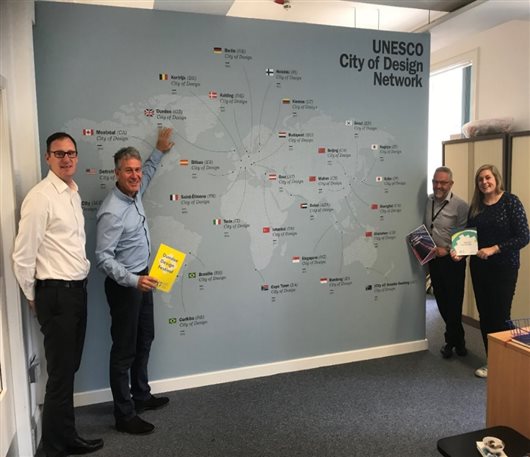
Tim Ellis, Councillor Bruce Harwood (CoGG) Stewart Murdoch, Annie Day City of Dundee – Dundee Office
STUDY TOUR TO DUNDEE, SCOTLAND AND TURIN, ITALY TO VISIT WASTE-TO- ENERGY PLANTS
Introduction
This report details the findings and information learned from the study tour to two waste-to-energy (WTE) plants in Dundee, Scotland and Turin, Italy. The study tour provided an opportunity to learn from the experience of Dundee and Turin, and to meet with the commercial operators of the WTE plants in these cities. Specifically the WTE plants visited burn municipal waste to generate energy.
Background
The decision to meet with both Dundee and Turin to learn about their WTE operations was based on Geelong’s attendance at the UNESCO Creative Cities Network (UCCN) AGM, following our recent acceptance into the Creative Cities Network in the field of design. Both Dundee and Turin are also UNESCO Cities of Design and have WTE operations.
United Kingdom, Italian and European Union (EU) policies have strongly influenced the decisions Turin and Dundee councils have made to develop alternatives to landfill. The 2008 EU Waste Framework Directive sets Europe’s waste policy, and has driven action to change municipal waste disposal processes.
The EU directive sets a reuse and recycling target of 65% by 2020, and a maximum of 10% of municipal waste to landfill by 2030. This has been instrumental in how municipalities across Europe are managing their waste. Based on the Waste Framework Directive, subsequent council decisions and investment in WTE operations, there is now broad acceptance by the community in Europe in support of WTE facilities. Technology is now well-proven, with relevant EU regulations supporting operations and controlling emission levels.
Australia is still reliant on landfill for the disposal of municipal waste. It is the cheap and easy option. However, with the Geelong landfill at Drysdale only having five more years of life expectancy, and with our expected population growth (increasing the waste task), continuing to simply bury waste is not a sustainable long-term option, nor does it meet our community’s expectations for sustainable waste disposal.
Dundee, Scotland
Dundee council’s decisions around waste management have been driven by its energy strategy for the city. This, in turn, responds to the EU Waste Framework Directive. WTE is one aspect of Dundee’s waste solution, along with recycling and recovery, community education, and green waste.
Dundee has operated a WTE plant since 2010, however, the current plant is old with outdated technology and is in the process of being decommissioned over the next three years while a new plant is being built adjacent to the current site by a private operator, German utility company MVV Environment. MVV is a well-established utility company in Europe and has numerous WTE plants throughout Europe, the largest being in Germany, and in the UK.
The new plant will be capable of managing 110,000 tonnes per year. It will initially manage 83,000 tonnes, 50,000 tonnes from Dundee and 33,000 tonnes from neighbouring shire, Angus. The Dundee plant is located on the edge of city, approximately 15 minutes from the centre in an industrial zone, and close to French tyre manufacturer, Michelin.
The new plant will be owned by Dundee and Angus councils, who created a joint venture agreement. The agreement is a 60/40 split, based on the volumes of waste provided to the WTE plant by each council. After a three-year tender, approvals and contract negotiation process, Dundee and Angus entered into a 28-year contract with MVV. The contract has very strong community focus, which was critical in the tender process. The community elements built into the contract to support the build and ongoing operations include:
Local supplier content
Supplier development
Local labour
Commitment to apprenticeships
Work experience for schools
Business mentoring for small to medium enterprises
Awareness -raising with the community
Environmental awareness programs
Donation of materials
Job vacancy sharing
A sponsorship fund for the community, with a focus on environmental programs
The contract has 71 key performance indicators, and is managed by the joint venture agreement. The contract includes a revenue share model, with 50% of revenue, after MVV have reached their business case revenue, going to the joint venture. The contract value is 500 million pounds sterling over the life of the contract, and the capital cost to build the plant is 110/120 million pounds sterling.
By setting the contract structure, Dundee and Angus councils have essentially passed the risk of their municipal waste to the private sector. Both councils have committed to provide the waste at an agreed cost per tonne (90 pounds), and this gives the councils security of budget for the next 28 years.
One of the primary elements to ensure a positive business case for the plant is its link with Michelin. During the WTE process the steam by-product is distributed to Michelin to provide energy for its operations. This link with industry is critical and supports Michelin’s carbon neutral agenda, while ensuring more than 1000 jobs remain in Dundee.
Dundee WTE plant’s head of operations stated that the importance of efficiency for any WTE plant is paramount. The efficiency of the plant is driven by the calorific value of the waste, and in turn determines the scope and engineering design of the plant. Waste by its nature is low in calorific value. High calorific value solid fuels include coal, carbon, coke, charcoal, high calorific liquid fuels include LNG, gasoline, ethane.
Therefore the type of waste going into the plant, now and into the future, needs to be analysed to ensure the plant is built for optimum efficiency and supports the types of waste feedstock. Thirty per cent efficiency is the highest that MVV currently strives for and its Plymouth, UK, WTE plant currently achieves 28% efficiency.
The new system being built in Dundee is a grate system (an automatic sorting system), which avoids the need for pre-sorting of the waste. The process is a typical energy generation operation i.e. fuel (in this case waste) is burned, to boil water, to create steam. The steam runs a turbine, which drives a generator, which produces electricity. As MVV is a utility company, it distributes and sells the electricity to the consumer, and the steam by-product is sold to Michelin. The other by-product is ‘bottom ash’, of which some can be used for materials for roads and a small percentage (1.5%) is still required to go to landfill. The plant produces its own energy to run the operation.
Of equal importance in progressing a WTE solution is community communication and education programs. It is vital to invest in community consultation and education, from household sorting, to collection, to promoting the benefits of using waste to create energy. A strong community communication plan is critical to demonstrate the benefits of the solution. MVV has appointed a community liaison officer in Dundee to work with the community, schools, etc to provide this education and to implement necessary community programs.
Turin, Italy
The Turin Trattamento Rifiuti Metropolitani (TRM) WTE plant is part-owned and operated by IREN Group, an Italian utility company. IREN is a producer, distributer and retailer of energy, with WTE making up 18% of its revenue. IREN also produces energy from water, wind, and biomass in Italy.
The WTE plant site in Turin is fully operational and manages 500,000 tonne per year, supporting 175,000 households’ energy needs. With energy and steam co-generation (energy going back into the plant to power the facility) this is reduced to 160,000 households, leaving steam district heating for 17,000 residents once completed.
Waste is collected from two million households across the region to support the plant and generates 62 megawatts (MwH) of energy, of which 55 MwH is exported. The plant receives 100 to 150 trucks per day and is located in an industrial zone area approximately 25 minutes from the centre of Turin.
The plant in Turin was also built in response to the EU waste policy. The WTE plant is a public/private partnership, with an IREN share of 80%, and the other 20% owned by 32 municipalities in the region that provide waste to the plant.
The head of operations at the plant, similar to Dundee, stressed the importance of the calorific value of the fuel to the plant. The calorific value of waste is very low compared to other fuel sources, such as coal. Waste is also not homogenous (or inconsistent) and the GRATE system is therefore the appropriate technical solution for Turin, as it can manage all types of waste going into the plant.
Apart from energy production there is residual waste bottom ash, metals and PSR (solid residue products). Bottom ash accounts for 20% and is sold for material for roads, 2% goes to landfill and 1.5% PSR is a solid residue used for materials for roads.
Emissions are strictly monitored and must be in line with EU regulations. The plant is designed with air filters that clean out the majority of the dust particles and emissions. Emissions are often cited by the community as an objection to burning waste, however, the technology is far advanced and the regulations so high and so strictly governed that this is not a valid technical reason to not burn waste.
Summary
Both plants visited have taken (or will take for Dundee) about six to nine years to be operational, this includes three to six years to undertake scoping, find partners, work through tender process, agree on contracts, and obtain planning and regulatory approvals, and then a further three years for the build and test.
European and national policy is instrumental in driving a standard approach to managing waste and subsequent investment in WTE. The plants visited are both operated by utility companies, who also have majority ownership in the plants. The technology used to turn waste into energy is dependent of the type of waste produced. The GRATE system avoids the requirement to sort municipal waste at the plant.
Full, open and transparent community engagement is the only way to make a WTE successful in the community, and social license for WTE will take a few years to be achieved. The alternative, our current waste to landfill approach, is not a sustainable option and does not meet our community’s expectation for sustainable waste disposal.
The solution and process in Turin, although a different design and scale, is the same as Dundee. Learnings from both visits demonstrated the community’s acceptance of WTE and the need to fully understand waste types now and into the future to ensure the design of a plant delivers the highest efficiency. The calorific value of the waste is critical to a WTE plant’s operations, and analysing the makeup of waste is an important part of the pre-planning process. This is particularly significant for Geelong as our region continues to grow and products in the market change.
WTE plants are not large generators of jobs post the build. WTE is only one part of a waste strategy – recycling and recovery, sorting at source, community education, green waste, bio mass, and bio digestion all play a role.
Next Steps
Follow-up with Wyndham City Council to discuss options and a joint approach to managing waste.
Advocate to State and Federal Government to drive policy, national targets and investment in a coordinated waste plan for Australia.
Work with the Barwon South West Waste and Resource Recovery Group to advocate for policy change.
Collaborate with councils on the western side of Melbourne, such as Wyndham and Ballarat, and with the G21 Region Alliance, to progress a ‘go to market plan’ for a WTE plant west of Melbourne, and put in place a joint team to manage this process (if the decision to purse a WTE option is agreed).
Engage with the private sector to develop a ‘go to market’ plan.
Images
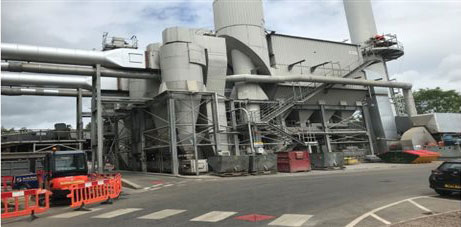
Waste to Energy Plant - Dundee
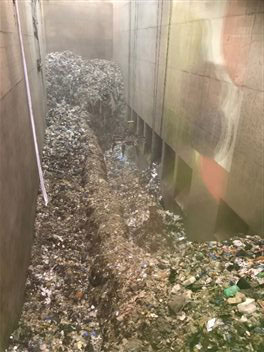
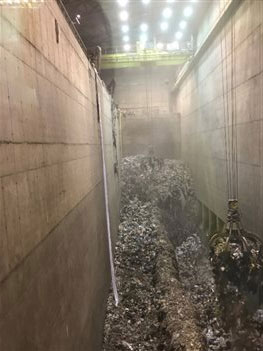
Waste to Energy Plant Turin – Trattamento Rifuti Metropolitani – Waste Bin
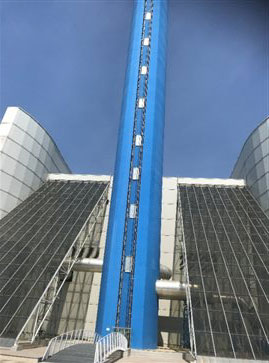
Waste to Energy Plant Turin - Trattamento Rifuti Metropolitani
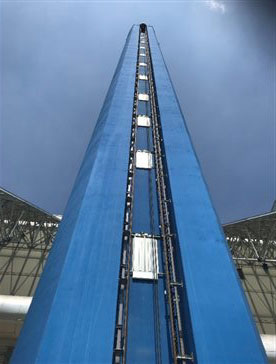
Waste to Energy Plant Turin - Trattamento Rifuti Metropolitani - 135m chimney
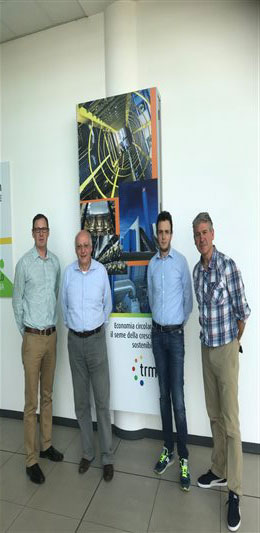
Waste to Energy Plant Turin – Trattamento Rifuti Metropolitani
Tim Ellis (CoGG), Head of Operations, Luca Piantelli (iren), Cr Bruce Harwood (CoGG)
FROM THE MEETINGS WITH AIR ASIA HEADQUARTERS, KUALA LUMPUR
Background
In 2003, the then CEO of Jetstar, Alan Joyce, and the Chairman of Linfox, Lindsay Fox, attended a Council meeting to speak about the opportunity presented to Geelong with the birth of Avalon Airport. The discussion focussed on Avalon opening up to routes throughout Australia, with the ultimate dream to one day become an international airport.
The City of Greater Geelong Council was very supportive of this dream from its inception and contributed financially with strong support for initial planning requirements. The City’s financial contribution to Avalon Airport has since been repaid by the Linfox organisation, as agreed.
The initial introduction of Jetstar flights led to Tiger Airways also joining Avalon Airport, with flights to various cities around Australia. As time passed there would be many variations of flights in to, and out of Avalon, but the Linfox organisation and Avalon staff’s determination to make the airport a success never wavered.
The Australian International Airshow remains a cornerstone event held at the Avalon Airport every two years and continues to bring hundreds of thousands of visitors to our region.
Avalon Airport – International flights
In February 2018, Air Asia announced that it would be introducing direct flights from Kuala Lumpur International Airport to Avalon, Geelong. This represented a huge shift in the aviation operations of Avalon, and opened up Geelong and the Bellarine Peninsula to the world. The decision was officially announced at an event at Avalon Airport, CEO of Air Asia, Tony Fernandes.
Following many meetings, predominantly conducted by Avalon Airport CEO Justin Giddings, numerous government agencies and a very passionate Air Asia management team, Geelong now has an international airport. This is the biggest ‘game changer’ our region has experienced in recent years. The huge boost in jobs during construction, and ongoing with the operations of the airport, will have a significant economic impact. The impact on our visitor economy will also be huge, with an expected influx of international visitors to our region. And importantly, Air Asia’s decision has formally branded Geelong, our clever and creative city of design, as an international city on the global stage.
Air Asia Headquarters, Kuala Lumpur visits
The Mayor has attended Kuala Lumpur on two occasions in recent months, 24 -26 June and 9-11 July 2018 to have various meetings with officials to ensure sound working relationships and promote Geelong and the Bellarine as a destination for international travel.
24-26 June 2018
The City’s decision to visit Air Asia headquarters in June this year demonstrated that as a city we’re very committed to our new international business relationship.
Formal meetings with Air Asia’s Chief Executive Officer Benyamin Ismail, Commercial Manager Barry Klipp, Media Manager Kris Taute and Head of Group Communications Vanessa Reagan, provided an invaluable opportunity to further learn about, and understand, what the positive impacts of Air Asia’s decision will be and the role the City of Greater Geelong can play in being a partner in its success.
Much of the discussion centred around what was expected of the Geelong Council and the continued support of Avalon Airport especially in relation to required tourism promotion, planning, commercial opportunities and road access issues.
During this time, the Mayor met with the CEO of Tunes Hotel, Mark Lankester. Mark was very impressed with the growth of Geelong, especially in the northern region, and the opportunity to potentially build a hotel at the new Avalon International Airport site. Mark also expressed an interest in bringing his company’s upgraded brand hotel chain – Ormond – to Central Geelong. Geelong has been actively seeking new CBD accommodation options and these discussions are continuing.
A meeting was also held with Tan Sri Hj Mhd. Amin Nordin bin Abd. Aziz, Mayor for Kuala Lumpur, a particular honour given the very high status of his position and ability to influence the Malaysian tourism industry. It was a very good meeting discussing a number of similar issues faced by our cities. In particular managing growth and while maintain connectivity within the community.
The City’s Mayor met with Raymond Peter, Government Relations and Marketing Manager, Victorian Government Trade and Investment Office – South East Asia, and with EXCO members of the Malaysia Australia Business Council – Australia and New Zealand Banking Group Limited, Malaysia Representative Office Chief Representative Tracy Ong and KLCC Runners Group Founder Sdn Bhd Matthew Barsing.
During these meetings, the representatives of Kuala Lumpur’s business community expressed great interest in the Geelong region not only for its potential as a tourist destination but also its potential for business development through the digital hub created at Federal Mills, and the growth of our insurance service industry.
9-11 July 2018
At a Special Council Meeting on 3 July 2018, it was discussed that Air Asia would formally announce its new flight and fare deals to the world on Tuesday 10 July at its Airport Hotel, Tunes Hotel, in Kuala Lumpur. The Council supported a decision for Mayor Bruce Harwood to attend the announcement event in Kuala Lumpur and relevant meetings during a short stay from 9 -11 July.
On Tuesday 10 July the Mayor had the privilege of representing the City at a formal dinner held at the Air Asia headquarters in Kuala Lumpur, where Geelong was announced as an international tourist destination. The Mayor’s speech and following presentation of a 90 second video about Geelong and the Bellarine captured the imagination of the audience and generated much discussion about what our region has to offer.
The event was attended by many dignitaries, including Australian High Commissioner to Malaysia His Excellency Mr Andrew Glodenowski, Air Asia Commercial Manager Barry Klipp, Air Asia CEO Benyamin Ismail and CEO Avalon Airport Justin Giddings, along with Victorian State Government representatives, Malaysian tourism industry representatives and a large cross-section of local and international media outlets.
The Mayor’s attendance at this event offered an invaluable opportunity to showcase Geelong on the global stage, enhance the City’s positive relationship with Air Asia, encourage further international investment in Greater Geelong and show the City’s support for Air Asia’s decision to invest in the region and provide cheap air fares for the public to travel between Avalon Airport and a number of Asian destinations.
The event provided opportunity to conduct interviews with international tourism personnel from Malaysia, China, Korea, Thailand, India and Japan. It is now up to the Geelong community and beyond to get behind their new international partner Air Asia and enjoy our new access from our own front yard to the world.
Next steps
Hold Civic Reception for Air Asia officials and tourism and business leaders on 31 October 2018
Continue to promote Geelong and the Bellarine as a destination for international travel
Continue to develop the positive business relationships established
Source: |
Finance & Strategy |
Director: |
Peter Anderson |
Index Reference: |
Civic Accommodation - SUB-18-3846 |
Portfolio: |
Finance |
To provide a report and recommendations to Council as a result of investigation and activities undertaken by the Central Administrative Office Project Advisory Committee (Committee).
At the Council meeting on 24 April 2018, Council resolved to establish the Committee and report at a Council meeting in July on the following:
Scope of Project;
Preferred Siting and funding options;
Opportunities for the project to be a catalyst for further CBD revitalisation projects;
Preferred future arrangements for civic and ceremonial functions;
Expansion of the Geelong Gallery to part or all of the existing Geelong Town Hall; and
Opportunities to attract State and Federal Government funding for the project.
At the Council meeting on 22 May 2018, Council resolved to:
Through its Central Administrative Office Project Advisory Committee only consider locations that are within Central Geelong for the consolidation of its administrative functions to one location;
Notes 137 Mercer Street, Geelong and 21 Gheringhap Street, Geelong as its two previously identified Council owned sites within Central Geelong for the consolidation of its administrative functions to one location; and
Seek Expressions of Interest from developers and investors for further potential central administrative office locations within the Central Geelong area.
Information Received by the Committee
The Committee has met six times and received information on:
Siting, sites available and urban design aspects of Council owned sites
Project scope;
Extension of Art Gallery to City Hall, including possible future use of City Hall for meeting and ceremonial functions;
Government funding opportunities; and
Funding strategy.
Expressions of Interest From Developers and Investors
The Director Finance and Strategy has, via a tendering process and in accordance with the Council resolution of 22nd May 2018, appointed agents Cushman and Wakefield to progress Expressions of Interest from developers and investors for further potential central administrative office locations within the Central Geelong area.
Under this process the scope of project is larger than Council requires for its own purposes and is specified as:
12,000 square metres of office space;
Early Learning Centre;
Active retail space at ground level (allow 300 square metres); and
350 car parks.
Results of this site search will be available by the end of July 2018.
Weighted Site Selection
The Committee has considered the site selection criteria as:
Capacity of site to accommodate a building with a minimum floor plate size of 1,200m2;
Access to site;
Site opportunities and constraints;
Civic presence;
Economic Development/Revitalisation of Central Geelong; and
Site availability.
The Committee has identified weightings for each of the components.
Agreed Scope Cost
Quantity Surveyors have costed the initial scope. Total build cost of the initial scope is estimated at $108.7m consisting of:
Office component including building costs, site costs and fit-out - $79.5 million;
Early Learning Centre - $6.6 million;
120 car parks - $7.1 million;
Additional 230 car parks - $13.6 million; and
Retail - $1.9 million.
The initial scope is being used for the site search but is not able to be funded within the approved budget allocation of up to $91m for the project. Consequently, any inclusions beyond Council’s office requirements would need to be provided from the private sector or additional Council funding, subject to the appropriate business case.
The Committee reviewed the scope and decided to recommend a reduction to the scope to just Council’s identified office requirements (including an allowance for office accommodation growth). After considering financial capacity within the agreed budget of up to $91m and after confirming the future requirements of Council, the Committee has considered the appropriate project scope to be:
10,000 square metres of office space (9,000 square metres net lettable area);
Active retail space at ground level (allow 300 square metres); and
120 car parks.
It should be noted that the final budget figure of up to $91m includes all project costs including, build costs, fit-out, design and construction contingencies, all permits and an allowance for building escalation.
Future Use of City Hall/Geelong Art Gallery Expansion
The Committee has considered and is recommending that the preferred future use of City Hall would be;
Accommodation for an expanded Art Gallery; and
Retention of a civic presence for some meeting and ceremonial purposes.
The extension of the Art Gallery to City Hall would be subject to receipt of appropriate Government funding.
Government Funding/Catalyst Project.
The Committee considered that the extension of the Art Gallery made possible by the consolidation of Council offices may be an attractive project for Government funding as part of the growth of the existing Arts and Cultural precinct.
The Committee also considered that the sale of Council properties (to partially fund the Office project) will attract additional private sector investment. If some sites are identified within the Central Geelong area and those sites have development potential this would potentially provide a further stimulus for Central Geelong Revitalisation.
The Committee also considered its investment opportunity may attract private sector partnerships or projects – via the site selection process.
Final Site Selection
The Committee is recommending that the final site selection be left until August after which the current developer site search will be concluded.
All nominated sites will be assessed against the criteria agreed by the Committee.
Given the budget set by Council for this project the Committee is recommending that the final site selected should preferably be owned by Council (either acquired from developer in land swap arrangement or an existing Council owned site).
Funding Options
The Committee considered the funding options available for the project beyond the borrowings which formed part of the Strategic Resource Plan identified in the 2018-19 budget. The financial analysis assumes the project to be fully funded from borrowings. The analysis was based on the larger project scope.
Having considered the funding strategy the Committee recommends that the funding strategy for the project (to be included in the 10 year draft financial plan) is
Initial borrowings of up to $91 million with interest only loans during construction period, repayable over 25 years.
$41 million of loans to be repaid within 5 years from:
Sale of surplus; and
Increasing revenue yield from existing commercial properties.
The suggested funding strategy leaves the outstanding loan balance of $50 million repayable over 25 years. The cost of the reduced debt servicing is estimated to be $3.8 million per annum. If it is assumed the asset sales do not diminish current revenues the impact of the $3.8 million could be reduced considerably after accounting for the discontinuance of current rent payments ($2 million pa) and anticipated operational cost reduction from consolidation.
Own and Build and Rental Options
The Committee considered each of the following options:
Do Nothing;
Own and Build; or
Rent.
In a comprehensive financial analysis of each option undertaken for the Committee analysts concluded that over a 25 year period (based on the larger project scope) Council would incur the following net present costs for each option:
Do Nothing $95.9 million
Own and Build $40.2 million
Rent $74.5 million
A summary of the analysis (see attached) assumed Council borrowing the full amount of $91m and servicing this debt over 25 years. The repayment of part of the $91 million further reduces the net present cost of the Own and Build and the Rental options.
The Committee concluded that the most cost effective method of procurement is to own and build on one of the sites Council owns or could acquire equity in.
With an own and build project the option also still exists for a future Council to fix the ongoing rental rate and sell the building with Council remaining the long term tenant. Proceeds of the sale would go to paying off any outstanding debt and the balance used for future capital works.
Rental Option
If the decision was made to be a tenant, Council will still need to sell assets and repay debt in order to meet the additional rental commitment. Financial analysis suggests the annual rental bill would start at $6.74m initially and increase over the life of the building.
In a rate capped environment this cost of rental would mean Council would need to sell assets to reduce existing debt servicing or reduce expenditures in other areas to fund the additional rental costs.
The annual costs of renting and owning/building start out to be relatively comparable. Over time however the costs are considerably different (see earlier net present cost statement). An important difference between the own and build option is the annual costs of own and build are constant and after 25 years disappear whereas the annual cost of the rental option increases for the period of the tenancy agreement.
Councillor Aitken moved, Councillor Grzybek seconded -
That Council:
notes the proposed Central Administrative Office Accommodation Project Recommendations (the Proposed Recommendations) and refers the Proposed Recommendations for public consultation and engagement as follows:
advertises the Proposed Recommendations, including information about the preferred funding and ownership model for the Central Administrative Office Accommodation Project, inviting written submissions on the Proposed Recommendations and/or the Central Administrative Office Accommodation Project from the public from Wednesday 25 July 2018 until 5pm on Tuesday 28 August 2018;
convenes a Public Submissions Panel consisting of a majority of councillors (Panel) after the close of submissions to:
consider any written submissions and to hear any person who wishes to address the Panel in relation to a submission on the Proposed Recommendations and/or the Central Administrative Office Accommodation Project, on a date to be confirmed by the Panel; and
report to Council in relation to the submissions that have been received and any recommended actions arising from those submissions in relation to the Proposed Recommendations and/or the Central Administrative Office Accommodation Project;
consider the Panel report and the Proposed Recommendations at the next Council meeting scheduled no earlier than 14 days after the Panel hearing.
Proposed Recommendations:
That Council:
Reaffirm its commitment to the new Central Administrative Office Accommodation project and approve the scope to be:
1.1. 10,000square metres office (gross floor area);
1.2. 120 car parks; and
1.3. Active street level retail (allow 300 square metres).
As part of the current site search invite developers and investors, consider and provide additional mixed use development options and/or ideas in addition to the Council core requirements;
Require any additional scope to the project (e.g. additional car parks and/or early learning centre) be the subject of a separate business case and budget discussion and be considered in the context of any future CBD car parking strategy and/or Social Infrastructure Plan to be completed;
Confirm the site selection criteria as:
4.1. Capacity of site to accommodate a building with a minimum floor plate size of 1,200 square metres;
4.2. Access to site;
4.3. Site opportunities and constraints;
4.4. Civic presence;
4.5. Economic development/revitalisation of Central Geelong; and
4.6. Site availability.
Confirm the project budget to be up to $91m (per existing 2018/19 budget and strategic resource plan);
Confirm that its preference is to be the owner of the project;
Fund the project from borrowings but reduce the net cost of borrowings to $50 million over the first 5 years from sale of surplus property assets and by increasing revenue yield from commercial assets (minimum value $41 million);
Confirm that the future use of the City Hall should, subject to sufficient Government funding being available, include the extension of the Geelong Art Gallery and part of City Hall be retained for civic meeting and ceremonial functions.
Carried.
The financial implications are addressed in the body of the report. Up to $91 million has been allocated for the project which is reflected in the 2018/19 budget and strategic resource plan.
As the project planning proceeds it will be essential to involve Council staff and the wider community in order to encourage input into the precinct plans and the community aspects of the building itself.
The consolidation of Council departments into one central location will help to unify the organisation, deliver increased efficiency and productivity and release surplus assets for more economic uses.
There are no legal or statutory implications for the project at the strategic assessment and business case phases.
A planning and development permit will be required for the new building.
This project aligns with the Council Plan - Organisational Leadership, Strategy and Governance – we have identified one of the Key Priorities as being “Consolidating the City of Greater Geelong offices".
No officers or contractors involved in the preparation of this report have a direct or indirect interest in matters to which this report relates
The risks associated with the project are able to be managed following normal management procedures and processes.
The cost plans for the new buildings have been prepared assuming a minimum 5.5 star Green Star Rating. Council’s current policy for large new buildings require a Green Star rating of 5.
Other environmental implications, if any, will be assessed once a site selection has been made.
[Back to List]
Source: |
Finance & Strategy |
Director: |
Peter Anderson |
Index Reference: |
Land and Building Sales - SUB-17-3539 |
Portfolio: |
Finance |
Councillor Grzybek moved, Councillor Nelson seconded -
That in accordance with Section 89 (2) (h) of the Local Government Act 1989, this matter which the Council considers would prejudice the Council or any person be considered at the conclusion of all other business at which time the meeting be closed to members of the public.
Carried.
Source: |
Finance and Strategy |
Director: |
Peter Anderson |
Index Reference: |
Tender T1800038 |
Portfolio: |
Social and Infrastructure Planning |
Councillor Grzybek moved, Councillor Asher seconded -
That in accordance with Section 89 (2) (d) of the Local Government Act 1989, this contractual matter be considered at the conclusion of all other business at which time the meeting be closed to members of the public.
Carried.
Source: |
Finance and Strategy |
Director: |
Peter Anderson |
Index Reference: |
Tender T1800039 |
Portfolio: |
Social and Infrastructure Planning |
Councillor Nelson moved, Councillor Asher seconded -
That in accordance with Section 89 (2) (d) of the Local Government Act 1989, this contractual matter be considered at the conclusion of all other business at which time the meeting be closed to members of the public.
Carried.
Source: |
Finance & Strategy – Property & Procurement |
Director: |
Peter Anderson |
Index Reference: |
SUB-18-225 |
Portfolio: |
Finance |
Councillor Nelson moved, Councillor Sullivan seconded -
That in accordance with Section 89 (2) (d) of the Local Government Act 1989, this contractual matter be considered at the conclusion of all other business at which time the meeting be closed to members of the public.
Carried.
Contents | Previous Page: Section A - Procedural Matters | Next Page: Section C - Notices of Motion
