
Council Minutes - Section B: Reports - 29 October 2019
Contents | Previous Page: Section A - Procedural Matters | Next Page: Section C - Assembly of Councillors
Contents | Previous Page: Section A - Procedural Matters | Next Page: Section C - Assembly of Councillors
Reports tabled at the Ordinary Meeting of Council on Tuesday date held at the Council Conference and Reception Centre in City Hall, 57 Little Malop Street, Geelong.
Municipal Public Health and Wellbeing Plan 2018-2021 – First Annual Report 2019
Revocation of Flood Prone Area Designation of New Lots at Manzeene Village Estate, Stage 7
Revocation of Flood Prone Area Designation of New Lots at Charlemont Rise Estate, Stages 6, 7 and 8
Revocation of Flood Prone Area Designation of New Lots at Ashbury Estate, Stage 12
2019-2020 Community Investment Support Fund Funding Recommendations (Confidential)
Contractual Matter (Confidential)
Contractual Matter (Confidential)
Contractual Matter (Confidential)
Appointment of Independent Members to the Audit and Risk Committee (Confidential)
Contractual Matter (Confidential)
Source: |
Governance, Strategy & Performance - Strategy, Engagement & Performance |
Director: |
Rebecca Leonard |
Portfolio: |
Strategy and Communications |
To have Council consider and note The City of Greater Geelong Annual Report 2018-2019 (Annual Report) and Summary Annual Report and actions as required by the Local Government Act 1989 (Act).
The Annual Report provides a comprehensive account of the City’s performance from 1 July 2018 to 30 June 2019 against the Council Plan 2018–22 and the Budget 2018–19.
The Annual Report must comply with the Act and include a report of operations, a performance statement and financial statements.
The City has developed the Annual Report (Attachment 2) and a Summary Annual Report (Attachment 3).
The Annual Report was submitted to the Minister for Local Government (the Minister) on 30 September 2019.
Public notice that the Annual Report has been prepared and can be inspected at the City’s office and on the City’s website was given on 4 October 2019.
Council must consider and discuss the Annual Report at an open meeting of Council within one month after submitting the Annual Report to the Minister.
Councillor Harwood moved, Councillor Murnane seconded -
That Council consider and note the Annual Report (Attachment 2) and Summary Annual Report (Attachment 3).
Carried.
There are no financial implications arising from the subject of this report.
The Annual Report has been prepared in close consultation with the Executive Leadership Team, Managers, Coordinators and Officers from across the organisation. Public notice regarding the council meeting and availability of the Annual Report from council’s website and customer service centres, was provided to our community via City News in the Geelong Indy and the Geelong Advertiser and in our Community Update.
The Annual Report provides information to the community on how the resources of the City have been allocated between the social, environment and economic needs of the community.
Section 131 of the Act requires that the Annual Report be submitted to the Minister within three months of the end of the financial year.
Section 134 of the Act in combination with Regulation 22 of the Local Government (Planning and Reporting) Regulations 2014 requires that Council must consider and discuss the Annual Report at an open meeting of Council within one month after submitting the Annual Report to the Minister.
Section 134 of the Act requires public notice be given that the Annual Report is to be discussed at Council Meeting at least 14 days beforehand.
Section 133 of the Act requires that after submission to the Minister, public notice be given that the Annual Report has been prepared and can be inspected at the council office and website.
Council Plan 2018-2022 is the guiding document for the Annual Report. The Annual Report provides an update on the achievements under the 11 strategic directions within the council plan.
There have been no direct or indirect interests declared.
There are no identified risks arising from this report.
Minimal copies of the Annual Report and Summary Annual Report will be printed in-house. In addition, a minimal number of the Summary Annual Report will be commercially printed. The Annual Report and Summary Annual Report will be made available to our community online and at our customer services centres.
Source: |
Community Life - Healthy Communities |
Director: |
Robyn Stevens |
Portfolio: |
Community Health and Safety |
For Council to note the Municipal Public Health and Wellbeing Plan 2018-2021 (the Plan) first annual report.
The Plan was endorsed by Council on 23 October 2018.
The Public Health and Wellbeing Act 2008 requires Council to review and, if appropriate, amend the Plan annually (Attachment 2).
The Plan was launched at the Food for Thought Breakfast on 29 October 2018. The Breakfast was held to raise awareness of the link between food and mental health.
First year achievements include a reduction in the availability of sugar sweetened beverages in council owned sporting facilities and adoption of the Ba-gurrk Gender Equity Framework. The City also continues to support schools and early learning centres to implement the Cancer Council Victoria health promotion framework, the Achievement Program.
The focus of this foundational year was to promote the Plan across the organisation and develop the mechanisms to support its implementation and evaluation. To achieve this, the City developed a staff engagement strategy, solidified its external partnerships, developed a monitoring and evaluation framework and implemented the first reporting process.
No changes are required to the Plan for the second year.
Councillor Grzybek moved, Councillor Mason seconded -
That Council note the Municipal Public Health and Wellbeing Plan 2018-2021 first annual report.
Carried.
No direct financial implication. However, it is important to note that its implementation is embedded in the City’s core business plans and budgets.
The implementation of the Plan requires the City to continuously engage with our community to ensure we are meeting their needs using the Plan’s three-tiered approach: place-based, people centred and environmentally sustainable.
The principle underpinning this Plan, of striving for health equity, is consistent with the City’s social equity principles and with the Victorian Public Health and Wellbeing Plan 2015-2019 aiming to reduce health and wellbeing inequities. Good health and wellbeing is important to everyone and enables people to more fully participate in communities, education and employment opportunities.
The Public Health and Wellbeing Act 2008, section 26 (4) requires Council to annually review the Plan and ensure to resubmit to the Secretary of the Department of Health and Human Services if any changes are made.
The Plan is directly related to the 11 priorities of the Council Plan within its approach of ‘health in all policies’ and health and wellbeing being at the core of its business as a Local Government.
No City officers or contractors who have provided advice in relation to this report have declared a conflict of interest regarding the matter under consideration.
There are no risks associated to this report or to the Plan.
The Plan has been developed in accordance to the Climate Change Act 2017 which requires Council to consider climate change within the Municipal Public Health and Wellbeing Plan.
Source: |
City Services - Environment and Waste |
Director: |
Guy Wilson-Browne |
Portfolio: |
Environment and Sustainability |
To report to Council on options and estimated costs to collect and process recycling materials in response to the closure of SKM Recycling and related businesses.
At the Council Meeting on the 30 July 2019, a motion was passed to request that the CEO reports to Council by September 2019 on the options and costs for alternatives to collect and process recycled materials.
The South Geelong Material Recovery Facility (MRF) operated by SKM ceased operation in late July 2019. Since that time, all material in the yellow bin has been taken to landfill.
The use of other MRF’s in Bendigo and Wangaratta have been investigated. Unfortunately, the cost and environmental impact of transporting recyclables from Geelong to these MRF’s outweighs the benefits.
It is likely that the South Geelong MRF will shortly recommence operation under new ownership. The City will pursue a new contract for the processing of recyclables with the new MRF operator, dependent on appropriately negotiated terms and conditions. This is likely to provide a medium-term solution to process recycling in the municipality.
In addition to pursuing the continued processing of recycling through the South Geelong MRF, the City has investigated alternative recycling options including continuation and expansion of recycling hubs, introducing an at-call service (combined with hard waste collection trial) and introducing a 4th or 5th bin to separate recyclables. The best short-term option for the processing of recyclables is the continuation of the recycling hubs at the City’s North Geelong and Drysdale Resource Recovery Centres. Service levels at the Hubs have been increased to enable them to accept additional recyclable materials, for example: glass, dropped off by residents. The estimated additional cost to maintain this increased level of service is $300,000 per annum.
The cost of introducing a 4th or 5th bin to separate plastics, paper and cardboard from glass is significant. The introduction of a 4th or 5th bin is also likely to be impacted by State Government Policy e.g. Circular Economy and the State’s consideration of a container deposit scheme. Recommendations from the State Government with respect to both these initiatives are expected within six months. It would therefore be premature for the City to consider a 4th and 5th bin system until the outcome of the State Government policy review.
Infrastructure Victoria has released the Recycling and Resource Recovery Infrastructure Report. The Report outlines the options that are available to create a strong, sustainable recycling and resource recovery industry (Attachment 2), including better use of organic waste and updating government procurement guidelines to increase recycling. The Report states that a container deposit scheme has promise but that further research is required. Given the potential impacts of a container deposit scheme on kerbside recycling it would have been preferable if a more detailed analysis and recommendation was provided.
Whilst processing recyclables is an immediate concern for the City, almost 1/3 of waste in each red bin is food organic material. Food organics collection will enable the City to increase its diversion rate from landfill, reduce greenhouse gas emissions and provide an additional service to the community. There is an opportunity, through a trial to process food organic material from the kerbside red bin. Findings from the trial will guide the roll-out of a future City wide food organics service. A plan will be developed to guide this trial in 2020.
The City has established innovation partnerships and will continue to work its key partner, Deakin University, to develop local innovation in the recycling sector including the development of a Regional Circular Economy Policy. The City is also working with key partners Councils such as Wyndham Council and those in the G21 region to explore opportunities for shared outcomes such as diverting waste to landfill and developing the circular economy.
The City will continue its innovative use of recycled materials in asphalt programs, recycled rubber for athletic tracks, use of recycled concrete under footpaths and in causeways, and recycled plastic used for seats and bollards in recreation reserves.
The City will continue its partnership with Cleantech Innovation Geelong. A major focus for Cleantech Innovations Geelong and the City will continue to be innovation in the recycling sector. Businesses in the Geelong region can access support to develop markets for clean technologies, through this partnership between the City of Greater Geelong, the Geelong Manufacturing Council and the State Government.
Councillor Mansfield moved, Councillor Mason seconded -
That Council:
Note that the City:
Is actively pursuing innovative solutions to enhance the processing of recyclables in the Municipality;
Is actively involved with initiatives to ensure the sustainability of kerbside recycling including participating in and contributing to the State review of the kerbside bin service and the development of the Circular Economy Policy;
Following extensive community consultation, will present a draft Waste and Resource Recovery Strategy to Council by December 2019;
Will develop a plan to pilot kerbside food organics collection and processing with the intention of conducting a trial in 2020; and
Has an extensive range of projects being undertaken with its partners, including Deakin University, Geelong Manufacturing Council and local businesses that are providing innovation in the recycling sector;
Authorise an additional $300,000 operational expenditure in the 2019-20 budget to maintain the increased the levels of service at the community recycling hubs at both the North Geelong and Drysdale Resource Recovery Centres;
Advocate to the Victorian and Federal governments on actions, including the introduction of a container deposit scheme required to ensure the long-term viability of the recycling industry;
Write to Infrastructure Victoria requesting a presentation to Geelong, Wyndham and G21 Councils on the Recycling and Resource Recovery Infrastructure Report released 21 October; and
Request that the Chief Executive Officer prepare a submission to the Recycling and Resource Recovery Infrastructure Report.
Carried.
Transporting kerbside recyclables to an alternative processing facility in either Wangaratta or Bendigo would avoid sending up to 81% of recycling materials to landfill. However this option would come at a cost of approximately $8 million per annum.
Landfilling is the most affordable and reliable alternative to the kerbside collection service to residents until a local MRF becomes available. However, valuable resources are buried instead of being recovered and recycled.
With financial assistance provided by the State Government to reopen the SKM recycling facilities, the South Geelong MRF should return to operation this calendar year.
The City has applied for and received $1,059,617 in Victorian Government funding under the Recycling Rebate Program. This reimburses Council for approximately 98% of the additional costs associated with the recycling crises between 26 July and 14 November.
The estimated cost to provide a glass kerbside bin and service to residential properties is $4.3 million per annum for a monthly collection, and $5.44 million for a fortnightly collection.
The estimated cost to provide a cardboard and paper kerbside bin and service to residential properties is $5.4 million for a monthly collection, and $6.5 million for a fortnightly collection.
The City has provided recycling updates to the community through the City’s website, social media channels, media release, presentations to community groups and customer enquiries.
The provision of a high quality waste and resource recovery service enables all residents to recycle valuable materials.
The City entered into a contract for receiving and processing recyclable materials with SKM Recycling in 2009, following a collaborative tendering process with G21 councils. SKM built the MRF in South Geelong to process recyclables under the contracts with G21 councils and for their other clients.
A Notice of Winding Up Order was issued to SKM Corporate Pty Ltd by the Supreme Court on 2 August 2019 after it failed to pay its creditors. Hall Chadwick has been appointed as the Liquidator.
On 23 August 2019, Cleanaway Waste Management Limited announced that it has acquired the senior secured debt (the Debt) in SKM Recycling, another company in the SKM group, from the Commonwealth Bank of Australia for approximately $60 million. KordaMentha has been appointed as receivers and managers for the entire SKM group excluding the GRS entities.
On 27 August 2019, the State Government provided a $10 million loan to the receivers to help clear waste stockpiles and fund essential maintenance work to get SKM’s plants back up and running.
On 9 October 2019, Cleanaway announced that it was the successful bidder for the acquisition of the assets of the SKM Recycling Group. Council is now in negotiations with Cleanaway regarding the processing of kerbside collected recyclables.
The recommendations support the strategic priority of effective environmental management and shows leadership to address waste, climate change and environmental challenges.
No City officers or contractors involved in the preparation of this report have a direct or indirect interest in the matters to which this report relates.
The City has implemented a recycling contingency plan in response to the recyclable processing disruption due to the closure of SKM Recycling. While sending recyclables to landfill was the last resort due to its poor environmental outcome, it provides business continuity and minimises operational risks to the kerbside recycling collection service.
Transporting kerbside recyclables to an alternative MRF in either Wangaratta or Bendigo would avoid sending up to 81% of recycling materials to landfill. However this option has high vehicle emissions.
Recycling innovation and the development of a circular economy will be important to ensure a sustainable recycling industry. The City supports and promotes innovation in the recycling sector and has programs such as Cleantech Innovations Geelong which engages and partners with industry, tertiary education institutions and other levels of government. Recent examples of recycling innovation in Council projects include:
Recycled rubber for Goldsworthy athletics track surface;
Use of recycled materials in asphalt programs;
Composite fibre pedestrian bridge construction;
Use of recycled crushed concrete under footpaths and subbase;
Use of 7,500 reinforced concrete railway sleepers. The sleepers did not meet rail specifications and the City has been able to use these in causeways and coastal erosion prevention works;
Recycled plastic used for the walkways and other items such as seats and bollards in recreation reserves; and
Greenstar concrete mix using recycled crushed blast furnace slag. This by-product of steel manufacture would otherwise go to landfill. This has been used at the Highton, Drysdale and Purnell children’s centres.
The City has expanded the types of recyclable materials that can be accepted at the Geelong and Drysdale Resource Recovery Centres and end markets for these have been identified.
Recycling in the Geelong region is heavily reliant on the South Geelong MRF. The receivers of the SKM MRFs have been preparing the sites, including the South Geelong MRF, to accept and process new kerbside recyclable materials.
The City is actively involved with major initiatives to ensure the long term viability of the kerbside collection and recycling services and industries, including:
Implementing the MAV Rescue Our Recycling Action Plan;
Participation in the Parliamentary inquiry into recycling and waste management;
Participation in the development of the Victorian Government Circular Economy Policy and Action Plan, as well as the Kerbside Services and Infrastructure reviews;
Collaborative tendering through Waste and Resource Recovery Groups; and
Continuing to participate in the Barwon South West Regional Recycling Action Plan.
Infrastructure Victoria released a report on the 21 October 2019 titled ‘Recycling and Resource Recovery - Infrastructure Evidence Base Report’. The Report provides a useful summary of the issues, challenges and opportunities facing the recycling and resource recovery industry. Given the potential impacts of a container deposit scheme on kerbside recycling it would have been preferable if a more detailed analysis and recommendation was provided. A summary of the recycling options outlined in the Report include:
Developing a clear, overarching policy framework including recycling targets and waste to energy;
Examining incentives and price signals for business and industry to improve their recycling performance;
Supporting councils to implement consistent approaches to sorting and collection;
Separating food and garden waste from other materials to get more out of our organic waste;
Better planning, locating and protecting waste management sites;
Working with the Commonwealth and other states to increase consistency and reduce packaging and single use plastics;
Increasing the use of recycled materials by eliminating barriers and updating government procurement guidelines; and
Conducting further analysis on the Container Deposit Scheme.
The Recycling and resource recovery infrastructure: Evidence base October 2019 report can be found at the Infrastructure Victoria website.
The City in consultation with Waste and Resource Recovery Groups and DELWP have reviewed the co-mingle recyclables processing capacity of MRFs across Victoria. No alternative MRFs are able to accept all of the City’s kerbside collected material and the cost is very high. The alternatives also require much higher transport than the South Geelong MRF which results in substantial emissions.
Additional recycling options have been set-up at the Geelong and Drysdale Resource Recovery Centres.
The Geelong Resources Recovery Centre will accept:
Paper;
Cardboard;
Aluminium and metal cans;
Glass bottles and jars (no lids);
Polystyrene packaging; and
Mixed plastics numbered 1,2,4 and 5.
The Drysdale Resource Recovery Centre will accept:
Paper;
Cardboard (excluding any cardboard container designed to hold liquids such as coffee cups, milk or juice cartons);
Aluminium and metal cans;
Glass bottles and jars (no lids); and
Mixed plastics numbered 1,2,4 and 5.
Any additional hub will cost approximately $800,000 per annum.
Additional recyclables can potentially be added to the hard waste service, however this does not provide good value for money to collect and recover recyclables, given the relatively small amount involved. It collects certain types and quantities of yellow bin recyclables, but not as effectively as a City-wide kerbside recyclable collection service.
Over 40% of the kerbside yellow bin recyclables is cardboard and paper which have higher commodity values when separated at source (kerbside). Modifying the kerbside collection service so that the existing yellow bin accepts paper and cardboard only will cost an additional $8.2 million per annum. The cost is largely related to the need to purchase additional garbage bins which residents will utilise to place other recyclable materials e.g. plastics. This option also has a heavy reliance on residents to avoid placing contaminants in the paper and cardboard only bin as these materials will not be processed via a MRF.
The Cleantech Innovations Geelong program supports businesses in the Geelong region to develop markets for clean technologies that address waste and recycling issues. This program is a partnership between the City, the Geelong Manufacturing Council and the State Government. Projects delivered include:
facilitating Deakin University and CSIRO to develop technologies to process their food waste on the Waurn Ponds campus. Deakin University installed a Closed Loop food composter, built by Australian business Closed Loop Recycling, at their Waurn Ponds Estate. The unit converts up to 60 kilograms food waste a day into nutrient-rich soil improver and reduced waste by 90%;
funding a market research project that has identified Australian based customers for new tyre crumb derived composite material and its expected volume of sales. This project has contributed to the establishment of a manufacturing plant in Geelong; and
supporting an innovative procurement process to reduce waste through the procurement and installation of age defying and maintenance free recreational bridges. The successful submission came from a consortium including Geelong manufacturer Austeng, Deakin University’s Carbon Nexus research facility and Australian engineering company Rocla. The consortium undertook research and developed an innovative building product made from geopolymer (with partly recycled materials) and reinforced with carbon fibre, which is stronger and longer lasting than existing products.
Source: |
City Services - Emergency Management and Fire Prevention |
Director: |
Guy Wilson-Browne |
Portfolio: |
Environment and Sustainability |
For Council to adopt the Municipal Fire Management Plan 2019-2021, following endorsement by the Municipal Emergency Management Planning Committee.
The Municipal Fire Management Plan (MFMP) undergoes an annual update, and every three years the MFMP undergoes a full review in preparation for an external audit by the Municipal Fire Management Planning Committee (MFMPC) and the Emergency Management Planning Committee (MEMPC).
This review has now been completed and the MFMP must now be adopted by Council.
The Emergency Management Manual Victoria Guidelines require that Council adopt the Municipal Fire Management Plan following endorsement by the Emergency Management Planning Committee.
Part 4, s55A(1) of the Country Fire Authority Act 1958 (the Act), requires a municipal council to prepare and maintain a MFMP for its municipal district in accordance with the advice and recommendations of the municipal fire prevention committee.
Part 4, s55A(2) states the MFMP must contain the following provisions in accordance with the regulations:
Identifying areas and land use at risk in the municipal district that are at risk of fire;
Specifying how each identified risk is to be treated;
Specifying who is responsible for treating those risks; and
Any other matter prescribed for inclusion in the plan.
Council’s MFMP complies with the above requirements.
The Plan was endorsed by the Municipal Fire Management Planning Committee at its July 2019 meeting and also endorsed by the Municipal Emergency Management Planning Committee at its August 2019 meeting.
Councillor Mason moved, Councillor Mansfield seconded -
That Council:
Note that the Emergency Management Planning Committee endorsed the Municipal Fire Management Plan at its meeting August 2019; and
dopt the Municipal Fire Management Plan 2019 – 2021 as attached.
Councillor Harwood left the meeting room at 8:55pm
Councillor Harwood re-entered the meeting room at 8:57pm.
Carried.
The MFMP will continue to be maintained.
The MFMP was placed on Council’s website 3 September 2019 as requested by the CFA following endorsement of the Plan by the Emergency Management Planning Committee.
The MFMP aims to ensure that everyone in the Community is protected in the event of fire.
The MFMP meets all legislative requirements of the Country Fire Authority Act 1958 and the Emergency Management Manual of Victoria.
The MFMP strongly aligns with Priority 1 improved health and safety of our community.
No person involved in the preparation of this report has any direct or indirect interest in the subject of this report.
The MFMP is an integral component of Council’s risk management requirements.
The MFMP aims to help protect the environment from the risk of fire.
Source: |
City Services – Engineering Services |
Director: |
Guy Wilson-Browne |
Portfolio: |
Social and Infrastructure Planning |
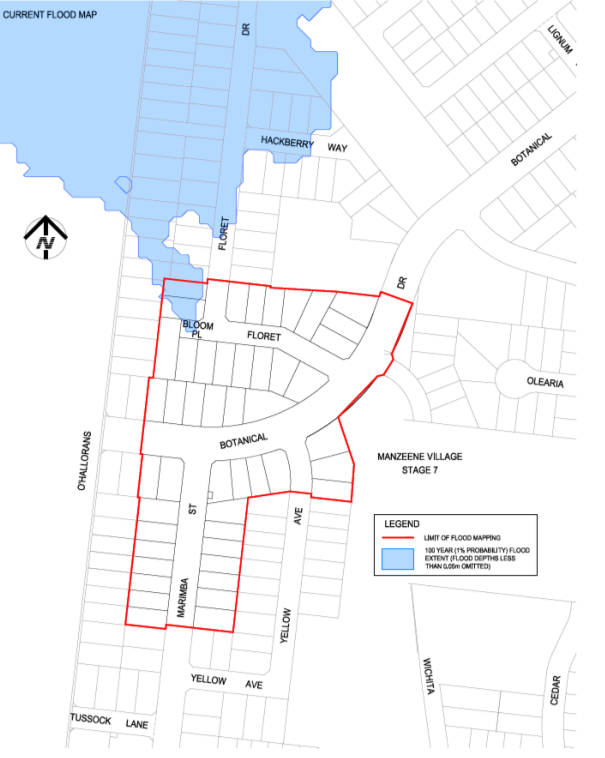
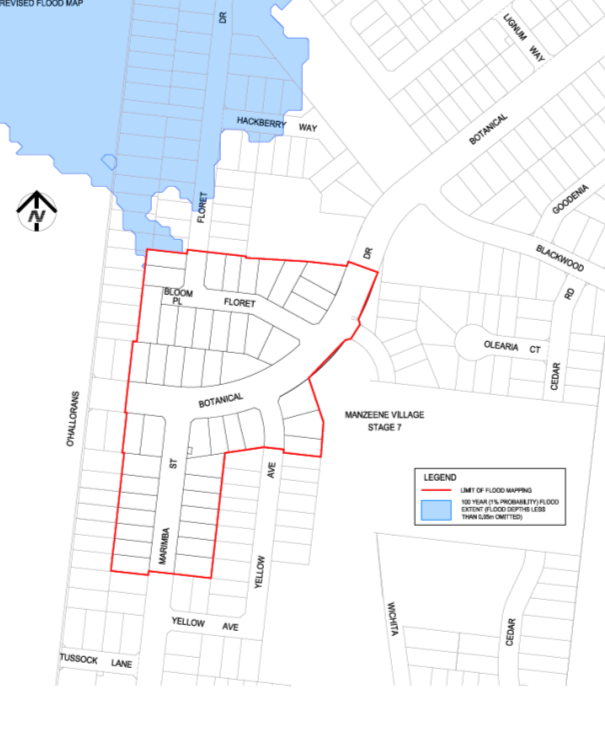
To revoke Council’s designation of 12 December 2006 of flood affected land at Manzeene Village Estate, Stage 7 inclusive as liable to flooding pursuant to regulation 153 of the Building Regulations 2018.
Council has a statutory obligation under the Building Regulations 2018 to designate land as liable to flooding where it reasonably knows it to be prone to flooding. Conversely, there is an obligation to remove the encumbrance of designation from land that is no longer considered to be flood-prone.
The current designated flood mapping (Attachment 2) was designated by Council at its meeting of 12 December 2006.
This revocation will result in another stage of new lots in Manzeene Estate fronting 99 – 111 Manzeene Avenue, Lara being free of their flood prone status, paving the way for owners to build homes on their land.
The flood mapping is subject to a revision due to the subdivision and development at 99 – 111 Manzeene Avenue, Lara. Prior to subdivision the parent lot was considered to be liable to flooding. This development site, which is also known as Manzeene Village Estate, Stage 7 inclusive, achieves flood immunity for newly created lots for flood events up to and including the 100 year Average Recurrence Interval (ARI) event due to approved internal earthworks.
The decision by the City that the flood prone status can be removed includes assessment of internal drainage, road construction and earthworks to contain potential floodwaters from the 100 year ARI event within road and drainage reserves (Attachment 3).
It should be noted that designation is separate to the creation of flood overlays within the Planning Scheme, which generally follows designation. In the case of this development, the planning scheme amendment to create post-development flood zones or overlays is proposed after the design of the proposed precincts.
Councillor Murnane moved, Councillor Grzybek seconded -
That Council revoke the Council designation of 12 December 2006 of flood affected land at Manzeene Village Estate, Stage 7 inclusive as liable to flooding pursuant to regulation 153 of the Building Regulations 2018.
Carried.
There are no financial implications arising from the subject of this report.
A revocation of designation does not warrant public consultation as it constitutes the removal of an encumbrance on land.
Relevant City databases and flood maps will be revised and updates sent to the Corangamite Catchment Management Authority and Building Control Commission.
Council have a responsibility to the community to provide the best possible information on areas that are flood prone. The removal of flood prone designation allows owners to build on their land without a special permit from the City, and without raising the floor level of their home. It also reduces the cost of property insurance.
The City has various statutory responsibilities for drainage management and flood management (prevention, response and recovery) as set out in the Local Government Act 1989, Local Government Regulations 1990, Planning and Environment Act 1987, Building Regulations 2018, Water Act 1989, Subdivision Act 1988 and Emergency Management Act 1986.
The works have resulted in the lots being protected from flooding during a major storm event that has a one per cent probability of occurring in any one year, and occurs on average once in 100 years. This is the required standard for new subdivisions.
The recommendations of this report are consistent with the Council Plan, in relation to planned sustainable development.
No City officers or contractors who have provided advice in relation to this report have declared a conflict of interest regarding the matter under consideration.
Council also has some risk exposure with any failure to disclose the flood-prone status of a property in a Land Information Certificate.
The revocation of the designation is the final step in minimising Council’s risk.
The revocation of flood-prone areas designation and designation of revised flood data through the design of this stage is considered unlikely to result in any known adverse environmental impacts.
Source: |
City Services - Engineering Services |
Director: |
Guy Wilson-Browne |
Portfolio: |
Social and Infrastructure Planning |
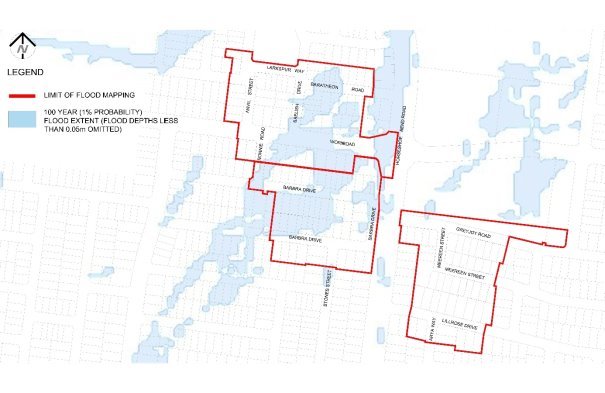
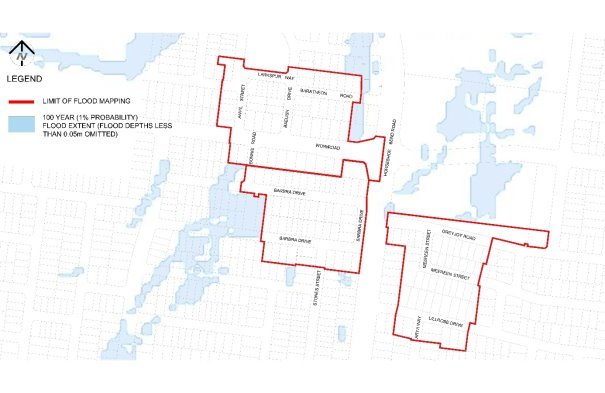
To revoke Council’s designation of 12 December 2006 of flood affected land at Charlemont Rise Estate, Stages 6, 7 and 8 inclusive as liable to flooding pursuant to regulation 153 of the Building Regulations 2018.
Council has a statutory obligation under the Building Regulations 2018 to designate land as liable to flooding where it reasonably knows it to be prone to flooding. Conversely, there is an obligation to remove the encumbrance of designation from land that is no longer considered to be flood-prone.
The current designated flood mapping (Attachment 2) was designated by Council at its meeting of 12 December 2006.
This revocation will result in another stage of new lots in Charlemont Rise Estate fronting 150 – 230 Horseshoe Bend Road, Charlemont being free of their flood prone status, paving the way for owners to build homes on their land.
The flood mapping is subject to a revision due to the subdivision and development at 150 – 230 Horseshoe Bend Road, Charlemont. Prior to subdivision the parent lot was considered to be liable to flooding. This development site, which is also known as Charlemont Rise Estate, Stages 6, 7 and 8 inclusive, achieves flood immunity for newly created lots for flood events up to and including the 100 year Average Recurrence Interval (ARI) event due to approved internal earthworks.
The decision by the City that the flood prone status can be removed includes assessment of internal drainage, road construction and earthworks to contain potential floodwaters from the 100 year ARI event within road and drainage reserves (Attachment 3).
It should be noted that designation is separate to the creation of flood overlays within the Planning Scheme, which generally follows designation. In the case of this development, the planning scheme amendment to create post-development flood zones or overlays is proposed after the design of the proposed precincts.
Councillor Murnane moved, Councillor Nelson seconded -
That Council revoke the Council designation of 12 December 2006 of flood affected land at Charlemont Rise Estate, Stage 6, 7 and 8 inclusive as liable to flooding pursuant to regulation 153 of the Building Regulations 2018.
Carried.
There are no financial implications arising from the subject of this report.
A revocation of designation does not warrant public consultation as it constitutes the removal of an encumbrance on land.
Relevant City databases and flood maps will be revised and updates sent to the Corangamite Catchment Management Authority and Building Control Commission.
Council have a responsibility to the community to provide the best possible information on areas that are flood prone. The removal of flood prone designation allows owners to build on their land without a special permit from the City, and without raising the floor level of their home. It also reduces the cost of property insurance.
The City has various statutory responsibilities for drainage management and flood management (prevention, response and recovery) as set out in the Local Government Act 1989, Local Government Regulations 1990, Planning and Environment Act 1987, Building Regulations 2018, Water Act 1989, Subdivision Act 1988 and Emergency Management Act 1986.
The works have resulted in the lots being protected from flooding during a major storm event that has a one per cent probability of occurring in any one year, and occurs on average once in 100 years. This is the required standard for new subdivisions.
The recommendations of this report are consistent with the Council Plan, in relation to planned sustainable development.
No City officers or contractors who have provided advice in relation to this report have declared a conflict of interest regarding the matter under consideration.
Council also has some risk exposure with any failure to disclose the flood-prone status of a property in a Land Information Certificate.
The revocation of the designation is the final step in minimising Council’s risk.
The revocation of flood-prone areas designation and designation of revised flood data through the design of this stage is considered unlikely to result in any known adverse environmental impacts.
Source: |
City Services - Engineering Services |
Director: |
Guy Wilson-Browne |
Portfolio: |
Social and Infrastructure Planning |
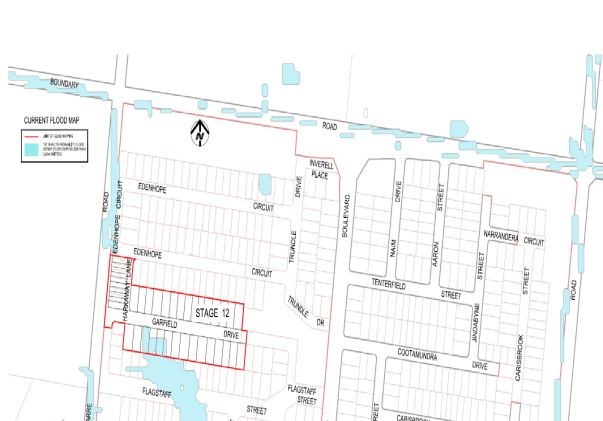
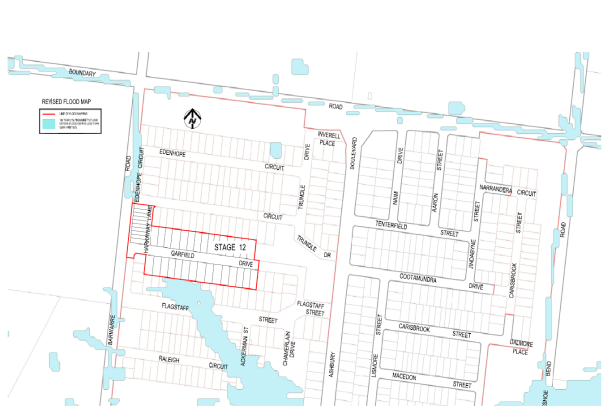
To revoke Council’s designation of 12 December 2006 of flood affected land Ashbury Estate, Stage 12 inclusive as liable to flooding pursuant to regulation 153 of the Building Regulations 2018.
Council has a statutory obligation under the Building Regulations 2018 to designate land as liable to flooding where it reasonably knows it to be prone to flooding. Conversely, there is an obligation to remove the encumbrance of designation from land that is no longer considered to be flood-prone.
The current designated flood mapping (Attachment 2) was designated by Council at its meeting of 12 December 2006.
This revocation will result in another stage of new lots in Ashbury Estate fronting 282 – 400 Horseshoe Bend Road, Armstrong Creek being free of their flood prone status, paving the way for owners to build homes on their land.
The flood mapping is subject to a revision due to the subdivision and development at 282 – 400 Horseshoe Bend Road, Armstrong Creek. Prior to subdivision the parent lot was considered to be liable to flooding. This development site, which is also known as Ashbury Estate, Stage 12 inclusive, achieves flood immunity for newly created lots for flood events up to and including the 100 year Average Recurrence Interval (ARI) event due to approved internal earthworks.
The decision by the City that the flood prone status can be removed includes assessment of internal drainage, road construction and earthworks to contain potential floodwaters from the 100 year ARI event within road and drainage reserves (Attachment 3).
It should be noted that designation is separate to the creation of flood overlays within the Planning Scheme, which generally follows designation. In the case of this development, the planning scheme amendment to create post-development flood zones or overlays is proposed after the design of the proposed precincts.
Councillor Murnane moved, Councillor Nelson seconded -
That Council revoke the Council designation of 12 December 2006 of flood affected land at Ashbury Estate, Stage 12 inclusive as liable to flooding pursuant to regulation 153 of the Building Regulations 2018.
Carried.
No impact to budget.
A revocation of designation does not warrant public consultation as it constitutes the removal of an encumbrance on land.
Relevant Council databases and flood maps will be revised and updates sent to the Corangamite Catchment Management Authority and Building Control Commission.
Council have a responsibility to the community to provide the best possible information on areas that are flood prone. The removal of flood prone designation allows owners to build on their land without a special permit from the City, and without raising the floor level of their home. It also reduces the cost of property insurance.
The City has various statutory responsibilities for drainage management and flood management (prevention, response and recovery) as set out in the Local Government Act 1989, Local Government Regulations 1990, Planning and Environment Act 1987, Building Regulations 2018, Water Act 1989, Subdivision Act 1988 and Emergency Management Act 1986.
The works have resulted in the lots being protected from flooding during a major storm event that has a one per cent probability of occurring in any one year, and occurs on average once in 100 years. This is the required standard for new subdivisions.
The recommendations of this report are consistent with City Plan, in relation to planned sustainable development.
There are no officer direct or indirect interests with respect to this report.
Council also has some risk exposure with any failure to disclose the flood-prone status of a property in a Land Information Certificate.
The revocation of the designation is the final step in minimising Council’s risk.
The revocation of flood-prone areas designation and designation of revised flood data through the design of this stage is considered unlikely to result in any known adverse environmental impacts.
Source: |
Customer & Corporate Services – Program Integration & Development |
Director: |
Michael Dugina |
Portfolio: |
Finance |
Councillor Murrihy moved, Councillor Sullivan seconded -
That in accordance with Section 89 (2) (d) of the Local Government Act 1989, this contractual matter be considered at the conclusion of all other business at which time the meeting be closed to members of the public.
Carried.
Source: |
Economy, Investment & Attraction - Economic Development & Events |
Director: |
Brett Luxford |
Portfolio: |
Economic Development |
Councillor Grzybek moved, Councillor Sullivan seconded -
That in accordance with Section 89 (2) (d) of the Local Government Act 1989, this contractual matter be considered at the conclusion of all other business at which time the meeting be closed to members of the public.
Carried.
Source: |
City Services - Environment and Waste Services |
Director: |
Guy Wilson-Browne |
Portfolio: |
Environment and Sustainability |
Councillor Sullivan moved, Councillor Grzybek seconded -
That in accordance with Section 89 (2) (d) of the Local Government Act 1989, this contractual matter be considered at the conclusion of all other business at which time the meeting be closed to members of the public.
Carried.
Source: |
Community Life - Social Planning & Investment |
Director: |
Robyn Stevens |
Portfolio: |
Social and Infrastructure Planning |
Councillor Murrihy moved, Councillor Mason seconded -
That in accordance with Section 89 (2) (d) of the Local Government Act 1989, this contractual matter be considered at the conclusion of all other business at which time the meeting be closed to members of the public.
Carried.
Source: |
Governance, Strategy & Performance |
Director: |
Rebecca Leonard |
Portfolio: |
Leadership and Governance |
Councillor Mason moved, Councillor Sullivan seconded-
That in accordance with Section 89 (2) (h) of the Local Government Act 1989, this matter which the Council considers would prejudice the Council or any person be closed to members of the public.
Carried.
Source: |
City Services - Environment and Waste |
Director: |
Guy Wilson-Browne |
Portfolio: |
Environment and Sustainability |
Councillor Sullivan moved, Councillor Grzybek carried -
That in accordance with Section 89 (2) (d) of the Local Government Act 1989, this contractual matter be considered at the conclusion of all other business at which time the meeting be closed to members of the public.
Carried.
Contents | Previous Page: Section A - Procedural Matters | Next Page: Section C - Assembly of Councillors
