
Council Minutes - Section B: Reports (5-11) - 23 April 2013
Contents | Previous Page: Section B - Reports 1-4 | Next Page: Section C - Notice of Motions
Contents | Previous Page: Section B - Reports 1-4 | Next Page: Section C - Notice of Motions
Reports 6-11 tabled at the Ordinary Meeting of Council on Tuesday date held at City Hall, Little Malop Street in Geelong.
2013-2017 Geelong Health and Wellbeing Development Plan Report
Road Renaming – Northern Sections of Charlemont Road, Charlemont and Armstrong Creek
Portfolio: |
Community Development - Cr Fisher |
Source: |
Community Services/Aged and Disability Services |
General Manager: |
Jenny McMahon |
Index Reference: |
Subject: Municipal Public Health Plan |
The 2009-2013 Geelong Health and Wellbeing (H&WB) Plan was adopted by Council on 23 February 2010.
The Public Health and Wellbeing Act 2008 requires Council to adopt, annually review and amend, as appropriate, their Municipal Public Health and Wellbeing Plan.
The plan is based on the social model of health which identifies the environmental and social factors that impact on wellbeing.
The 2009-2013 Geelong H&WB Plan is structured around six priority themes and is consistent with previous regional and Local Government plans.
There are 24 strategies outlined in the Plan and 119 actions.
Actions arising from the plan are listed in CORVU and are the responsibility of respective managers and departments across Council.
Reporting on the H&WB Plan progress is part of the corporate reporting process.
This report contains a summary of key outcomes over the last 12 months.
A staff evaluation of the 2009-2013 Geelong H&WB Plan points to the need for improvements in the reporting process and scope of the next Municipal Public Health and Wellbeing Plan.
A new Geelong H&WB Plan is being drafted for 2013-2017.
Cr Fisher moved, Cr Farrell seconded -
That Council note the progress in the implementation of the 2009-2013 Geelong Health and Wellbeing Plan over the last 12 months.
Cr S Kontelj left the meeting room at 8:14pm
Cr S Kontelj re-entered the meeting room at 8:16pm
Carried.
The 2009-2013 Geelong H&WB Plan outlines how the City of Greater Geelong is working to enhance the health and wellbeing of the community. The plan is based on a social model of health which aims for improvements in health and wellbeing by addressing the social and environmental factors that impact on community wellbeing.
The six priority themes of the plan are:
Safe and Healthy Environment
Preparing for Population Change
Better Access to Services
Community Strengthening, Social Inclusion and Mental Wellbeing
Physical Activity and Healthy Eating
Healthy Transport
Some of the key achievements and issues in each of the priority themes include:
Priority Theme 1 - Safe and Healthy Environment
All precinct structure plans (PSP) prepared for Armstrong Creek (Armstrong Creek East & North East Industrial, Armstrong Creek West, Horseshoe Bend Precincts and Armstrong Creek Town Centre) have been developed using Healthy Spaces and Places guidelines. (Strategy 1.1 Action 1.01)
Council’s Community Development Department have developed a new referral process which enables Council to consider the social impact that new and existing liquor licenses have on drinking culture. Data can now be fed directly into relevant information management systems and will enable mapping of licenses for the first time. (Strategy 1.1 Action 1.05)
Council continues to promote sustainable development assisted by a positive working relationship with Sustainability Victoria. The partnership with Sustainability Victoria has included a business case for sustainable development across Armstrong Creek. (Strategy 1.1 Action 1.06)
A Climate Change Adaptation Strategy has been adopted by Council and work is underway to implement the strategy. (Strategy 1.2 Action 2.04)
Community consultation is ongoing in relationship to open space and recreation reserve master planning and neighbourhood shopping centres. Active transport has been a focus within and around 3214 and the work of local health based initiatives such as Food Skil’s 2&5 social enterprise in Corio/Norlane has been supported. (Strategy 1.2 Action 2.05)
Council’s Environmental Health Department continues to provide and advocate for environmental health safeguards through their statutory role. This includes monitoring safe and sanitary healthy housing stock, work environments and rooming houses. The Health and Local Laws department is also concerned about compliance for disability access within rooming houses. (Strategy 1.3 Action 3.01) The Communicable Diseases Focus group continue to monitor and respond to incidents of Myobacterium and Chlamydia rates, immunisation status and school health programs. (Strategy 1.3 Action 3.01 & 3.02)
Priority Theme 2 - Preparing for Population Change
A broad program of performances, workshop events, and exhibitions has been held in the newly renovated space at the Old Courthouse Building and Council continues to maintain a presence on the Courthouse Board of Management. (Strategy 2.2 Action 2.02)
Council has expanded the Positive Ageing Strategy and is developing a strategic plan to build on the Live Well Plan. This will address areas of the Commonwealth Governments Living Longer Living Better strategy, and in particular the issues associated with an ageing population and workforce. (Strategy 2.3 Action 3.03)
The Economic Development Unit continue to develop strategies to attract funding and investment for the provision of adequate infrastructure, improving adequate workforce skills and capacity and providing necessary business support services. Geelong Small Business Festival continues to grow and worked collaboratively with G21 Councils in the development of the Regional Victoria Living Expo. (Strategy 2.4 Action 4.02)
Council has taken responsibility for the delivery of the Skilled Migration Program and has been supporting the scoping of a Transport and Logistics training program for the Northern suburbs which also supports the Northern Futures Strategic Plan. (Strategy 2.4 Actions 4.03 & 4.06)
Priority Theme 3 - Better Access to Services
Council continues to work with community partners for seamless service delivery of a number of community services some of those partnership outcomes are:
The G21 Health and Wellbeing Pillar are reviewing the activities of the Service Coordination and the Chronic Disease Management groups during 2013. Some pilot activities have commenced. Post-acute care partnerships with Barwon Health and the development of a client centred Action Service Model for Aged Care will be continued. (Strategy 3.1 Action 1.01)
Best Start Partnerships in Rosewall and with Wathaurong continue to improve health outcomes for children 0-8 in these target groups. Both have developed new action plans and brokerage projects have been funded to address key local priorities. (Strategy 3.1 Actions 1.06 & 1.07)
Information about services in the City of Greater Geelong has been increased by the maintenance of the web based and customer service directories. This includes translations for our CALD communities. Information is provided using the Community Update newsletter, City News and providing appropriate and timely community information in marginalised groups. (Strategy 3.2 Actions 2.01, 2.03, 2.04, 2.05)
Council’s Community Development Department have continued to improve access to services in target populations concentrating on Whittington, Corio and Norlane. This has been achieved by supporting and delivering a number of actions outlined in the Corio Norlane Healthy City Plan. The Community Development department continues to support activities of the Community Renewal Action Strategy for Whittington and works with G21 Health and Wellbeing Pillar seeding projects through a number of working groups. (Strategy 3.3 Actions 3.01, 3.02 & 3.04)
Priority Theme 4 - Community Strengthening, Social Inclusion and Mental Wellbeing
Council has supported a number of initiatives that promote mental health and wellbeing in the community - particularly in services directed at Children and Youth. These have included programs like Youth Linx and Headspace which has a base at the Potato Shed and Bellarine Secondary College. Further work continues on embedding the importance of child safety in Council’s Community Safety Plan. (Strategy 4.1 Actions 1.01, 1.02, 1.03 & 1.04)
Opportunities for participation in community life was demonstrated by the successful Live Well Age Well event for seniors which included a cooking demonstration by the Gordon, presentation on Food Safety in the home by our Environmental Health Department, a healthy lunch and a demonstration of line dancing. Over 250 participants, many clients and or isolated people were bought to the event by carers, community organisations and nursing homes. (Strategy 4.2 Action 2.04)
The Geelong L2P program was awarded the L2P Excellence Award at the Victorian Community Road Safety Partnership Conference. Over 100 mentors have completed training and 110 young people have been provided with supervised driving practice. (Strategy 4.2 Action 2.05)
Reducing social isolation has been addressed in part, making access to volunteering activities easier. Online application forms for volunteering are available on City Web and Geelong Australia website and Council has strengthened its working relationship with Volunteering Geelong. (Strategy 4.3 Actions 3.01)
Council has commenced planning for a Children and Family Hub to be co-located at North Shore Primary School which includes purchase of the land and budgeting $1.5M towards the project. (Strategy 4.3 Action 3.07)
A Geelong Gambling Advisory Committee has been established with representation from key stakeholders including neighbouring Councils, key agencies and venue operators to provide advice on matters relating to reducing problem gambling. (Strategy 4.4 Action 4.07)
Priority Theme 5 - Physical Activity and Healthy Eating
Data on food premise inspections indicate that the food sampling program is on track. Council’s Environmental Health Officers have participated in a region wide survey of gluten free foods and will be active in enforcing new regulations with regard to egg safety, traceability of eggs, unsafe eggs and egg products. (Strategy 5.1 Action 1.03)
The Food Security Network, as led by Council, has completed a Needs Assessment across the whole of the municipality. Recommendations have been made using the “environments for health” framework to address the determinants of food security; to support local initiatives addressing food insecurity in disadvantaged areas; to plan for a food policy; and to continue to resource, support and grow the coordination of food security activity within the region. (Strategy 5.1 Action 1.07).
The Be Active initiative has commenced following a VicHealth allocation to Council of $488,000 from 01/07/2012-30/06/2015. (Strategy 5.2 Action 2.01).
The Healthy Together Geelong (HTG) team commenced its activities into increasing the consumption of fruit and vegetables and increasing physical activity, following the appointment of the team in 2012. The Program is based within Aged and Disability Services and is supported by a governance group representing Council, Barwon Health, Bellarine Community Health and the Department of Health.
Council continues its strategic partnerships with G21, the Corio Norlane Advisory board, GRAND and participates in a regional Human Services Network to provide a platform to address regional health and wellbeing priorities. The HTG team is working with schools, early childhood settings and with medium to large workplaces. All Council City and Learning Care centres and childhood services are participating in the initiative. (Strategy 5.3 Action 3.01 Strategy 5.5 Action 5.01)
Priority Theme 6 - Healthy Transport
In partnership with Roadsafe Barwon, Council delivered 13 Fit2Drive Year 11 workshops and continues to promote road safety and active travel during ‘Walk and Ride to School’ events during the year. (Strategy 6.1 Action 1.02)
A local social media, marketing and education campaign ‘On the Buses’ occurred in February 2013 to increase the use and awareness of public and community transport in targeted areas. (Strategy 6.2 Action 2.01)
New parking options have meant less demand for the Park and Ride in the CBD. Night bus use is low due to taxis impacting on rank availability. The Safe taxi rank is well supported and serves approximately 1200 travellers per week. (Strategy 6.2 Action 2.04)
Active transport will continue to be promoted through recommendations to Council from the Streets Ahead project, and some projects may be supported and incorporated into activities of the Healthy Together Geelong Team. Principal Pedestrian Network assessments for Marshall and Grovedale with Department of Transport and foot path programs in Corio/Norlane are underway. Grant funding was received for the Community Infrastructure Program for Leopold with the Melaluka Road footpath now complete. G21 Bicycle Infrastructure Group projects have been submitted to VicRoads for funding. The Walkability/Wayfinding signage program will be progressively extended to outer areas. (Strategy 6.4 Actions 4.01 &4.02)
Staff Evaluation of H&WB Plan
A staff evaluation of the 2009-2013 Geelong Health and Wellbeing Plan was recently conducted and incorporated an internal cross-departmental meeting followed up by an online survey (20 respondents).
Findings from this evaluation included:
that 74% of staff had used the Plan in their current role
that health data was the aspect of the Plan the most number of staff were satisfied with (55%)
that the reporting process was the aspect of the Plan the most number of staff were dissatisfied with (30%)
the collective view of respondents was that the Plan needs to be more integrated, strategic and aspirational.
This feedback will be considered as part of the process for developing the next Municipal Public Health and Wellbeing Plan which is due to be completed by October 2013.
A key priority of the 2009-2013 Geelong Strategic Health Plan 2006-2009 is ‘Safe and Healthy Environment’ with actions designed to enhance and preserve the natural environment, whilst creating a supportive built environment for the health of residents.
All actions within the Health and Wellbeing plan are provided for in individual departmental budgets or are dependant upon external funding.
The annual update of the 2009-2013 Geelong H&WB Plan fulfils the requirements outlined under Section 26 (4) of the Public Health and Wellbeing Act 2008.
No officer involved in the preparation of this report has any direct or indirect interest relative to the advice provided in the report.
The preparation of this report ensures compliance with the Public Health and Wellbeing Act 2008 and contributes to Council’s aim to achieve the actions outlined in the Plan by February 2014.
The 2009-2013 Geelong Health and Wellbeing Plan reinforces Council’s commitment to addressing the social determinants of health through planned and sustained action.
This report will be available to the community via the Geelong Australia website and on request.
Portfolio: |
Community Development - Cr Fisher |
Source: |
Community Services/Aged and Disability Services |
General Manager: |
Jenny McMahon |
Index Reference: |
Subject: Municipal Public Health Plan |
The 2009-2013 Geelong Health and Wellbeing (H&WB) Plan was adopted by Council on 23 February 2010.
The Public Health and Wellbeing Act 2008 requires Council to adopt, annually review and amend, as appropriate, their Municipal Public Health and Wellbeing Plan.
The plan is based on the social model of health which identifies the environmental and social factors that impact on wellbeing.
The 2009-2013 Geelong H&WB Plan is structured around six priority themes and is consistent with previous regional and Local Government plans.
There are 24 strategies outlined in the Plan and 119 actions.
Actions arising from the plan are listed in CORVU and are the responsibility of respective managers and departments across Council.
Reporting on the H&WB Plan progress is part of the corporate reporting process.
This report contains a summary of key outcomes over the last 12 months.
A staff evaluation of the 2009-2013 Geelong H&WB Plan points to the need for improvements in the reporting process and scope of the next Municipal Public Health and Wellbeing Plan.
A new Geelong H&WB Plan is being drafted for 2013-2017.
Cr Fisher moved, Cr Farrell seconded -
That Council note the progress in the implementation of the 2009-2013 Geelong Health and Wellbeing Plan over the last 12 months.
Cr S Kontelj left the meeting room at 8:14pm
Cr S Kontelj re-entered the meeting room at 8:16pm
Carried.
The 2009-2013 Geelong H&WB Plan outlines how the City of Greater Geelong is working to enhance the health and wellbeing of the community. The plan is based on a social model of health which aims for improvements in health and wellbeing by addressing the social and environmental factors that impact on community wellbeing.
The six priority themes of the plan are:
Safe and Healthy Environment
Preparing for Population Change
Better Access to Services
Community Strengthening, Social Inclusion and Mental Wellbeing
Physical Activity and Healthy Eating
Healthy Transport
Some of the key achievements and issues in each of the priority themes include:
Priority Theme 1 - Safe and Healthy Environment
All precinct structure plans (PSP) prepared for Armstrong Creek (Armstrong Creek East & North East Industrial, Armstrong Creek West, Horseshoe Bend Precincts and Armstrong Creek Town Centre) have been developed using Healthy Spaces and Places guidelines. (Strategy 1.1 Action 1.01)
Council’s Community Development Department have developed a new referral process which enables Council to consider the social impact that new and existing liquor licenses have on drinking culture. Data can now be fed directly into relevant information management systems and will enable mapping of licenses for the first time. (Strategy 1.1 Action 1.05)
Council continues to promote sustainable development assisted by a positive working relationship with Sustainability Victoria. The partnership with Sustainability Victoria has included a business case for sustainable development across Armstrong Creek. (Strategy 1.1 Action 1.06)
A Climate Change Adaptation Strategy has been adopted by Council and work is underway to implement the strategy. (Strategy 1.2 Action 2.04)
Community consultation is ongoing in relationship to open space and recreation reserve master planning and neighbourhood shopping centres. Active transport has been a focus within and around 3214 and the work of local health based initiatives such as Food Skil’s 2&5 social enterprise in Corio/Norlane has been supported. (Strategy 1.2 Action 2.05)
Council’s Environmental Health Department continues to provide and advocate for environmental health safeguards through their statutory role. This includes monitoring safe and sanitary healthy housing stock, work environments and rooming houses. The Health and Local Laws department is also concerned about compliance for disability access within rooming houses. (Strategy 1.3 Action 3.01) The Communicable Diseases Focus group continue to monitor and respond to incidents of Myobacterium and Chlamydia rates, immunisation status and school health programs. (Strategy 1.3 Action 3.01 & 3.02)
Priority Theme 2 - Preparing for Population Change
A broad program of performances, workshop events, and exhibitions has been held in the newly renovated space at the Old Courthouse Building and Council continues to maintain a presence on the Courthouse Board of Management. (Strategy 2.2 Action 2.02)
Council has expanded the Positive Ageing Strategy and is developing a strategic plan to build on the Live Well Plan. This will address areas of the Commonwealth Governments Living Longer Living Better strategy, and in particular the issues associated with an ageing population and workforce. (Strategy 2.3 Action 3.03)
The Economic Development Unit continue to develop strategies to attract funding and investment for the provision of adequate infrastructure, improving adequate workforce skills and capacity and providing necessary business support services. Geelong Small Business Festival continues to grow and worked collaboratively with G21 Councils in the development of the Regional Victoria Living Expo. (Strategy 2.4 Action 4.02)
Council has taken responsibility for the delivery of the Skilled Migration Program and has been supporting the scoping of a Transport and Logistics training program for the Northern suburbs which also supports the Northern Futures Strategic Plan. (Strategy 2.4 Actions 4.03 & 4.06)
Priority Theme 3 - Better Access to Services
Council continues to work with community partners for seamless service delivery of a number of community services some of those partnership outcomes are:
The G21 Health and Wellbeing Pillar are reviewing the activities of the Service Coordination and the Chronic Disease Management groups during 2013. Some pilot activities have commenced. Post-acute care partnerships with Barwon Health and the development of a client centred Action Service Model for Aged Care will be continued. (Strategy 3.1 Action 1.01)
Best Start Partnerships in Rosewall and with Wathaurong continue to improve health outcomes for children 0-8 in these target groups. Both have developed new action plans and brokerage projects have been funded to address key local priorities. (Strategy 3.1 Actions 1.06 & 1.07)
Information about services in the City of Greater Geelong has been increased by the maintenance of the web based and customer service directories. This includes translations for our CALD communities. Information is provided using the Community Update newsletter, City News and providing appropriate and timely community information in marginalised groups. (Strategy 3.2 Actions 2.01, 2.03, 2.04, 2.05)
Council’s Community Development Department have continued to improve access to services in target populations concentrating on Whittington, Corio and Norlane. This has been achieved by supporting and delivering a number of actions outlined in the Corio Norlane Healthy City Plan. The Community Development department continues to support activities of the Community Renewal Action Strategy for Whittington and works with G21 Health and Wellbeing Pillar seeding projects through a number of working groups. (Strategy 3.3 Actions 3.01, 3.02 & 3.04)
Priority Theme 4 - Community Strengthening, Social Inclusion and Mental Wellbeing
Council has supported a number of initiatives that promote mental health and wellbeing in the community - particularly in services directed at Children and Youth. These have included programs like Youth Linx and Headspace which has a base at the Potato Shed and Bellarine Secondary College. Further work continues on embedding the importance of child safety in Council’s Community Safety Plan. (Strategy 4.1 Actions 1.01, 1.02, 1.03 & 1.04)
Opportunities for participation in community life was demonstrated by the successful Live Well Age Well event for seniors which included a cooking demonstration by the Gordon, presentation on Food Safety in the home by our Environmental Health Department, a healthy lunch and a demonstration of line dancing. Over 250 participants, many clients and or isolated people were bought to the event by carers, community organisations and nursing homes. (Strategy 4.2 Action 2.04)
The Geelong L2P program was awarded the L2P Excellence Award at the Victorian Community Road Safety Partnership Conference. Over 100 mentors have completed training and 110 young people have been provided with supervised driving practice. (Strategy 4.2 Action 2.05)
Reducing social isolation has been addressed in part, making access to volunteering activities easier. Online application forms for volunteering are available on City Web and Geelong Australia website and Council has strengthened its working relationship with Volunteering Geelong. (Strategy 4.3 Actions 3.01)
Council has commenced planning for a Children and Family Hub to be co-located at North Shore Primary School which includes purchase of the land and budgeting $1.5M towards the project. (Strategy 4.3 Action 3.07)
A Geelong Gambling Advisory Committee has been established with representation from key stakeholders including neighbouring Councils, key agencies and venue operators to provide advice on matters relating to reducing problem gambling. (Strategy 4.4 Action 4.07)
Priority Theme 5 - Physical Activity and Healthy Eating
Data on food premise inspections indicate that the food sampling program is on track. Council’s Environmental Health Officers have participated in a region wide survey of gluten free foods and will be active in enforcing new regulations with regard to egg safety, traceability of eggs, unsafe eggs and egg products. (Strategy 5.1 Action 1.03)
The Food Security Network, as led by Council, has completed a Needs Assessment across the whole of the municipality. Recommendations have been made using the “environments for health” framework to address the determinants of food security; to support local initiatives addressing food insecurity in disadvantaged areas; to plan for a food policy; and to continue to resource, support and grow the coordination of food security activity within the region. (Strategy 5.1 Action 1.07).
The Be Active initiative has commenced following a VicHealth allocation to Council of $488,000 from 01/07/2012-30/06/2015. (Strategy 5.2 Action 2.01).
The Healthy Together Geelong (HTG) team commenced its activities into increasing the consumption of fruit and vegetables and increasing physical activity, following the appointment of the team in 2012. The Program is based within Aged and Disability Services and is supported by a governance group representing Council, Barwon Health, Bellarine Community Health and the Department of Health.
Council continues its strategic partnerships with G21, the Corio Norlane Advisory board, GRAND and participates in a regional Human Services Network to provide a platform to address regional health and wellbeing priorities. The HTG team is working with schools, early childhood settings and with medium to large workplaces. All Council City and Learning Care centres and childhood services are participating in the initiative. (Strategy 5.3 Action 3.01 Strategy 5.5 Action 5.01)
Priority Theme 6 - Healthy Transport
In partnership with Roadsafe Barwon, Council delivered 13 Fit2Drive Year 11 workshops and continues to promote road safety and active travel during ‘Walk and Ride to School’ events during the year. (Strategy 6.1 Action 1.02)
A local social media, marketing and education campaign ‘On the Buses’ occurred in February 2013 to increase the use and awareness of public and community transport in targeted areas. (Strategy 6.2 Action 2.01)
New parking options have meant less demand for the Park and Ride in the CBD. Night bus use is low due to taxis impacting on rank availability. The Safe taxi rank is well supported and serves approximately 1200 travellers per week. (Strategy 6.2 Action 2.04)
Active transport will continue to be promoted through recommendations to Council from the Streets Ahead project, and some projects may be supported and incorporated into activities of the Healthy Together Geelong Team. Principal Pedestrian Network assessments for Marshall and Grovedale with Department of Transport and foot path programs in Corio/Norlane are underway. Grant funding was received for the Community Infrastructure Program for Leopold with the Melaluka Road footpath now complete. G21 Bicycle Infrastructure Group projects have been submitted to VicRoads for funding. The Walkability/Wayfinding signage program will be progressively extended to outer areas. (Strategy 6.4 Actions 4.01 &4.02)
Staff Evaluation of H&WB Plan
A staff evaluation of the 2009-2013 Geelong Health and Wellbeing Plan was recently conducted and incorporated an internal cross-departmental meeting followed up by an online survey (20 respondents).
Findings from this evaluation included:
that 74% of staff had used the Plan in their current role
that health data was the aspect of the Plan the most number of staff were satisfied with (55%)
that the reporting process was the aspect of the Plan the most number of staff were dissatisfied with (30%)
the collective view of respondents was that the Plan needs to be more integrated, strategic and aspirational.
This feedback will be considered as part of the process for developing the next Municipal Public Health and Wellbeing Plan which is due to be completed by October 2013.
A key priority of the 2009-2013 Geelong Strategic Health Plan 2006-2009 is ‘Safe and Healthy Environment’ with actions designed to enhance and preserve the natural environment, whilst creating a supportive built environment for the health of residents.
All actions within the Health and Wellbeing plan are provided for in individual departmental budgets or are dependant upon external funding.
The annual update of the 2009-2013 Geelong H&WB Plan fulfils the requirements outlined under Section 26 (4) of the Public Health and Wellbeing Act 2008.
No officer involved in the preparation of this report has any direct or indirect interest relative to the advice provided in the report.
The preparation of this report ensures compliance with the Public Health and Wellbeing Act 2008 and contributes to Council’s aim to achieve the actions outlined in the Plan by February 2014.
The 2009-2013 Geelong Health and Wellbeing Plan reinforces Council’s commitment to addressing the social determinants of health through planned and sustained action.
This report will be available to the community via the Geelong Australia website and on request.
Portfolio: |
Community Development - Cr Fisher |
Source: |
Community Services/Aged and Disability Services |
General Manager: |
Jenny McMahon |
Index Reference: |
Subject: Municipal Public Health Plan 2013-2017 |
The Victorian Public Health and Wellbeing Act 2008 (the Act) requires that each Council develop and implement a Municipal Public Health and Wellbeing Plan within 12 months of a general Council election.
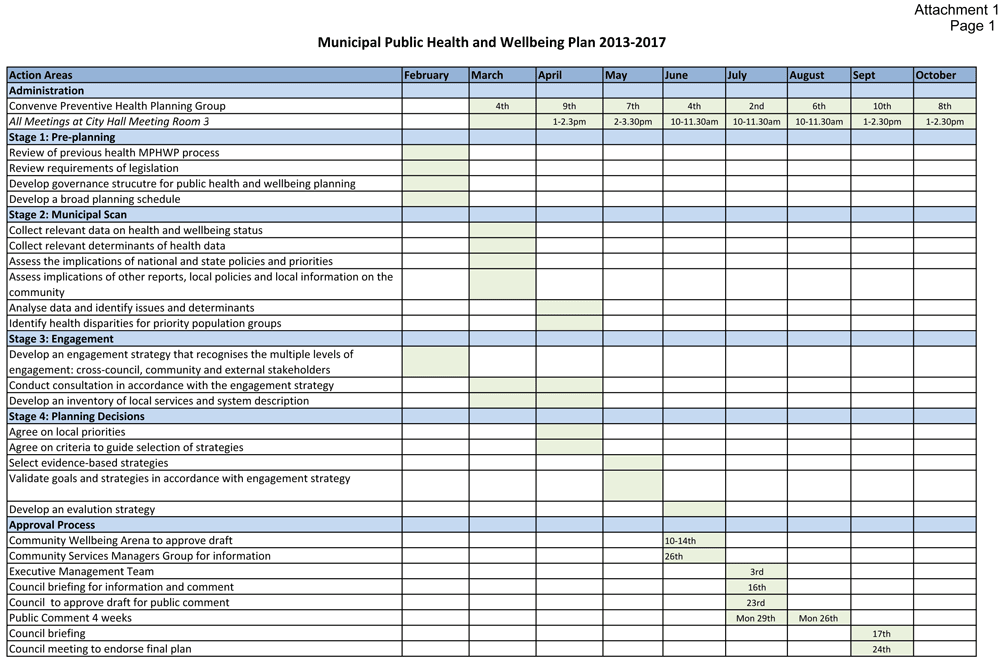
The 2013-2017 Geelong Health and Wellbeing (H&WB) Plan will come to Council for consideration to be placed on public exhibition at its July 2013 meeting and to Council’s September meeting for adoption. Timelines for delivery of the 2013-2017 H&WB Plan are attached (Appendix 6-1).
In developing and when approving the H&WB Plan, Council is expected to have regard to the Council Plan as well as other relevant legislation such as the Climate Change Act 2010 and Tobacco Act 1987.
The H&WB Plan also takes account of associated Council policy that impacts on the social, economic, natural and built environments as they effect community health and wellbeing.
The Community Wellbeing Arena formed out of Council’s City Plan has officer oversight of the development of the H&WB Plan. A Preventive Health Planning Group has been developed to prepare the plan under the direction of the Community Wellbeing Arena.
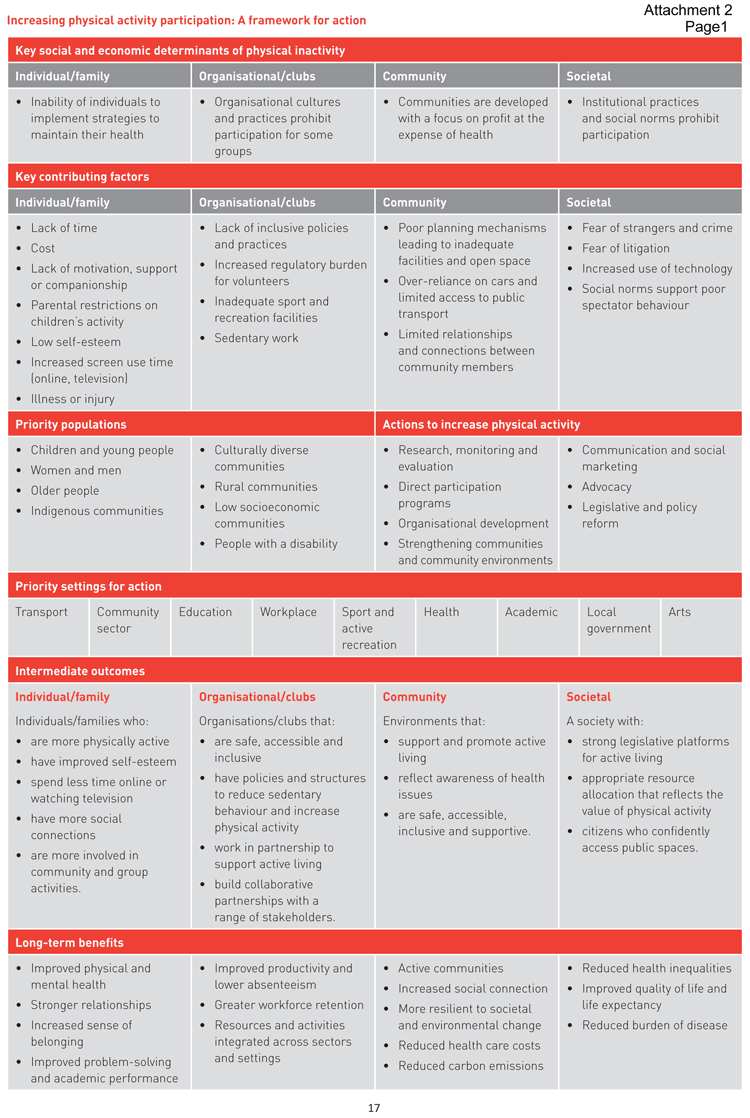
In the development of the 2013-2017 H&WB Plan Council also needs to consider the VicHealth Physical Activity Framework (Appendix 6-2); the Regional Physical Activity Strategy and the health and social data from the Department of Health, other LGA’s and Community Health Services.
Council is hosting a stakeholder forum on 23 April 2013 at the Geelong Conference Centre.
Cr Fisher moved, Cr Farrell seconded -
That Council note the timeframes for the development of its Health and Wellbeing Plan.
Council’s H&WB Plan is a requirement of the Victorian Public Health and Wellbeing Act 2008 (the Act) which sees that a plan needs to be delivered to the Minister for Health within 12 months of a general Council election.
The previous 2009-2013 Geelong H&WB Plan outlined how the City of Greater Geelong worked to enhance the health and wellbeing of the community. The plan was based on a social model of health which aimed for improvements in health and wellbeing by addressing the social and environmental factors that impact on community wellbeing.
City Plan is Council’s overarching document guiding Council’s strategies and action. One of the three proposed strategic directions in City Plan is ‘Community Wellbeing’. The Strategic Directions of City Plan are supported by cross-divisional arenas which are attended by General Managers and Managers. The Community Wellbeing Arena has convened a Preventive Health Planning Group to develop Council’s 2013-17 H&WB Plan.
In the development of the 2013-2017 H&WB Plan Council also needs to consider congruence of planning and collaboration opportunities with the other regional LGA’s. The Victorian Department of Health has agreed to provide funding to assist regional collaboration in H&WB planning.
The VicHealth Physical Activity Framework (Appendix 6-2)
Council received $488,000 from VicHealth to address low rates of physcial activity. A requirement of the funding is for Council to consider the VicHealth Physical Activity framework when developing its H&WB Plan.
The VicHealth Physical Activity framework is being supported by Councils Recreation departments and this work will feed into the H&WB plan.
A stakeholder forum is being held 23 April 2013 from 9.00am – 12.00pm at the Geelong Conference Centre to obtain input from stakeholders into the development of Council’s H&WB Plan.
Council is utilising the Department of Health’s ‘Guide to municipal public health and wellbeing planning’ to undertake the development of the 2013-17 H&WB Plan. The Plan provides a summary of current Victorian legislative and policy requirements; outlines key elements for effective planning for a healthy community represented within a six-stage planning cycle; recommends actions and milestones at each stage in this planning cycle to develop and implement a municipal public health and wellbeing plan; and provides references to relevant data and further resources.
The six stages in the planning cycle are:
Pre-planning
Municipal scan
Engagement
Planning decisions
Implementation
Evaluation
Attachment 1 to this report outlines the timelines for the development of Council’s 2013-17 H&WB Plan from stage 1-4. Stages five and six will occur after adoption of the Plan.
Regional Public Health and Wellbeing Planning will deliver a relatively small number of high-level strategic priority issues that are common for the five municipalities and that can be jointly implemented and evaluated. It will link to other completed or potential plans addressing regional growth, public transport and physical activity. It will also assist in the delivery of the H&WB Plan for each Council in the region that meets the requirements of the Act.
Councils H&WB Plan will be developed in conjunction with Council officers, local stakeholders and service providers and will reflect the unique LGA population profile and issues. Opportunities exist to link or extend stakeholder feedback currently being sought for other Council planning processes to avoid consultation fatigue and to ensure a broad spread of community, services and local organisations are engaged.
VICHEALTH PHYSICAL ACTIVITY FRAMEWORK
The VicHealth physical activity framework has been provided to Council through the Be Active funding for Council to consider how the framework may fit within Council’s H&WB Plan.
The VicHealth Be Active funding awarded to Council is providing funding for the development of the Regional Strategy. Council’s Sport, Recreation and Open Space Department is contributing funding to the development of a City of Greater Geelong local action plan to implement the Regional Strategy locally. Colac-Otway Shire is also funding development of a local action plan for the Colac-Otway Shire.
In developing its H&WB Plan Council is required to have regard for legislation such as the Climate Change Act 2010.
The development of Council’s H&WB Plan is being undertaken by Council staff and staff funded through VicHealth’s Be Active grant. The Regional Physical Activity Strategy is being funded through the VicHealth Be Active funding together with a contribution from Council for the development of a Council wide local action plan.
The development and delivery of Council’s 2013-2017 Geelong H&WB Plan will fulfil the requirements outlined under Section 26 (4) of the Public Health and Wellbeing Act 2008 and will have regard for legislation such as the Climate Change Act 2010 and Tobacco Act 1987.
No officer involved in the preparation of this report has any direct or indirect interest relative to the advice provided in the report.
The preparation of this report ensures compliance with the Public Health and Wellbeing Act 2008.
The 2013-2017 Geelong Health and Wellbeing Plan will outline in part Council’s commitment to addressing the social determinants of health through planned and sustained action.
Development of the 2013-17 H&WB Plan will benefit from community consultation through the following forums:
City Plan
Municipal Early Years Plan survey
Council H&WB Plan stakeholder forum 23 April 2013
Key informant interviews for the Regional Physical Activity Strategy
Regional Physical Activity Strategy stakeholder forum (date yet to be confirmed).
This report will be available to the community via the Geelong Australia website and on request.
Portfolio: |
Infrastructure, Parks and Gardens - Cr Ellis |
Source: |
Projects, Recreation and Central Geelong/Sports & Recreation |
General Manager: |
Dean Frost |
Index Reference: |
Property: #253244, 3 High Ridge Drive, Clifton Springs |
The purpose of this report is for Council to formally endorse the Beacon Point Reserve Master Plan.
The Beacon Point Reserve Master Plan was commissioned by Council to guide the development of the reserve in line with the Clifton Springs Coastal Management Plan (2008), the Drysdale Clifton Springs Structure Plan (2010), the Bellarine Peninsula Recreation and Leisure Needs Study (2005), and the expectations of the local community.
Key recommendations of the Beacon Point Master Plan include retaining the reserve as parkland for passive recreation, protecting and improving coastal biodiversity values, protecting cultural heritage values, improving recreational access to the beach and involving the local community in the ongoing implementation of the master plan’s actions.
Cr Ellis moved, Cr Harwood seconded -
That Council endorse the Beacon Point Reserve Master Plan.
Cr Heagney left the meeting room at 8:28pm
Cr Heagney re-entered the meeting room at 8:30pm
Carried.
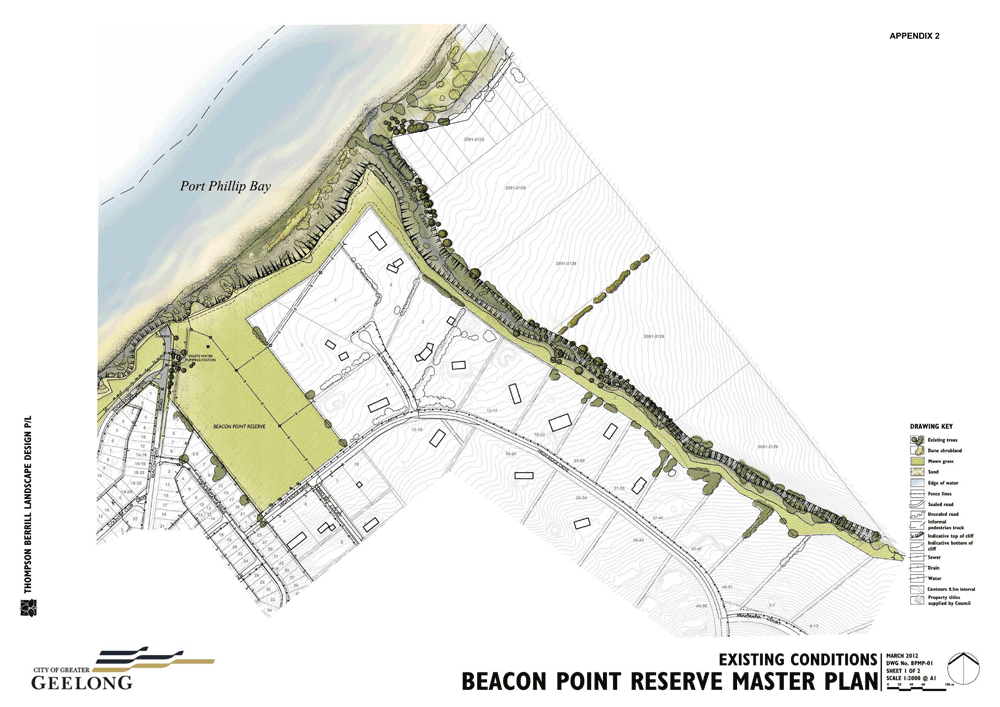
Beacon Point Reserve including the Scarborough Creek open space corridor is a 12 hectare local open space reserve located on the North East fringe of the Drysdale township. The reserve currently plays a dual role as a passive piece of open space and drainage reserve. Beacon Point Reserve is the largest relatively flat open grassed area within the narrow coast reserve east of the boat harbour at Clifton Springs. There is no formal access to the beach from the cliff-top east of Beacon Point (the point) and steep, unformed and eroding cliff tracks are used informally by locals.
The Drysdale Clifton Springs Coastal Management Plan (2008) and the Drysdale Clifton Springs Structure Plan (2010) recommend an investigation of beach access from Beacon Point Reserve, revegetation of the coastal reserve, improvement of bicycle and pedestrian networks and establishment of new picnic facilities. The aim of the Beacon Point Reserve Master Plan is to develop a guide for the future development of the reserve in line with these existing strategic documents and having regard to the local community’s aspirations.
The master planning process involved a review of background information, including a detailed review of the Drysdale Clifton Springs Coastal Management Plan (2008), the Drysdale Clifton Springs Structure Plan (2010) and the Bellarine Peninsula Recreation and Leisure Needs Study (2005). A summary of general actions and those specific to Beacon Point Reserve is included in the master plan report.
Key objectives of the Beacon Point Master Plan include the following:
To ensure the reserve retains its character consistent with its surroundings and coastal setting;
To identify, maintain and enhance key viewing points across Port Philip Bay;
To implement environmentally sustainable design practices to ensure the long term viability of informal recreation in the reserve;
To investigate locations for paths, seating, shelters, signage and new facilities as appropriate;
To investigate trail links to nearby significant foreshore reserves, including The Dell;
To consider and incorporate Crime Prevention through Environmental Design and best practice access and mobility principles;
To indicate appropriate ecological vegetation class (EVC) references for use of indigenous species in revegetation including proposed trees and areas of shrubs and grasses/ groundcovers/ wetland plants;
To provide recommendations to restore habitat, establish links and reduce the impact on the environmental and heritage values of the park; and
To incorporate recommendations for registered sites and areas of indigenous and European cultural heritage sensitivity as previously identified.
The following formal reference groups were established to provide input into the planning process:
Project Control Group (PCG) to provide high level strategic direction;
Project Working Group (PWG) to provide technical advice on the project; and
Project Reference Group (PRG) to provide advice on local values and uses of the reserve during the research and analysis phase.
The consultation and research undertaken during the Beacon Point Reserve Master Plan confirmed a number of issues that had been raised during the more extensive community consultation carried out in the preparation of the Drysdale Clifton Springs Coastal Management Plan during 2007.
Items suggested for consideration in the master plan included:
Investigate beach access using a previously disturbed route starting near Scarborough Creek and angling west down the cliff;
Retain the informal, natural character of the reserve;
Improve pedestrian circulation; the existing goat tracks are uneven and restrict access by the elderly and people with less mobility;
Identify ways for the Friends of Beacon Point Reserve to contribute to the improvement of the reserve;
Develop guidelines for appropriate species to be used for revegetation works and identify strategic locations for planting in order to retain passive surveillance and views to the bay; and
Improve the ground surface through weed management and more frequent maintenance.
Initial consultation with key council officers from across CoGG departments and relevant agencies has indicated support.
Section 4 of the master plan report outlines the recommended implementation schedule and indicative capital costs for the works identified. The total cost of works is estimated at $1,724,050 and is broken down as follows:
Mandatory |
$6,750 |
Critical |
Nil |
High |
$174,300 |
Medium |
$938,000 |
Low |
$605,000 |
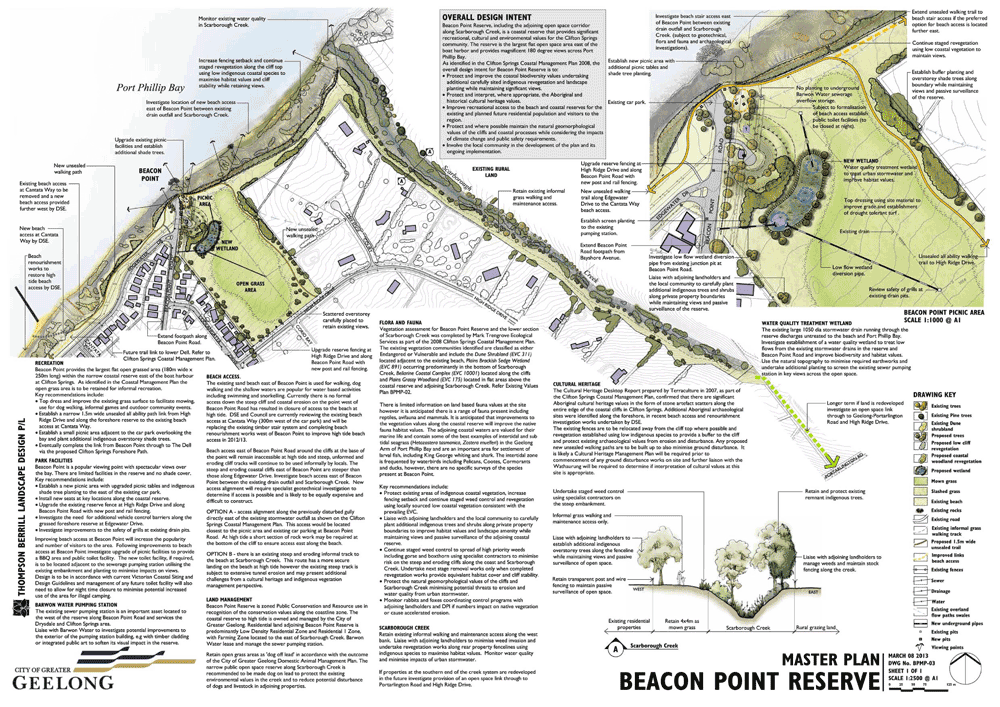
Key recommendations of the draft Beacon Point Reserve Master Plan include:
Continuing the existing fence along the extent of the coastal foreshore and installing new cautionary signage;
Establishing a new walking trail from Beacon Point Reserve to the beach access at Cantata Way;
Investigating access to the beach between Beacon Point and Scarborough Creek;
Providing a new picnic area with upgraded picnic facilities and tree planting if beach access is provided at Beacon Point Reserve;
Replacing the existing recycled plastic tables with tables of more natural materials;
Installing new seats at key locations in Beacon Point Reserve and along the coastal reserve, in association with new walking paths;
Providing additional dog bins and biodegradable plastic bags to encourage dog owners to clean up after their dogs in accordance with Council's Domestic Animal Management Plan;
Investigating the formalisation of open grass areas away from the new picnic area as 'dog off lead' in accordance with the current City of Greater Geelong Domestic Animal Management Plan;
Liaising with adjoining landholders and the local community to carefully site planting areas for additional indigenous trees and shrubs along private property boundaries;
Investigating the establishment of an off-line water quality treatment wetland at Beacon Point Reserve; and
A Cultural Heritage Management Plan (CHMP) for any ground-disturbing works in Beacon Point Reserve including new beach access, paths, wetland/drainage and picnic area works.
Implementation of these and the further recommendations in the report will improve the overall amenity and biodiversity of the reserve, improve its capacity for passive recreation and provide consistent safe access.
The master plan includes recommendations on footpath linkages to improve accessibility for pedestrians and cyclists along the Clifton Springs foreshore and from the Drysdale town centre. The reserve is also serviced by the bus network running along Beacon Point Road. Implementation of the linkages recommended in the master plan report would make Beacon Point Reserve very accessible by non-motorised means and/or public transport, minimising greenhouse emissions by people visiting the reserve.
Beacon Point Reserve will continue to draw minimally on potable water supplies. Future development of the reserve will include very low-use items such as a tap associated with a barbecue and a public toilet. The reserve is not currently nor is it proposed to be irrigated.
The Master Plan proposes an investigation into an offline water quality treatment wetland to treat low flows that currently discharge untreated stormwater to the beach. The untreated stormwater runoff released into Port Phillip Bay may have an adverse effect on the existing marine life and a significant seagrass meadow in the adjoining coastal water. The installation of a low flow diversion pipe from the reserve’s existing pit system into a new offline weir would improve the quality of low flow stormwater runoff. Using the natural mounded topography around the Barwon Water Pumping Station would minimise the earthworks required to construct a wetland. Wetland planting would improve biodiversity and habitat values in the reserve.
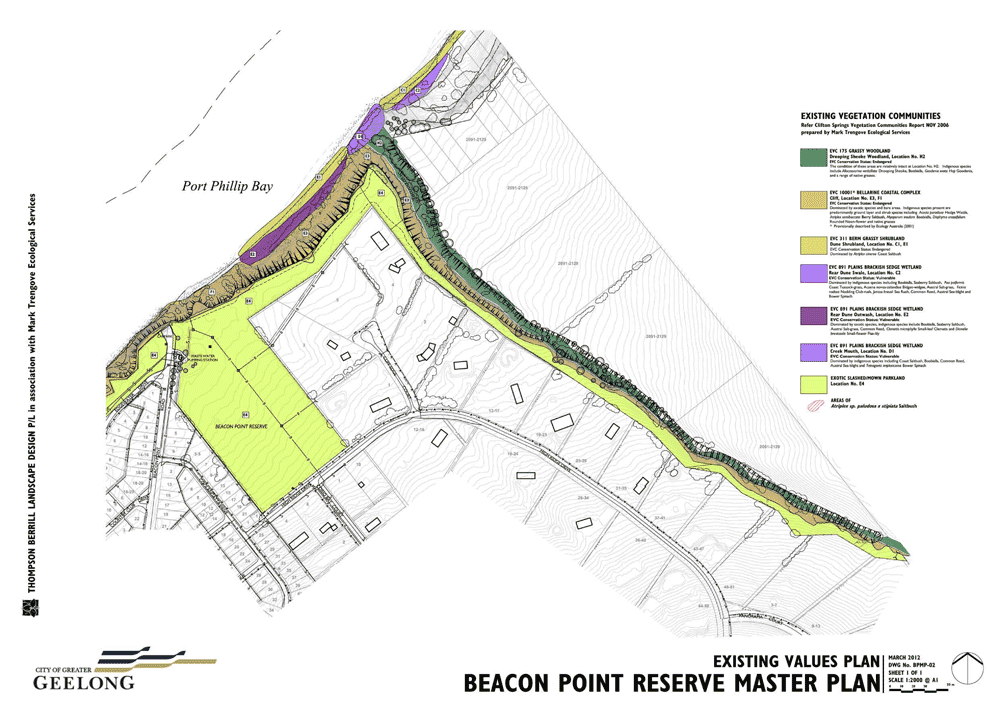
Wetland planting, as well as revegetation of coastal vegetation along the cliff and Plains Grassy Woodland along Scarborough Creek will improve biodiversity and habitat values in the reserve. An increased setback of the fencing along the cliff top will provide protection for the natural geomorphological values of the cliffs while revegetation will minimise threats to erosion and water quality caused by urban stormwater.
The Beacon Point Reserve Master Plan makes a number of recommendations and provides indicative costings for the recommended projects.
Where the implementation of specific recommendations will require a new capital allocation from Council, these will be presented and considered during the process of annual budget considerations. Opportunities for contributions from funding sources external from Council are listed against specific items in the implementation schedule.
The implementation schedule provides a broad estimate of costs specific to each recommended action. The actions are prioritised according to the following categories: mandatory, critical, high, medium, low; these are used to guide Council’s decision-making in relation to development at the reserve.
While the adoption of this report does not have any direct financial implications, the listed actions within the plan will cost in the order of $1,724,050. It is expected that the master plan will be implemented over an approximate timeframe of 10-15 years.
The total cost of works at the reserve is estimated at $1,724,050 and is broken down as follows:
Mandatory |
$6,750 |
Critical |
Nil |
High |
$174,300 |
Medium |
$938,000 |
Low |
$605,000 |
The Equal Opportunity Act (1995) protects Victorians against discrimination based on a wide range of personal characteristics or associations. These include (but are not limited to) age, gender, ethnicity, disability, pregnancy, religion and employment status. The Beacon Point Reserve Master Plan recognises that all community members have equal rights to participate in and enjoy the benefits of recreation and the natural environment. Any development at Beacon Point Reserve will consider design solutions to facilitate access for all.
Cultural Heritage Management Plans are mandatory for listed high impact activities proposed for listed areas of cultural heritage sensitivity, as defined in the Aboriginal Heritage Regulations 2007. There is a registered aboriginal archaeological site (AAV 7821-0387) within the study area and the Clifton Springs coastal reserve has significant cultural heritage values. A CHMP may be required for any ground disturbing works in Beacon Point Reserve including new beach access, fencing, paths, wetland/drainage and picnic area works.
No Council staff or persons engaged under contract have a direct or indirect interest in the development of the Beacon Point Reserve Master Plan.
The Beacon Point Reserve Master Plan provides guidance for the development of this important piece of open space over the next 10-15 years.
There are no immediate risks associated with endorsing this report. Appropriate risk management measures will be put in place when implementing the recommendations of the report.
Council is currently exposed to risk through the easy public access to the steep and unstable cliff-top at Beacon Point Reserve. The mandatory items in the Implementation Schedule relate to the extension and repair of fencing along the cliff-top and associated cautionary signage to deter public access.
Implementation of the Beacon Point Reserve Master Plan will enhance recreational and social opportunities in the reserve through improvements in connections and circulation as well as by improving facilities for people to spend longer periods at the reserve.
Included in the recommendations of the master plan is an unsealed all ability walking trail through the reserve and improvements to the grading and surface of the grass area which will increase the ease with which people with limited mobility can move through the re
The Beacon Point Reserve Master Plan process has been overseen by a three-tiered management structure. The three tiers are:
Project Control Group (PCG) consisting of the Ward Councillor and key council officers to provide high level strategic direction on key issues and opportunities.
Project Working Group (PWG) consisting of council officers from across CoGG departments and relevant agencies to provide technical advice on the project.
Project Reference Group (PRG) consisting of representatives of Friends of Beacon Point Reserve, Drysdale Clifton Springs Community Association, Bellarine Landcare Group and a number of local residents who had made contact with Council expressing interest in the project. The PRG provided advice on local values and uses of the reserve during the research and analysis phase.
The planning process involved a comprehensive review of background material, including the significant body of information generated by the public consultation process conducted in 2007 for the Clifton Springs Coastal Management Plan. As a result of having such relevant and significant information already to hand, the public consultation for the Beacon Point Reserve Master Plan was limited to a workshop with local interest groups and associations and residents who had made contact with Council expressing an interest in the reserve.
The consultation included:
Two Project Working Group meetings. These included council officers, Barwon Water (first meeting) and Wathaurung Aboriginal Corporation (second meeting).
Community stakeholder workshop attended by 20 community members, including representatives from the Friends of Beacon Point Reserve, Drysdale Clifton Springs Community Association Inc. and the Bellarine Landcare Group.
An article in the Have Your Say section of City News, distributed to all readers of the Geelong Advertiser and the Independent, invited feedback to be submitted via Council’s website, email or phone.
Public submissions and notes from the community stakeholder workshop at the analysis stage can be found at Appendices A and B, respectively, of the Beacon Point Reserve Master Plan Report. These and the historic consultation results were used to inform the identification of issues and major themes for consideration in the Master Plan.
The Beacon Point Reserve Draft Master Plan was released for public comment between 9 November and 7 December 2012. The following steps were taken to provide opportunities for the community to provide feedback on the report:
Copies of the master plan were available for viewing at the Drysdale and City Hall Customer Service Centres;
Copies of the master plan were emailed or posted to all participants in the community stakeholder workshop and to all those who submitted comments by telephone or email during the research and analysis phase;
Copies of the one-page illustrative master plan with notes were distributed via letter box drop to the 70 properties that share a boundary with the reserve or are in very close proximity; and
The public comment period of four weeks was advertised in City News on 16 November 2012 and on the Geelong Australia website between 9 November and 7 December 2012.
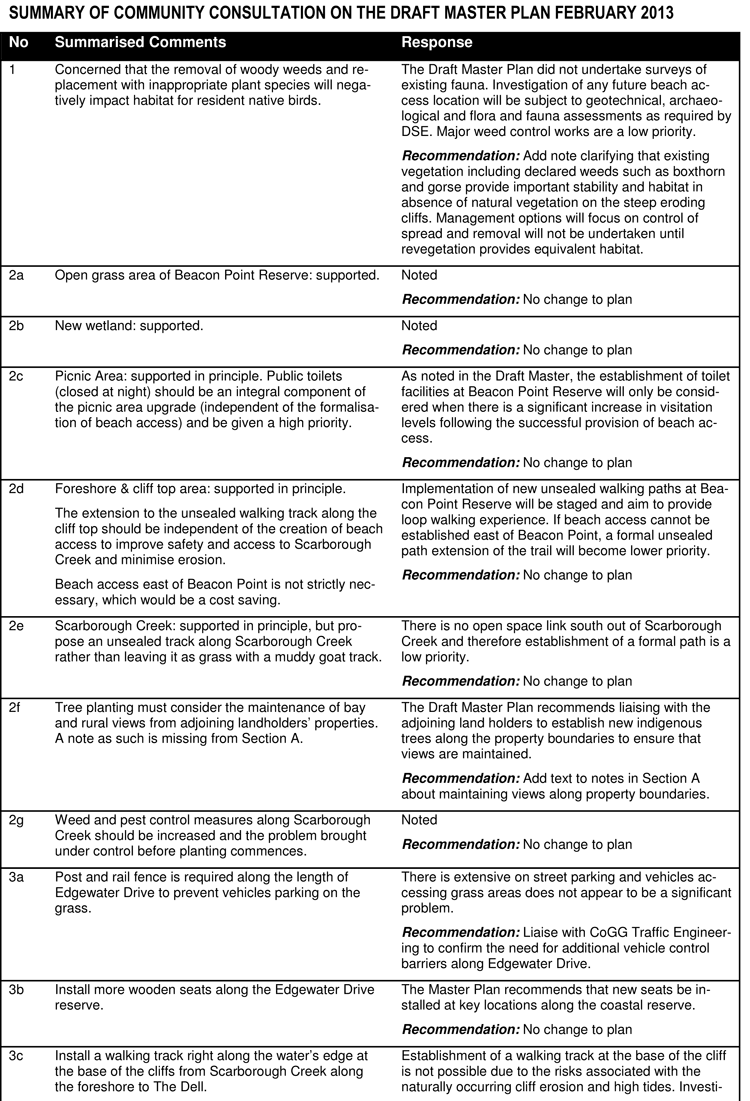
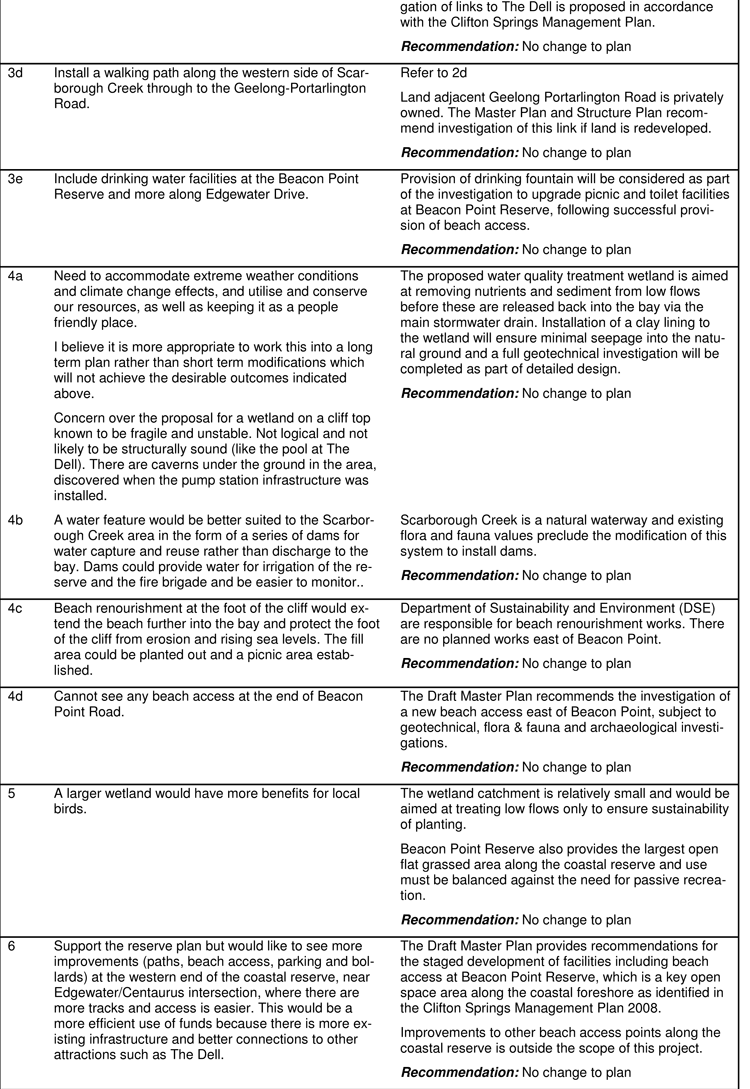
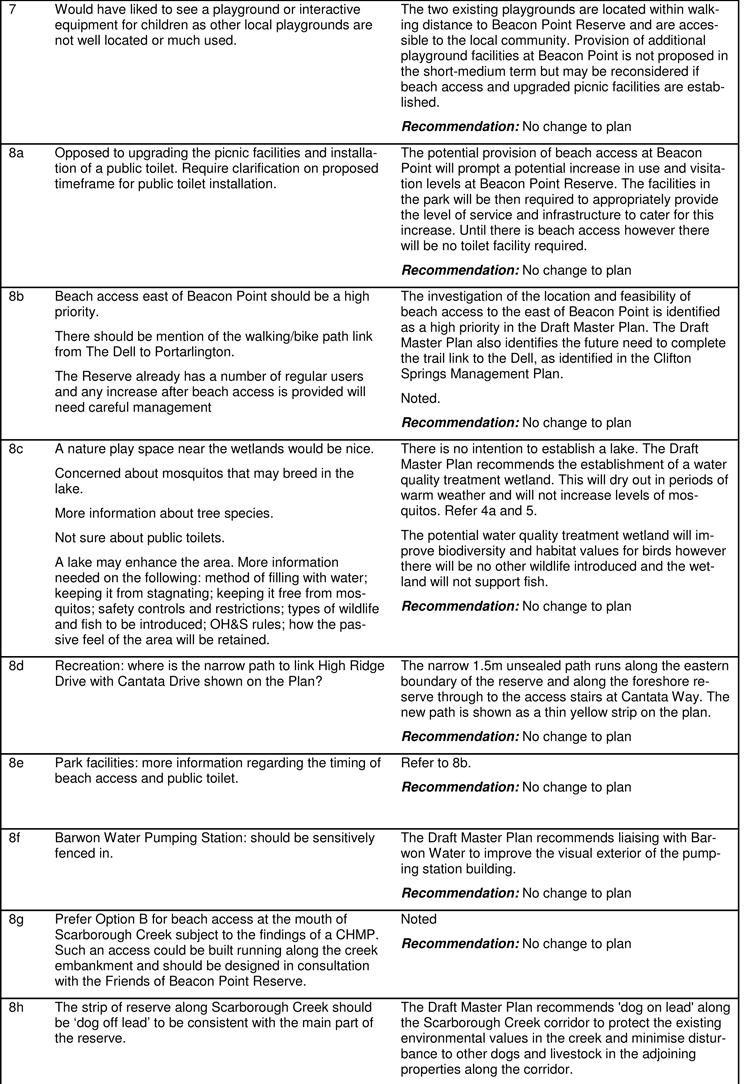
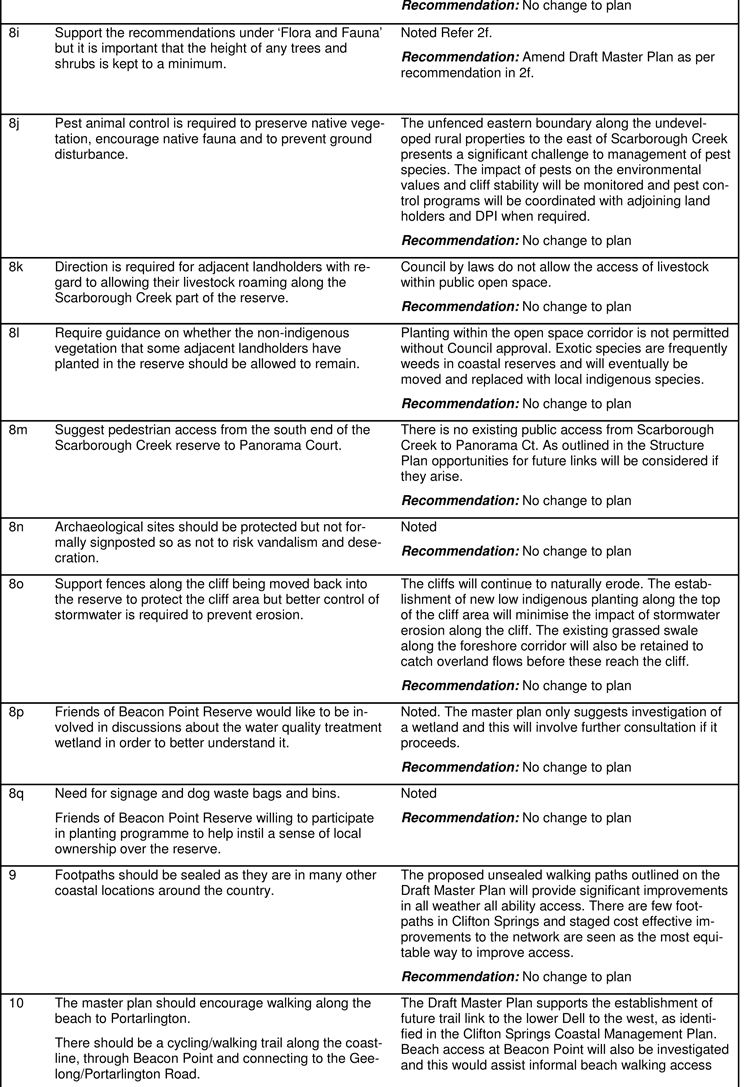
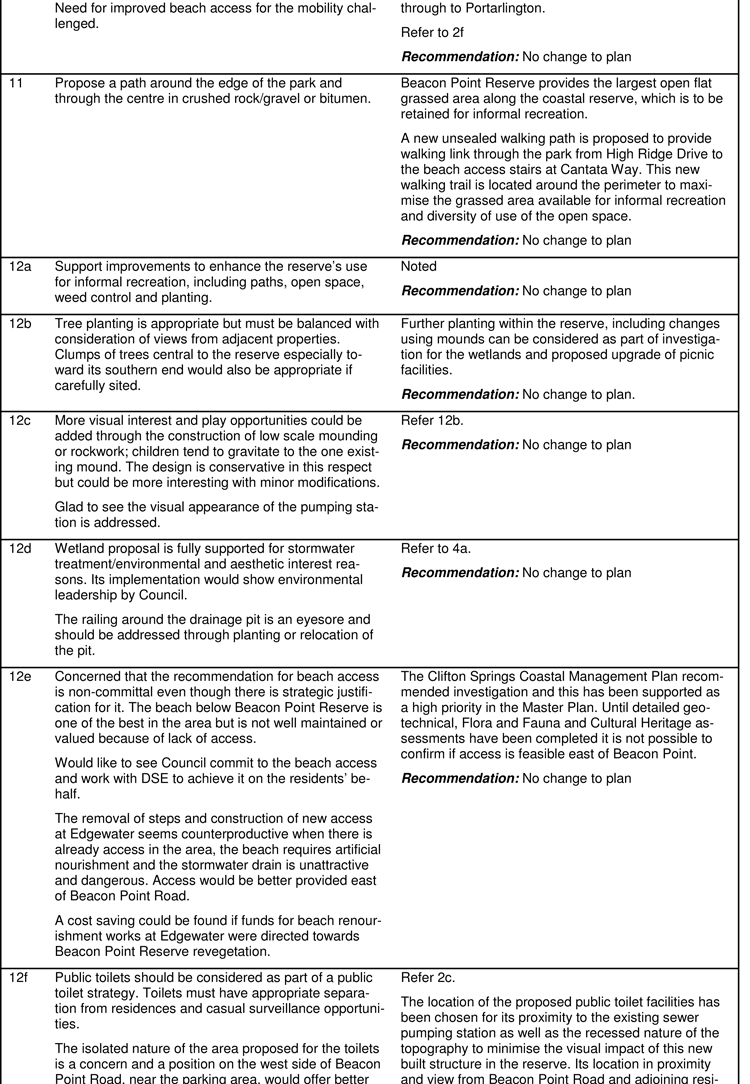
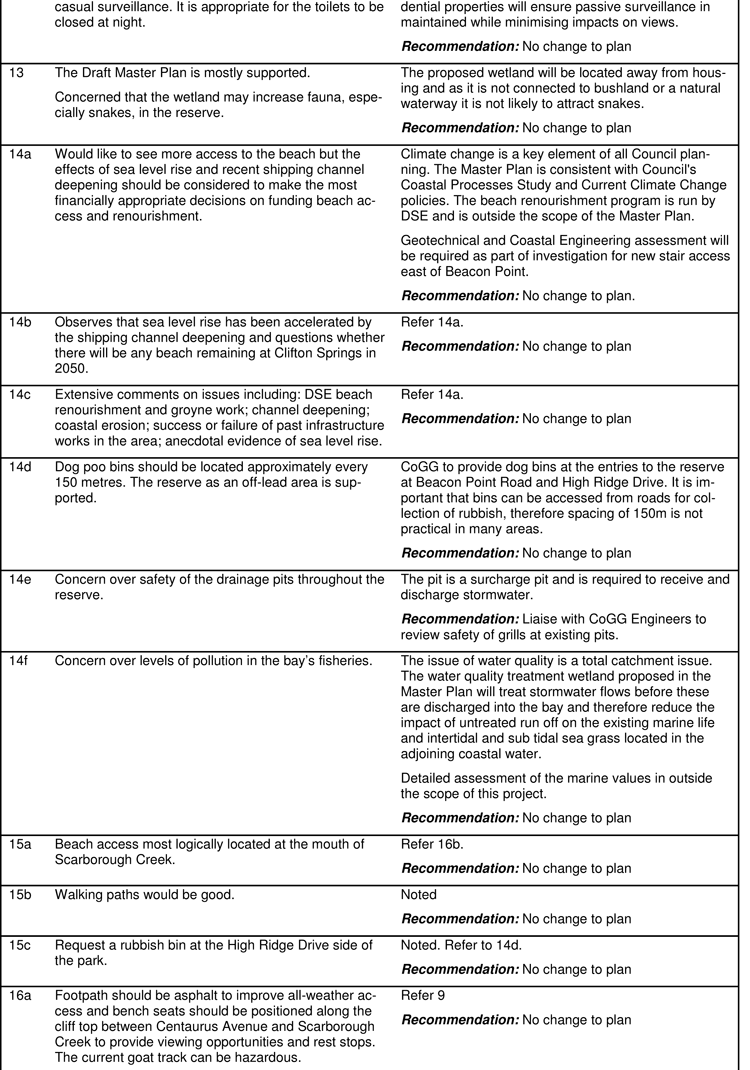
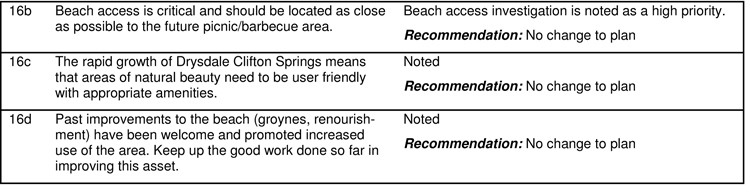
In total, 16 public submissions were received and are included in full at Appendix C of the Beacon Point Reserve Master Plan Report. A summary of the comments received by Council regarding the draft Beacon Point Reserve Master Plan is outlined in Appendix 1.
Portfolio: |
Governance - Cr K Fagg, Mayor |
Source: |
Corporate Services - Administration & Governance |
General Manager: |
Jeff Wall |
Index Reference: |
Municipal Association of Victoria |
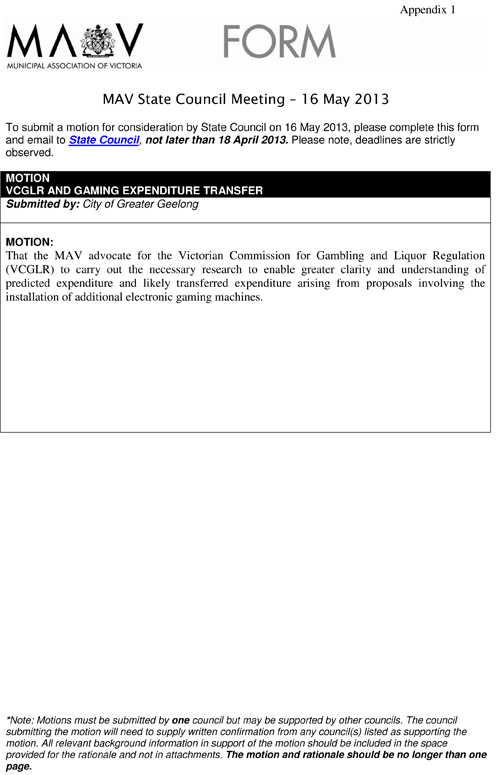
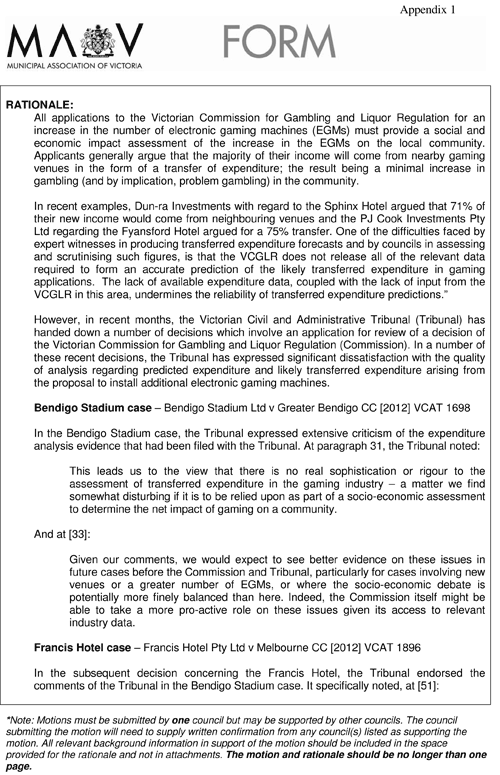
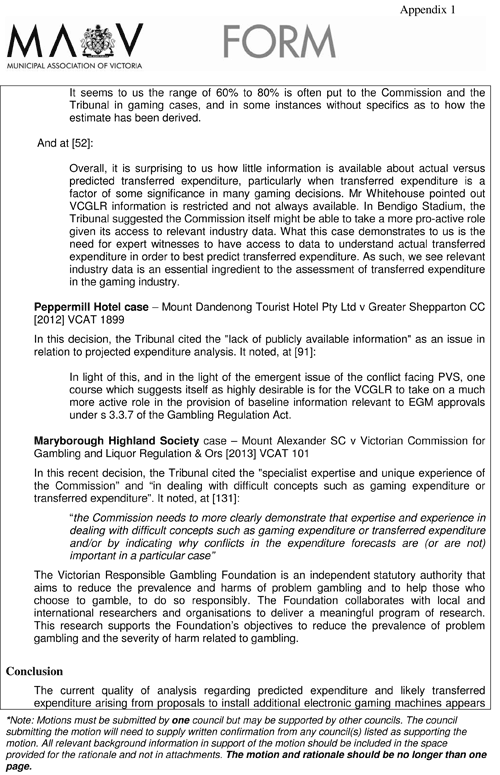
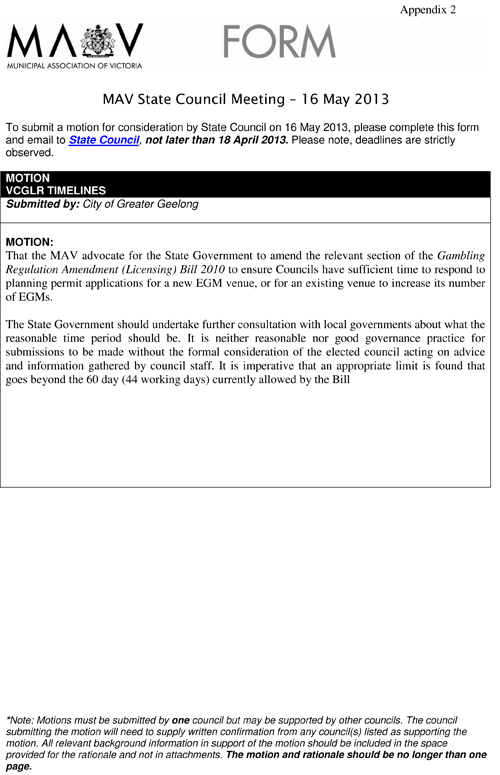
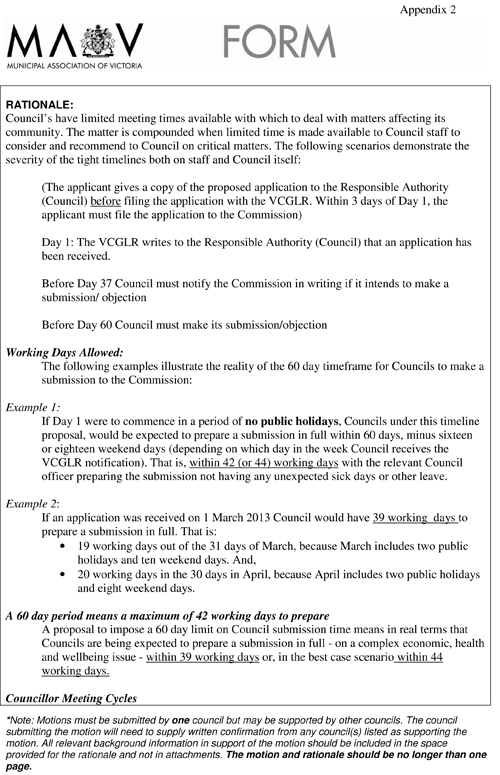
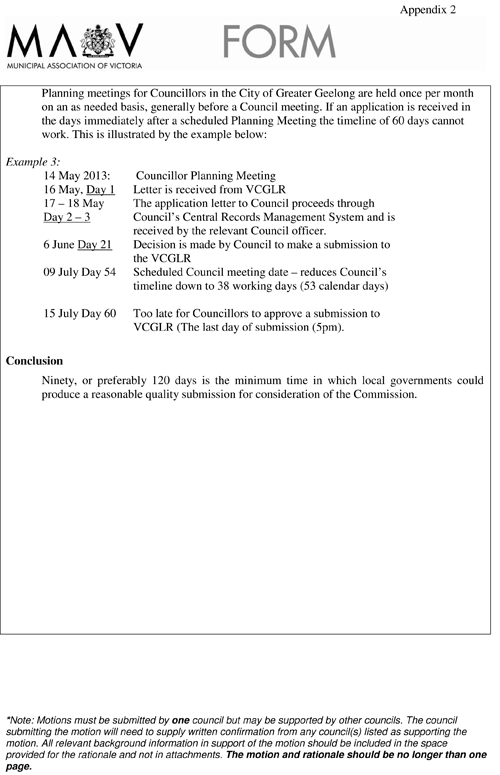
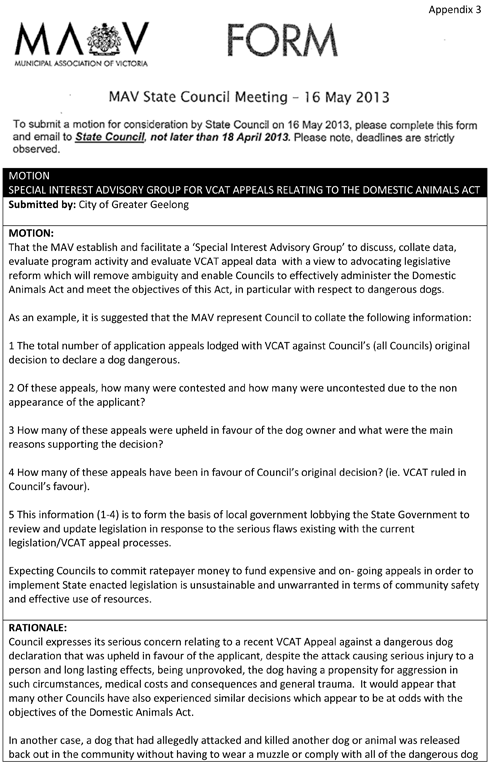
The Municipal Association of Victoria (MAV) State Council meeting will be held on 16 May 2013 and Councils have been requested to submit motions for consideration.
Decisions made at the meeting constitute policy direction of the MAV for the immediate future.
Issues proposed by the City of Greater Geelong are set out in this Report.
The State Council meeting is primarily for Council appointed representatives and Cr Richards will be attending on behalf of the City of Greater Geelong.
Cr Richards moved, Cr E Kontelj seconded -
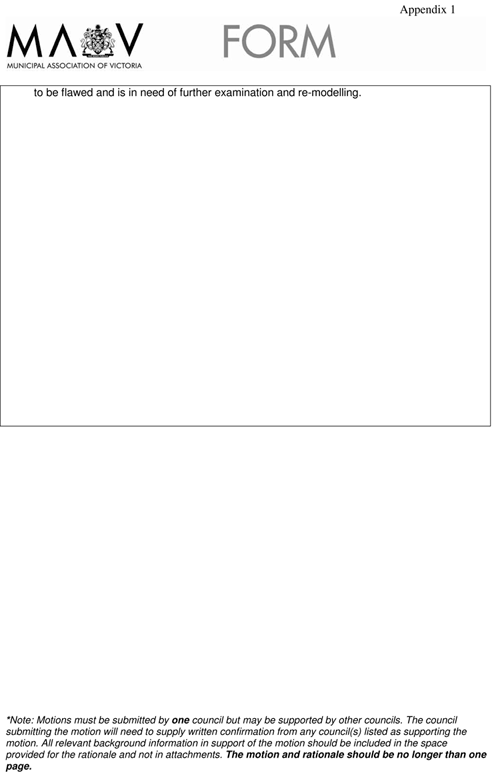
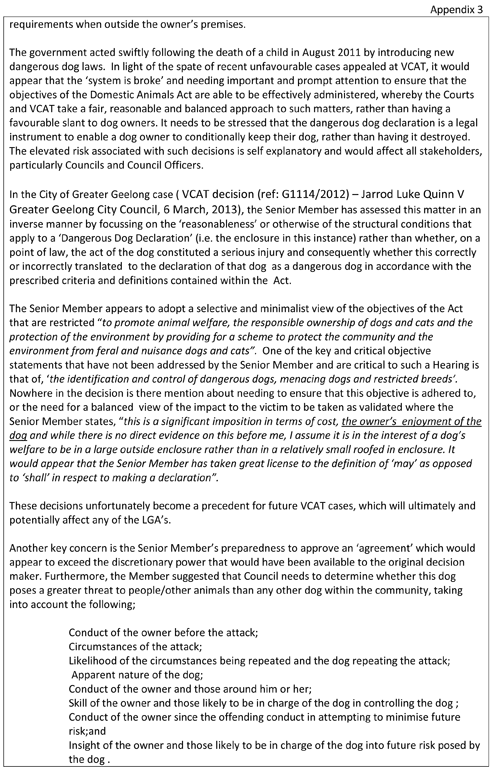
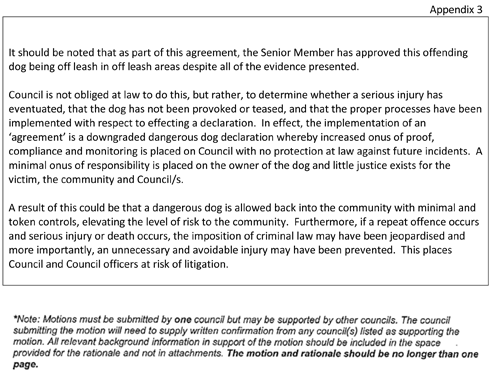
That the motions set out in Appendices 1 – 3 of this report be submitted to the MAV State Council.
Carried.
At the State Council Meeting, there is an opportunity for Councils to submit motions for consideration. If supported, the motions form part of the policy direction of the Association. The MAV requested input from Councils, with a closing date of 18 April 2013.
Motions must be of state-wide significance to Local Government and must be accompanied by background information which provides the rationale behind the motion.
Nil.
There are no financial implications in presenting motions to the MAV. However, if some of the proposals achieve success, financial benefits may result.
If supported at State Council, the issues raised by Council will have the backing of the MAV whose role includes lobbying other levels of government to promote the views of Local Government.
No officers involved in the preparation of this report have any direct or indirect interest.
There are no risks associated with endorsement of these proposals by the MAV.
Nil.
The issues will be canvassed with other Councils through State Council, and if endorsed, will be pursued with the State or Federal Government by the MAV.
Portfolio: |
Governance –Cr Fagg, Mayor |
Source: |
Corporate Services – Financial Services |
General Manager: |
Jeff Wall |
Index Reference: |
Subject: Financial Management - Reporting |
Urban development at Charlemont and Armstrong Creek has resulted in Charlemont Road no longer being a continuous roadway.
In order to comply with legislation and provide properties with a unique identifiable street address, it is proposed to rename two sections of Charlemont Road.
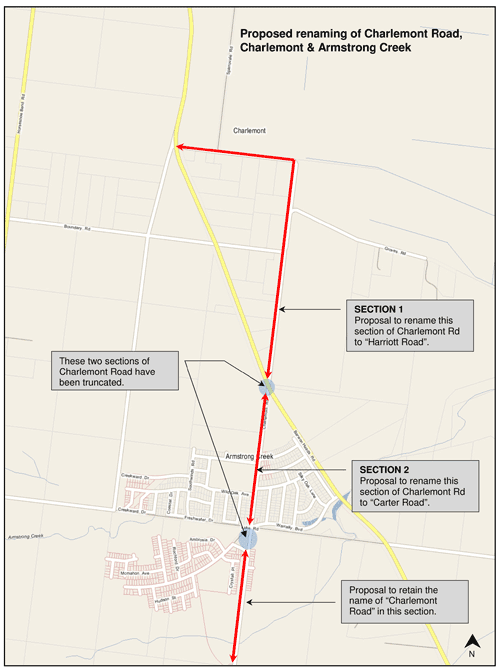
It is proposed to rename a section of Charlemont Road to “Harriott Road, Charlemont and Armstrong Creek” (refer Appendix 9-1, Section 1). The section to be renamed connects to the Barwon Heads road at two points, commencing in the suburb of Charlemont and ending in Armstrong Creek.
The proposed renaming to “Harriott Road” was advertised in The Independent newspaper on 22 February 2013 and the Geelong Advertiser newspaper on 23 February 2013.
No submissions were received.
It is also proposed to rename another section of Charlemont Road to “Carter Road, Armstrong Creek” (refer Appendix 9-1, Section 2). The section to be renamed commences at the Barwon Heads Road, heads south and terminates at Lake Road, Armstrong Creek.
The proposed renaming to “Carter Road” was advertised in The Independent newspaper on 17 August 2012 and the Geelong Advertiser newspaper on 18 August 2012.
One submission was received which was against the proposal.
Cr Richards moved, Cr Macdonald seconded -
That Council approve the renaming of the section of:
Charlemont Road that connects to the Barwon Heads road at two points, commencing in the suburb of Charlemont and ending in Armstrong Creek to “Harriott Road, Charlemont and Armstrong Creek” (refer Appendix 9-1, Section 1).
Charlemont Road that commences at the Barwon Heads Road, heads south and terminates at Lake Road, Armstrong Creek to “Carter Road, Armstrong Creek” (refer Appendix 9-1, Section 2).
Carried.
The northern end of Charlemont Road in Charlemont is currently accessed off the Barwon Heads Road and continues in a generally southerly direction crossing the Barwon Heads Road and continuing into Armstrong Creek.
Charlemont Road continues south crossing Lake Road, Lower Duneed Road, McCanns Road and terminating at the Charlemont property within Surf Coast Shire.
Urban development (ie. Warralily development) occurring in Charlemont and Armstrong Creek has resulted in a truncation of Charlemont Road at Lake Road.
The road is no longer navigable as a continuous roadway. This does not comply with legislative guidelines.
Based on principle 4(f) of the Guidelines for Geographic Names 2010, Council is required to rename both sections of the roadways.
Principle 4(f) states that “if the course of a road is obstructed perhaps due to the construction of other roads or features, a new unique name is to be applied to one end of the road. This is particularly important when an emergency service vehicle cannot navigate the entire course of the road from one end to the other”.
The Guidelines state that when a road becomes or is disjointed, a separate name is required for both sections of the roadway.
With the truncation of Charlemont Road at the approximate mid point, it was necessary to consider renaming either the northern section or southern section of Charlemont Road.
Emergency Services have previously requested Council to rename the northern section of this roadway due to confusion in locating properties north and south of Barwon Heads Road.
The proposal is to rename the sections of Charlemont Road north of the point of truncation at Lake Road.
Renaming these sections of road will enable all properties to have a unique identifiable street address and will enable emergency services and visitors to the area to locate properties in a timely manner.
It is proposed to rename the section of Charlemont Road that connects to the Barwon Heads road at two points, commencing in the suburb of Charlemont and ending in Armstrong Creek to “Harriott Road, Charlemont and Armstrong Creek” (refer Appendix 9-1, Section 1).
It is proposed to rename the section of Charlemont Road that commences at the Barwon Heads Road, heads south and terminates at Lake Road, Armstrong Creek to “Carter Road, Armstrong Creek” (refer Appendix 9-1, Section 2).
The proposed names have been chosen from a recently compiled list of suitable ANZAC names, namely:
Captain Harriott served on the western front within the 19th Light Horse and was promoted throughout his service to Captain and was also recommended for a Military Cross. Captain Harriott was killed in action at Broodseinde Ridge, Belgium, aged 26, in what was known as the third battle of Ypres.
Mr Carter was a Presbyterian Chaplain with the AIF 2nd Brigade 5th-8th battalions. He served on the Western front for three years and ministered to units and interred the deceased.
The proposed renaming of both sections of this roadway meet the requirements of the Geographic Place Names Act 1998 and the Guidelines for Geographic Names 2010.
The proposed names were advertised separately in The Independent newspaper and the Geelong Advertiser newspaper. All abutting land owners were notified at the time.
Council only received one submission in total. The submission was against the name “Carter Road” and proposed another name. However, the suggested name does not meet the Guidelines for Geographic Names 2010 as it would be a duplicate name within a 15km radius. This submission was responded to accordingly.
There are no environmental issues arising from this report.
Council is responsible for street signage.
The Geographic Place Names Act 1998 and the Guidelines for Geographic Names 2010 have been followed and met.
The proposals were advertised separately.
The proposed naming of “Harriott Road” was advertised in The Independent newspaper on 22 February 2013 and the Geelong Advertiser newspaper on 23 February 2013, with no submissions being received.
The proposed naming of “Carter Road” was advertised in The Independent newspaper on 17 August 2012 and the Geelong Advertiser newspaper on 18 August 2012, with one submission against the proposal being received.
There is no Council Officer direct or indirect interest involved in this report.
Should an emergency situation occur in this area, Council’s proposal to rename these sections of roadway will minimise the risk of emergency services not being able to locate the situation.
These renamings will allow for easy identification to the public and utility services in case of an emergency.
The proposals were advertised separately.
The proposed naming of “Harriott Road” was advertised in The Independent newspaper on 22 February 2013 and the Geelong Advertiser newspaper on 23 February 2013 with no submissions being received.
The proposed naming of “Carter Road” was advertised in The Independent newspaper on 17 August 2012 and the Geelong Advertiser newspaper on 18 August 2012 with one submission being received.
Subject to Council and The Registrar of Geographic Names approval, the relevant authorities and abutting owners will be notified of the official registration of these road renamings.
Portfolio: |
Governance –Cr Fagg, Mayor |
Source: |
Corporate Services – Administration and Governance |
General Manager: |
Jeff Wall |
Index Reference: |
Council General Election 2012 |
The October 2012 Greater Geelong City Council elections were held by postal ballot conducted by the Victorian Electoral Commission (VEC).
The VEC have now presented its report on the conduct of the election that provides an overview of:
Electoral process
Voter and Candidate participation, and
Statistical information and results.
Cr Harwood moved, Cr Macdonald seconded -
That Council notes the report from the VEC in respect to the 2012 General Elections.
Carried.
The MAV acting as agent for 54 Councils published and facilitated a tender for the provision of electoral services for the 2012 Council general elections. The VEC was appointed to conduct these elections on behalf of the 54 Councils. The Greater Geelong City Council election included 12 Single-Councillor Wards and the Directly Elected Mayor.
The VEC has submitted its report on the conduct of the 2012 Council election which provides a summary of the electoral process, voter and candidate participation together with statistical data.
In managing the Election, the VEC had a ballot paper issue which they responded promptly to address. The VEC wrote to all voters as well as issuing media releases in the local paper, radio and their website to explain the anomaly.
There were 170,408 voters on the roll. As a percentage of the total enrolment for the Greater Geelong City Council, the number of ballot papers counted (formal and informal) was 76.29% for the Mayoral election and 77.7% for the Ward elections. This compares with 75.91% at the last Council Ward elections.
The informal voting rate was 3.29% for the Mayoral election and 2.41% for the Ward elections. The elections for all wards were determined by manual count and distributing the preferences marked on the ballot paper, using the preferential counting method. Preference distributions were required for Austin, Beangala, Brownbill, Buckley, Coryule, Cowie and Windermere wards, as no candidate received an absolute majority of first preferences.
The election result for the Directly Elected Mayor was also determined using the preferential counting method, however due to the large number of ballot papers, the VEC used a computer count to capture preferences and perform the calculation of the result.
Candidates Information Sessions
The Municipal Association of Victoria and the VEC held two information sessions for prospective candidates in the lead up to the elections.
There are no environmental implications associated with this report.
The election was conducted under contract with the VEC, with a budget estimate of $650,000. Costs are yet to be finalised but we expect to be within the budget.
The Election was conducted in accordance with the Local Government Act 1989 and there were no formal complaints lodged.
No officers involved in the preparation of this report have any direct or indirect interest in the content of this report.
The appointment of the VEC ensured the election was conducted in accordance with regulatory requirements.
Participation in the election of the Directly Elected Mayor and Councillors was made available to all eligible voters.
The report of the VEC provides details of the information campaign, newspaper and radio advertising, media releases, VEC’s website and direct mailouts. The VEC worked with a number of partners to provide suitable communication services for blind and low vision voters, voters with a disability, and culturally and linguistically diverse voters.
Portfolio: |
Finance - Cr S Kontelj |
Source: |
Corporate Services – Financial Services |
General Manager: |
Jeff Wall |
Index Reference: |
Financial Management - Reporting |
Cr S Kontelj moved, Cr Richards seconded -
That in accordance with Section 89 (2) (d) of the Local Government Act 1989, this contractual matter be considered at the conclusion of all other business at which time the meeting be closed to members of the public.
Carried.
Contents | Previous Page: Section B - Reports 1-4 | Next Page: Section C - Notice of Motions
