
Council Minutes - Section B: Reports (6-10) - 27 May 2014
Contents | Previous Page: Section B - Reports (3-5) | Next Page: Section B - Reports (11-12)
Contents | Previous Page: Section B - Reports (3-5) | Next Page: Section B - Reports (11-12)
Reports tabled at the Ordinary Meeting of Council on Tuesday date held at the Geelong Greyhound Racing Club, Princes Freeway, Corio.
Portfolio: |
Community Development - Cr Fisher |
Source: |
Community Services |
General Manager: |
Jenny McMahon |
Index Reference: |
Subject: Community Building / Early Years |
The purpose of this report is to present recommendations to Council for the future governance and operational arrangements for the new Leopold Integrated Children’s Centre.
The purpose of this report is to present recommendations to Council for the future governance and operational arrangements for the new Leopold Integrated Children’s Centre.
Construction of the new Leopold Integrated Children’s Centre commenced in December 2013 and is scheduled for completion by the end of January 2015. It is anticipated that the centre will be operational from April 2015.
The Boorai Centre Ocean Grove commenced operation at full capacity in January 2014 and has already begun to establish a new benchmark in the delivery of integrated early childhood services in the City of Greater Geelong. The development of the Leopold Integrated Children’s Centre will build upon and extend this new approach to the provision of quality children’s services within the Leopold community. The Leopold Integrated Children’s Centre is of a similar size and service complexity to the Boorai Centre.
The design of the new Centre, combined with proposed governance and management arrangements, will act as vehicles for the delivery of more cohesive, comprehensive, integrated and cost efficient services and activities for local children and families. To date, the experience of Council management of the Boorai Centre indicates that integrated, high quality, responsive service delivery for children is best achieved through a centralised governance and management structure.
Once completed and operating at full capacity, the new centre will employ around 35 full time equivalent staff (including existing positions), as well as providing opportunities for staff employed by external allied health and family support agencies to be based at the centre. In addition, this place-based approach to local service delivery and planning will enable a range of program activities to be provided from the centre that directly respond to the needs of local families, including playgroups, parenting information sessions and targeted group support programs.
The initial proposed operational budget estimates indicate an additional cost to Council of $104,093 for the first three months of operation in 2014/2015. This figure includes initial implementation costs but excludes depreciation and the costs of providing maternal and child health services in Leopold. It is anticipated that, by 2016/2017 (assuming that the service is at full capacity and high utilisation rates are maintained), the budget for the long day care and kindergarten programs will achieve a cost neutral position.
International economic research clearly demonstrates that the cost-benefit return on public investment in high quality childhood education is substantial. Equally, providing the infrastructure so that all adults who wish or need to work outside the home can find and sustain employment is critical to meeting workforce demands to sustain an economically competitive region.
A business development plan and operational implementation schedules have been developed for the new centre.
Council has three options to consider for the management of the centre (see attachment 1). It is recommended that Council adopt option 1.
Cr Macdonald moved, Cr Fisher seconded
That Council directly manage the Leopold Integrated Children’s Centre.
Carried.
The development of the Leopold Integrated Children’s Centre has been designed to augment the limited capacity of existing local services to meet rapidly growing population requirements in Leopold and surrounding areas on the Bellarine, while also expanding the range of programs and services available for local children and families. It will also increase childcare service options for commuter populations from Ocean Grove, Drysdale/Clifton Springs and the wider Bellarine Peninsula.
The second stage of proposed development at the site includes a new public library and spaces for youth services. This will provide additional opportunities in the future for the integration of learning, training and support programs for adults, young people and children (e.g. early literacy programs, support programs for young parents).
The key feature of an ‘integrated children’s centre’ is that it acts as a service hub for the community by bringing together a range of services and practitioners (from a range of professional backgrounds) who use a holistic, integrated approach to supporting children and their families.
The integration of early childhood services and the increased collaboration between services and other professionals are integral to addressing and supporting the needs of children and their families. Local, national and international evidence clearly identifies a range of positive outcomes for children and families where services adopt a more integrated and holistic approach.
The Boorai Centre Ocean Grove commenced operation at full service capacity in January 2014 and has already begun to establish a new benchmark in the delivery of integrated early childhood services in the City of Greater Geelong. Specifically, a centralised management structure with Council as the lead agency has enabled the centre to develop an integrated practice model that incorporates:-
A single strategic plan (with an evaluation framework) for the centre
Clear information-sharing process and shared data collection across a range of program areas and agencies (e.g. Barwon Health, Ocean Grove Toy Library Association)
A centralised budget that can realise cost efficiencies
A single ‘point of entry’ for families into all services operating from the centre
Meaningful engagement with local community stakeholders, such as primary schools, the Ocean Grove Neighbourhood House, and other community services
Expansion of service options for families at the centre (e.g. parenting information sessions, group programs for families experiencing conflict post-parental separation) based upon consultation with families using the centre
The development of the Leopold Integrated Children’s Centre will build upon and extend the City’s new, integrated approach to the provision of quality children’s services within the Leopold community. The Leopold Integrated Children’s Centre is of a similar size and service complexity to the Boorai Centre.
A range of potential governance and management options for the operation of the new Leopold Integrated Children’s Centre have been examined (refer Attachment 1). Consequently, this report proposes that the City of Greater Geelong assumes the role as the lead agency in the development of the governance and management of the Leopold Integrated Children’s Centre.
Council is a registered kindergarten cluster manager and currently operates the Maternal and Child Health service that will be incorporated into the new Leopold Integrated Children’s Centre. Council has also demonstrated its capacity to successfully operate an integrated children’s centre of similar size and service complexity in Ocean Grove.
The Leopold Integrated Children’s Centre has been designed to provide an integrated early childhood service, that delivers a comprehensive range of early childhood education and care services for the growing community of Leopold and the surrounding area.
The location of the new Leopold Integrated Children’s Centre provides a key focal point for the local community, and opportunity for close integration and linkages with other education, community, and recreation services and amenities. The completion of Stage 2 development at the site will also result in the co-location of the Centre with a new public library and specialist youth services. To date, evidence from the implementation of the Boorai Centre indicates that the location of integrated children’s centres within close proximity to primary schools and recreation reserves not only enhances the quality of educational experiences available to children across all early years services but also creates professional linkages and shared understandings that support children’s transitions between learning environments.
The principles on which the new Leopold Integrated Children’s Centre has been developed reflect a shared commitment to improving outcomes for children and families, and a belief that greater progress toward improved outcomes is to be achieved by services working together rather than working in isolation.
The proposed integrated service model for the new Leopold Integrated Children’s Centre is consistent with that currently adopted at the Boorai Centre. This model also aligns with national, state and local government policy and program directions aimed at improving integration and co-location of early childhood services, and strengthening connections between early childhood services and facilities provided by other government and community agencies.
A comprehensive literature review undertaken by the Centre for Community Child Health (CCCH) outlines a number of features of effective integrated child and family services that have been identified. These include the following:
The services are not just co-located but form a new entity, with pooled resources and common service protocols.
The integrated service is built around the provision of universal services, that is, core services that are available to all children and families. These include maternal and child health services, playgroups, toy libraries, child care and preschools. This approach enables vulnerabilities in young children and/or their families to be identified early so that appropriate specialist support can be put in place to ensure children achieve their full potential.
Although still in its early stages of establishment, the Boorai Centre has already demonstrated that integrated service delivery creates opportunities for the delivery of education and care services to children that is supported by ‘wrap around’ parenting support (e.g. parenting information sessions, counselling sessions). This results in consistency across home and service environments in terms of how children’s learning and development needs are met, as well as ensuring that the ‘background factors’ within families (e.g. parental separation) that can impact upon children’s development are addressed within a supportive environment. Multi-disciplinary professional consultations, assessments and planning also regularly occur within the Boorai Centre, enabling a holistic response to identifying and meeting children’s needs.
This new model is more than simply ‘co-locating’ a range of services together under ‘one roof’. The experience of the Boorai Centre indicates that co-location in itself does not lead to ‘integration’ or for that matter even improved ‘cooperation’. Evidence from the experience of implementing this new centre in Ocean Grove indicates that more is required, and must include every aspect from how a centre is governed, managed, and the ways in which services are delivered.
The scope and design of the new Leopold Integrated Children’s Centre will significantly expand the capacity of existing education and care service provision for young children within the Leopold community. Current provision will be further enhanced through the development of a range of new and additional services including playgroups, parent education, toy library, family support services, early intervention, and ancillary community health. These new service activities and programs will be designed in consultation with children and their families so that they meet the current and emerging needs of families.
The Leopold Integrated Children’s Centre will also provide a focal point for local placed-based access to information and referral to a range of services provided more generally throughout the municipality and by other providers including government agencies. This function of the centre will also include administrative function to assist parents with appointments, enrolments and program registrations. In providing a place-based response to children and families, parents who are new to the local area will also able to access opportunities to establish informal social support networks (e.g. through attendance at playgroups or being provided with information about other community services), thereby reducing social isolation and the risk of social exclusion.
Program and service planning will aim to ensure that opportunities for outreach and home visiting services are provided to families – taking services to families, rather than expecting families to come to the centre, will be, in some cases, the only way to engage families and ensure positive benefits are provided to young children. The service will also ensure that culturally safe and inclusive practices are integral to the centre’s philosophy and mode of operation.
Governance:
The concept of integrated governance and service delivery has gained wide-spread currency in the field of early childhood service provision and related government policy. This has been particularly driven by the design and development of new models of children’s service infrastructure that provide a ‘one-stop-shop’ delivery of a range of services that may have been formerly located and delivered through geographically isolated and separate service centres and governance arrangements.
Studies of integrated governance initiatives both in Australia and overseas all point to the importance of strong executive leadership at the top of relevant organisations in order to achieve desirable outcomes and overcome the myriad of potential barriers and challenge that are commonly associated with achieving integration.
The work undertaken by the Centre for Community Child Health in the ‘Evaluation of Victorian children’s centres: Framework to support the establishment and operation of children’s centres’ established a number of indicators of a governance structure that is able to effectively manage and operate an integrated early childhood service and that has a clear community mandate. These include:-
A shared strategic plan has been developed for the entire centre.
Pooled funding is centrally administered.
A single overall planning process is in place that includes a communication strategy, an evaluation plan, a risk management plan and clear reporting processes.
A central intake process is in place that is supported by a common information system, avoiding the need for families to enrol in each separate program.
Parents receive a comprehensive guide to services, programs and facilities.
A shared philosophy and vision is in place that based on the core principles of child-centred practice.
The effectiveness and speed with which these aspects of service governance have been able to be implemented at the Boorai Centre has been a direct result of the unified, centralised governance structure that has resulted from the centre being a Council managed service. The positive impact of this structure is evidenced by the following achievements:-
A single strategic plan has been developed for the entire centre (in consultation with the centre’s advisory group).
An integrated budget, with the potential to achieve cost efficiencies across programs and services.
The development of a ‘brand’ and communication plan for the centre that is inclusive of all services, programs and agencies engaged with the centre.
Clear reporting and accountability processes have been developed, with a Centre Manager having responsibility for the overall management of the centre’s operations.
A single overall planning process has enabled findings from the first parent/carer survey to inform what services are provided at the centre and how they are configured.
A central intake process is in place, with consideration being given to the development of a common information system.
A shared philosophy and vision for the centre is in place. This will continue to be refined over time with input from children, parents, stakeholders and the centre’s advisory group.
This experience indicates that integrated children’s centres will, therefore, benefit from Council’s strong strategic planning foundations that are well aligned with key objectives associated with achieving integrated service development within early childhood services and approaches to broader local community building and social planning prioities. Council also has well developed, robust and transparent governance, management, financial and reporting systems that are subject to public scrutiny and internal and external checks and balances.
In addition to its management of the City’s first integrated children’s centre, Council has successfully delivered related early childhood services and programs over a long period and has strong community confidence and support. Council has an intimate knowledge and understanding of local needs and priorities, along with the capacity to focus both knowledge and resources to address identified local needs and priorities.
As the lead agency for the Leopold Integrated Children’s Centre, Council will be responsible for ensuring that services and activities are delivered in accordance with key objectives and community requirements, including financial accountability, quality of provision, integrated services and management, as well as meeting the targets set out in performance management frameworks and individual service contracts. In addition to this, regular consultation with the local community, parents and partners will ensure local needs are met and resources are used effectively.
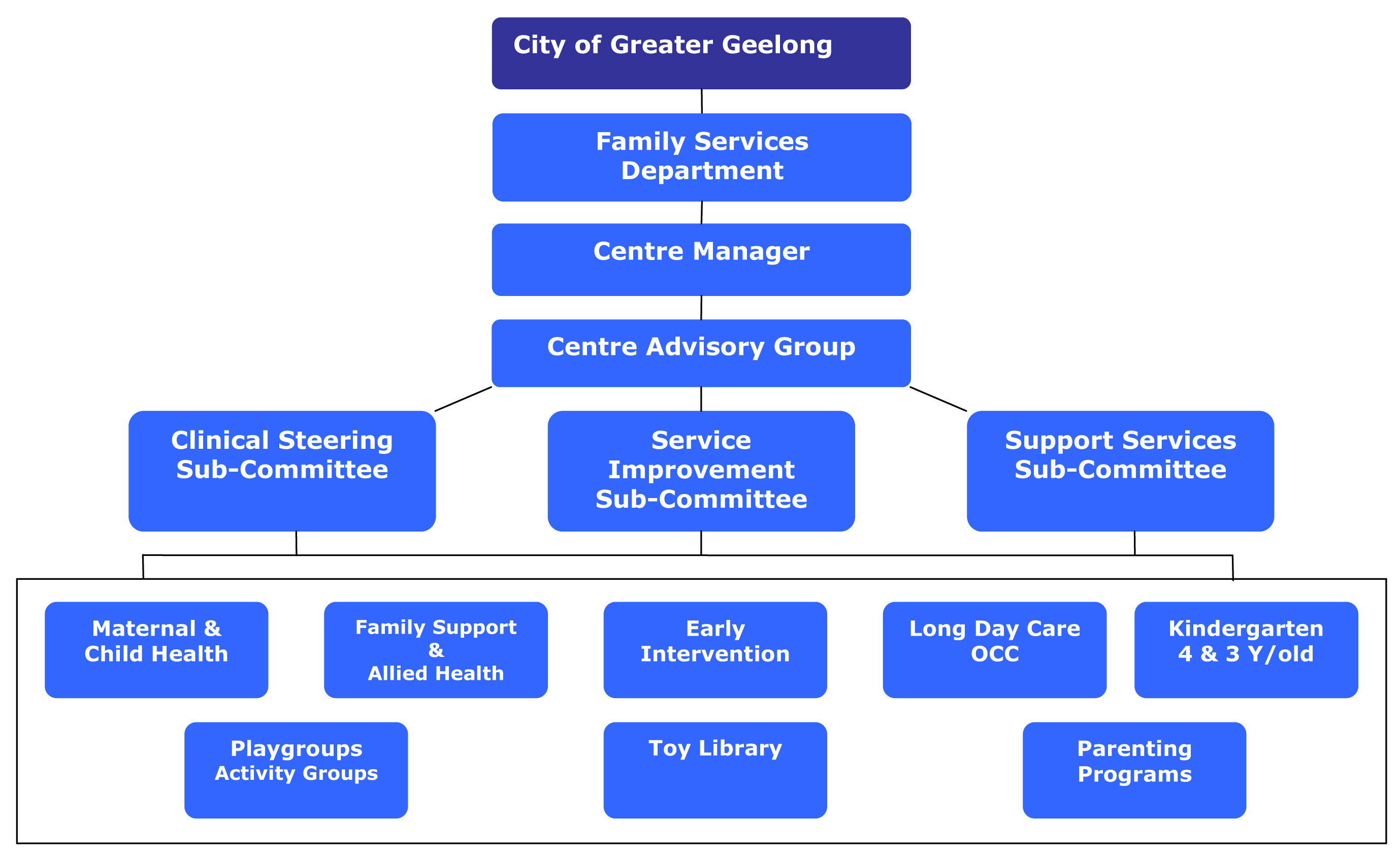
Parents, user groups, community organisations and other key stakeholders will be encouraged to participate in the operational and functional dimensions of the Leopold Integrated Children’s Centre, through the establishment of a ‘Centre Advisory Group’. This group will focus on the development and evaluation of the relationships, policies, planning and procedures that will ensure the effective development and implementation of an effective, integrated practice model and governance structure at the centre. Refer to the diagram presented in Attachment 2 for a summary of the proposed management structure of the Leopold Integrated Children’s Centre. This structure has been successfully implemented at the Boorai Centre, with parent participation a key component of the functioning of the advisory group.
Staffing:
Once completed and operating at full capacity, the new centre will employ 35 full time equivalent staff. The increased net cost to Council for the first year as detailed in the table on page 7 has been included in the draft 2014/2015 budget. It is anticipated that by 2016/2017 the budget for the long day care and kindergarten programs will achieve a cost neutral position.
The Leopold Integrated Children’s Centre meets the requirements of the Building Code of Australia.
As indicated in Table 1 (below), it is expected that the Leopold Integrated Children’s Centre will generate income of approximately $0.25M in 2014-15 in its initial three months of operation, increasing to $1.82M in 2015-16 and to $2.46M in 2016-17. The projected income estimates have been conservatively calculated, based on an initial 44 places in the long daycare service (at 95 per cent utilisation) in its first three months of operation and increasing to full capacity (i.e. 92 places at 95 per cent utilisation) by 2016-17.
It is anticipated that the sessional kindergarten program will commence operation at the centre from 2016. The maternal and children health service will continue to be funded in accordance with existing arrangements.
|
Income |
Expenditure |
Cost to Council |
Cost to Council |
2014-15 |
$0.25M |
$0.38M |
$0.14M |
$0.10M |
2015-16 |
$1.82M |
$2.10M |
$0.28M |
$0.16M |
2016-17 |
$2.46M |
$2.58M |
$0.13M |
$0.00M |
Table 1: Estimated Annual Budget for Leopold Integrated Children’s Centre (excluding depreciation and maintenance)
Total consolidated expenditure across all Council programs and services operating from the Leopold Integrated Children’s Centre is expected to be $0.38M in the initial three month financial year period 2014-15, increasing to $2.1M in 2015-16 and to $2.59M in 2016-17.
The additional costs to Council (subtracting the costs for which Council already contributes to the existing maternal and child health service) is expected to be $0.10M in 2014-5 and $0.16M in 2015-16.
The annual percentage rate at which the cost to Council will be reduced from the period of commencement remains subject to how quickly the centre achieves optimal utilisation, and also maintaining an annual fees adjustment at the rate of 4.5 per cent.
Based upon current predicted service demand, however, it is estimated that the service will be operating at full capacity by 2016-17, at which point the budget for the long day care and kindergarten programs will achieve a cost neutral position.
International economic research clearly demonstrates that the cost-benefit return on public investment in high quality childhood education is substantial. Equally, providing the infrastructure so that all adults who wish or need to work outside the home can find and sustain employment is critical to meeting workforce demands to sustain an economically competitive region.
The planning role of Local Government in relation to the provision of services for the community is legislated in the Victorian Local Government Act (1989), Planning and Environment Act (1987) and the Health Act (1958).
The provision of early childhood facilities and delivery of related services is regulated by a range of legislated requirements and service standards including the following:
Education and Care Services National Regulations (2011)
Maternal and Child Health Program Standards (2009)
Disability Discrimination Act (1992)
Occupational Health and Safety Act (2004)
Victorian Food Act 1984
The development of the Leopold Integrated Children’s Centre aligns with a range of existing Council strategies, policies and plans that inform Council’s role in the provision of children’s services and facilities. These include:
City Plan (2013-2017) - a major theme within City Plan, is “delivering community infrastructure and managing and supporting our continued growth, whilst delivering services for our community”.
Municipal Public Health and Well-being Plan (2013-2017) “We will provide safe and vibrant physical environments and infrastructure to support healthy living and connected communities.”
Municipal Early Years Plan (2013-2017)
Council’s Asset Management Policy (2012)
Council Asset Management Strategy Version 1.06 – (2010)
No officers or contractors involved in the preparation of this report have a direct or indirect interest in matters to which this report relates.
There are a number of inherent risks with a project of this nature. These risks are being mitigated through various control measures, and include financial, operational, and potential implications for Council’s reputation.
There are a number of pressures on Council relating to the provision of family and children’s services in the Leopold area which will be addressed by completion of this project. In significantly increasing the provision of affordable childcare within the local community, the centre will also contribute to broader social and economic outcomes for families in the local area.
The Leopold Integrated Children’s Centre represents a significant investment of public funding and is a key part of the broader establishment of a new benchmark and service model for the delivery of integrated children’s services across the City. This commitment to integrated children’s centres will continue to ensure that earlier, ‘whole of family’ intervention and support for children can occur for children within their local community.
It is therefore essential to ensure that governance and management structures facilitate and support the successful implementation and achievement of the goals for this project, as well building upon the learning to date from the operation of the new Boorai Centre.
The United Nations Convention on the Rights of the Child (CRC) requires governments to take all appropriate measures to ... render appropriate assistance to parents and legal guardians in the performance of their child-rearing responsibilities.
The United Nations CRC in conjunction with the Human Rights Charter upholds the rights of children’s rights to receive appropriate support and assistance, which protects their welfare, health, and well-being.
Council has been working closely with relevant stakeholder groups, and communicating with the Leopold community in regards to this project.
The following summarises a range of potential options under which integrated children’s centre could be managed. Not all the options referred to in this table would necessarily result in successfully achieving effective integrated outcomes or governance.
Model Structure |
Description |
Example |
Advantages |
Disadvantages |
Preferred Option Rating |
Direct Council Service Management |
Council would assume responsibility for governance and management. Service users, sub-contractors, and parents would have input through ‘advisory groups’ and sub-committees. |
Currently Council directly manages 1 integrated children’s centre, 7 long day care centres and 4 kindergarten programs. Council is also responsible for the direct management of the existing MCH service. |
Provides clear and cohesive governance. High level of credibility and community support. Statutory framework and accountability. Strong management and established support systems Direct control over quality and service management. Capacity to sub-contract as required. Large flexible workforce. History of sound business management. Driven by non commercial community interests. Maintains mix economy of local service provision. Ensure cohesion between property and service management. Would not require redeployment, transfer, or redundancy of existing workforce. |
Imposes additional responsibility on Council. Increases Council’s liabilities and potential short term costs. Limits direct community involvement in service management. |
1 |
Establishment of new Incorporated Association |
Requires the establishment of a separate legal entity, incorporated association or a limited liability company that CSOs can also become members of. This model increases the accountability of members to each other and legally — either through the Associations Incorporation Act 1981 or the Corporations Act 2001. This structure can provide for contracts to be entered into, property and employment of staff. Increased burden of responsibility for ‘committee or Board’ members, including ensuring compliance with all necessary legal requirements and liabilities. |
Neighbourhood houses and kindergartens generally operate on this model. |
Removes one control of Council or one CSO (lead CSO) as fund holder. Defrays costs and liabilities from Council and individual CSOs. Stronger reporting lines for funded positions and staff to a BOM. Stronger lines of reporting and financial accountability. In-kind support and real costs of partnership are exposed. Encourages community ownership and participation. Supports broader range of organisational interests. Provides opportunities for building social capital within local community. |
Burden of responsibility focused on members of COM or BOM. Increased reporting and administrative duties for COM and BOM. Increasing difficulty recruiting skilled COM with sufficient skills and capacity. Enters a competitive space as corporate body. Can be subject to individual interests and completing priorities Lack of continuity for strategic planning. Could not assume capacity of all service components e.g. MCH. Would require redeployment of existing staff or subcontract arrangement back to Council. Does not eliminate Council liabilities and potential short term costs. Council remains responsible to ensure delivery of quality requirements. |
2 |
Contract Lead Agency or Multi-agency Agreement |
This model would provide for the opportunity to ‘out source’ the governance and management of the centre and service delivery to an established independent provider or consortium of providers. Would possibly require implementation of a tender process to select preferred provider/providers. |
Vines Road; Geelong Family Relationships Centre |
Reduced liability and costs for Council. Clearly defined lines of reporting and accountability. |
Control over quality and service management subject to contract arrangements. Would possible still require financial maintenance arrangements for Council to compensate for any shortfall in funding. Arrangement would be subject to selective tender process. Favours larger well resourced organisations – dominant providers Domination by single provider over other smaller services. Reduced community and Council involvement. Diminished control by Council over service quality and management. Reduced local influence on operation of centre. Smaller groups and organisations may have difficulty in negotiating access or be subject to unreasonable costs. Integration requirements are likely to be subject to other financial and operational priorities. Would require redeployment of existing staff or subcontract arrangement back to Council. Does not eliminate Council liabilities and potential short term costs. Council remains responsible to ensure delivery of quality requirements. |
3 |
Portfolio: |
Heritage - Cr Ansett |
Source: |
Community Services/Arts & Culture |
General Manager: |
Jenny McMahon |
Index Reference: |
Subject: Anzac Centenary |
The purpose of this report is to inform Council of Anzac Centenary funding programs being offered by Federal and State Governments and projects which have been submitted for funding.
The Centenary of the First World War 1914-1918 will be commemorated across Australia in many different ways. Anzac Centenary project funding for Councils and communities is available from a range of Federal and State Government programs.
Local service organisations including the Geelong RSL Sub Branch and the Geelong and District Sub Branch of the National Serviceman’s Association have met with Council Officers to discuss Anzac Centenary project opportunities.
Council officers are reviewing proposed Anzac Centenary projects against program criteria to ensure the projects with significant outcomes and best opportunity for success are prioritised and developed for funding opportunities.
Cr Macdonald moved, Cr Ansett seconded -
That Council note the commemorative Anzac Centenary projects being submitted under grant programmes being offered by the Federal and Victorian State Governments.
Carried.
The Centenary of Australia’s involvement in WW1 will be commemorated in many different ways across the nation. A number of War Memorials and Avenues of Honour are located throughout the City of Greater Geelong including the Geelong Peace Memorial in Johnstone Park.
To support the Anzac Centenary, Federal and State Governments have created programmes to provide Councils and communities with access to funding for Anzac Centenary projects.
The grant programmes include:
Anzac Centenary (Federal) Local Grants Programme (closes 30 May 2014), with funding of $125,000 has been made available to each Federal electorate across Australia.
Anzac Centenary (State) Major Grants Programme with funding of between $20K - $100K is available on an ongoing basis for new projects that should be completed within the centenary period (2014-2018).
Victorian Veterans Council – Anzac Centenary (State) Community Grants Programme with funding of up to $20K for new projects on an ongoing basis over the period of the Anzac centenary.
Restoring Community War Memorials and Avenues of Honour Grants Programme (State) with funding of up to $20K for new projects.
Possible Anzac Centenary projects, including collaborative project opportunities have been discussed with representatives of local service organisations including the Geelong RSL Sub Branch and the Geelong and District Sub Branch of the National Serviceman’s Association.
A consolidated list of proposed Anzac Centenary projects has been developed and assessed against programme funding criteria from the various Federal and State Government programmes. Some programmes offered have extended time-frames which will enable further development of concepts. Current projects include:
A new Leopold WW1 memorial with a funding application of $28,000 applied for from the Anzac Centenary Local Grants Programme.
Creation of a new service projection installation in the Geelong Peace Memorial. Indicative project funding of $100,000 to be sought from the Anzac Centenary (State) Major Grants Programme.
Creation of a dedicated City of Greater Geelong Anzac webpage(s) providing public access to consolidated list information about Anzac’s from the City of Greater Geelong. Information to include service detail, local stories, images and links to local service related sites e.g. war memorials and honour boards. Indicative project funding of $20,000 to be sought from the Victorian Veterans Council – Anzac Centenary (State) Grants Programme.
Research on WW1 service histories of indigenous Anzac’s from the City of Greater Geelong as part of the City of Greater Geelong Anzac webpage(s). Indicative project funding of $10,000 to be sought from the Victorian Veterans Council – Anzac Centenary (State) Grants Program.
Creation and installation of dedicated plaques about Anzacs from the City of Greater Geelong for footpaths and/or places of local significance. Indicative project funding of $50,000 to be sought from Anzac Centenary (State) Major Grants Program.
Restoration works to Geelong West War Memorial Flagpole. Indicative project funding of $10,000 to be sought from the Restoring Community War Memorials and Avenues of Honour Program (State).
Restoration works to the St. Albans War Memorial. Indicative project funding of $5,000 to be sought from the Restoring Community War Memorials and Avenues of Honour Program (State).
This is not intended to be an exhaustive list of all projects across the City as local service organisations and community groups can also apply for funding from the Federal and State Government Anzac Centenary programmes.
There are no environmental implications associated with this report.
There is no allocation in the draft 2014/2015 Council budget. Projects will not take place unless successful in receiving grant funding from Federal and/or State Government Anzac Centenary programmes.
Ongoing maintenance costs for projects which involve the creation of a new and/or upgraded asset such as a memorial or public art piece will require maintenance plans for care under Council’s Public Art Maintenance budget.
There is no policy, legal or statutory implications in this report.
Anzac Centenary projects align with Community Wellbeing – Connected, creative and strong communities: Healthy lifestyles: Healthy environments and Growing our Economy: Greater Geelong is a leading city for tourism, arts, culture and events.
There is no officer direct or indirect interest in this project.
It is important to seek opportunities to mark the Anzac Centenary given the civic pride associated with the actions performed by Geelong people in WW1.
Projects will be implemented using Council’s Risk Management framework.
Between 1914 and 1918, the nation of Australia was at war and the Anzac Centenary is a milestone of special significance to all Australians. The First World War helped define us as a people and as a nation and during the Centenary period, Australia will remember the original Anzacs who served at Gallipoli and the Western Front, those people who served on the home front and also commemorate more than a century of service by Australian men and women in defence service roles.
The active involvement and sacrifice made by members of the Geelong community in WW1 was significant. Commemoration of local involvement in various forms will strengthen the current Geelong community’s knowledge and understanding of the depth of sacrifice made 100 years ago. The Anzac story is a powerful one and the commemorations of the centenary of WW1 will provide Council with a unique opportunity to collaborate with community groups and individuals, on projects to mark this chapter in Australian history at a local level.
Rights that will be supported in evaluation and implementation of any Anzac Centenary projects will include;
Freedom - Freedom of expression in particular that a person has the right to hold opinions without interference and to seek, receive and impart information and ideas
Dignity - Privacy and reputation relating to the handling of personal information for research.
The Arts & Culture Department in consultation with Communication and Marketing will be responsible for communicating this report.
Portfolio: |
Community Development – Cr Fisher |
Source: |
Community Services – Family Services |
General Manager: |
Jenny McMahon |
Index Reference: |
Subject: Children’s Events |
The purpose of this report is to present to Council the outcomes of the 2014 Geelong Playgroup Week celebrations, held between 24-30 March 2014.
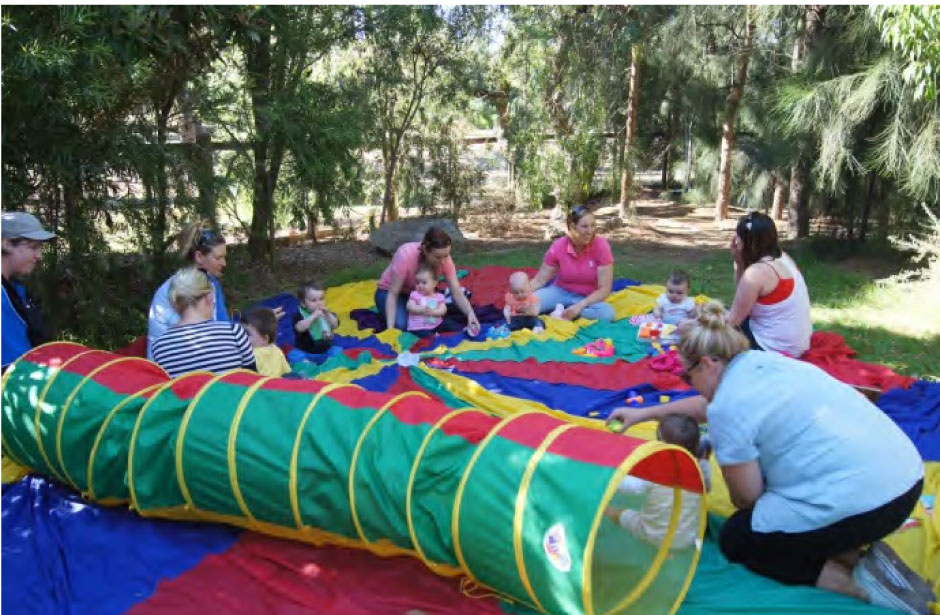
Playgroup Week is a National event. The focus of Playgroup Week is to promote the value of playgroups for children, families and the community and to enjoy the opportunities for families to come together to celebrate children’s play, learning and development, support for parents and community linkages.
Council has been responsible for the coordination, planning and promotion of Playgroup Week activities in Geelong since 2008. The annual development and implementation of Playgroup Week activities demonstrates the value of playgroups in building community connections between individuals, families and local services.
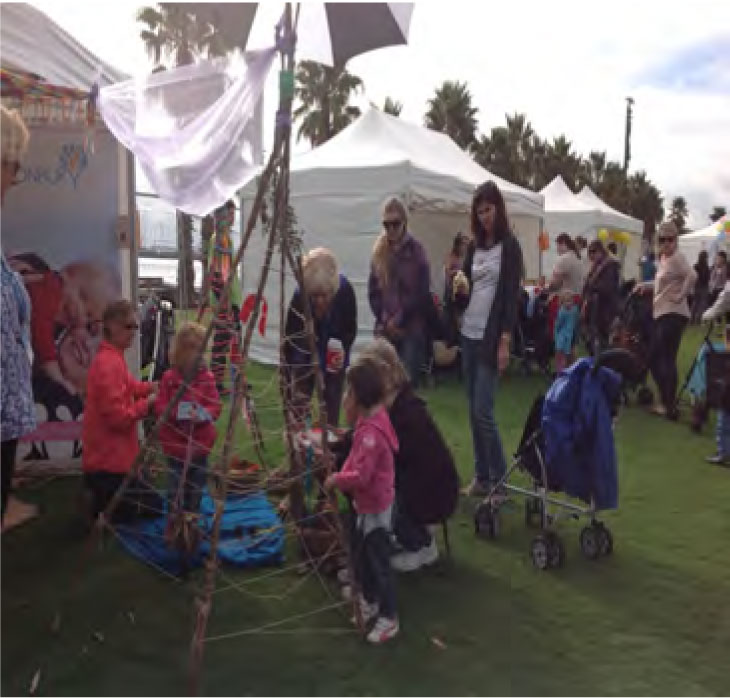
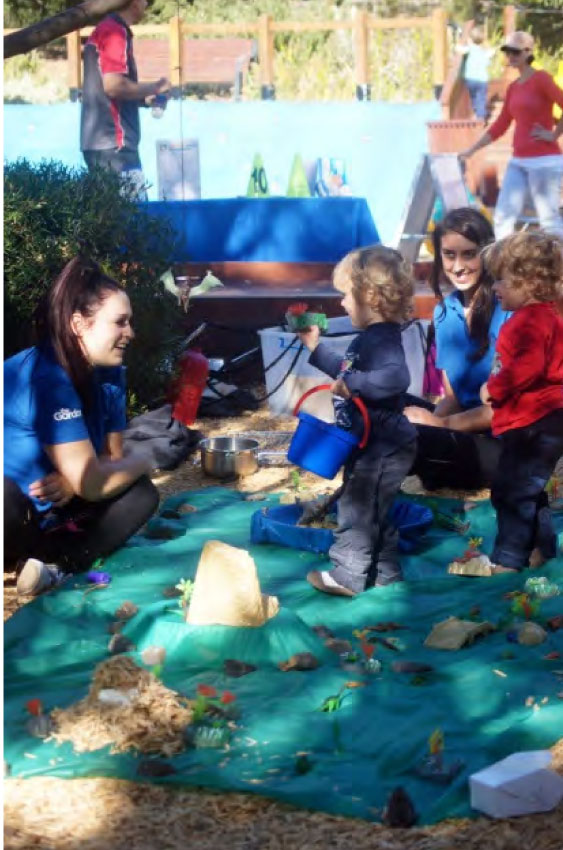
The events conducted in Geelong during Playgroup Week demonstrated continued participation and interest from the local community, including involvement of over 30 community organisations and 50 volunteers. Two council lead events were held with over 2,000 children and adults participating in the celebrations at Steampacket Gardens and Carousel on Monday 28 March and at Eastern Gardens Playspace on Wednesday 26 March (see Attachment 1).
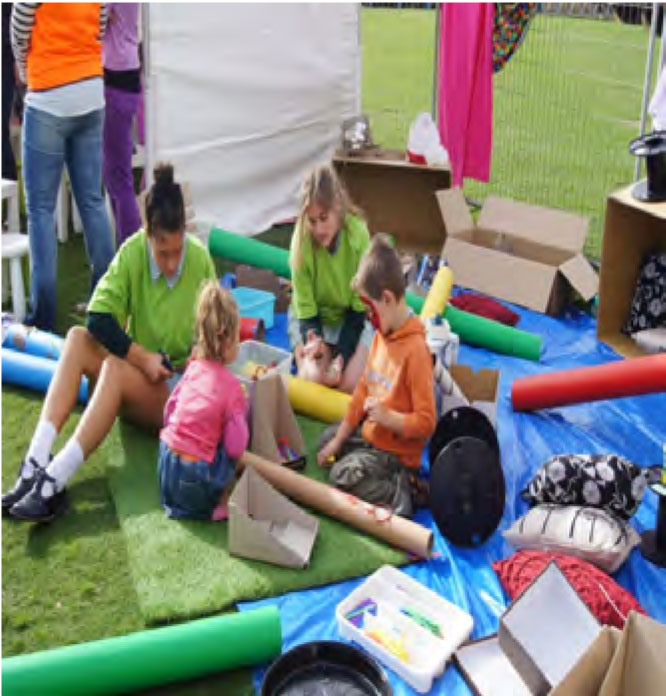
Babies, toddlers, preschool aged children and their families participated in a wide variety of fun activities, including an animal farm, music sessions, pop up creative play, storytime, craft, baby play and free Carousel rides.
Community involvement included volunteer participation by VCAL students from Belmont High School and Gordon TAFE child care studies students. On Monday the VCAL students enthusiastically welcomed participants, assisted parents and children with the activities, encouraged parents to complete evaluations and monitored safety at these special community and family events. The Gordon TAFE students prepared and presented many children’s activities for the Wednesday event.
Council’s support for children’s events is consistent with key objectives contained within City Plan, the Municipal Public Health and Wellbeing and the Municipal Early Years Plans.
Cr Fisher moved, Cr Heagney seconded -
That Council acknowledges the success of Playgroup Week in Geelong, March 2014, and the contribution by volunteers and local organisations.
Carried.
Playgroup Week events commenced in Geelong in 2008 with the DEECD funded Supported Playgroups and Parenting program promoting a get together of facilitated and community playgroups at Eastern Gardens. This event was attended by approximately 180 parents and children and from this small beginning has grown over the last 7 years to more broadly service the needs of families with infants, toddlers and preschool children. This event now has in excess of 800 parents and children in attendance. From 2012 Playgroup Week has also been celebrated at Steampacket Gardens/Carousel, building on successful annual Children’s Week celebrations held in October each year.
Playgroup Week in Geelong has continued to grow strongly, and provide enhanced opportunities to encourage children’s civic participation and the promotion of the unique contributions children make to the local community.
Geelong’s Playgroup Week program represents one of the largest regional events in Playgroup Week in Victoria. Its success is evidenced by strong participation from local children and families during the week.
Playgroup Week generates significant good will and is a low cost event facilitated by the Family Services Department with involvement of community organisations. The cost of Playgroup Week activities is absorbed within existing program budgets.
All events and activities conducted during Playgroup Week attempt to promote and operate according to good environmental sustainability practices and principles, including appropriate waste management and recycling wherever possible. Activities for children include “pop up play” with a focus on using recycled objects including cardboard boxes for creative play.
All costs associated with the Playgroup Week activities were met within the budget allocation of $12,500.
Council’s role in supporting the provision of local programs and activities for children and families is consistent with local government requirements stipulated under Section 3E (a); (b); (c); and (d) of the Victorian Local Government Act 1989 and also the Victorian Charter of Human Rights and Responsibilities.
Council’s role and responsibilities toward the hosting and support of Playgroup Week are consistent with key recommendations endorsed by Council in the existing Municipal Health and Wellbeing Plan 2013-17, including priorities of physical active communities, social inclusion and community connectedness.
Council’s City Plan 2013–17 details corporate planning objectives, service delivery priorities and commitments that are consistent with and closely aligned to the matters contained in this report, especially in relation to the development and provision of opportunities to facilitate community participation and engagement and healthy environments.
No officers or contractors involved in the preparation of this report have a direct or indirect interest in matters to which this report relates.
Risk assessment planning is routinely completed for all Council hosted events in accordance with Council event planning guidelines.
Children’s active engagement and participation in their community has significant social and developmental benefits that are shared by children, families, and the whole community.
Playgroup Week provides a unique opportunity to promote civic participation by young children and acknowledge the contributions provided by children toward realising the Council vision of making ‘Geelong a great place to live’.
Growth in participation in Playgroup Week by a diverse range of organisations and community groups (including Geelong Regional Library, TAFE, schools, family support agencies, playgroups, Botanic Gardens and toy libraries) provides a positive platform for partnership and generation of community goodwill.
Council’s role in supporting the provision of local programs and activities for children and families is consistent with the Victorian Charter of Human rights and Responsibilities, Part 2 Section 17 Protection of families and children.
Geelong’s Playgroup Week 2014 was advertised on Playgroup Victoria website, Geelong Early Childhood and Education eBulletin, DEECD Children’s Week website, the Geelong Australia website and social media were also used to promote Children’s Week.
An event flyer was developed and distributed both in electronic format and posted to schools, Maternal and Child Centre centres, the Carousel, child care centres, kindergartens, playgroups, toy libraries, family day care educators and families, Geelong libraries, Playgroup Victoria, CAOS Newsletter, registered organisations, Bellarine Kids & Geelong Kids websites and Council Customer Services Centres in the Geelong and surrounding areas. Kids Voice magazine promoted the event in their What’s On section.
The event was posted on the Geelong Australia Facebook page with over 800 viewings and Event Geelong Facebook page that had 668 viewings on Friday 21 March, 419 viewings on Sunday 23 March, 411 viewings on Monday 24 March and 2,763 viewings of the event in action on Monday 24 March. Media notifications and releases were forwarded to COGG Media for distribution through local media outlets. Additional advertising was placed in City News in the Geelong Advertiser and Geelong Independent Newspapers in the week leading up to the event.
The communication of this report along with material produced in relation to the development and promotion of Playgroup Week in Geelong is the responsibility of Council’s Family Services Department.
Participant feedback surveys were completed using android tablets. The surveys were loaded onto the tablets as an offline link and allowed surveyors to roam and engage with participants.
Steampacket Gardens and Carousel event Monday 24th March, 10.00 am to 12.00 pm
90 participants were surveyed about their experience at the event
80% of attendees were female, 21.1% male
The majority (76.7%) of adults in attendance were aged between 25 and 44 years
Participants predominately heard about the event through: playgroups 26.7%; Kindergarten 22.2% ; Facebook and Website 27.8%
98.9% of participants found the event time and location suitable
58.9% of those surveyed enjoyed the entertainment and activities for children
23.3% enjoying the inexpensive opportunity for an outing with their children
53.3% reported that the event was well organised, 36.7% found the organisation to be excellent
62.2% of participants surveyed were playgroup participants
Eastern Gardens event Wednesday 26th March 10.00 am to 1.00 pm
At this event as well as interviewing adults about their experience, children were surveyed through a photo board activity. This was a huge success and at future children’s events children’s voices will continue to be included in evaluation to inform forward planning.
82 adult participants and 38 children were surveyed about their enjoyment of the event
76% of those interviewed were female, 6% were male
84% were parents aged between 25 and 44 years
15.9% were grandparents ranging across the 55 to 74 years age group
29.3% of participants found out about the event through word of mouth, followed by 29.3% at playgroup and 19.5 % from Facebook
31.7% had attended the event in previous years
90.2% reported that they would attend the event again in the future
32.9% of participants surveyed had also attended the Steampacket Gardens event earlier in the week
Animal Farm, music and movement, face painting, puppet show, and baby area were favourite activities as reported by adults. The children surveyed enjoyed ‘pop up play’, face painting and the animal farm
100% found the location suitable
50% of participants surveyed attend a playgroup and 41.5% were interested in joining playgroup and were provided with information to help them to do so
Portfolio: |
Enterprise Geelong – Cr Harwood |
Source: |
Enterprise Geelong |
General Manager: |
Dr Russell Walker |
Index Reference: |
Project: Geelong Centre for Emerging Infectious Diseases (GCEID) |
This report seeks to facilitate the GCEID – Construction of Research Hub Project by Council authorising the Acting Chief Executive Officer to sign a funding agreement, with the Australian Government, to auspice up to $3million funding, to facilitate delivery of the project.
GCEID is a $12million project including cash and in-kind contributions from the project partners; CSIRO, Deakin University, Barwon Health and the City of Greater Geelong.
As a financial partner, Council has approved $100,000 in the 2014 /2015 budget towards this project. Other financial partners are Deakin University contributing $2million and Barwon Health contributing $1 million and the 3rd Floor of the TTR building as the location of the re-fit to house GCEID. CSIRO are an active in-kind partner to the project.
Council must enter into an agreement with the Australian Government to auspice up to $3million funding to facilitate the delivery of this project as the Australian Government will not provide the funding to any of the other partners.
Cr Harwood moved, Cr Macdonald seconded -
That Council resolve to authorise the Acting Chief Executive Officer to sign the Funding Agreement - CDG239 Geelong Centre for Emerging Infectious Diseases – Construction of Research Hub Project.
Carried.
Council has previously unsuccessfully attempted to action an agreement with the Australian Government for funding for this project under the previous government’s Regional Development Australia Fund (RDAF).
This agreement is the result of the new Government’s’ Community Development Grants Programme Manager “approving re-opening negotiations to establish a Funding Agreement with the City of Greater Geelong for the construction of a Research Hub for Emerging Infectious Diseases.”- Australian Government Correspondence to Council.
Harwood Andrews are Council’s legal advisors in this matter, and have prepared a contract between COGG and Barwon Health to pass on many of the obligations of this agreement to Barwon Health – the building owners. Barwon Health is fully aware of this agreement and the obligations therein and has agreed to proceed.
After four months of contract negotiation Council are now at final agreement stage with the Australian Government and required to return the signed agreement before the 4th June 2014.
The intention of this agreement is to ensure that the Australian Government pass on all responsibility and accountability for the careful management and delivery of this project to Council.
The financial project partners and the independent project manager are all members of the GCEID Project Control Group (PCG) This PCG has met four times in 2014, an independent project manager has been appointed, COGG has been involved in a risk assessment process for this project along with the other project partners.
The recommendation in this report is informed by a range of key professionals – including close scrutiny of the proposed deliverables by Barwon Health’s Business Manager and Financial Officer, Barwon Health’s Capital Works Manager, the experienced independent project manager appointed to the project, Council Officers, and independent legal advice.
There are no environmental implications.
Council have already committed $100,000 in the next budget cycle to fund the GCEID Construction of a Research Hub Project. All of these monies are allocated within the overall GCEID construction budget.
Income: Up to $3,000,000
Expenditure: Up to $3,100,000 (including Council commitment)
Ongoing maintenance and operational costs:
Legal estimated $7,000
Staffing 0.2 EFT PCG, Contract and Project Quality Assurance. To December 2015 – with an ongoing five year commitment to ensure the intention of the GCEID project on this site is realised.
Council are subject to the terms and conditions of the Australian Government Department of Infrastructure and Regional development Community Development Grants Programme Funding Agreement in relation to the Geelong Centre for Emerging Infectious Diseases – Construction of Research Hub.
GCEID appears in the 2013-17 City Plan page 60 and the listed benefits include investment attraction, enhancement and strengthening educational links across multi-discipline sectors, providing opportunities for high end employment, creating supply chain industry and business development localised to Geelong and elevating the profile of the region.
GCEID has appeared in regional planning documents since 2010 - the Barwon and South West Strategic Plan referred to the GCEID as a key contributor to transitioning from a commodities and low value economy to a knowledge-based high value add economy.
GCEID is listed as Priority Project in the G21 2013 Report to the Region,
Council’s Annual Report 2012-2013 refers to GCEID as an all of government collaboration with the private sector to protect population health, food safety and food security.
There are no known conflicts of interest.
If Council do not authorise the Acting Chief Executive Officer to sign this funding agreement the Geelong Centre for Emerging Infectious Diseases – Construction of Research Hub Project funding will not proceed and the reputation of the Council’s ability to action a funding agreement will be severely tarnished. The project has already been halted once before and taking the negative course of action in this case will have unnecessarily cost both Barwon Health and Deakin University a great deal of money time and resources.
Delivering this project may have challenges such as seeking statutory authority within the agreed time frames
The economic impact of an infectious disease outbreak can be catastrophic - GCEID is a critical part of our offensive and defensive capability for both our animal industries and the risk to human health in the Barwon South West and across Australia.
The Geelong Centre for Emerging Infectious Diseases project has the potential not only to protect and grow the Barwon South West regional economy but also has national impact and significance. GCEID has obvious economic benefits stimulating employment during construction phase, and Geelong’s Centre for Emerging Infectious Diseases will help protect the health of our communities and the productivity of our livestock.
An Independent assessment by economists indicates that GCEID will inject $29.7 million into the regional economy in the sort term and create 137 jobs. GCEID is expected to deliver $87 million of benefits to the region over the first 20 years of operation.
Increasing emerging Infectious disease research activity and the profile of GCEID in the region has the potential to stimulate local commercial opportunities associated with this research.
Human health is increasingly threatened by current and emerging infectious diseases and GCEID will deliver new and innovative ways to better manage these.
GCEID is a collaborative, multi-disciplinary health initiative and the construction phase is critical to allow the GCEID to grow and evolve the planned outputs, providing a central location for the integration of research activities of the three partner research organisations. Delivering the Construction of the Research hub project involves a collaborative working relationship with Barwon Health, the City of Greater Geelong and Deakin University.
Portfolio: |
Governance – Cr Lyons (Mayor) |
Source: |
Corporate Services - Corporate Strategy |
A/General Manager: |
Michael Kelly |
Index Reference: |
Corporate Management |
Council at its meeting on 25 June 2013 adopted City Plan 2013-2017, that outlined the Strategic Directions and Priorities planned by the City over that four-year period, and the Annual Business Plan Actions planned for 2013-2014.
This report is the progress report to Council of the organisations achievements against these actions.
Attachment A details the status and provides commentary against the Annual Business Plan actions. The key to the status of actions is:
On Schedule: Green 193
Completed: Black 39
Major Issue: Red 1
Minor Issue: Yellow 18
Not Started: White 7
Cr E Kontelj moved, Cr S Kontelj seconded -
That Council receives and notes the City Plan Progress Report to 31 March 2014.
Carried.
That Council at its meeting on 25 June 2013 adopted City Plan 2013-2017, which has been developed within a framework of four strategic directions:
Community Wellbeing
Healthy Together Geelong: to enhance health, wellbeing and quality of life of Greater Geelong Communities.
Growing Our Economy
Securing Geelong’s economic future
A Sustainable Built and Natural Environment
Partnering with our community to protect and enhance our natural ecosystems and to encourage sustainable design and reduced resource consumption.
How We Do Business
We will focus on developing and maintaining effective working relationships to deliver Council’s strategic directions and cost effective services that meet the changing needs of the community.
This report and attachment indicates the status of the actions in City Plan 2013-2017 for the 2013-2014 financial year as at 31 March, 2014.
The attachment provides status and comments for each of the 258 actions within the four strategic directions.
There has been significant progress towards achieving the actions in 2013-2014 including:
Community Wellbeing
Status Summary:
On Schedule: 111 Completed: 23 Major Issue: 0
Minor Issue: 10 Not Started: 5
The City developed the draft Physical Activity Strategy and released it for public exhibition in March 2014. The strategy, which was developed as part of the State Government funded ‘Be Active’ program, sets out ways to create an environment that supports physical activity over the next four years. It identifies cost effective physical activity interventions such as facility development, policies, programs and services that are most likely to succeed in getting local people to be more active more often.
Nine of the City’s Early Learning Centres have been the first in Victoria to be recognised as ‘Healthy Early Childhood Services’ through the Healthy Together Geelong Achievement Program. The City has worked closely with local community health organisations and early childhood services to help achieve these benchmarks and create action plans.
The Healthy Together Geelong program has also signed a Memorandum of Understanding with the Geelong Football Club to roll out a quit smoking online program and ongoing healthy eating promotion through the 2014 and 2015 AFL seasons.
Two key strategies that address the wellbeing of our community were completed in the March quarter and are out for public comment in April. The draft Municipal Early Years Plan will inform future planning, service development and support for young children and families throughout the region. The plan closely aligns with the emergence of a wide range of Victorian and Australian Government policy and program changes. It will guide planning for the next four years.
The draft Disability Action Plan 2014-2017 was also released for public comment. This plan meets state and federal legislation as well as the UN Convention on the Rights of Persons with Disabilities. This is our third plan since 2002, and the 45 actions build on the previous work across four main areas; provision of goods and services, employment, community participation and attitudes and practices.
A number of new playgrounds across the municipality have been installed as part of the City’s Playground Development Program. Esperance Reserve Lara, Fairlie Reserve Hamlyn Heights, Tim Hill Reserve Highton and Myers Reserve in Bell Post Hill have all seen newly installed playgrounds. Landscaping and path works will continue at the upgrade locations in the coming months as well as fencing at selected sites.
Cultural Diversity Week 2014 was celebrated as part of the Multicultural Action Plan in March, by welcoming new arrivals to Geelong at a mayoral welcome function. There was also a formal launch for the Geelong Interfaith Network publication ‘In Good Faith’. Cultural Diversity week aims to encourage people of all cultures to come together and celebrate with each other as one community.
The City’s Learn to Swim programs are again achieving outstanding results. In Term One 2014 the City’s programs attracted 6,185 enrolments across the four indoor leisure centres (Leisurelink, Waterworld, Splashdown and Bellarine Aquatic and Sports Centre). The Bellarine Aquatic and Sport Centre achieved their highest ever enrolment number since opening in 2008.
Preparations for the Mountain to Mouth (M~M2014), which is to be held on Friday 9 – Saturday 10 May, are well underway and registrations are now being taken. This innovative cultural event will gather together people from all walks of life for a shared journey through the unique landscape of the Geelong region.
The 24 hour extreme arts walk invites people of all ages and abilities to register to walk one or more stages of an 80km pathway, which will incorporate a program of music, visual arts, storytelling and sporting elements presented by local and guest artists.
Growing Our Economy
Status Summary:
On Schedule: 32 Completed: 9 Major Issue: 1
Minor Issue: 4 Not Started: 0
Council has endorsed the actions of the new Central Geelong Action Plan and expressions of interest have been sought for members to join the task force and its four advisory committees; Transport and Infrastructure, Heath and Education, Place making and Investment attraction.
Implementation of the action plan is underway with a trial of free weekend car parking undertaken within the inner Central Geelong Precinct during the March quarter. The trial has resulted in findings of increased pedestrians and vehicles within the area in comparison to the same period in the previous year. The success of this trial will see free weekend parking become permanent.
The March quarter again proved to be the peak events season for the municipality with a number of major events held, bringing in valuable economic benefit and showcasing our region. Events included the Festival of Sails, The Great Australian Beer Festival, Pako Festa, Barwon Regatta Rowing, Suicide Awareness Walk, Melgas 24 Sailing World Championship, Lara Food and Wine Festival, Victorian Open Golf, and the Geelong Caravan, Camping and Outdoor Expo.
Cementing its position as one of the best sports facilities in the country, Simonds Stadium saw a jam-packed calendar of events in February with soccer, rugby and AFL all played within 12 days of each other. This included a NAB AFL Challenge match, Super Rugby trial match and the Asian Football Confederation Championships qualifying match featuring the Melbourne Victory.
Geelong’s appeal as an international cruise ship destination continues to grow with five ships having anchored in Corio Bay over the 2013-2014 summer period. The most recent, The Amadea, spent the day docked in Corio Bay as its 600 passengers explored Central Geelong and the Waterfront, The Bellarine and the Great Ocean Road. The City continues to seek funding for a new Yarra Street Pier.
The Geelong region continues to support new and emerging growth sectors with two exciting announcements in the last quarter.
Energy Australia, one of the nation’s largest energy retailers, announced Geelong will be the location for its National Call Centre. Once operational this will deliver 300 local jobs. The company has also committed to employing local contractors to undertake the construction and fit out of the centre.
$5 million dollars in funding has also been awarded to Geelong Business Carbon Revolution through the Geelong Region Innovation and Investment Fund. This will allow the company to produce carbon fibre wheels at a much faster pace, and create up to 150 jobs in the high tech carbon fibre industry in Geelong.
The construction phase of the Geelong Library and Heritage Centre is now underway with the installation of 42 piles to support the new building and partially retain the adjacent buildings abutting the Little Malop Street site. The new centre will be an impressive addition to Geelong’s architectural and cultural landscape. It will be a six-storey state-of-the-art facility with all the modern conveniences for today’s library user.
The State Government recently announced $500,000 in funding from Regional Development Victoria for the redevelopment of Austin Park. This is being delivered as part of Council’s agreement with Coles to deliver the Lara town centre expansion project, and will provide pedestrian and cycling links between the town centre, the Lara station and community facilities.
The Head of Schoolgirls’ Regatta will remain in Geelong after a five year agreement was signed securing the event for Geelong until 2019. Economic modelling indicates that the Head of the Schoolgirls Regatta brings an estimated benefit to Geelong of approximately $2 million per year. 84 per cent of participants in the Regatta are visitors to Geelong. The City has also partnered with State Government and Corangamite Catchment Management Authority to undertake improvements to the 1500 metre rowing course on the Barwon River. These works will be completed in the time for the 2015 event.
A Sustainable Built and Natural Environment
Status Summary:
On Schedule: 27 Completed: 2 Major Issue: 0
Minor Issue: 2 Not Started: 2
The ’Rethink Your Rubbish’ program continues to be a success with various initiatives undertaken in the last quarter. A chemical drop off day was held in February at Corio Operations Depot where residents could drop off a large range of chemicals. Residents dropped off an average of 20.4 kilograms per person. The highest volume of products collected were inert liquids, flammable liquids and battery lead acid. 2,545 kilograms of household chemical products will now be recycled for recovery. This was a free service provided by the City in conjunction with Sustainability Victoria.
Future Proofing Geelong coordinated the City’s participation in the state-wide Sustainable Living festival in February. The festival was a two week series of 57 activities and events aimed at encouraging residents to live more sustainably. This year visitor numbers exceeded 3,700, more than triple that of last year’s events. There were more events and activities throughout Greater Geelong than in any other area in Victoria. The festival covered a range of topics from improving energy efficiency at home or in the office, to growing food at home and designing residential homes to make them more sustainable.
Future Proofing Geelong have assisted Pickering Joinery, a local manufacturer, to secure a Geelong Region Innovation and Investment Fund (GRIIF) grant. By securing the grant, Pickering Joinery will complete a $560,000 expansion of its manufacturing operations in Belmont, resulting in eight new full time jobs. A key initiative of Future Proofing Geelong is to assist the local business community to source state and federal funding to encourage new economic growth. The GRIIF grant is a joint initiative of the Australian Government, Victorian Government and Ford Australia.
The City’s Sustainable Buildings Policy has continued to be implemented within the March quarter with a number of new buildings being constructed as five-star Greenstar certified building designs. The new Geelong Library and Heritage Centre is the first of these buildings under construction, along with the Leopold Community Hub, Grovedale Integrated Children's Centre, Norlane Children’s and Family Centre and Barwon Heads Early Learning Centre.
The draft Environment Management Strategy 2013-2017 has now been developed and was recently placed on public exhibition enabling the wider community the opportunity to assess the strategy and provide comments. Input for the new strategy has been sought from Council staff, the community and government departments and agencies. Due to the extensive amount of feedback the draft strategy is now being reviewed and is due to be presented to Council for adoption in the coming months.
Data has been released showing energy improvements achieved as a result of the installation of the new energy efficient equipment at Splashdown, Waterworld and the National Wool Museum. The data has shown improvements in energy use across all three sites and a reduction in carbon emissions equivalent to over 3,500 one way economy flights from Melbourne to Perth. This equipment was installed as a part of a Community Energy Efficiency Program, a Future Proofing Geelong initiative. During the March quarter, further progress has also been made engaging owners and tenants to improve the energy efficiency within commercial buildings throughout Geelong.
How We Do Business
Status Summary:
On Schedule: 23 Completed: 5 Major Issue: 0
Minor Issue: 2 Not Started: 0
The City’s Women in Community Life Advisory Committee hosted its first event in March to celebrate International Women’s Day, celebrating the achievements of women across our community. The committee is made up of 12 women from across the municipality of diverse ages, locations, skills, backgrounds and interests. This committee will provide opportunity to further the work of Council with a range of community groups, businesses and organisations in advocating for, planning and influencing service delivery that impacts women’s lives.
Various roundabout beautifications as well as landscaping works are now complete in Bell Post Hill and the Corio ward with the completion of upgrades to Plume/Rose Avenue and Michigan/Canadian Avenue.
A number of corporate training programs are currently underway including Assertiveness Skills, Council and Information Services Induction programs, Effective Management of Employee Performance Training, Stepping up to Leadership, OHS Training and Plain English.
Social media continues to be a key communication channel for the City to inform and engage with the community. The City of Greater Geelong and Geelong Mayor's Facebook and Twitter accounts are monitored seven days a week. Between the two pages, Facebook currently has 50,000 likes and Twitter 119,000 followers.
The City’s Engineering Services team have been working hard to complete the scheduled 2014 works by the end of the financial year. The drainage design and construction program is 41 per cent complete (44 per cent projected), kerb and channel renewal program is 84 per cent completed (54 per cent projected) and the roads construction program is 61 per cent completed (66 per cent projected). All scheduled works are expected to be delivered by the end of June 2014.
There are several actions under the Sustainable Built and Natural Environment Strategic Direction within City Plan that aim to enhance and protect natural areas and ecosystem health, support our community to live sustainably, advocate for and promote sustainable design and development, and minimise our environmental footprint.
The City’s Annual Budget provides the Resource Plan to support the initiatives identified within the adopted Annual Business Plan.
The City’s external auditors will undertake a Performance Audit of the planned Key Strategic Activities and prepare a report as part of the ‘sign off’ of the Annual Accounts.
This report is the progress report of the organisations achievements against the adopted City Plan 2013-2017, 2013-2014 actions.
Officer Direct or Indirect Interest
There is no conflict of interest to be disclosed.
The risks arising from the actions are managed within the framework of the City’s adopted Policies, Procedures and Risk Management strategies.
Several of the actions identified within City Plan are aimed at improving the quality of life for the resident in the City of Greater Geelong. This is particularly the case for actions within the Community Wellbeing Strategic Direction.
This report provides an update on the implementation of City Plan 2013-2017 and will be made available on Council’s website and on request at Council’s Customer Service Centres as part of the Council meeting minutes. There are no known positive or negative effects.
A comprehensive report on the 2013-2014 City Plan actions will be published in the City of Greater Geelong Annual Report by September 30, 2014, which will be submitted to the Minister for Local Government and available to the public in hard copy and on the City’s website (www.geelongaustralia.com.au).
Contents | Previous Page: Section B - Reports (3-5) | Next Page: Section B - Reports (11-12)

Copyright CoGG 2012
Last Update: 10 June 2014